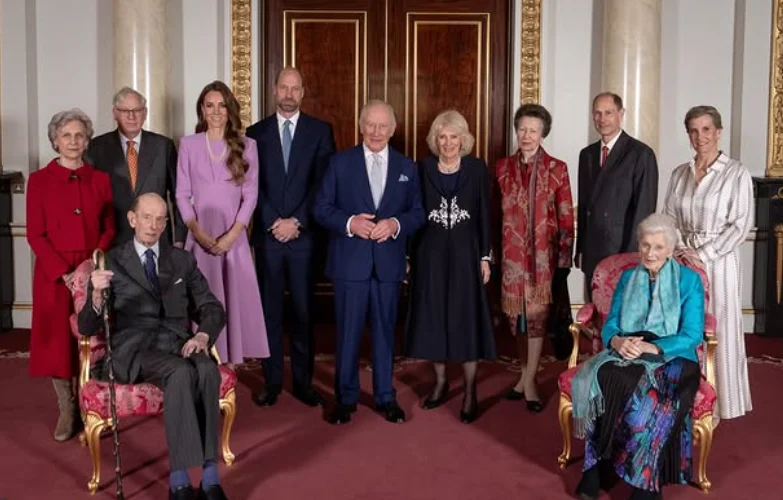

On April 21, 2026, precisely one hundred years after the birth of Queen Elizabeth II, members of the House of Windsor convened at Buckingham Palace for a poignant occasion. The day marked a dual commemoration: celebrating the enduring legacy of the late monarch and honouring individuals who share her milestone 100th birthday. The central event, a reception hosted by King Charles III, brought together charities deeply connected to Queen Elizabeth II’s philanthropic work. Amidst this significant gathering, a formal portrait was captured, featuring the current working members of the Royal Family, an image destined for the annals of history.
A Symbolic Gathering at Buckingham Palace
The reception at Buckingham Palace was more than just a social event; it was a carefully curated moment designed to reflect the continuity of the monarchy and the lasting impact of Queen Elizabeth II’s reign. King Charles III, alongside his wife, Queen Camilla, stood at the heart of the assembled family, a visual representation of the line of succession and the enduring strength of the institution. The presence of the Prince and Princess of Wales, Princess Anne, the Duke and Duchess of Edinburgh, and the Duke and Duchess of Gloucester underscored the collective commitment of the senior royals to public service and their dedication to upholding the traditions established by their predecessors.
A notable and touching inclusion in the photograph was Princess Alexandra, the much-respected cousin of Queen Elizabeth II. Although she has officially retired from royal duties, her decision to participate in this significant portrait highlighted her continued connection to the family and her long-standing dedication to royal service, spanning over six decades. Her presence alongside her elder brother, the Duke of Kent, who continues to undertake engagements, offered a powerful visual link to a previous era of the monarchy, demonstrating a deep sense of familial duty and shared history.
Honoring a Century of Service and Life
The portrait served as a focal point for a day dedicated to remembrance and celebration. The charities present were those that had benefited from Queen Elizabeth II’s patronage and support, underscoring her lifelong commitment to a diverse range of causes. King Charles III took the opportunity to personally present birthday cards to three individuals who, like his mother, were celebrating their 100th birthdays on this significant date. This gesture of personal recognition further emphasized the celebratory nature of the day, linking the lives of ordinary citizens with the extraordinary legacy of the late Queen. The day’s festivities were further punctuated by the cutting of a specially designed cake, adorned with a prominent gold "100," a clear and symbolic nod to the centenary.
Glimpses of the National Memorial
Earlier in the day, a significant portion of the Royal Family had visited the British Museum in London. Their purpose was to review the final designs for the national memorial dedicated to Queen Elizabeth II, which is slated for installation in St. James’s Park. This ambitious project aims to create a lasting tribute to the longest-reigning monarch in British history.
Details of the memorial design have revealed a unique and symbolic element: a glass cast bridge. This architectural feature is said to echo the intricate design of the Queen Mary Fringe Tiara, a piece Queen Elizabeth II famously wore on her wedding day. The tiara’s sparkling lines are artfully replicated in the structure of the bridge, creating a visual continuity between personal milestones and public commemoration.
The memorial plans also include statues of both Queen Elizabeth II and Prince Philip. While the artistic renderings themselves have been a subject of discussion and some debate regarding the chosen poses, their inclusion signifies a desire to immortalize the enduring partnership and shared dedication of the royal couple to the nation. The development of this memorial represents a significant undertaking, reflecting the profound impact Queen Elizabeth II had on the United Kingdom and the Commonwealth.
Princess Anne’s Dedication to Green Spaces
Adding another layer to the day’s commemorations, Princess Anne inaugurated the Queen Elizabeth II Garden in Regent’s Park. This initiative further solidifies the enduring connection between the late Queen and the preservation of natural beauty and public spaces. The garden stands as a living tribute, offering a serene and beautiful environment for public enjoyment, a fitting legacy for a monarch who consistently championed the importance of nature and well-being.
The Significance of the Portrait and the Centenary
The photograph of the Royal Family on April 21, 2026, is more than just an image; it is a powerful statement about the present and future of the British monarchy. The inclusion of all current working royals signifies a unified front and a collective commitment to their constitutional roles. The placement of King Charles and Queen Camilla at the centre reinforces their position as the current custodians of the Crown.
This centenary event, marking 100 years since Queen Elizabeth II’s birth, provides a crucial opportunity for national reflection. Her reign, spanning over 70 years, witnessed immense social, political, and technological change. Her steady leadership and unwavering dedication served as a constant throughout these transformations. The various commemorative events, from the Buckingham Palace reception to the unveiling of memorial plans, are designed to ensure that her legacy is not only remembered but also understood in the context of her profound impact on modern British history.
The inclusion of those celebrating their 100th birthdays alongside the royal family adds a deeply human element to the commemorations. It draws a parallel between a life dedicated to public service and the accumulation of a century of personal experience and wisdom. This connection serves to humanize the monarchy and highlight the shared journey of the nation through time.
Data and Context: A Century of Monarchy
Queen Elizabeth II was born on April 21, 1926. Her ascension to the throne in 1952 marked the beginning of a reign that redefined the role of the monarchy in the 20th and early 21st centuries. Her reign was the longest of any British monarch, surpassing her great-great-grandmother Queen Victoria’s reign of 63 years and seven months. During her tenure, Queen Elizabeth II undertook over 200 official overseas visits and her coronation in 1953 was the first to be televised, reaching an estimated audience of 27 million people in the UK alone.
The charities supported by Queen Elizabeth II represented a vast spectrum of causes, from animal welfare and conservation to education and healthcare. Her patronage provided significant visibility and support to countless organizations, enabling them to extend their reach and impact. The collective impact of these charities, often working behind the scenes, represents a significant philanthropic legacy that continues to benefit society.
The national memorial in St. James’s Park is one of several tributes being planned or already established to honour Queen Elizabeth II. These initiatives reflect a national desire to create tangible symbols of her enduring influence and to ensure her memory is preserved for future generations. The process of designing and approving such memorials involves extensive consultation with royal family members, heritage organizations, and the public, ensuring that the final tributes are both fitting and widely embraced.
Analysis of Implications
The events of April 21, 2026, underscore the adaptive nature of the British monarchy. While deeply rooted in tradition, the institution has demonstrated its capacity to evolve and engage with contemporary society. The focus on charitable work and the inclusion of centenarians highlight a desire to connect the monarchy with broader societal values and the experiences of ordinary citizens.
The presentation of the memorial plans also signals a forward-looking approach. By engaging with public spaces and incorporating symbolic elements, the monarchy is seeking to create lasting testaments to Queen Elizabeth II’s reign that resonate with the public imagination. The ongoing development of these tributes will undoubtedly continue to be a point of national interest and discussion.
Furthermore, the gathering of the working royals in a formal portrait serves to project an image of stability and continuity. In a rapidly changing world, the monarchy, through such symbolic acts, aims to provide a sense of constancy and national identity. The careful staging of these events, from the formal reception to the unveiling of memorial designs, reflects a strategic effort to maintain public engagement and support for the institution. The successful execution of these commemorations will play a vital role in shaping public perception of the monarchy in the years to come, ensuring that the legacy of Queen Elizabeth II continues to inspire and inform.