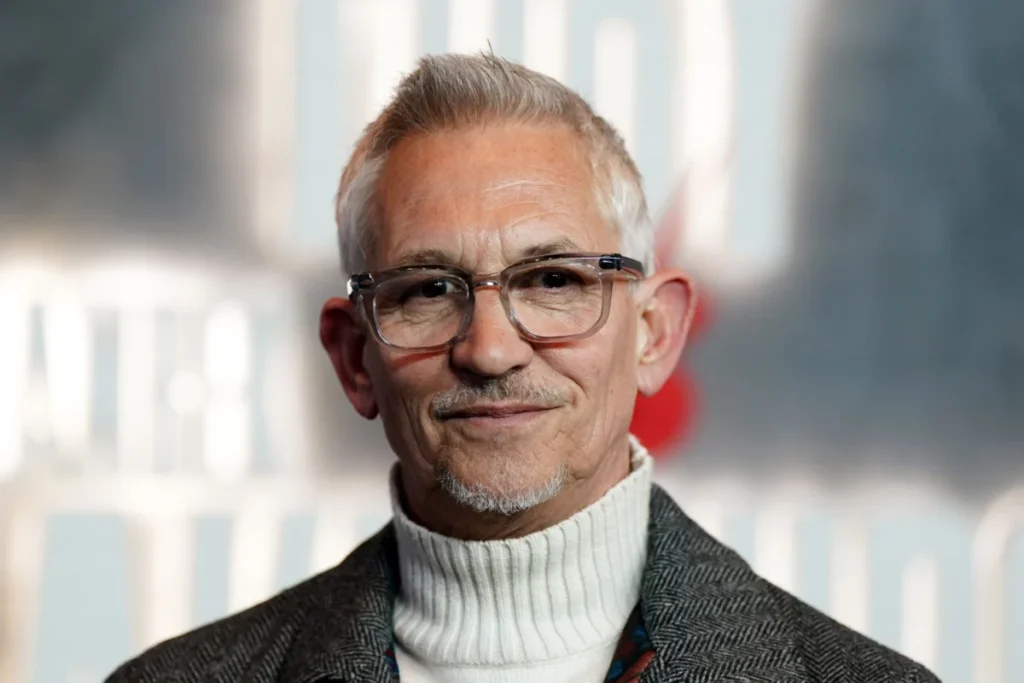

Former England international and revered television presenter Gary Lineker has articulated a sense of liberation following his departure from the BBC, stating he is "not treading on so many eggshells these days" and is now "allowed an opinion on things." The candid remarks come as Lineker, 65, prepares to take his successful podcast, "The Rest Is Football," to Netflix for an exclusive daily TV show during the 2026 FIFA World Cup. This significant career pivot follows his high-profile exit from the BBC’s flagship football programme, Match Of The Day, in May of the previous year, amidst a contentious dispute over his social media commentary and the corporation’s impartiality guidelines.
A New Chapter: Post-BBC Life and "The Rest Is Football"
Lineker’s departure from Match Of The Day marked the end of an era, concluding a remarkable 26-year tenure as the programme’s lead presenter. His exit in May 2023 was triggered by a widely publicised controversy surrounding his personal opinions aired on social media, particularly an Instagram post concerning Zionism that featured a depiction of a rat, which was broadly interpreted as an antisemitic trope. The incident ignited a fierce debate about the boundaries of impartiality for high-profile public broadcasters and their personal platforms.
Reflecting on his life since leaving the confines of BBC employment, Lineker shared his newfound sense of autonomy with the Press Association. "I’ve got a bit more time, I’m not treading on quite so many eggshells these days, I’m allowed an opinion on things," he explained, underscoring a shift from the stringent editorial guidelines that govern BBC presenters. While acknowledging a "wonderful period at the Beeb" and expressing a nostalgic sentiment for some of the camaraderie, he was quick to point out that the excitement of his new ventures has largely filled any void. "I won’t miss being in the green box itself, but I miss some of the company," he mused, adding, "But the fact we’ve got our own show now with loads of guests and stuff, that’s been replaced completely."
The new chapter sees Lineker, alongside fellow football pundits Micah Richards and Alan Shearer, bringing "The Rest Is Football" – produced by his company Goalhanger Podcasts – to a global audience via Netflix. This daily television show is set to provide comprehensive coverage of the 2026 World Cup, which will be jointly hosted by the United States, Canada, and Mexico. The move represents a strategic expansion for Goalhanger Podcasts, which has rapidly established itself as a major player in the audio content sphere since its inception. Launched in August 2023, "The Rest Is Football" podcast quickly soared to the top of sports podcast charts, lauded for its engaging discussions, expert analysis, and the natural chemistry between Lineker, Richards, and Shearer. Its success demonstrated a strong appetite among audiences for alternative, less constrained football commentary, paving the way for its ambitious transition to a visual format on a streaming giant.
The Impartiality Conundrum: A Look Back at Lineker’s BBC Exit
The genesis of Lineker’s BBC departure dates back to March 2023 when he posted a tweet criticising the UK government’s asylum policy, drawing parallels to 1930s Germany. This sparked an immediate and intense backlash, with accusations of political bias and breaches of BBC guidelines. While Lineker initially stood by his comments, the BBC temporarily suspended him from Match Of The Day. This decision, however, inadvertently triggered an unprecedented show of solidarity from his colleagues. Alan Shearer and Ian Wright, fellow pundits, famously refused to appear on the show, leading to a widespread walkout by commentators, reporters, and production staff. The ensuing weekend saw Match Of The Day broadcast without presenters, pundits, or even commentary, a stark illustration of the deep divisions within the corporation and the wider public regarding impartiality rules.

The BBC, as a public service broadcaster, operates under strict guidelines regarding impartiality, particularly for its high-profile presenters who are perceived to represent the organisation. These rules are designed to maintain public trust and prevent the perception of political bias. Lineker, as one of the BBC’s highest-paid and most recognisable figures, was considered subject to these stringent standards, especially when discussing political issues on personal social media accounts. The controversy brought into sharp focus the tension between a presenter’s right to free speech and their contractual obligations to uphold an employer’s editorial standards.
Following extensive negotiations and a period of intense public scrutiny, Lineker was reinstated to Match Of The Day after an agreement was reached with the BBC. However, the experience undeniably altered his relationship with the institution. His subsequent decision to step down from the role in May 2023, albeit framed as a mutual agreement to "explore new opportunities," was widely interpreted as a direct consequence of the impartiality row and the desire for greater freedom of expression. The Instagram post regarding Zionism, which occurred later, served to further highlight the complexities and sensitivities surrounding his public commentary, particularly when touching upon politically charged and historically fraught subjects. The BBC’s stance has consistently been that it must remain impartial to all political viewpoints, a principle it asserts is fundamental to its role as a public broadcaster.
Netflix’s Strategic Play: Capturing the Global Football Audience
The decision by Netflix to secure "The Rest Is Football" for the 2026 World Cup marks a significant moment in the evolving landscape of sports broadcasting. While traditional broadcasters like the BBC and ITV will continue to hold the live rights to major football tournaments in the UK, Netflix’s foray into this supplementary, analysis-driven content signals a broader strategic shift for streaming platforms. Historically focused on scripted drama, documentaries, and movies, Netflix has increasingly invested in live events and sports-related content, recognising the immense global appeal and subscriber-driving potential of major sporting spectacles.
The 2026 World Cup, with its expanded format featuring 48 teams and being co-hosted across three nations, promises to be the largest and most complex iteration of the tournament to date. This presents a massive opportunity for platforms like Netflix to engage a diverse international audience. Lineker highlighted that his new show is not in direct competition with traditional broadcasters for live rights. "We’re not in competition with the BBC in this, because obviously they’re focused on live football, we haven’t got the rights, but we’ve got a show that people can watch alongside," he explained. This "alongside" model allows Netflix to tap into the World Cup hype without the exorbitant costs associated with live broadcasting rights, instead offering a complementary viewing experience featuring analysis, interviews, and behind-the-scenes insights from a team of highly respected football figures.
The move also underscores the growing influence of talent-led production companies. Goalhanger Podcasts, co-founded by Lineker, has demonstrated the ability to cultivate a loyal audience and produce high-quality content independently. This model empowers presenters and creators to develop their own brands and intellectual property, offering them greater creative control and potentially more lucrative financial arrangements than traditional employment. For Netflix, partnering with an established and popular podcast brand like "The Rest Is Football" and its celebrated hosts provides instant credibility and a pre-existing audience base, mitigating the risks associated with launching new sports content.
Geopolitical Shadows: Concerns Over the 2026 World Cup
Despite the personal excitement surrounding his new venture, Lineker expressed genuine apprehension regarding the geopolitical backdrop of the 2026 World Cup, particularly with the United States as a co-host. His concerns are rooted in the potential for political tensions to overshadow the sporting spectacle, citing the actions of former and potentially future US President Donald Trump, including his administration’s historical posture towards Iran, which is expected to compete in the tournament.
"This time we’ve got a first, probably I think, we’ve got the host nation at war with one of the competing countries, you’ve got an unpredictable leader," Lineker stated, acknowledging the unprecedented nature of the situation. While the United States is not officially "at war" with Iran, relations have been fraught with tension for decades, marked by sanctions, military confrontations in proxy conflicts, and diplomatic standoffs. A potential return of Donald Trump to the US presidency, known for his hawkish stance on Iran and his "America First" foreign policy, could significantly escalate these tensions in the lead-up to or during the tournament. The implications for Iranian athletes, fans, and media within the US could be substantial, creating a challenging environment for a global sporting event intended to foster unity.
Lineker’s concerns are not without precedent. He recalled similar geopolitical complexities surrounding previous World Cups he covered. The 2022 tournament in Qatar was heavily scrutinised for its human rights record, particularly concerning migrant workers and LGBTQ+ rights, leading to widespread calls for boycotts and debates about "sportswashing." The 2018 World Cup in Russia also faced criticism, taking place four years after Russia’s annexation of Crimea and amid allegations of state-sponsored doping. In both instances, Lineker observed, the football eventually took centre stage, often overriding the initial controversies. "But from my experience, which is a lot, once we get there, once it starts, it’s always alright, it’s always great, the football takes over, and I’m very much hoping that that’s the case," he reflected.
However, he confessed a heightened sense of unease for 2026. "But I am a little bit more nervous about this one, I think, than others, for obvious reasons," he admitted. This nervousness highlights the increasing entanglement of global sports with complex geopolitical realities, forcing athletes, media, and organisers to navigate a landscape where political statements and humanitarian concerns are as prominent as the sporting action itself. The expanded format of the 2026 World Cup, spanning three diverse nations with distinct political climates, further amplifies these potential challenges.
Lineker’s Enduring Legacy and the Future of Sports Media
Gary Lineker’s career arc from a celebrated goalscorer – famously never receiving a yellow card – to a broadcasting titan, and now an independent media mogul, reflects broader shifts in the media industry. His move to Netflix and his outspokenness underscore a growing trend where established personalities are leveraging their brand power to create content outside traditional media structures, seeking greater creative freedom and direct engagement with their audiences. This new chapter allows Lineker to merge his unparalleled football knowledge with his personal perspectives, unencumbered by the strictures of public service broadcasting impartiality.
The implications of this move are multifaceted. For sports journalism, it suggests a future where diverse voices and independent platforms will increasingly challenge the monopoly of traditional broadcasters. For audiences, it promises a wider array of content choices, catering to different preferences for analysis, commentary, and opinion. And for Lineker himself, it represents a culmination of his ambition to build a media empire around his passion for football, while also asserting his right to an informed opinion on global affairs.
As the 2026 World Cup approaches, the focus will undoubtedly be on the pitches across North America. Yet, Lineker’s journey and his expressed concerns remind us that major sporting events are rarely just about the game. They are global spectacles intertwined with politics, culture, and human rights. His Netflix venture, therefore, is not merely a new show; it is a statement about the evolving role of media personalities, the shifting power dynamics in broadcasting, and the persistent challenge of separating sport from the broader world it inhabits. His ability to deliver insightful analysis while navigating these complex terrains will be keenly watched, marking a new phase in his already illustrious career.