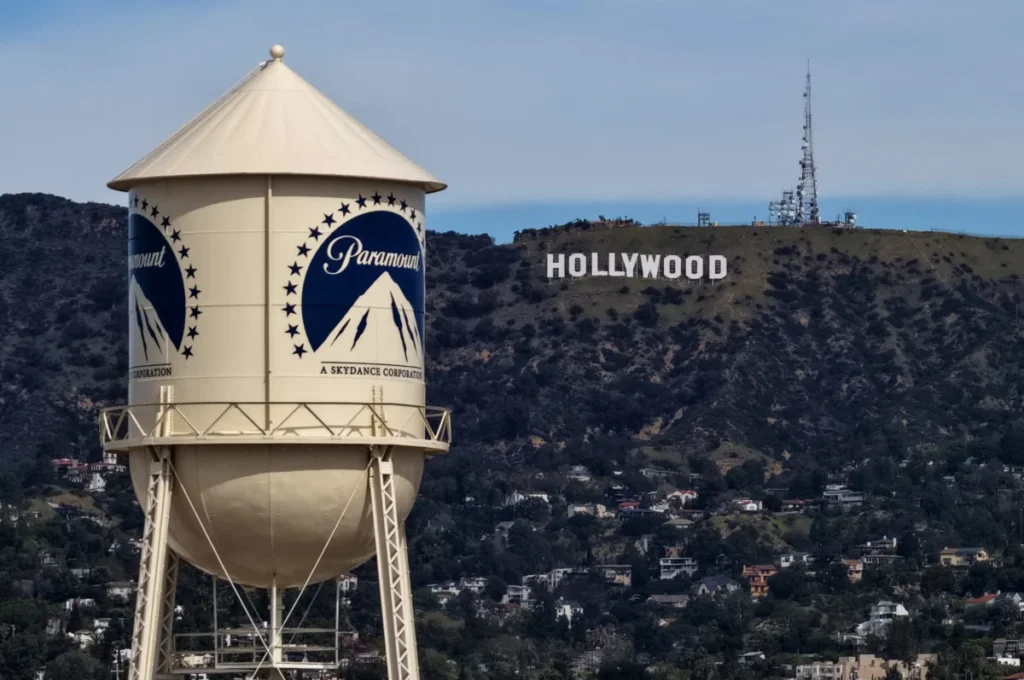

Jeffrey Kessler, a towering figure in the realm of antitrust litigation, has been tapped to spearhead Paramount Global’s defense against legal challenges arising from its proposed $110 billion megamerger with Warner Bros. Discovery. Kessler’s appointment, following a recent landmark victory for states challenging Live Nation’s market practices, signals a robust and aggressive legal strategy by Paramount in anticipation of a complex regulatory and consumer gauntlet. While the studio reportedly does not anticipate direct legal action from the Justice Department, state prosecutors, or international regulators, Kessler’s presence underscores the high stakes involved in consolidating two of Hollywood’s most enduring and expansive media empires.
The Proposed Megamerger and Its Strategic Imperatives
The potential combination of Paramount Global and Warner Bros. Discovery represents a monumental shift in an already consolidating media landscape. Both companies face significant headwinds in the evolving entertainment industry, primarily driven by the decline of traditional linear television and the fierce competition in the direct-to-consumer streaming market.
Paramount Global, under the ownership of Shari Redstone’s National Amusements, has been actively exploring strategic options for months. The company, which includes Paramount Pictures, CBS, MTV, Comedy Central, Nickelodeon, and the Paramount+ streaming service, has been grappling with debt, falling advertising revenues, and the substantial costs associated with building out its streaming platform. Despite its rich content library and global reach, Paramount+ has struggled to achieve the scale and profitability of market leaders like Netflix and Disney+. The $110 billion figure likely refers to the estimated market capitalization or enterprise value of the combined entity, highlighting the sheer scale of the proposed transaction.
Warner Bros. Discovery (WBD), itself a product of a recent megamerger between AT&T’s WarnerMedia and Discovery Inc. in April 2022, is led by CEO David Zaslav. WBD controls an equally vast portfolio including Warner Bros. film and television studios, HBO, CNN, TBS, TNT, HGTV, Food Network, and the Max streaming service. The company has focused heavily on debt reduction and synergistic cost-cutting since its formation, navigating its own post-merger integration challenges. A further consolidation with Paramount would arguably create a diversified global entertainment giant with an unparalleled library of content spanning film, television, news, and sports, alongside a combined streaming subscriber base that could more effectively compete with industry titans. The strategic rationale for both parties centers on achieving greater scale, reducing operational redundancies, and leveraging combined intellectual property to drive subscriber growth and advertising revenue in a challenging economic environment.
Jeffrey Kessler: A Titan of Antitrust Law
The decision to bring Jeffrey Kessler on board is a clear statement of intent from Paramount. Kessler, co-executive chair of Winston & Strawn, is not merely an antitrust lawyer; he is a celebrated strategist known for his tenacious advocacy and a remarkable track record of success, often in complex, high-profile cases. His reputation precedes him, particularly for his willingness to take on "plaintiff-side" work, advocating for competition and consumer interests – a background that makes his defense of a large corporate merger particularly intriguing and powerful.
His most recent high-profile triumph came last year when he represented a coalition of over 30 states in an antitrust challenge against Live Nation. The case culminated in a jury verdict finding that Live Nation, the parent company of Ticketmaster, operated as a monopoly, violating federal and state antitrust laws. This victory was a significant blow to the live entertainment giant and showcased Kessler’s prowess in dismantling entrenched market power.
Prior to that, in 2019, Kessler achieved a seismic victory against the National Collegiate Athletic Association (NCAA). Representing student-athletes, he won a first-of-its-kind antitrust lawsuit that fundamentally reshaped college sports by opening the door for student-athletes to profit from their name, image, and likeness (NIL). This ruling marked a paradigm shift, ending decades of strict amateurism rules and ushering in a new era of athlete compensation.
In 2023, Kessler also secured the dismissal of an antitrust lawsuit brought by Broadway producer Garth Drabinsky against Actors’ Equity Association, following Drabinsky’s placement on the union’s “Do Not Work” list. These varied successes demonstrate Kessler’s versatility and deep understanding across different sectors of antitrust law, from sports and entertainment to labor disputes. His consistent ability to navigate complex legal terrain and secure favorable outcomes makes him an invaluable asset for Paramount in what is expected to be a contentious legal battle.
Assembling a Formidable Legal Phalanx
Kessler is not alone in this high-stakes defense. Paramount has assembled a formidable legal team, reflecting the multifaceted nature of potential antitrust scrutiny. The team includes Makan Delrahim, who served as former President Donald Trump’s Assistant Attorney General for Antitrust at the Department of Justice. Delrahim’s intimate knowledge of federal antitrust enforcement mechanisms and priorities during his tenure will be critical.
Complementing Delrahim is David Gelfand, who held the position of Deputy Assistant Attorney General for Litigation in the antitrust division under former President Barack Obama. The presence of two former high-ranking antitrust officials from different administrations provides Paramount with a deep institutional understanding of both Republican and Democratic approaches to merger review and enforcement. Their combined experience offers unparalleled insight into how the DOJ and other regulatory bodies might evaluate the proposed transaction.
Further bolstering the defense are seasoned lawyers from two of the most prestigious law firms in the country: Latham & Watkins and Cravath, Swaine & Moore. These firms are renowned for their expertise in corporate transactions, mergers and acquisitions, and complex litigation, and have already been involved in seeking initial regulatory approvals for the deal. The inclusion of these legal powerhouses, alongside Kessler and his team from Winston & Strawn (Jeanifer Parsigian, Conor Reidy, Kevin Goldstein, and Matt Huppert, all noted for their deep experience in antitrust litigation), paints a picture of a robust, multi-pronged legal strategy designed to withstand intense scrutiny from all angles.
The Consumer Challenge: An Early Salvo
The initial legal challenge against the proposed merger has emerged not from government regulators, but from a group of Paramount subscribers. Last month, these consumers filed a lawsuit alleging that Paramount’s acquisition of Warner Bros. Discovery would significantly diminish competition across several critical sectors: streaming services, news programming, and theatrical distribution. This, they argue, constitutes a violation of existing antitrust laws.
Specifically, the lawsuit posits that a combined entity would reduce consumer choice, potentially lead to higher prices for streaming subscriptions, and limit the diversity of content available. In the news sector, the merger of CBS News (Paramount) and CNN (WBD) could raise concerns about journalistic pluralism and market concentration. In theatrical distribution, the combination of two major Hollywood studios could reduce competition for film exhibition slots, potentially impacting independent filmmakers and moviegoers.
On Friday, a federal judge formally accepted Kessler’s application to represent Paramount in this consumer-led lawsuit, marking the official commencement of the legal battle. Just days prior, the consumer lawyers intensified their efforts by filing a motion for a preliminary injunction, seeking to halt the merger before it can proceed. This move aims to prevent any irreversible steps towards integration while the legal challenge unfolds, putting immediate pressure on Paramount to counter these claims vigorously.
Kessler’s Initial Response: "Baseless" and "Political Scaremongering"
In his first public statement regarding the consumer lawsuit, Jeffrey Kessler did not mince words. He characterized the complaint as "baseless" and accused it of resorting to "political scaremongering that is both inaccurate and irrelevant to the antitrust analysis." Kessler emphasized that the complaint, in his expert view, contained "no credible antitrust case to be brought against the Paramount/Warner Bros. merger."
He further asserted, "In my many years of practice championing competition and the interests of consumers, athletes, and workers, I have rarely seen such a weak case seeking to block a transaction." This strong denouncement from a lawyer with a track record of defending consumer interests is a calculated rhetorical move. It seeks to discredit the plaintiffs’ arguments from the outset, framing their challenge as politically motivated rather than grounded in sound antitrust principles. Kessler’s strategy likely involves highlighting the intensely competitive nature of the modern media landscape, arguing that increased scale is necessary for survival and that the merger would ultimately benefit consumers through enhanced content offerings and efficiencies, rather than harming competition.
Broader Regulatory Landscape and Potential Hurdles
While Paramount reportedly does not anticipate direct legal challenges from the Justice Department, the current regulatory climate suggests that any megamerger in the media sector would face intense scrutiny. The Biden administration, particularly under figures like Federal Trade Commission Chair Lina Khan and Assistant Attorney General for Antitrust Jonathan Kanter, has adopted a more aggressive stance on antitrust enforcement, especially concerning consolidation in technology and media.
The DOJ and FTC have expressed concerns about "killer acquisitions" and horizontal mergers that could reduce competition, stifle innovation, and harm consumers. Past media mergers, such as AT&T’s acquisition of Time Warner, faced significant challenges, although they were ultimately approved. The proposed Disney-Fox deal, while also large, involved the divestiture of certain assets to appease regulators. Given this backdrop, even without an immediate governmental challenge, the consumer lawsuit could serve as a bellwether, potentially influencing regulators to take a closer look.
The combined market share of Paramount+ and Max in the streaming space, along with the implications for news and theatrical distribution, will undoubtedly be analyzed by antitrust authorities, regardless of Paramount’s current expectations. Foreign regulators, particularly in major markets where both companies have significant operations (e.g., the European Union, UK, Canada), will also conduct their own reviews, adding layers of complexity to the approval process.
Implications for Hollywood and the Media Ecosystem
The successful merger of Paramount Global and Warner Bros. Discovery would have profound implications for Hollywood and the broader media ecosystem. For content creators and talent, it could mean fewer major buyers and distributors, potentially impacting creative freedom and negotiation leverage. While consolidation often promises efficiencies and increased investment in premium content, it also raises concerns about job losses due to redundancies in various departments, from production to marketing and distribution.
For consumers, the impact is a double-edged sword. Proponents of the merger would argue that a larger, more financially stable entity can invest more heavily in high-quality original programming, creating a more compelling offering for subscribers. A combined streaming service could potentially offer a wider array of content at a competitive price. However, critics, echoing the sentiments of the consumer lawsuit, fear that reduced competition could lead to higher subscription costs, fewer distinct content libraries (as services merge), and a homogenized viewing experience. The competitive dynamic in the streaming wars is already fierce, and this merger would undoubtedly reshape the battlefield.
From an industry perspective, this deal reflects the ongoing pressure on traditional media companies to achieve scale to compete with tech giants and global streaming services. It underscores a strategic imperative to control intellectual property, monetize content across multiple platforms, and secure advertising dollars in an increasingly fragmented digital landscape.
A Chronology of Events Leading to the Legal Showdown
The journey towards this legal battle has unfolded over several months:
- Late 2023: Reports surface indicating Paramount Global is exploring strategic alternatives, including a potential sale or merger, amidst financial pressures.
- Early 2024: Various suitors and proposals emerge, including discussions with Skydance Media, Apollo Global Management, and the potential for a Warner Bros. Discovery merger.
- Last Month (exact date not specified in original, inferring February/March 2024): Paramount subscribers file an antitrust lawsuit challenging the proposed merger, claiming reduced competition in streaming, news, and theatrical distribution.
- Recently (exact date not specified, inferring late March/early April 2024): Consumer lawyers file a motion for a preliminary injunction to block the deal.
- Friday (specific date not provided, inferring a recent Friday): A federal judge formally accepts Jeffrey Kessler’s application to represent Paramount Global in the consumer lawsuit.
This timeline highlights the rapid progression from merger talks to direct legal confrontation, underscoring the urgency and complexity of the situation.
In conclusion, the proposed $110 billion merger between Paramount Global and Warner Bros. Discovery is far from a done deal. With Jeffrey Kessler leading a powerhouse legal team, Paramount is gearing up for a significant legal battle, starting with the consumer antitrust lawsuit. This case is not just about two media giants combining; it is a critical test of modern antitrust enforcement in an era of unprecedented industry consolidation, with profound implications for the future of entertainment, news, and how content reaches audiences worldwide. The outcome will be closely watched by investors, regulators, and consumers alike, as it will undoubtedly help shape the contours of Hollywood for years to come.