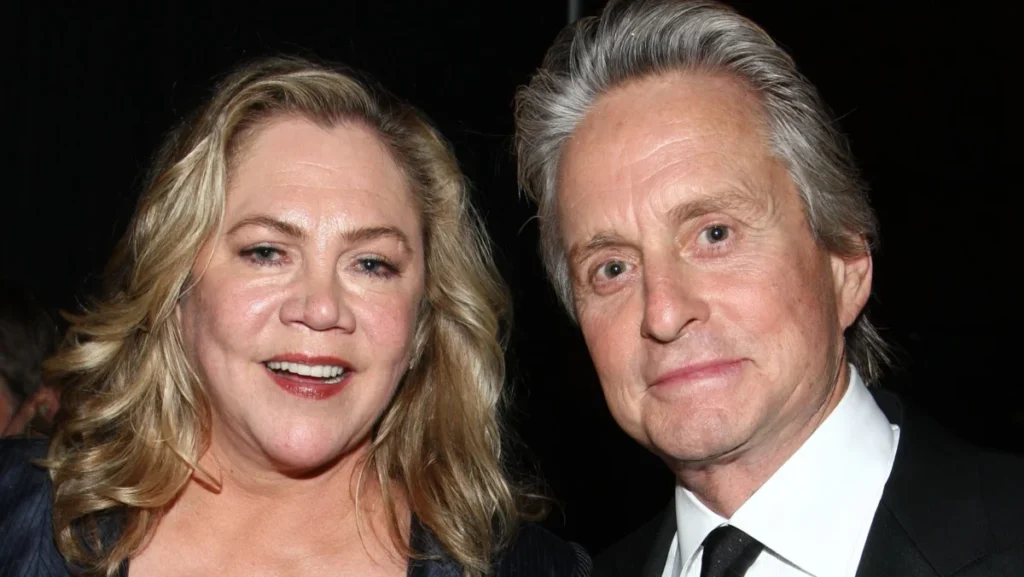

Decades of Hollywood speculation finally reached an official conclusion this week when Academy Award-winning actor Michael Douglas disclosed in his upcoming memoir, One Helluva Ride, that he and legendary co-star Kathleen Turner maintained a clandestine romantic relationship during the 1984 production of the blockbuster adventure-comedy Romancing the Stone. The revelation shatters a narrative that both actors had meticulously maintained across four decades, four major film collaborations, and numerous joint press junkets.
While the electrifying on-screen chemistry between Douglas and Turner was immediately apparent to film critics and audiences alike upon the release of Romancing the Stone, the performers consistently denied any off-screen romantic involvement. According to Douglas’s newly released literary excerpts, those widespread public denials were deliberate deceptions executed to protect his marriage, his family, and the professional integrity of their burgeoning cinematic partnership. Turner, responding to the publication of the excerpt days later, offered a characteristically breezy and affectionate reaction, signaling that there remains no lingering animosity between the enduring cinematic icons.
The Unraveling of a Four-Decade Deception
In exclusive excerpts published by major entertainment media outlets, Douglas details the intense behind-the-scenes dynamics that ultimately birthed one of Hollywood’s most famously concealed romances. The actor, whose prolific career spans over half a century, explains that at the time principal photography commenced on Romancing the Stone, he and his then-wife, Diandra Douglas, were separated. Douglas notes in his memoir that both he and Diandra were navigating extramarital affairs during this period of domestic fracture, creating an environment ripe for unexpected personal developments.
Director Robert Zemeckis’s film, which also starred a brilliant Danny DeVito, placed Douglas and Turner in physically demanding and emotionally charged environments, shooting on location in the jungles of Mexico. The combination of intense working conditions, high artistic pressure, mutual creative respect, and undeniable physical attraction proved overwhelming. Douglas writes that he was "knocked sideways" by Turner, describing a romance that grew organically out of their daily collaboration rather than a fleeting, casual liaison.
For forty years, the official industry narrative—repeatedly reinforced by both actors during promotional cycles for subsequent cinematic outings including Jewel of the Nile, The War of the Roses, and later television press for The Kominsky Method—was that their intense chemistry was strictly professional. They openly acknowledged being mutual "terrible flirts" who felt the temptation inherent in Hollywood pairings, but steadfastly maintained that physical boundaries were never crossed. Douglas’s confession in One Helluva Ride reframes this history entirely, labeling the decades-long narrative as an elaborate, coordinated lie.
A Comprehensive Timeline of Collaboration and Concealment
The professional and personal chronology of Michael Douglas and Kathleen Turner represents one of the most successful collaborative partnerships in modern cinematic history. Understanding the depth of their relationship requires examining the timeline of their joint projects and the persistent rumors that dogged them throughout their careers.
The partnership officially began in 1983 during pre-production and filming for Romancing the Stone, which premiered in theaters in March 1984. The film was a critical and commercial triumph, transforming Turner into an overnight movie star and solidifying Douglas’s status as a leading man and premier producer. It was during this pivotal jungle shoot that Douglas and Turner, according to the memoir, fell deeply for one another and initiated their secret romance.
The secrecy of the affair was absolute. According to Douglas, even key members of the production team, including director Robert Zemeckis and co-star Danny DeVito, remained entirely unaware of the romance blossoming between their lead actors. The clandestine nature of the relationship was maintained through extreme vigilance on set and during public appearances.
The turning point of the romance occurred during a pivotal set visit by Diandra Douglas. According to the memoir, Diandra grew suspicious of the dynamic between her estranged husband and his leading lady. During her visit, she spoke directly with Turner, firmly establishing her view of the status of her marriage to Douglas. Diandra made it explicitly clear that, regardless of any informal separation understandings, she and Douglas remained legally married.
This confrontation effectively halted the momentum of the romance. Turner, unwilling to act as a home-wrecker or interfere in an ambiguous marital status, stepped back. Following the confrontation and the conclusion of the film’s production, Douglas and Turner ended their romantic involvement, and Douglas attempted to reconcile his marriage to Diandra.
Despite the swift end of their real-life romance, their professional partnership continued to flourish without missing a beat. In 1985, the duo reunited for The Jewel of the Nile, the highly anticipated sequel to Romancing the Stone, directed by Lewis Teague. Once again, rumors of off-screen friction and romance followed the pair, yet both actors maintained the facade of strictly platonic colleagues.
Four years later, in 1989, Douglas, Turner, and Danny DeVito reunited once more for The War of the Roses, a pitch-black dark comedy directed by Danny DeVito that explored the harrowing dissolution of a marriage. The intense, emotionally brutal material of the film further fueled tabloid speculation regarding the real-life chemistry and history between the two leads, all of which was met with polite denials from the actors.
Decades later, in 2021, Turner made a guest appearance on Douglas’s acclaimed Netflix comedy series The Kominsky Method. The reunion delighted fans and critics alike, prompting another round of press interviews where journalists inevitably questioned the enduring electric dynamic between the two veterans. True to form, both actors continued to downplay any historical romance, preserving the secret that Douglas would only unveil years later in his autobiography.
Kathleen Turner’s Public Response
As the excerpt from One Helluva Ride circulated rapidly across global media platforms, industry watchers eagerly awaited a response from Kathleen Turner, an actress renowned for her fierce independence, distinctive husky voice, and unfiltered candor. Turner did not disappoint, addressing the revelation with characteristic wit, grace, and detachment.
In a concise statement provided to the press on Friday, Turner remarked, "Good heavens what a fuss about something 40 years ago! I love Michael and I look forward to enjoying the book."
By characterizing the media frenzy as an excessive fuss over events spanning four decades, Turner gracefully deflected the sensationalism of the news while affirming her enduring affection for Douglas. Her statement neatly closes the loop on a Hollywood secret that has captivated pop culture historians, ensuring that the revelation is met with fond nostalgia rather than controversy or bitterness.
Broader Impact and Memoir Implications in Hollywood
The disclosure in One Helluva Ride highlights a broader trend within contemporary celebrity autobiographies, where aging Hollywood icons use memoirs to correct historical records, unpack decades-old rumors, and offer unfiltered accounts of the golden eras of late-20th-century filmmaking. For decades, the private lives of major movie stars were heavily guarded by studio publicists, personal managers, and the stars themselves, who viewed discretion as a professional necessity to protect their box-office viability and personal families.
In Douglas’s case, the decision to reveal the affair now—forty years after the fact, and long after his divorce from Diandra Douglas (which was finalized in 2000)—reflects a shifting perspective on legacy and truth. Having been married to actress Catherine Zeta-Jones since 2000, Douglas is in a secure, long-established personal chapter, allowing him to revisit past relationships with the benefit of time, maturity, and emotional distance.
Furthermore, the revelation serves to validate the keen instincts of film audiences and critics. For forty years, moviegoers insisted that the palpable sexual tension between Joan Wilder and Jack Colton in Romancing the Stone could not possibly be mere acting. Douglas’s confession proves that the undeniable electricity captured on celluloid was genuine, fueled by real passion in the jungle, even if it was ultimately sacrificed to the practical realities of marriage, family, and the relentless scrutiny of public life. As One Helluva Ride prepares for its official publication, this singular disclosure has successfully revitalized interest in Douglas and Turner’s iconic cinematic legacy, cementing their place in the pantheon of classic Hollywood screen couples both on and off the silver screen.