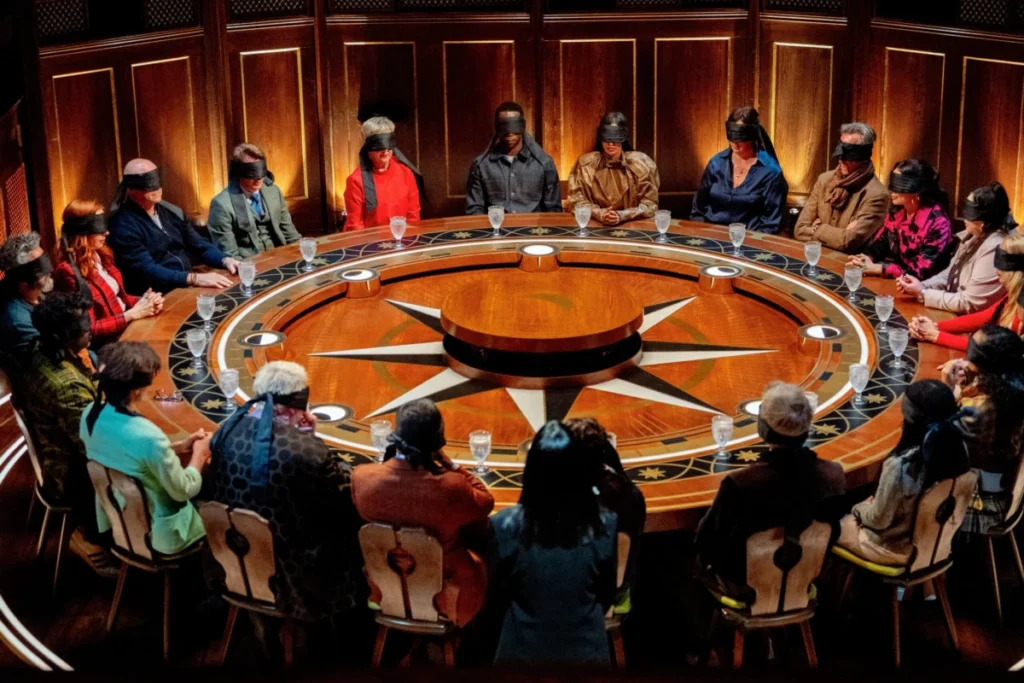

The BBC’s flagship reality competition, The Traitors, has officially returned to the Scottish Highlands for a high-profile celebrity edition that promises to elevate the intensity of the game to unprecedented levels. As 21 of Britain’s most recognizable entertainers—ranging from Oscar-nominated actors to chart-topping musicians and acclaimed comedians—descend upon the brooding architecture of the historic Ardross Castle, the social dynamics of the game have already begun to fracture. Host Claudia Winkleman remains at the helm of the psychological thriller, which challenges contestants to identify the "Traitors" hidden within their ranks before they are systematically "murdered" or banished from the group. With a prize pot of up to £100,000 destined for a charity of the winner’s choosing, the stakes have shifted from personal glory to a collective effort to secure funding for worthy causes, adding a layer of altruistic pressure to the already cutthroat environment.

The series, which premiered on Thursday, October 1, 2026, immediately deviated from the established format seen in previous civilian seasons. In a move designed to destabilize the participants from the outset, Winkleman opted to appoint only two Traitors initially, rather than the customary three. This tactical decision served to create a vacuum of power, forcing the chosen few to operate with heightened caution while the "Faithful" contestants navigated the uncertainty of a smaller, more concentrated pool of potential saboteurs.

Chronology of the Early Game and the Recruitment Strategy

The game’s opening hours were marked by swift deception. Maya Jama and Richard E. Grant were identified by Winkleman as the original Traitors. Both individuals, known for their charismatic public personas, embraced their clandestine roles with alacrity. The psychological weight of the deception was evident almost immediately; during the inaugural episode, Richard E. Grant displayed a high-risk approach to the game by candidly mentioning his role as a Traitor to fellow contestant Joe Lycett. Whether this was a calculated move to mask his true identity through a display of honesty or a momentary lapse in judgement remains a subject of intense debate among viewers and fellow competitors alike.

By the second episode, the dynamics shifted once more. The Traitors were presented with a critical decision: they were required to either recruit an additional member to their coven or opt for a "murder" to eliminate a perceived threat. After deliberation, the duo of Jama and Grant extended an invitation to comedian James Acaster. The induction was captured on screen, with Grant welcoming Acaster into the fold, to which the comedian replied, "This is like every emotion I’ve ever felt." The inclusion of Acaster effectively rounded out the trio, providing the Traitors with a diverse set of social skills to navigate the remaining 18 contestants. Following this recruitment, the Traitors exercised their lethal option, selecting broadcaster Amol Rajan for elimination. Rajan’s departure in the second episode served as a stark reminder of the volatility inherent in the game, leaving the remaining 20 celebrities to grapple with the reality that any one of their peers could be orchestrating their downfall.

Participant Profiles and Strategic Landscape

The cast list for the 2026 celebrity series represents a cross-section of British cultural influence. The presence of seasoned actors such as Michael Sheen, Julie Hesmondhalgh, and Bella Ramsey brings a level of dramatic gravitas to the table, with many observers noting that their professional experience in character work may provide them with an edge during the intense, often emotionally charged, Round Table banishments.

Conversely, the inclusion of comedians like Miranda Hart, Romesh Ranganathan, and Rob Beckett injects a layer of levity that frequently masks strategic maneuvering. The Traitors franchise has historically rewarded those who can master the art of the "social read"—the ability to perceive subtle changes in body language and verbal cues. Mathematician and broadcaster Professor Hannah Fry represents an analytical wildcard; her ability to process complex data and recognize patterns could prove to be the most significant threat to the Traitors if she is permitted to remain in the game for the long term.

Other notable contestants include singer-songwriter James Blunt, who has expressed a desire to leverage his unique, self-deprecating humor as a defensive mechanism, and former Little Mix star Leigh-Anne Pinnock, whose experience in high-pressure public environments may bolster her resilience. The international flair of the cast is furthered by the inclusion of American actor Myha’la and the influential presence of model Jerry Hall, both of whom add a different cultural dimension to the power struggles within the castle walls.

Statistical Trends and Betting Market Analysis

As is customary with high-profile reality television, the betting markets have responded to the initial episodes with significant activity. According to data provided by Oddschecker, the public and professional oddsmakers have already begun to establish favorites based on the contestants’ perceived ability to remain undetected or to correctly identify the opposition.

Michael Sheen currently leads the market at 5/1, a reflection of the public’s confidence in his ability to maintain composure under pressure. Bella Ramsey follows closely at 6/1, with Romesh Ranganathan at 7/1. The middle tier of the market is tightly contested, with James Acaster, Joanne McNally, and Rob Beckett all sitting at 8/1. The shifting nature of these odds serves as a barometer for the public’s perception of gameplay; however, the producers of The Traitors have consistently emphasized that the game is intentionally designed to defy predictability. The volatility of the "murder" mechanism means that even the most favored contestant can be removed from the competition without warning, regardless of their standing with the group or the audience.

Broader Implications of the Celebrity Format

The transition to a celebrity-led format for the 2026 series of The Traitors is not merely a change in casting; it represents a significant evolution in the genre of "social experiment" television. In civilian series, the tension arises from the interplay between strangers with no prior public reputation. In this celebrity edition, the contestants arrive with pre-existing brand images, established fan bases, and public reputations to protect.

This shift creates a more complex layer of psychological warfare. A Traitor who is a beloved national figure must weigh the benefits of winning the game against the potential damage to their public image if their betrayal is perceived as particularly callous. Conversely, a Faithful contestant who is a public figure may find it more difficult to act with the necessary ruthlessness required to banish a peer, as the scrutiny of their actions is amplified by their celebrity status.

Industry analysts have noted that the success of this series could dictate the future trajectory of the format. By aligning the competitive nature of the game with charitable incentives, the BBC has effectively mitigated the "villain" narrative that often plagues reality competition winners. The focus remains on the integrity of the game, rather than the personal malice of the participants.

Future Outlook and Competitive Trajectory

With 20 contestants remaining, the first formal Round Table banishment is scheduled for the coming week. This event will be the true test of the contestants’ deductive reasoning. Up until this point, the game has been defined by private meetings, covert recruitments, and the initial shock of the "murder" mechanic. The move to a public vote will force individuals to declare their allegiances and justify their suspicions, a process that historically leads to the fracturing of alliances and the emergence of genuine paranoia.

As the series progresses, the pressure on the Traitors will increase exponentially. Each successful banishment of a Faithful contestant increases the Traitors’ share of the final prize, but it also draws more attention to their specific voting patterns. The balance between maintaining a "low profile" and actively steering the conversation at the Round Table is the central challenge that will ultimately define the winner.

The BBC has confirmed that the production will continue to film in the Highlands, utilizing the isolation of the location to enhance the atmosphere of the series. For the audience, the draw remains the intellectual challenge of playing along from home—attempting to identify the lies before the contestants themselves. As the episodes unfold, the combination of high-stakes drama, charitable purpose, and the unique chemistry of this diverse cast of celebrities positions the 2026 series as a pivotal moment in the history of British reality television. Whether the Traitors can maintain their hold on the castle or whether the Faithfuls will successfully root out the deception remains the primary question driving this season’s narrative.