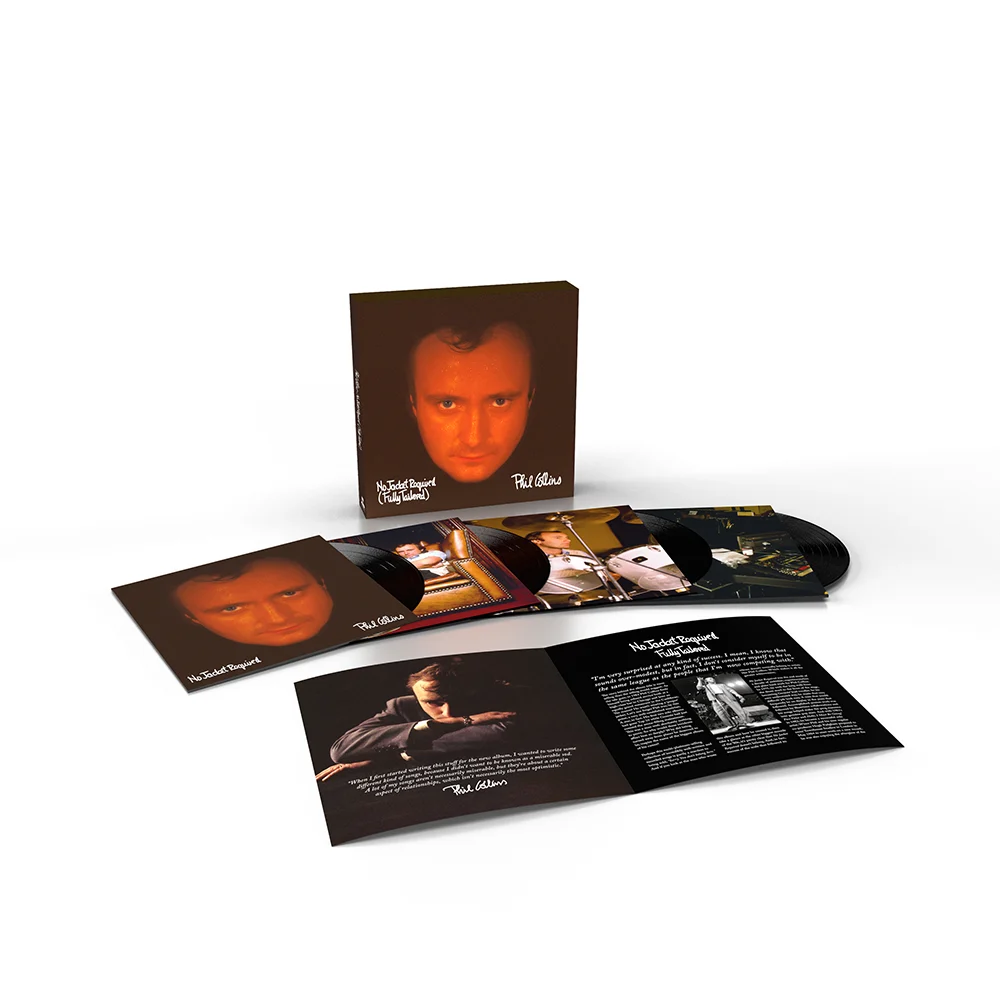

The legendary musician, songwriter, and former Genesis frontman Phil Collins has re-entered the public discourse with a candid, hour-long interview on Piers Morgan Uncensored. The appearance comes at a pivotal juncture in his storied career, timed to coincide with his upcoming induction into the Rock and Roll Hall of Fame and the release of a 45th-anniversary reissue of his seminal solo work, Face to Face. Spanning a wide range of topics from his debilitating medical history to long-simmering industry feuds, the interview offered a rare, unfiltered look at a man who has shaped the landscape of popular music for over five decades.
A Career Defined by Physical Adversity
The most poignant revelations from the interview centered on Collins’ ongoing struggle with his health, a narrative that has shadowed his later years. For a musician defined by his virtuosic drumming—a skill that fueled hits like "In the Air Tonight"—the admission that he can no longer perform on the kit is a profound finality. Collins detailed the confluence of issues, specifically citing drop foot in his right leg, a condition resulting from neurological and skeletal complications.
This physical decline has been a progressive burden. Collins noted that his final attempts to play during the 2022 Genesis "The Last Domino?" tour were unsuccessful, as he lacked the manual dexterity and physical stability required to hold drumsticks effectively. His condition, which necessitated five separate knee surgeries due to recurring infections and hardware failure, underscores the grueling toll that decades of intensive touring and performance have taken on his body. Beyond his motor skills, Collins also addressed the deterioration of his auditory health. He revealed a diagnosis of "sudden deafness" originating around the year 2000, a condition that has left him reliant on hearing aids and struggling to process speech in crowded environments.
The Resolution of a Legendary Standoff
One of the most widely discussed segments of the interview involved Collins’ reconciliation with Sir Paul McCartney. The tension between the two British icons originated at the Queen’s Golden Jubilee concert in 2002. According to Collins, he approached the former Beatle to sign a rare, first-edition biography. The encounter turned sour when McCartney allegedly dismissed Collins by referring to him as "our little Phil," a comment that Collins perceived as patronizing.
For years, this exchange—which Collins later recounted in his autobiography—fueled public speculation regarding an alleged rivalry. The rift deepened when a journalist relayed the quote to McCartney, who reportedly characterized Collins’ interpretation of the event as "sanctimonious." The silence between the two remained for over two decades, punctuated only by digital discourse and YouTube fan theories. However, the impasse recently concluded when McCartney initiated contact for a charitable cause. With Collins organizing donations for the King’s Trust charity auction, McCartney reached out to discuss the initiative, leading to a direct conversation where both parties formally apologized and cleared the air. This resolution serves as a capstone to a long-standing point of friction within the British music establishment.
Geopolitical Stances and Cultural Commentary
Collins’ foray into political commentary during the interview was equally direct. Discussing the current climate of American politics, he characterized Donald Trump’s rhetoric and leadership style as "unattractive." His critique focused on the divergence between traditional presidential decorum and Trump’s transactional approach to diplomacy. Collins argued that the former president’s failure to differentiate between business negotiations and national governance has created a "scary" environment. His skepticism extends to the stability of American democratic institutions, as he openly questioned whether the two-term limit for the presidency might be challenged.

In addition to his political views, Collins took a dismissive stance regarding the band Oasis. When asked about his thoughts on the group, he famously channeled Mick Jagger’s legendary indifference toward U2, noting that he simply does not think about the band at all. This lack of engagement contrasts sharply with his reverence for his own creative history, particularly his tenure with Genesis. During the interview, he singled out the instrumental "Apocalypse in 9/8" and its concluding movement as his favorite moments from the Genesis catalog, highlighting the progressive, complex arrangements that defined the band’s mid-70s output.
Contextualizing the Legacy
To understand the gravity of these revelations, one must consider the timeline of Phil Collins’ career. From his entry into Genesis in 1970 as a drummer to his emergence as a global solo superstar in the 1980s, Collins has sold over 150 million records worldwide. His influence on the drum kit—specifically the gated reverb sound popularized in "In the Air Tonight"—changed the sonic profile of the decade.
The Rock and Roll Hall of Fame induction represents a recognition of this longevity, yet it arrives at a time when Collins’ ability to engage with his own music is physically diminished. Industry analysts point out that the recent reissue of his early solo work serves as a reminder of his structural influence on modern pop. While his peers in the industry, such as McCartney, have remained active in live performance well into their 80s, Collins’ forced retirement from drumming highlights the unpredictable nature of physical longevity in the arts.
Broader Implications and Public Reaction
The interview also shed light on Collins’ media consumption, with the musician expressing support for the editorial stance of Piers Morgan. This alignment—covering topics from the British Royal Family to international affairs in Iran—suggests a shift in Collins’ public persona toward more conservative or traditionalist viewpoints.
The reaction to the interview has been multifaceted. While music historians are focused on the finality of his retirement from drumming, political commentators have noted the resonance of his critique of "business-first" diplomacy. By bridging the gap between his personal health struggles and his broader views on world leaders, Collins has repositioned himself not just as a heritage act, but as a cultural commentator at a moment of personal reflection.
Chronology of Key Events
- 1970: Phil Collins joins Genesis, beginning his ascent to international fame.
- 1981: Collins releases Face to Face, cementing his status as a premier solo artist.
- 2000: Collins begins experiencing the effects of "sudden deafness," marking the beginning of his health-related challenges.
- 2002: The "Golden Jubilee" incident occurs; the beginning of the long-term cold war between Collins and Paul McCartney.
- 2022: The final Genesis tour, The Last Domino?, serves as the final, difficult attempt for Collins to perform live.
- 2024: Significant health complications, including a period on life support, necessitate a re-evaluation of his future public involvement.
- 2026: Induction into the Rock and Roll Hall of Fame; formal reconciliation with Paul McCartney; release of the Face to Face anniversary edition.
The Path Forward
As Collins prepares for his upcoming honors, the focus remains on the duality of his legacy. He remains a figurehead of 20th-century pop culture, yet his current reality is defined by the limitations of a body that has survived multiple crises. The reconciliation with McCartney provides a rare moment of closure, suggesting that even in the high-stakes world of rock stardom, personal relationships can eventually transcend long-held grievances.
For the millions of fans who grew up listening to his work, the interview serves as an essential update. While the era of Collins the drummer has definitively concluded, the era of Collins the observer and elder statesman of rock appears to be in its infancy. As the industry looks back on the 45th anniversary of his solo debut, the discourse surrounding his life—both the music and the man—continues to evolve, proving that his impact on the cultural fabric of the last half-century remains as relevant as ever. Whether through the lens of his music or his evolving personal and political views, Phil Collins continues to command the attention of an audience that has followed his trajectory from the progressive rock experiments of the 70s to the global pop dominance of the 80s and beyond.