
Stockholm, Sweden – June 19, 2026 – Queen Silvia of Sweden has etched her name into the annals of royal history, celebrating an unprecedented 50 years as Queen Consort. This momentous occasion, marked on June 19, 2026, positions her as the longest-reigning consort in Swedish history and a pioneering figure in the evolution of modern monarchy. In a move that captivated the nation and offered a profound insight into her enduring popularity, Queen Silvia chose to commemorate this milestone not with opulent displays of state regalia, but with a deeply personal and culturally resonant tribute to her adopted homeland.
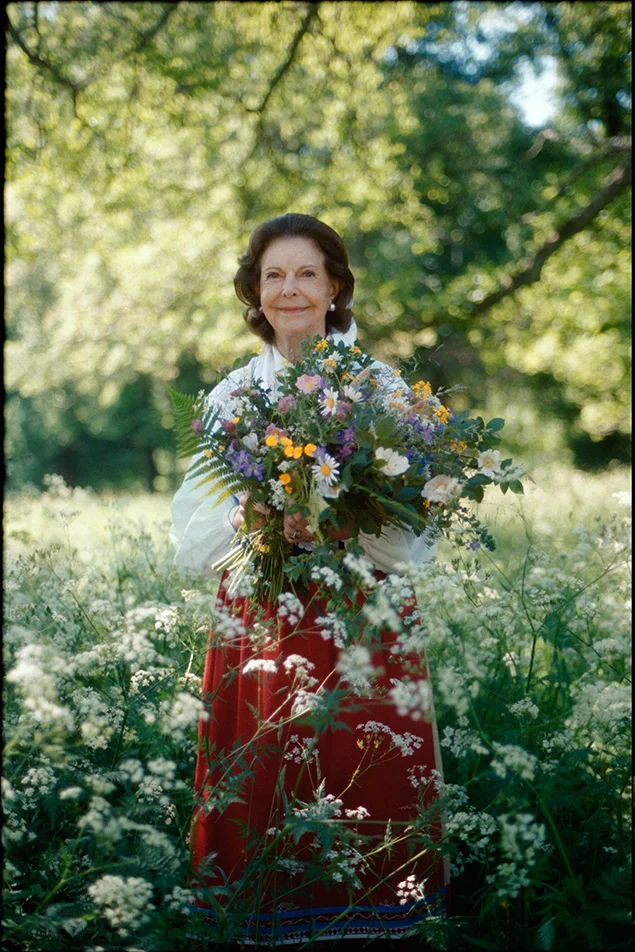
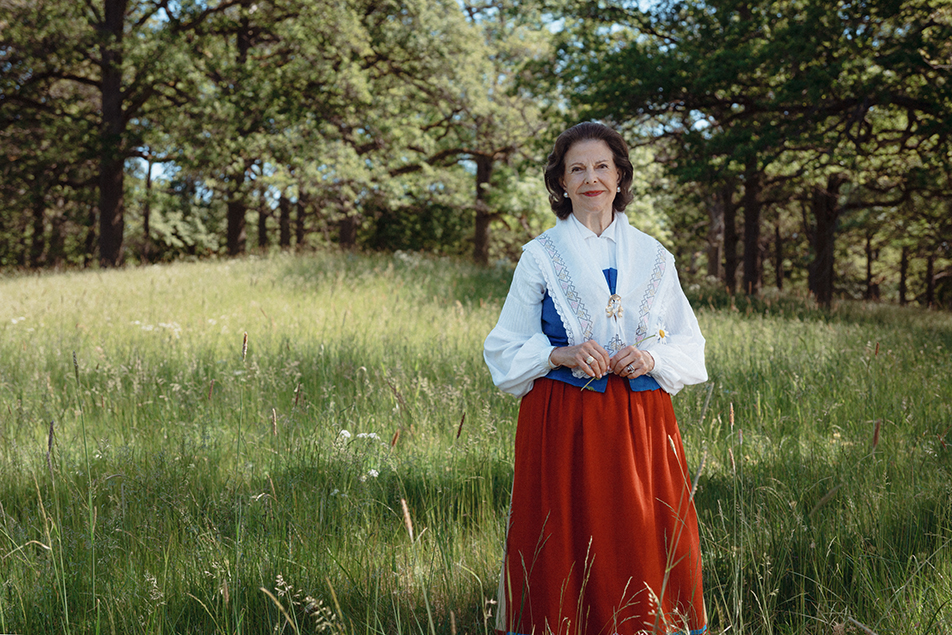
The Queen’s choice of attire and setting for her official anniversary portraits diverged significantly from the typical grandeur associated with such royal milestones. Eschewing the dazzling tiaras and formal court dress that have become synonymous with her reign, Queen Silvia opted for a traditional regional costume. This symbolic gesture underscored her commitment to Swedish heritage and her ability to connect with the populace on a more intimate level. The photographs, released on the eve of her anniversary, captured her in the heart of Sweden’s idyllic countryside, deliberately coinciding with the joyous celebration of Midsummer, a pivotal cultural event deeply ingrained in the national identity.
A Golden Anniversary Rooted in Tradition
The timing of Queen Silvia’s 50th anniversary is particularly poignant. Midsummer, celebrated annually around the summer solstice, represents the zenith of the Swedish summer, a period characterized by long daylight hours, vibrant floral displays, and communal gatherings. It is a time when Swedes traditionally embrace nature, engage in outdoor festivities, and celebrate the bounty of the season. By choosing this auspicious time and setting, Queen Silvia powerfully aligned her personal jubilee with the nation’s cherished traditions.
Her chosen attire for the portraits was the regional dress of Öland, an island province where the Swedish Royal Family often spends their private summer holidays. This deliberate selection resonated deeply with the Swedish people, highlighting the Queen’s personal connection to a beloved part of the country. The ensemble, far from the sparkle of diamonds, featured a simple white headscarf, a white dress, a red apron, and a blue waistcoat. This understated yet elegant presentation spoke volumes about her grounded nature and her commitment to representing the everyday life and values of Sweden.
In one particularly striking image, Queen Silvia is depicted holding a generous bouquet of wildflowers. The dominant blue and yellow hues of the blooms served as a potent visual reminder of the Swedish flag, further reinforcing her unwavering dedication to her adopted country. These portraits were not merely photographic records; they were a carefully crafted statement, a testament to a queen who has consistently placed Sweden and its people at the forefront of her royal duties.
A Journey from Abroad to the Swedish Throne
Queen Silvia’s path to becoming Queen of Sweden is a compelling narrative of love, circumstance, and adaptation. Born Silvia Renate Sommerlath in Heidelberg, Germany, in 1943, her early life was shaped by her German mother and Brazilian father. She spent a significant portion of her formative years in Brazil, acquiring fluency in multiple languages and developing a broad international perspective.
Her life took a pivotal turn in 1972 when, working as a translator at the Olympic Games in Munich, she met the then-Crown Prince Carl Gustaf of Sweden. Their encounter blossomed into a romance that would eventually lead to their marriage and her ascension to the Swedish throne.
The succession laws at the time presented a unique challenge. King Gustaf VI Adolf, Carl Gustaf’s grandfather, had decreed that his grandson, as heir to the throne, would lose his right to succession if he married a commoner. This archaic rule reflected a bygone era of royal protocol. However, the modernizing influence of the monarchy, and the strength of Carl Gustaf and Silvia’s bond, necessitated a change. Demonstrating the adaptability inherent in modern monarchies, King Carl XVI Gustaf, who ascended the throne in 1973, successfully navigated these legal and traditional hurdles. By 1976, the necessary reforms were enacted, paving the way for his marriage to Silvia Sommerlath to proceed without jeopardizing the royal line.
A Legacy of Modernization and Social Change
On June 19, 1976, Crown Prince Carl Gustaf married Silvia Sommerlath in Stockholm Cathedral. The event was met with immense public enthusiasm, with vast crowds lining the streets to witness the union of their young King and his new Queen. This marked the beginning of a reign characterized by a profound dedication to public service and a commitment to modernizing the Swedish monarchy.
Queen Silvia’s impact on the Swedish Royal Family extends beyond her personal popularity. She has been a key figure in fostering a more accessible and contemporary approach to royalty. A significant aspect of this evolution is evident in the line of succession. Queen Silvia and King Carl XVI Gustaf’s firstborn child, Crown Princess Victoria, was born into a system where her gender meant she had no automatic succession rights. However, Queen Silvia, alongside the King, championed and witnessed the implementation of a groundbreaking change: absolute primogeniture. This reform, enacted before Victoria turned three, ensured that the eldest child, regardless of gender, would inherit the throne.
This progressive shift has had a lasting impact, creating a precedent for female succession in European monarchies. Today, Sweden’s throne is occupied by a female heir, Crown Princess Victoria, who herself has a female heir, Princess Estelle. This unbroken line of female succession, a first in modern European history, is a powerful testament to the social progress championed during Queen Silvia’s tenure and her integral role in facilitating it.
A Template for Contemporary Royal Service
Queen Silvia’s enduring success and her ability to connect with the Swedish people can be attributed to a consistent and deeply felt commitment to her adopted nation. While her 50-year reign positions her as the longest-reigning consort on the European continent, her approach has been anything but ostentatious. In an era where royal anniversaries might traditionally be marked by elaborate displays of wealth and power, Queen Silvia has consistently demonstrated a profound understanding of her role as a servant of the people.
Her deliberate choice to embrace traditional Swedish attire and the natural beauty of the country for her anniversary portraits exemplifies her philosophy: "Country and crown first." This principle has guided her queenship, allowing her to navigate the evolving landscape of public expectations for royalty without alienating or alienating the populace. She has managed to "shake things up" and modernize the monarchy, as the article notes, "all without ruffling feathers."
This approach offers a compelling lesson for other royal families navigating the complexities of the 21st century. In an age of instant information and heightened public scrutiny, the ability to authentically connect with a nation’s heritage and its people is paramount. Queen Silvia’s half-century reign serves as a powerful case study in how to achieve enduring popularity and relevance by prioritizing national identity, cultural traditions, and genuine public service. Her anniversary is not just a personal celebration, but a recognition of a reign that has profoundly shaped the modern Swedish monarchy and provided a benchmark for royal service in a rapidly changing world.