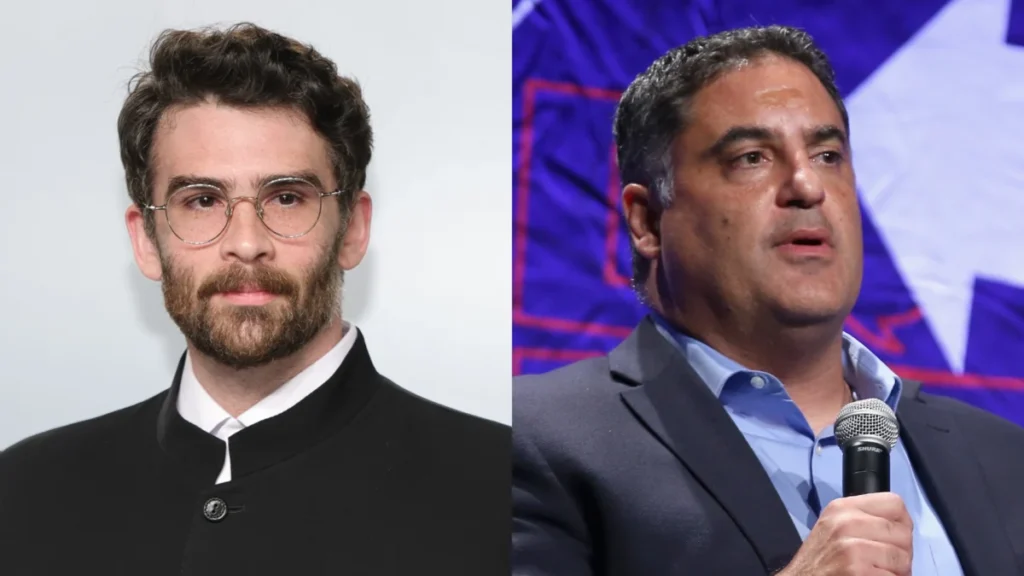

Left-wing political commentator Cenk Uygur, founder of The Young Turks media platform, and his nephew, prominent Twitch streamer and political commentator Hasan Piker, have been officially denied entry to the United Kingdom by the government’s Home Office. This decision has led to the cancellation of their scheduled appearances at SXSW London, a prominent extension of the annual South by Southwest festival in Austin, Texas, which focuses on technology, film, music, education, and culture. The Home Office confirmed the denial, stating that the Electronic Travel Authorization (ETA) for both individuals had been revoked on the grounds that their "presence in the U.K. may not be conducive to the public good."
Official Justification and Personal Reactions
In a statement provided to The Hollywood Reporter on Monday, the Home Office elaborated on its decision, asserting, "Decisions to refuse or cancel an ETA on these grounds are based solely on an assessment of the potential risk an individual may pose to U.K. Society." This clause, "not conducive to the public good," is a broad discretionary power frequently employed by the Home Office to deny entry or revoke visas for individuals deemed to pose a threat to national security, public order, or community cohesion.
Both Uygur and Piker swiftly took to social media to voice their objections and interpretations of the denial. Uygur, known for his populist political talk show The Young Turks, stated unequivocally on his platform that he believed he was banned for "criticising Israel." He posted, "I tried to get on a flight to London to attend SXSW London and give a speech at Oxford. I’ve been banned for criticising Israel. Are we free anymore? This is oppression of Western citizens by our own governments on behalf of a different country." His planned appearance at Oxford University, a separate engagement, also became impossible due to the travel ban.
Hasan Piker, who commands a significant online following with over three million followers on Twitch and more than 1.5 million on X (formerly Twitter), echoed his uncle’s sentiments. Responding to Uygur’s post, Piker added, "The U.K. has revoked my visa as well. All at the behest of Israel," further alleging that the West is "betraying ‘liberal values’ for a genocidal fascist foreign government." Both commentators have been vocal critics of Israel’s military actions in Gaza following the October 7, 2023, attack by Hamas on an Israeli music festival. Piker, in particular, has made highly controversial statements regarding the conflict, including claims that Hamas is "1,000 times better" than Israel and that he "would vote for Hamas over Israel every single time," made during an episode of Pod Save America.
Allegations of Antisemitism and Public Good Concerns
The decision to block Uygur’s entry is understood to have been influenced by concerns that his presence could risk "exacerbating antisemitism," according to a report by The Times. Uygur has faced accusations of promoting antisemitic tropes through his platform, notably the assertion that "Israel controls America." Such statements are often criticized for echoing historical antisemitic narratives that suggest Jewish control over global finance, media, or government, irrespective of whether the intent is antisemitic.
The Home Office’s "not conducive to the public good" clause is a powerful tool. It allows the government to refuse entry to individuals whose presence is deemed harmful to British society, even if they have not committed a crime in the UK. This can encompass a wide range of concerns, including hate speech, incitement to violence, or actions that could undermine community relations. In this context, the specific allegations of antisemitism against Uygur and Piker’s inflammatory rhetoric regarding Israel appear to have been central to the Home Office’s assessment of potential risk.
Chronology of Events and Escalating Tensions
The denial of entry for Uygur and Piker unfolds against a backdrop of heightened geopolitical tensions and intense debate surrounding the Israel-Hamas conflict.
- October 7, 2023: Hamas launches a large-scale attack on Israel, resulting in significant casualties and the taking of hostages. This event triggers a robust military response from Israel in the Gaza Strip.
- Post-October 7: Both Cenk Uygur and Hasan Piker become prominent voices in condemning Israel’s actions in Gaza. Their commentary, disseminated through The Young Turks and Piker’s extensive online platforms, often frames Israel’s response as disproportionate and critical of Western support for Israel.
- Ongoing Criticism and Controversy: Piker, in particular, generates significant controversy with statements like "Hamas is 1,000 times better than Israel" and his willingness to "vote for Hamas over Israel." These comments draw widespread condemnation, particularly from pro-Israel groups and those concerned about antisemitism.
- SXSW London Scheduling: Uygur and Piker are scheduled to appear at SXSW London. Uygur was set to participate in a session titled "Techno-Feudalism is Here. Who Are the Lords?" on Wednesday, while Piker’s panel on Thursday was named "How the American Left Learned to Speak the Internet."
- Community Security Trust Intervention: In the days leading up to the scheduled appearances, the Community Security Trust (CST), a UK-based Jewish organization dedicated to protecting British Jews from antisemitism, urges SXSW London to "act responsibly" and prevent the UK from becoming a "platform" for Piker’s views. This intervention likely brought increased scrutiny to Piker’s planned participation.
- ETA Revocation: The UK Home Office formally revokes the Electronic Travel Authorizations (ETAs) for both Cenk Uygur and Hasan Piker. The ETA is a new digital travel permit required for visa-exempt foreign nationals visiting the UK, similar to the ESTA in the US or eTA in Canada. Its cancellation effectively bars their entry.
- Social Media Announcements: Uygur and Piker publicly announce their denial of entry via social media, attributing the decision to their criticism of Israel and alleging external pressure from Israel.
- SXSW London Impact: Their planned sessions are consequently canceled, creating a void in the festival’s programming and sparking further discussion about freedom of speech and platforming controversial figures.
Reactions from Other Stakeholders
The Home Office’s decision has elicited strong reactions from various quarters, highlighting the contentious nature of the debate surrounding freedom of speech, criticism of Israel, and accusations of antisemitism.
Ash Sarkar, a journalist for Novara Media who was slated to chair Hasan Piker’s SXSW London session, vocally criticized the Home Office’s actions. On X, Sarkar characterized the decision as evidence of an "authoritarian turn motivated by Labour’s fear of being called antisemitic, and fear of being called out for their position on the genocidal war on Gaza." She further argued, "You don’t foster community cohesion by having the government ban people from speaking." Sarkar’s comments reflect a common sentiment among some left-wing circles in the UK, suggesting that the government’s actions are driven by political expediency and an attempt to stifle criticism of Israel.
The Community Security Trust (CST), which had proactively campaigned against Piker’s presence, views the Home Office’s decision as a vindication of their concerns. While they have not issued a formal statement since the ban, their earlier calls for SXSW to "act responsibly" underscore the Jewish community’s apprehension regarding figures whose rhetoric they believe contributes to antisemitism or creates a hostile environment. The CST’s role in monitoring and combating antisemitism in the UK often involves flagging individuals or events that they perceive as potentially harmful.
SXSW London, the organizing body for the event, has remained largely silent following the Home Office’s decision. The Hollywood Reporter confirmed that it reached out to SXSW London for comment, but no official statement had been released at the time of publication. The festival is likely navigating a delicate situation, balancing its role as a platform for diverse voices with the legal and reputational implications of government intervention. The cancellation of high-profile speakers can disrupt programming and draw unwanted controversy, yet directly challenging a Home Office decision is a complex and potentially futile endeavor for a private organization.
Broader Implications and Precedents
This incident highlights the ongoing tension between freedom of expression and the powers of a sovereign state to control its borders and protect what it deems the "public good." The UK has a long-standing legal framework that grants the Home Secretary significant discretion in immigration matters, particularly concerning individuals whose presence may be considered detrimental.
The "not conducive to the public good" clause has been invoked in various contexts over the years, often against individuals perceived as extremist, hate preachers, or those who might incite violence or social unrest. The application of this clause in cases involving political commentators, particularly those highly critical of foreign governments like Israel, raises important questions about the boundaries of acceptable discourse and the potential for perceived political censorship. Critics argue that such bans can have a chilling effect on free speech, while proponents maintain that they are necessary to prevent the spread of harmful ideologies and protect vulnerable communities.
This is not an isolated incident. The UK Home Office has previously used its powers to deny entry to other high-profile figures. A notable precedent mentioned in the original report is the case of Kanye West (now known as Ye), whose ETA was revoked shortly before he was set to headline the Wireless music festival in April. That decision was explicitly linked to the rapper’s "historical antisemitism," which included a series of public remarks widely condemned as antisemitic. The parallel with Kanye West’s case suggests a consistent application of the Home Office’s policy when faced with individuals accused of antisemitic rhetoric, regardless of their political alignment or media platform.
The incident also underscores the global reach of online political commentary and the challenges it poses for traditional borders and national policies. Figures like Hasan Piker, who have built massive audiences through digital platforms, transcend geographical limitations in their influence. However, when these online personalities seek to engage in physical events or travel internationally, they become subject to national immigration laws and the interpretations of "public good" by individual governments. This case serves as a stark reminder that even in an interconnected digital age, the principles of national sovereignty and border control remain potent, particularly when confronting sensitive geopolitical and social issues.
The denial of entry for Cenk Uygur and Hasan Piker is likely to continue to fuel debate in the UK and internationally about the limits of free speech, the definition of antisemitism, and the role of governments in regulating the entry of individuals whose views are deemed controversial or potentially harmful to societal cohesion. As the Israel-Hamas conflict continues to generate intense global discussion, the implications of such decisions on international relations and domestic political discourse will remain a significant point of contention.