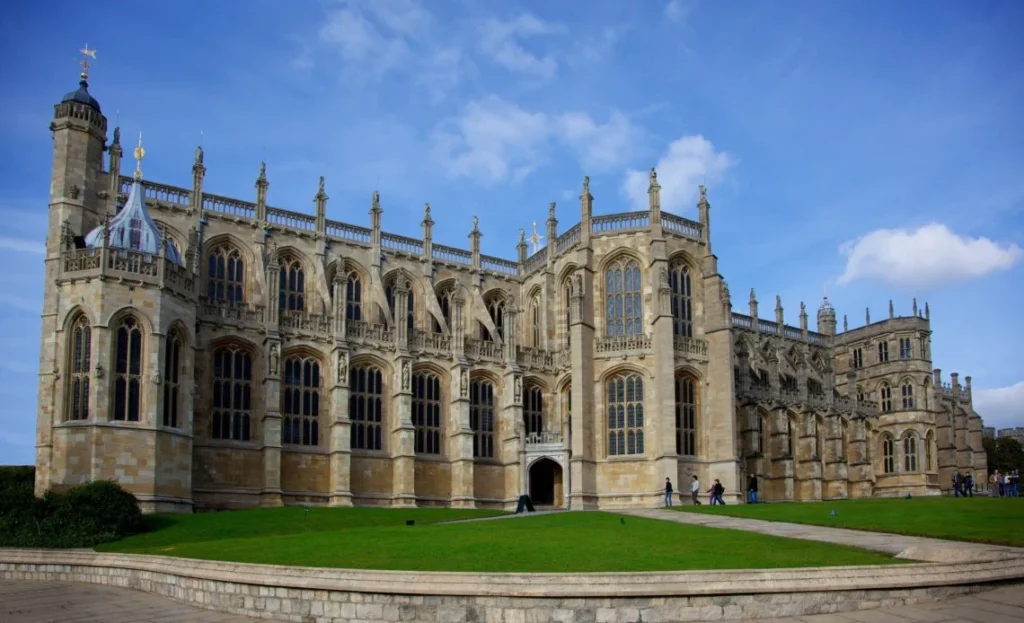

The Most Noble Order of the Garter, an institution steeped in centuries of British royal history and widely regarded as one of the world’s most prestigious chivalric orders, is poised for its annual gathering at the venerable St. George’s Chapel within Windsor Castle. This significant event will see the Sovereign, His Majesty King Charles III, lead the Knights and Ladies of the Order in a procession that underscores the enduring traditions of the British monarchy. The ceremony serves as a cornerstone of the royal calendar, celebrating centuries of service, loyalty, and distinguished achievement.
Genesis of a Noble Order: From Arthurian Legend to Royal Decree
The origins of the Order of the Garter are intrinsically linked to the romantic ideals of chivalry, famously inspired by the legends of King Arthur and his Knights of the Round Table. It was King Edward III, a monarch known for his military prowess and his appreciation for the arts and chivalric lore, who founded the Order in 1348. The establishment of the Order was a deliberate act to foster loyalty and camaraderie among his most esteemed subjects, creating a select fraternity bound by oaths of honour and service.
A captivating legend, though perhaps apocryphal, surrounds the very inception of the Order. The tale recounts a royal ball where a lady’s garter inadvertently slipped to the floor. In a moment that could have led to widespread embarrassment and mockery, Edward III is said to have gallantly retrieved the fallen garment, placing it back on the lady’s leg. As his courtiers tittered, the King, with characteristic regal composure, uttered the now-famous motto of the Order: "Honi soit qui mal y pense" – "Shame on him who thinks this evil." This defiant declaration transformed a potentially awkward incident into a symbol of honour and a testament to the King’s magnanimity, laying the groundwork for the Order’s enduring values.
Unraveling the Mystery of the First Garter
The identity of the lady whose garter sparked the creation of the Order has been a subject of much historical debate and romantic speculation. While definitive proof remains elusive, three prominent figures are consistently cited as the most plausible candidates.
Firstly, Joan of Kent, affectionately known as the "Fair Maid of Kent," emerges as a strong contender. As the daughter-in-law of Edward III, having married his eldest son, she held a significant position within the royal court. Her subsequent marriage to the Black Prince solidified her importance, and she is recognized as the first English woman to officially hold the title of Princess of Wales, a testament to her influence and standing.
Another compelling possibility is Katharine Grandison, Countess of Salisbury. Historical accounts and courtly whispers suggest that Edward III harboured a profound admiration, bordering on infatuation, for the Countess. Her name has long been associated with the legend, and her prominence at court makes her a key figure in the Order’s origin story.
A third, and perhaps more romantically charged, theory posits that the lady in question was none other than Edward III’s own wife, Philippa of Hainault, the Queen of England. If this were the case, the incident would highlight the King’s devotion to his consort and his public commitment to protecting her honour. Regardless of the precise identity, the legend itself has become an integral part of the Order’s rich tapestry, symbolizing virtue, discretion, and the elevation of honour above common gossip.
Evolution of the Order: From Aristocracy to Public Service
Over the centuries, the composition and criteria for membership within the Order of the Garter have undergone significant evolution. While initially a select group of noble knights, the Order’s modern mandate emphasizes recognition of individuals who have rendered outstanding public service to the nation. The number of members, excluding the Sovereign, is strictly limited to twenty-four Knights or Ladies Companion. This deliberate cap ensures that each appointment remains a highly distinguished honour, reserved for those who have demonstrably contributed to the betterment of society.
The Sovereign of the United Kingdom automatically holds the position of Sovereign of the Order of the Garter, a role that King Charles III assumed on September 8, 2022, following the passing of his mother, Queen Elizabeth II. This succession marked a new chapter for the ancient Order, with King Charles III now presiding over its traditions and ceremonies.
Royal Lineage and the Order of the Garter
The Royal Family plays a central role in the Order of the Garter, with several members holding esteemed positions. The Prince of Wales, currently Prince William, is always a member of the Order, serving ex-officio. His own appointment to the Order of the Garter in April 2008 was particularly noteworthy. Queen Elizabeth II, his grandmother, bestowed this honour upon him, making him the 1,000th member to be admitted to the Order, a symbolic milestone that underscored his future role in the monarchy.
Queen Camilla was appointed a Royal Lady of the Most Noble Order of the Garter on January 1, 2022, by Queen Elizabeth II. This honour was bestowed shortly before the late Queen’s Platinum Jubilee address, in which she expressed her wish for Camilla to be known as Queen Consort in the reign of Charles III. This pre-dated her official coronation as Queen Camilla in May 2023.
Other prominent Royal Family members who are Knights or Ladies of the Garter include the Duke of Kent, the Duke of Gloucester, Princess Alexandra, The Princess Royal (Princess Anne), and the Duke of Edinburgh (Prince Edward). The Duchess of Gloucester’s appointment was among the first significant honours bestowed during King Charles III’s reign, further highlighting the continued involvement of the Royal Family in this esteemed order.
The Rarity of Dismissal: A Mark of Serious Transgression
While membership in the Order of the Garter is a lifelong honour, it is not entirely immutable. The Order’s statutes do allow for the removal of a member, a rare occurrence that signifies a severe breach of conduct or a profound disassociation from the values the Order represents. In October 2023, it was confirmed that Prince Andrew, Duke of York, had been stripped of his membership in the Order of the Garter. This action followed King Charles III’s decision to remove all his royal titles and honours amidst allegations of sexual misconduct. The removal of such a prestigious honour serves as a stark reminder of the Order’s commitment to maintaining its integrity and upholding the highest standards of conduct among its members.
Global Recognition: Stranger Knights and Ladies
The Order of the Garter also extends its honour to foreign heads of state and royal figures, recognizing their significant contributions and fostering international ties. These individuals are designated as "Stranger Knights and Ladies." Notable current recipients include Emperor Naruhito of Japan, Queen Margrethe II of Denmark, King Carl XVI Gustaf of Sweden, King Felipe VI of Spain, King Willem-Alexander of the Netherlands, Princess Beatrix of the Netherlands, and King Harald V of Norway. These appointments reflect the Order’s global reach and its role in acknowledging distinguished figures on the international stage.
The Administrative Pillars of the Order
The functioning of the Order of the Garter is overseen by a dedicated group of five officers, each playing a crucial role in its administration and ceremonial proceedings. The Prelate, traditionally the Bishop of Winchester, holds a significant spiritual role. The Chancellor, Registrar, and Gentleman Usher of the Black Rod are also key figures, with the Registrar role having been held by the Dean of Windsor since the reign of King Charles I. The Garter King of Arms serves as the principal herald and is responsible for matters of ceremony and precedence.
Symbolism and Post-Nominals: A Mark of Distinction
Members of the Order of the Garter are formally addressed as Knights Companion or Ladies Companion. Upon their appointment, they are entitled to append the post-nominal letters "KG" (Knight Companion) or "LG" (Lady Companion) to their names, signifying their esteemed status. The Order of the Garter holds a unique precedence within the hierarchy of British honours, ranking above all orders and decorations except for the Victoria Cross and the George Cross, further emphasizing its paramount significance.
Historical Precedents: Degradation and Declined Honours
Throughout its long history, the Order of the Garter has witnessed instances where members have been "degraded," a term used to describe the formal removal of their insignia and heraldic achievements. This has occurred in cases of treason or severe disgrace. For example, during World War II, Emperor Hirohito of Japan and King Victor Emmanuel III of Italy were degraded as allies of the Axis powers. Notably, the Emperor’s degradation was later rescinded during a state visit in the 1970s.
In a more unusual historical event, King Henry VIII had several of his Knights beheaded, a stark reminder of the often volatile nature of royal favour in earlier eras. More recently, in 1945, Sir Winston Churchill, a towering figure in British history, declined an offer of a Knight Companioncy of the Garter. Following his government’s defeat in the general election, he famously remarked that he could not accept the "Order of the Garter" when the people had given him the "Order of the Boot," a witty and characteristic response that highlighted his commitment to democratic principles.
The Visual Legacy: Stalls at St. George’s Chapel
A distinctive feature of the Order of the Garter is the provision of individual stalls within St. George’s Chapel for each member. These stalls are adorned with the Knight’s or Lady’s personal banner, helmet, and a meticulously crafted stall plate bearing their coat of arms. These displays serve as a visual testament to their membership and their lineage. While the banners and helmets are removed after the member’s death, the stall plate remains, preserving their heraldic legacy within the hallowed walls of the chapel. This practice ensures that the memory and achievements of Knights and Ladies are permanently etched into the fabric of this historic royal church.
Garter Day: A Celebration of Tradition and Royal Splendour
Each year, typically in June, the Order convenes for Garter Day, a highlight of the royal calendar that culminates in a solemn service at St. George’s Chapel, the "Mother Church" of the Order. The day’s proceedings commence with King Charles III formally investing any new members in the opulent Throne Room at Windsor Castle. This investiture is followed by a traditional luncheon hosted by the Sovereign for all members of the Order.
The pinnacle of Garter Day is the magnificent procession to St. George’s Chapel. Knights and Ladies, resplendent in their ceremonial robes – rich velvet garments adorned with the Order’s insignia and distinctive plumed hats – proceed on foot. This visually stunning procession is a powerful evocation of centuries of royal tradition, bringing to life the historic grandeur associated with the Most Noble Order of the Garter. The service within the chapel is a solemn occasion, reinforcing the oaths of loyalty and service that bind the members together, and celebrating the enduring legacy of this venerable institution. The annual gathering not only honours its current members but also serves as a vital link to the past, ensuring that the chivalric ideals of the Order of the Garter continue to inspire and resonate in the modern era.