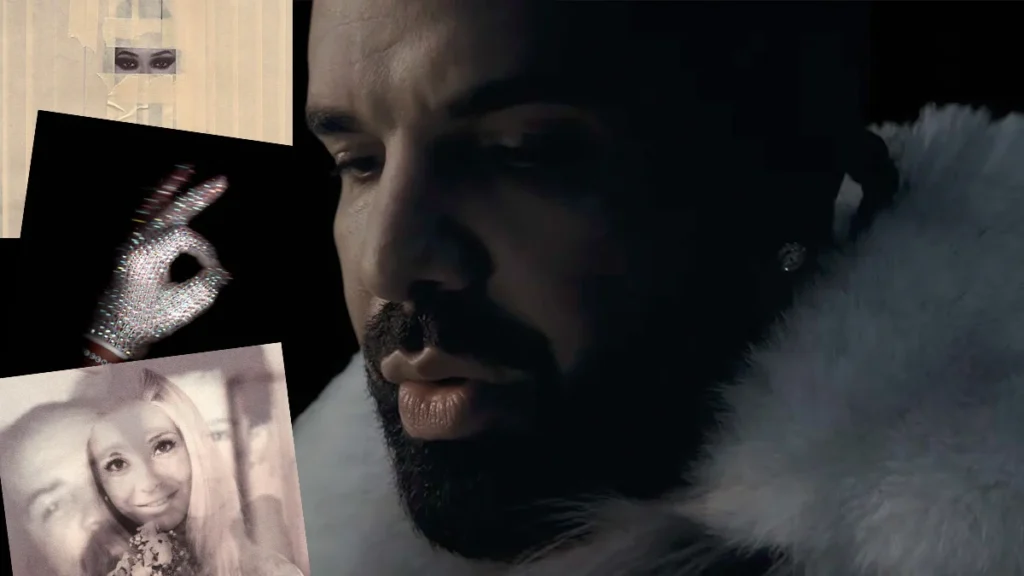

The music world is once again fixated on Drake as the Canadian superstar unleashes a monumental triple-album drop in May 2026, featuring Maid of Honour, Habibti, and Iceman. This ambitious release marks a calculated effort to reassert his dominance and reclaim his narrative, particularly following a widely publicized mocking during the 2025 Super Bowl Halftime Show that underscored a growing public perception of indifference or even active hostility towards the artist. The question reverberating across the industry and among fans alike is not merely about album sales, but whether Drake still possesses a broader cultural impact, and what his current standing signifies for the landscape of hip-hop.
A Pivotal Comeback Amidst Mounting Scrutiny
Drake’s career has been defined by unprecedented commercial success, evidenced by his record-breaking number of No. 1 LPs, surpassing even The Beatles – a feat he proudly commemorates with a tattoo. His ability to sell out arenas globally remains undiminished, and early projections suggest his new trilogy could monopolize the top three spots on the upcoming Billboard album chart, a testament to his enduring commercial power. Yet, this formidable commercial engine operates against a backdrop of increasing scrutiny and a chorus of critics questioning his ethical conduct and cultural relevance. Online forums and social media frequently echo the sentiment, "Who cares?", highlighting a significant portion of the public that views the artist with either disinterest or profound disapproval.
The criticisms against Drake are multifaceted, ranging from serious legal allegations to long-standing concerns about his personal brand. These include a RICO lawsuit initiated in January 2026 over alleged bot farm streaming manipulation, accusations regarding his problematic lyrical content and public statements concerning women, and past controversies surrounding his interactions with underage individuals. Furthermore, his associations with manosphere-aligned streamers and his conspicuous support for online gambling platforms, including a lawsuit involving Stake and Adin Ross in October 2025, have further complicated his public image. This triple-album release, therefore, arrives at a critical juncture, serving as both a potential redemption arc and a litmus test for his capacity to transcend the controversies and re-engage with a culture that appears increasingly divided on his significance.
Chronology of Controversy: A Shifting Public Narrative
Drake’s journey from revered hip-hop titan to a figure mired in controversy has been a gradual process, punctuated by specific events that have incrementally chipped away at his once-unassailable public image. Understanding this timeline is crucial to appreciating the context of his latest musical offering.
Early Warning Signs: The Millie Bobby Brown Incident
One of the earlier instances that sparked public debate around Drake’s personal conduct emerged in September 2018. Reports surfaced regarding his friendship with then-14-year-old actress Millie Bobby Brown, where he openly discussed texting her and offering advice. While both parties dismissed any impropriety, the revelation ignited a discussion among fans and media outlets about the appropriateness of an adult male musician, then 31, maintaining such a close digital relationship with a minor. Critics questioned the power dynamics at play and the potential for misinterpretation, laying an early foundation for later discussions about his interactions with women and younger individuals. This incident, while not leading to legal action, served as a precursor to broader concerns about his judgment.
The Gambling Entanglement and RICO Allegations
The years leading up to 2026 saw Drake increasingly embroiled in controversies tied to his financial dealings and associations. In October 2025, a significant lawsuit emerged, linking Drake to an alleged fraudulent gambling scheme involving the platform Stake and streamer Adin Ross. Drake’s open and "cozy support" for online gambling, often showcasing his high-stakes wagers on social media, drew criticism for potentially normalizing and promoting a habit that carries significant financial risks, particularly to his impressionable younger fanbase. The lawsuit intensified public scrutiny on the ethics of celebrity endorsements in potentially harmful industries.
Compounding these concerns, January 2026 brought forth a RICO (Racketeer Influenced and Corrupt Organizations) lawsuit against Drake, alleging his involvement in bot farm streaming schemes. This accusation, if proven, would carry severe implications for the integrity of music charts and the credibility of artists involved. The practice of using automated bots to inflate streaming numbers not only undermines fair competition but also deceives fans and advertisers about an artist’s genuine popularity. A RICO charge, typically reserved for organized crime, signifies the gravity of the allegations, suggesting a systemic and coordinated effort to manipulate industry metrics. While Drake’s legal team has reportedly initiated robust defenses, the very existence of such a lawsuit casts a long shadow over his commercial achievements, questioning the authenticity of his chart-topping dominance.
The Super Bowl Spotlight and Its Aftermath
The year 2025 proved to be a pivotal year for Drake’s public image, culminating in the embarrassing incident at the Super Bowl Halftime Show. While specifics of the "mocking" remain subject to public interpretation, media reports and social media chatter indicated a widely perceived moment of public ridicule or critical performance that fell short of expectations, leading to widespread online mockery. For an artist synonymous with cultural ubiquity, this public slight on one of the world’s largest stages was a significant blow, forcing a reevaluation of his contemporary relevance and perhaps catalyzing his decision to launch such an aggressive comeback with a triple-album release. The incident highlighted a growing disconnect between his perceived untouchable status and the reality of his slipping grip on cultural consensus.
The Kendrick Lamar Rivalry and Lyrical Scrutiny
While not explicitly detailed as a separate event in the provided text, the mention of "things he says about women" and a direct link to a 2024 article referencing "dijahsb-drake-black-women-kendrick-lamar" strongly implies the profound impact of the highly publicized rap feud with Kendrick Lamar. This rivalry, which reached its zenith in late 2024 and early 2025, involved a series of diss tracks that not only escalated personal attacks but also brought Drake’s character and past actions into sharp focus. Lamar’s tracks, in particular, leveled scathing accusations regarding Drake’s alleged predatory behavior, his family life, and his authenticity, resonating with existing public criticisms. The intensity of this lyrical battle forced many to reconsider Drake’s persona, amplifying existing concerns about his treatment of women and children, and his overall moral standing. The fallout from this beef significantly contributed to the "active hostility" mentioned by critics, pushing the question of his cultural impact beyond mere musical preference into the realm of ethical judgment.
Commercial Juggernaut vs. Cultural Crossroads
The ongoing debate surrounding Drake’s relevance is fundamentally a tension between his undeniable commercial prowess and an increasingly fractured cultural perception.
Unquestionable Chart Dominance
Despite the controversies, Drake’s commercial engine shows little sign of slowing down. His track record of surpassing The Beatles in No. 1 albums underscores a consistent ability to capture and maintain a massive audience. His tours continue to sell out arenas globally, demonstrating a dedicated fanbase that remains impervious to external criticism. The potential for his latest triple-album release to simultaneously occupy the top three slots on the Billboard album chart is a testament to his unique ability to command attention and generate sales figures that few artists in any genre can match. This commercial might extends beyond album sales, encompassing billions of streams across platforms, lucrative brand partnerships (even those that draw controversy), and the sustained success of his OVO Sound label and apparel line. For a significant segment of the music industry, these metrics are the ultimate arbiters of an artist’s importance, solidifying Drake’s position as an economic powerhouse.
The Erosion of Goodwill: Public Indifference and Hostility
However, the sheer volume of "Who cares?" comments directed at Drake every time his name appears in the news highlights a growing chasm between commercial success and genuine cultural resonance. The public’s indifference or "active hostility" stems from a combination of factors that have eroded his goodwill. The "things he says about women" in his lyrics, often perceived as misogynistic or dismissive, coupled with past controversies about his behavior with underage individuals, have alienated a substantial portion of listeners, particularly those advocating for more progressive social norms. His alliances with figures associated with the "manosphere"—an online subculture often characterized by misogynistic views and anti-feminist rhetoric—further exacerbates concerns about his influence and values.
Moreover, the serious allegations of bot farm streaming manipulation cast a shadow over his entire career, suggesting that some of his success may have been artificially inflated. This not only damages his credibility but also undermines trust in the music industry’s charting systems. The perceived ethical lapses, from questionable lyrical content to alleged fraudulent activities and the promotion of gambling, contribute to a narrative of an artist prioritizing personal gain and commercial dominance over ethical responsibility. For many, a true "cultural impact" extends beyond sales figures to encompass positive influence, artistic innovation, and a genuine connection with societal values. In this regard, Drake’s image has suffered considerable damage, leading to the profound question of whether his cultural footprint is shrinking, even as his commercial one expands.
The Triple-Album Gambit: An Auditory Examination
The release of Maid of Honour, Habibti, and Iceman is a strategic move, showcasing Drake’s characteristic genre fluidity across three distinct projects. The initial reactions from long-time listeners and critics, such as Kiana Fitzgerald and Eddie Fu, highlight a mixed reception, with a clear preference emerging for certain albums over others.
Iceman: The Return to Rap Form?
Among the trio, Iceman appears to be the most critically favored, particularly for listeners who prioritize Drake’s rapping prowess. Eddie Fu, who specifically cataloged the disses on the album, and Kiana Fitzgerald both ranked Iceman as the strongest offering. This album, dedicated to Drake’s core hip-hop roots, likely features the intricate wordplay, confident delivery, and often confrontational lyrics that characterized his earlier, highly acclaimed rap projects. In the wake of the intense rap beef with Kendrick Lamar, Iceman could be seen as Drake’s direct lyrical response, an opportunity to reassert his dominance as a formidable MC. The album’s perceived strength suggests that when Drake focuses on his foundational skill set, he can still deliver compelling and impactful music, perhaps aiming to silence critics who questioned his lyrical authenticity and ability during recent public skirmishes. Its success among panelists indicates that his dedicated rap fanbase might find the most solace and satisfaction in this project, affirming that his rapping ability, when focused, remains a powerful draw.
Maid of Honour: A Dancefloor Diversion
Maid of Honour, characterized as a dance album, garners a more polarized, yet generally positive, reception. Wren Graves admitted to being "higher on Maid of Honour than consensus," finding it "fun." Eddie Fu acknowledged its enjoyability, stating that if one "don’t care about the raps, Maid of Honour is more fun," and highlighted Drake "embracing dance/world music is the most interesting part of this." This album represents Drake’s continued exploration of global dance sounds, a direction he has previously dabbled in with hits like "One Dance" and "Passionfruit." While Wren Graves initially viewed it as a "RETVRN" rather than a new embrace, Eddie Fu differentiated it from Honestly, Nevermind (which leaned into house music), pointing to Maid of Honour‘s distinct sound, featuring artists like Central Cee and Popcaan. This suggests a fusion of dancehall, Afrobeat, and other global pop influences, signaling a deliberate effort to tap into international markets and create universally appealing, upbeat tracks. The album’s "fun" factor, coupled with its potential for commercial success through radio play and streaming, indicates Drake’s continued ambition to dominate pop culture beyond the confines of traditional hip-hop.
Habibti: The R&B Misstep
In stark contrast to the other two albums, Habibti, the R&B offering, appears to have fallen flat with the initial listeners. Kiana Fitzgerald was "soooo over it lol," and neither Eddie Fu nor Wren Graves expressed particular enthusiasm for it, implicitly ranking it lowest in their preferences. Drake has a long history of blending R&B sensibilities with his rap, often blurring the lines between the two genres to create his signature sound. However, a full-length R&B project necessitates a different level of vocal performance, emotional depth, and thematic consistency. The panel’s quick dismissal suggests that Habibti might lack innovation, succumb to repetition, or simply fail to connect on an emotional level. This could be due to oversaturation of his R&B style, a perceived lack of sincerity, or simply weaker songwriting compared to his more successful ventures into the genre. The lukewarm reception to Habibti raises questions about the limitations of Drake’s genre-hopping strategy, suggesting that not all musical explorations are met with equal success or critical acclaim.
Implications for Hip-Hop and Drake’s Enduring Legacy
The release of Drake’s triple album and the accompanying debate about his relevance carry significant implications for his legacy and the broader hip-hop landscape.
Navigating Authenticity and Artistic Evolution
Drake’s latest artistic endeavor, spanning three distinct genres, reflects a consistent pattern of artistic evolution and a desire to avoid being pigeonholed. From his early blend of singing and rapping to his excursions into dancehall, Afrobeats, and house music, Drake has always pushed the boundaries of what a hip-hop artist can be. Maid of Honour‘s embrace of global dance music, in particular, speaks to his ambition to remain a global pop force. However, this genre-hopping also raises questions about authenticity. In a genre that often values "keeping it real," some critics argue that Drake’s constant shapeshifting, especially when coupled with his controversies, can make his artistic identity feel diluted or calculated rather than genuinely inspired. The preference for Iceman among critics suggests that many still crave the lyrical prowess and raw hip-hop energy that defined his early career. The challenge for Drake, and for hip-hop itself, is how to balance artistic growth and commercial appeal with the demand for authenticity and a consistent artistic voice, especially when controversies cloud the narrative.
The Future of Influence and Cultural Impact
The central question, "Does Drake still matter?", transcends simple album sales. It probes the nature of cultural influence in an era dominated by social media and rapid news cycles. While Drake’s commercial machine remains formidable, his cultural impact appears to be at a crossroads. The online sentiment of "Who cares?" and the active hostility from a growing segment of the audience indicate a shift in how he is perceived. True cultural impact often involves inspiring change, shaping discourse, or pushing artistic boundaries in a way that resonates positively with a broad audience. The controversies surrounding Drake—from alleged streaming fraud to misogynistic undertones and problematic associations—have undeniably complicated his ability to maintain a universally positive or influential cultural standing.
For hip-hop, Drake’s situation highlights the evolving demands on its biggest stars. Artists are increasingly held accountable not just for their music, but for their personal conduct, their values, and their broader societal influence. The industry is grappling with how to reconcile immense commercial success with ethical concerns and public backlash. Drake’s triple-album release is not just a musical statement; it’s a strategic gambit to reclaim cultural relevance by sheer volume and genre diversity. Whether this aggressive move will allow him to transcend his recent setbacks and solidify a lasting, positive legacy, or merely reinforce his status as a commercially dominant but increasingly polarizing figure, remains to be seen. The coming months will reveal if the sheer force of his new music can outweigh the weight of his mounting controversies, determining whether Drake can truly matter in a way that transcends the charts and resonates with a culturally conscious audience.