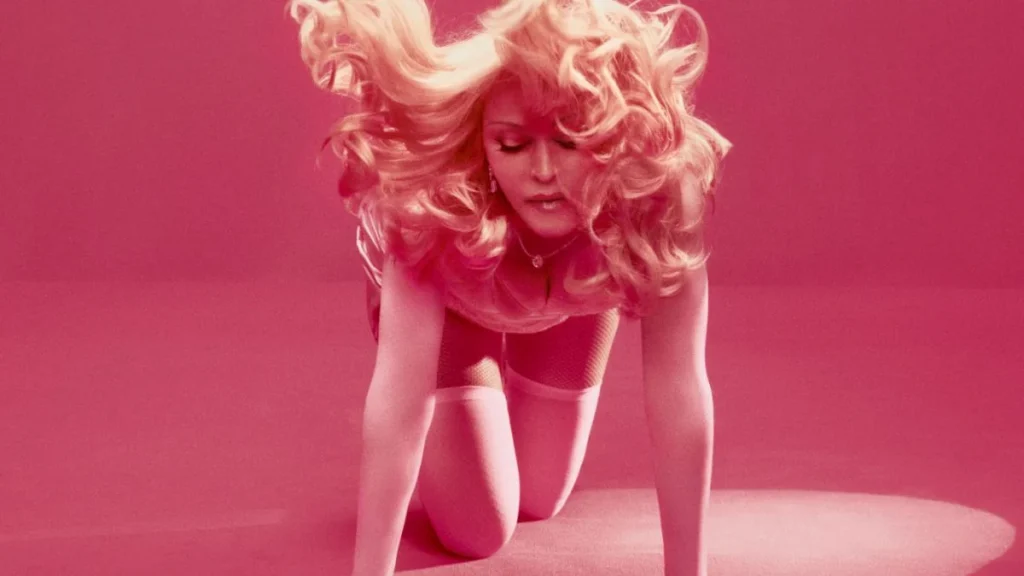

The highly anticipated release of Madonna’s Confessions II arrives in a vastly different musical landscape than its groundbreaking predecessor, Confessions on a Dance Floor. The original 2005 album, a collaborative triumph with producer Stuart Price, established itself as a seminal work in dance-pop, distilling Madonna’s four-decade-long evolution in dance-forward stylings into a singular, majestic presentation. It masterfully integrated the spiritual and exploratory themes previously explored in albums like Ray of Light and Music, treating the dance floor not merely as a venue for revelry but as a space for deeper introspection and transcendence. This was achieved through a meticulously crafted, continuous-mix architecture that felt simultaneously classic in its reverence for disco and house, and strikingly modern in its execution.
The Enduring Legacy of Confessions on a Dance Floor
Released in 2005, Confessions on a Dance Floor was more than just an album; it was a prescient declaration of intent that preceded the global electronic dance music (EDM) boom. At a time when pop charts were not yet saturated with electronic sounds, Madonna and Price were not merely following a trend but actively setting one, demonstrating how sophisticated dance-pop, rooted in decades of musical craftsmanship, possesses an timeless quality that simply awaits the world to catch up. The album’s success was immediate and profound, both critically and commercially. It debuted at number one in 40 countries, earned a Grammy Award for Best Electronic/Dance Album, and solidified Madonna’s status as an enduring innovator. Tracks like "Hung Up," "Sorry," and "Get Together" became global anthems, showcasing a perfect blend of infectious melodies, euphoric beats, and Madonna’s signature lyrical wit. The album’s continuous mix format, reminiscent of a live DJ set, was lauded for its immersive experience, inviting listeners into a vibrant, uninterrupted sonic journey. This period marked a powerful resurgence for Madonna, reaffirming her position as the Queen of Pop capable of reinvention and artistic foresight.
Two Decades On: The Shifting Sands of Pop Music
Fast forward 21 years to 2026, and the world has not only caught up to the electronic sounds Madonna previewed but has also moved significantly beyond them. The EDM surge of the early 2010s, characterized by colossal drops and aggressive synthesizers, eventually gave way to a more diverse electronic landscape, incorporating elements of deep house, techno, hyperpop, and genre-bending experimentalism. This evolution has raised questions about the relevance of a direct sequel to an album so intrinsically linked to a specific moment in pop history. Madonna’s intervening discography since 2005 has been a mixed bag, reflecting her ongoing exploration while sometimes struggling to connect with contemporary trends. Albums like Hard Candy (2008) saw her dabbling with urban pop and hip-hop influences, while MDNA (2012) leaned into more commercial dance sounds. Rebel Heart (2015) offered a blend of pop, EDM, and confessional ballads, but was perhaps best remembered for tracks like "Bitch I’m Madonna," which some critics perceived as a deliberate attempt to stay current rather than lead. Her most recent album prior to Confessions II, 2019’s Madame X, was an adventurous, eclectic, and often polarizing project that drew heavily from global sounds and her experiences living in Lisbon, demonstrating a continued desire for artistic exploration, albeit one that alienated some of her core audience. These varied artistic ventures underscore the challenge of revisiting a definitive past success.
Confessions II: A Return to the Dance Floor with New Collaborators
Confessions II represents Madonna’s deliberate attempt to recapture the self-reflexive vibrancy and spiritual depth of the original, positioning the dance floor once again as a crucible for transcendence and awakening. With Stuart Price returning as the primary producer, the album signals a clear intention to evoke the magic of their previous collaboration. However, the project also embraces a contemporary global perspective, featuring an international cohort of guest artists. Colombian reggaeton sensation Feid brings a modern Latin American flair, while Belgian musical polymath Stromae contributes his unique blend of electronic music and chanson. Pop scribes Cirkut (known for his work with The Weeknd and Miley Cyrus) and Andrew Watt (producer for Dua Lipa and Justin Bieber) inject a current mainstream sensibility. Long-time collaborator Mirwais, who previously worked on Music and American Life, adds a touch of avant-garde electronic expertise, and in a significant personal touch, Madonna’s daughter, Lola Leon, also features, underscoring a generational link within the project. This diverse lineup aims to bridge the gap between Madonna’s legacy and the contemporary global pop scene. The ambition is palpable: to prove that the dance floor still holds the power to redeem and enlighten. Yet, the core critique emerging from early reviews is that Confessions II frequently talks about transcendence rather than authentically delivering it.
Production and Sonic Palette: Tasteful but Not Pioneering
Despite its lyrical shortcomings, Confessions II is largely deemed a significant return to form for Madonna, especially when viewed in the context of her more recent catalog. It is widely considered a more cohesive and enjoyable listen than Madame X, and it successfully sheds the "bratty sheen" and perceived lagging behind pop trends that characterized some of her mid-2010s output. Stuart Price’s production remains a cornerstone, leaning away from the "gargantuan beat drops" and "garish sounds" that often define mainstream electronic pop. Instead, Price’s signature approach prioritizes intricate layering, a propulsive yet nuanced rhythm section, and a tasteful homage to classic dance genres.
The album traverses a wide array of stylish electronic modes. Listeners will find multiple variations of house music, from deep and soulful grooves to more driving, classic iterations. French Touch-adjacent sonics, characterized by filtered basslines and disco samples, recall the elegance of Daft Punk or Cassius. Scattered breakbeats add a dynamic edge, while brief forays into trip-hop in the album’s latter half introduce a moodier, more atmospheric dimension. This stylistic breadth demonstrates competence and a sophisticated ear for electronic music, making Confessions II undeniably tasteful and well-produced. However, the critique arises from its inability to truly push the boundaries of dance-pop. While competent and aesthetically pleasing, the album doesn’t venture into aggression or notable friction, nor does it explore the experimental frontiers where dance-pop’s actual evolution is currently taking place. It feels like a masterfully curated retrospective of the genre rather than a prophetic vision for its future.
The Core Critique: Lyrical Superficiality and Missed "Confessions"
The most significant reservation surrounding Confessions II lies in its lyrical content and thematic scope. The album, despite its title, often fails to provide substantial "confessions," instead skimming the surface of its intended themes. Madonna appears more preoccupied with explicitly instructing her audience about the benefits of dance – framing it as "good for the soul" and a balm for heartbreak – rather than embedding these ideas within richer, more personal narratives. The only notable deviation from this didactic approach comes in tracks like the New York-centric "Danceteria" and "L.E.S. Girl," where the concept of embracing personal identity through dance is touched upon, echoing Madonna’s own formative experiences in the city’s club scene.
Similar to the original Confessions, Madonna utilizes numerous spoken word passages to guide listeners through the album’s DJ-set structure, offering philosophical insights into dance music with an intimate, almost seductive tone. While this choice maintains a continuity with its predecessor and adds a unique textural layer, the content of these passages often lacks substance. For the most part, what Madonna articulates doesn’t amount to profound revelation. There are moments of jarring excitement, such as in "Everything," where Madonna assertively interjects with remarks like "It’s not okay/ I don’t fuck with it," delivered with palpable attitude, momentarily injecting a much-needed jolt of raw emotion. However, these instances are few and far between.
More often, the spoken passages and the album’s overarching lyrical approach are variations on a singular, somewhat simplistic theme: "I like to go out and dance because freedom" or similar sentiments. This thematic repetition is particularly egregious in "Love Without Words," an ode to dance music that opens with the line, "Call it trance, call it house, call it love without words." Despite being a groovy, if slightly overloaded, house track, its lyrics rarely transcend club clichés, relying on familiar phrases like "We only got all night so, baby, party all night long" and "We come from the rhythm that set us free."
The album’s opening three tracks – "I Feel So Free," "Good For the Soul," and "One Step Away" – are particularly emblematic of this lyrical homogeneity. Their thematic similarities make it challenging to discern distinct points of view or evolving narratives. Even the Feid-featuring "Read My Lips," which incorporates Spanish passages, struggles to elevate itself beyond a stereotypical "boy, bye" clap-back, missing an opportunity for deeper cultural or emotional engagement. Far too often, Madonna appears to surrender to the intoxicating pull of her own music, leaving the listener with little to ponder or explore beyond the immediate sonic pleasure. The profound "confessions" that lent the original its emotional weight are conspicuously absent.
Broader Implications and Madonna’s Enduring Legacy
The release of Confessions II inevitably prompts a re-evaluation of Madonna’s artistic trajectory and her ongoing relevance in the ever-shifting landscape of pop music. On one hand, the album serves as a potent reminder of her unparalleled ability to craft sophisticated dance music, particularly when collaborating with Stuart Price. It demonstrates a conscious effort to reconnect with a sound and an artistic ethos that resonated deeply with audiences two decades ago. This "return to form" is commendable, suggesting that even after decades in the industry, Madonna remains committed to the dance floor as a site of artistic expression.
However, the album also highlights a crucial challenge for legacy artists: how to revisit past successes without merely replicating them or falling into the trap of nostalgia. While Confessions II is technically proficient and sonically appealing, its lyrical shortcomings prevent it from achieving the same level of cultural impact or artistic innovation as its predecessor. In 2005, Confessions on a Dance Floor was a visionary statement that predicted the future of pop. In 2026, Confessions II feels more like a well-executed homage to a glorious past, rather than a bold step into the unknown.
For Madonna, this album reinforces her status as a cultural icon whose influence on pop music is undeniable. Yet, it also underscores the difficulty of maintaining a cutting-edge artistic presence when the very trends one helped to pioneer have evolved beyond recognition. While the album offers a great party, providing ample opportunities for listeners to dance and feel good, it ultimately leaves them wanting for the profound, often provocative, "confessions" that have long defined Madonna’s most impactful work. It’s a testament to her enduring skill as a performer and curator of sound, but perhaps less so as a groundbreaking lyrical storyteller in this particular iteration. The dance floor remains open, but the conversation feels incomplete.