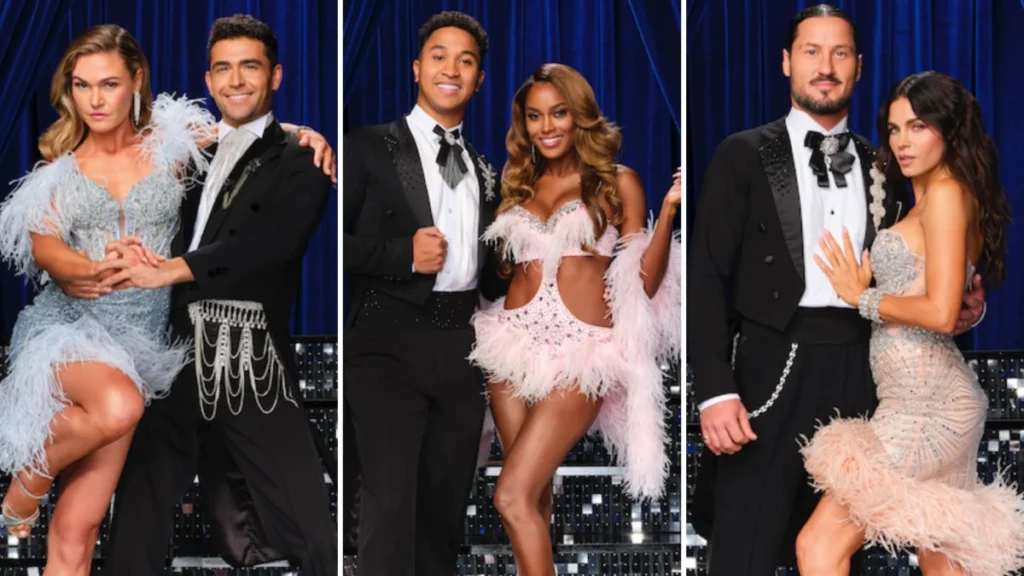

The second night of the Dancing With the Stars Season 35 premiere on September 16 shifted the spotlight to the female contingent of the celebrity cast, following a high-stakes opening night that saw the men take the stage and the early elimination of Conner Leavitt. As the competition ramps up, the pressure to deliver technically proficient performances while maintaining audience engagement has reached a critical threshold. The evening, which featured eight female celebrity contestants paired with professional dancers, was themed around musical hits that topped the charts during the year of each celebrity’s birth, providing a nostalgic backdrop to the rigorous choreography.
The Competition Format and Scoring Dynamics
For the 2026 season, the scoring system remains a combination of professional judge critiques—provided by Carrie Ann Inaba, Derek Hough, and Bruno Tonioli—and the real-time input of the viewing audience. The judges operate on a 30-point scale, and their scores are mathematically integrated with public votes to determine the "bottom tier" of performers. In a two-hour broadcast, the stakes were high, as the cumulative score from the judges and the public vote ultimately decided which pair would exit the ballroom.
This season has placed a heightened emphasis on technical precision early on, with judges signaling that they are holding back higher marks in the premiere weeks to allow for a clearer trajectory of growth. This "growth-oriented" scoring strategy aims to ensure that participants who improve throughout the season have a measurable path to higher scores, rather than peaking during the initial performance.
A Chronological Breakdown of the Performances
The evening began with Tatyana Ali, known for her role on The Fresh Prince of Bel-Air, partnered with Jan Ravnik. Performing a jive, the duo encountered an early technical misstep. Judges noted that the error proved difficult for Ali to recover from, resulting in a score of 12/30. Carrie Ann Inaba acknowledged the "rough start" but noted the underlying potential, while Derek Hough and Bruno Tonioli pointed out the necessity for better footwork and sustained energy throughout the routine.
Following this, Olympian Amber Glenn and Pasha Pashkov delivered a high-intensity cha-cha. Glenn’s background as a solo athlete provided a unique challenge, as she had to transition into the collaborative dynamics of ballroom dancing. The judges lauded her "warrior queen" attitude and raw power, though they suggested that she refine her foot articulation to meet the specific requirements of the cha-cha. With a score of 18/30, Glenn established herself as a strong contender.
Ciara Miller and Brandon Armstrong then took the floor for a foxtrot. Miller’s performance was noted for its emotional depth, with Inaba visibly moved by the vulnerability presented on stage. However, the technical feedback focused on the lack of consistency in her lines and the need for a more continuous flow between steps. Scoring 15/30, the pair has been tasked with translating their emotional connection into technical mastery.
Celebrity chef Giada De Laurentiis, paired with Alan Bersten, performed a tango that defied the expectations typically associated with a debut performance. While the judges praised the clarity of her lines, they noted that the performance felt "careful." Both Hough and Tonioli encouraged her to "cook with conviction" and bring more power to future routines, leading to a score of 17/30.
Julia Stiles, partnering with Ezra Sosa, performed a quickstep set to Dolly Parton’s "9 to 5." The performance served as a rebuttal to public skepticism regarding her dance experience. While the judges praised her radiance and grace, they collectively advised her to increase her energy output and expand her movements to fully command the floor, resulting in an 18/30.
Maura Higgins and Mark Ballas, who both gained notoriety for their appearance on The Traitors, delivered what was widely considered the standout performance of the night. Their foxtrot was described by Tonioli as "smooth as silk" and by Hough as "sultry and mysterious." With a score of 21/30, Higgins set the benchmark for the evening, demonstrating a level of polish that is rare for a first-week performance.
Sarah Jane Nader and Hailey Bills, the season’s only same-sex pairing, attempted a jive that showcased significant potential. While Inaba praised the energy, she noted that the pair struggled with synchronization. Despite their best efforts, the judges’ scores were conservative, resulting in a 14/30 and placing them in a vulnerable position.
Closing the night, Jenna Dewan and Val Chmerkovskiy performed a tango. Given Dewan’s professional background as a backup dancer for Janet Jackson, the expectations for her performance were exceptionally high. While the judges noted her undeniable intensity, Inaba docked a point due to the inclusion of a lift, which violated the technical constraints of the specific dance style. Nevertheless, her 19/30 score reflected a high-energy, compelling close to the evening.
The Elimination Process and Results
Following the conclusion of the performances, the safe couples were announced: Maura Higgins and Mark Ballas, Jenna Dewan and Val Chmerkovskiy, Amber Glenn and Pasha Pashkov, Julia Stiles and Ezra Sosa, and Ciara Miller and Brandon Armstrong. The bottom three consisted of Giada De Laurentiis, Tatyana Ali, and Sarah Jane Nader.
Ultimately, the cumulative scores and audience participation resulted in the elimination of Sarah Jane Nader and Hailey Bills. The departure of the duo highlights the unforgiving nature of the early weeks of the competition, where even minor synchronization errors or lack of technical refinement can result in an early exit, regardless of the individual talent or charisma displayed by the participants.
Broader Implications and Tactical Analysis
The results of the second night demonstrate that the Season 35 competition is highly competitive, with a narrow point spread between the middle-tier contestants. The judges’ decision to maintain a strict adherence to technical requirements, such as the prohibition of lifts in certain styles and the expectation of continuous, linked movement, indicates that the production team is prioritizing the "sport" of ballroom dancing over purely entertainment-based performances.
For the remaining contestants, the implications are clear: performance quality must be backed by technical consistency. The elimination of Nader and Bills, while disappointing to their supporters, serves as a reminder that the audience vote is highly reactive to the performance on the night. Celebrities with prior dance experience, such as Jenna Dewan, face a different set of challenges, as they are judged against a higher baseline of expectation. Meanwhile, those new to the medium must rapidly internalize the nuances of frame, footwork, and partner connection to avoid the bottom of the leaderboard.
As the season progresses, the training intensity is expected to increase. The transition from the premiere to the second week often marks the "reality check" phase of the show, where the initial excitement of the production gives way to the rigorous physical and mental demands of learning new, complex routines on a weekly basis. With the loss of two couples in the first two nights, the field has narrowed, and the remaining participants must now navigate the dual pressures of maintaining their public appeal and satisfying the technical scrutiny of the judging panel.
Contextualizing the Season 35 Landscape
The inclusion of a diverse cast, ranging from reality television personalities to culinary experts and professional athletes, highlights the show’s intent to broaden its demographic reach. However, the core of the show remains the pedagogical journey of the amateur dancer. The early elimination of two couples serves to heighten the tension, as every subsequent week will now carry the weight of potential removal for any pair that fails to execute.
The production value of the 2026 season has remained consistent with high-budget standards, utilizing advanced lighting and staging to frame the dances. As the competition moves toward its third week, the focus will likely shift from initial impressions to the development of consistent, high-scoring routines. With the judges already signaling a desire for more "conviction" and "energy," the contestants will be under immense pressure to adapt their performances to meet these qualitative metrics.
In summary, the second night of the premiere successfully established a competitive atmosphere, characterized by high stakes, varied technical challenges, and the stark reality of the elimination process. As the season unfolds, the dynamic between the judges’ technical feedback and the audience’s emotional response will continue to dictate the narrative of the competition. The exit of Sarah Jane Nader and Hailey Bills marks the first departure of the female contingent, setting a somber tone for the challenges that lie ahead in the coming weeks of Dancing With the Stars.