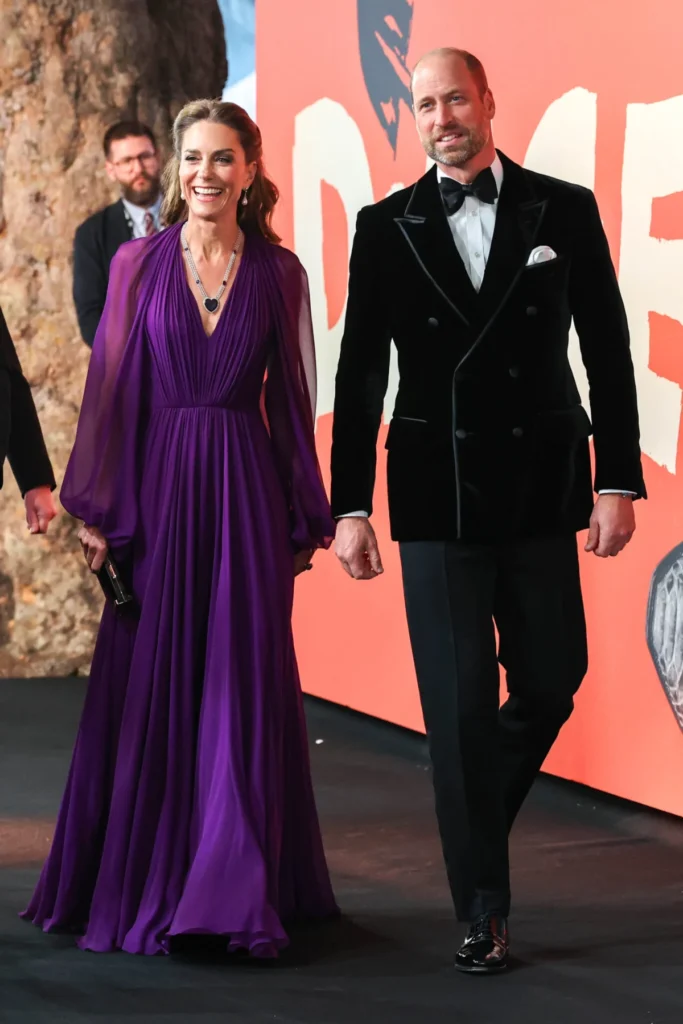

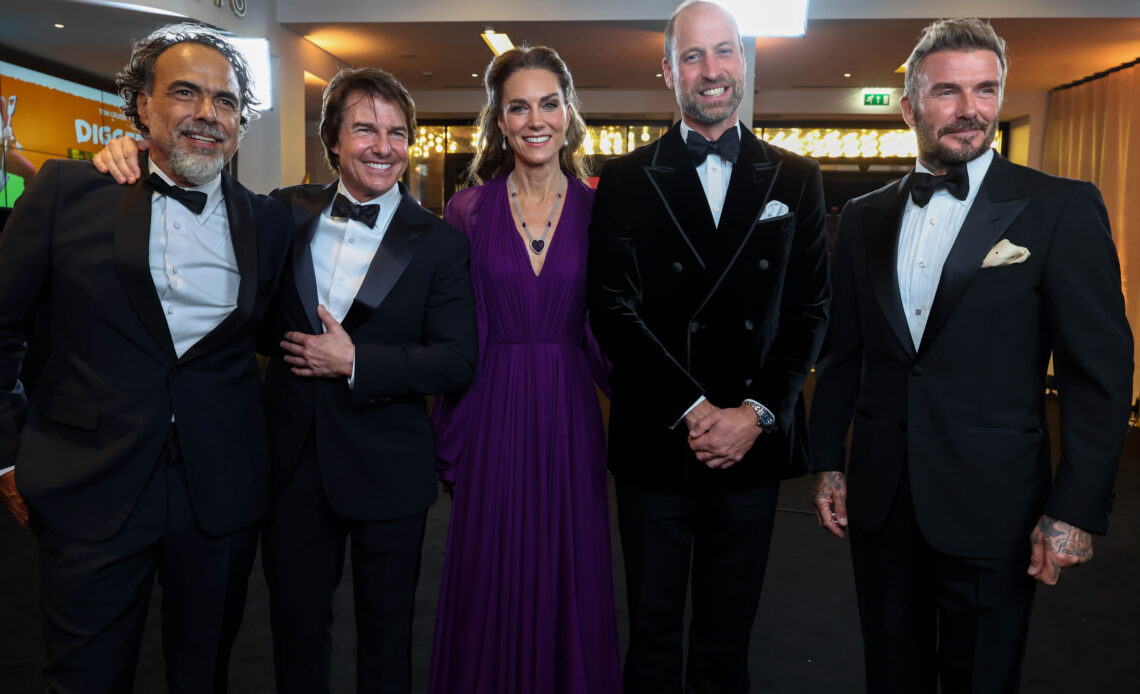
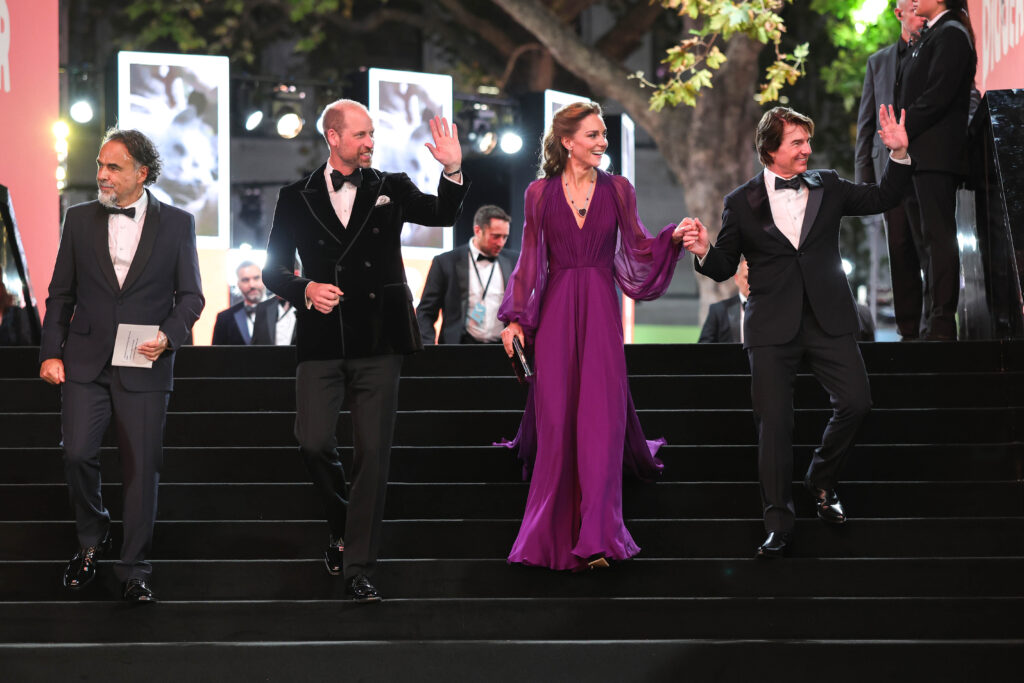
The central red carpet of Leicester Square played host to a convergence of British royalty and Hollywood heavyweights this week, as the Prince and Princess of Wales attended the high-profile world premiere of the new feature film Digger. While the star-studded guest list featured luminaries of the silver screen, including acclaimed actor Tom Cruise, it was the Princess of Wales who commanded the spotlight by unveiling a rare, century-old royal heirloom that has spent decades hidden away from public view within the royal vaults.
The glittering engagement was staged in direct support of the Film and TV Charity, an organization dedicated to supporting the mental health, financial stability, and behind-the-scenes well-being of the thousands of creative professionals working across the British entertainment industry. The Prince and Princess have long championed artistic and charitable causes, and their presence underscored the vital intersection of public service and cultural patronage. For this high-profile gala evening, the Princess chose a striking aesthetic ensemble, pairing a deep purple Jenny Packham evening gown with a remarkable sautoir necklace featuring diamonds, pearls, and a prominent heart-shaped amethyst.
A Century of Royal Provenance: The History of the Amethyst Sautoir
The magnificent piece of jewelry selected by the Princess carries a rich and complex provenance dating back precisely to 1923. Originally commissioned as a wedding gift, the sautoir was presented by Queen Alexandra—the widow of King Edward VII—to Lady Elizabeth Bowes-Lyon upon her marriage to Prince Albert, the Duke of York, who would later ascend the throne as King George VI.
Queen Alexandra, famed throughout her life for her pioneering aesthetic sense and trendsetting influence on European fashion, curated a piece that defied the rigid, conventional jewelry norms of the era. Born in Copenhagen as Princess Alexandra of Denmark before marrying into the British royal family in 1863, she cultivated a lifelong passion for design and tailoring that began in her youth when she and her siblings crafted their own garments. Her gift to the future Queen Elizabeth reflected a sophisticated understanding of modern elegance.
Lady Elizabeth Bowes-Lyon—who would later be affectionately known to the British public as the Queen Mother—was similarly celebrated for her avant-garde approach to style. Her 1923 wedding gown notoriously broke with centuries of royal tradition by discarding heavy lace, orange blossoms, and myrtle in favor of a sleek, modern silhouette that aligned with the fashionable flapper aesthetic of the roaring twenties. By presenting the young bride with a contemporary sautoir featuring a romantic, heart-shaped amethyst accented by diamonds and pearls, Queen Alexandra provided a youthful and stylish alternative to the heavy, conservative jewels typically associated with royal trousseaus.
Chronology of a Hidden Masterpiece: From Queen Alexandra to Modern Royalty
The journey of the diamond, pearl, and amethyst sautoir through the twentieth and twenty-first centuries is marked by extreme rarity. Following its presentation in 1923, the necklace was integrated into the extensive collection of the woman who would become Queen Elizabeth. Despite its striking design and versatility, the piece was rarely exhibited in public over the subsequent decades, functioning largely as a private archive item rather than a working piece of state jewelry.
Decades later, the sautoir made a rare public appearance in 2012, when Queen Camilla—then the Duchess of Cornwall—wore the statement necklace to the glittering world premiere of the James Bond film Skyfall at the Royal Albert Hall in London. The appearance generated significant interest among royal jewelry historians, who quickly identified the piece’s lineage.
Following the 2012 outing, the necklace once again vanished into the secure confines of the royal collection, remaining unseen for more than a decade until the Princess of Wales selected it for the Digger premiere. This latest appearance bridges a historical continuum linking three distinct queens and future queens of the United Kingdom: Queen Alexandra, who commissioned and gifted the piece; Queen Elizabeth (the Queen Mother), who first received it; Queen Camilla, who revived it in the modern era; and now Catherine, Princess of Wales, who stands in direct line to the throne.
The Significance of the Ensemble: Symbolism and Sartorial Diplomacy
The choice of attire and ornamentation for major public engagements is rarely accidental within the British royal household; rather, it constitutes a calculated exercise in sartorial diplomacy. By selecting deep purple—a shade traditionally associated with sovereignty, nobility, and power due to the historical scarcity and expense of producing purple dyes in ancient and medieval textile manufacturing—the Princess reinforced the visual authority of her role.
The fluid, flowing sleeves and deep V-neckline of the Jenny Packham gown were deliberately tailored to showcase the geometric and vertical layout of the sautoir. Sautoir necklaces, which are typically long, pivoting pendant necklaces featuring a tassel or focal drop, gained immense popularity during the Edwardian and Art Deco periods. Their design is inherently suited to the long lines of evening wear characteristic of twentieth-century high fashion.
Fashion analysts and royal commentators have noted that the Princess of Wales frequently uses her wardrobe to pay homage to predecessors or to highlight British manufacturing and design talent, with Jenny Packham remaining one of her most trusted couturiers for red-carpet galas and state occasions. The integration of historical archive pieces into contemporary styling has become a hallmark of Catherine’s public persona, striking a balance between honoring institutional tradition and embracing modern aesthetic sensibilities.
Supporting the British Entertainment Sector
Beyond the fashion commentary and historical analysis, the primary institutional objective of the evening was the elevation and financial support of the Film and TV Charity. Operating behind the scenes of the multi-billion-pound British film and television industries, the charity provides crucial mental health support, 24/7 helplines, legal and financial advice, and hardship grants to crew members, production staff, and creative workers.
In recent years, the sector has faced unprecedented pressures stemming from post-pandemic recovery challenges, inflationary costs, and fluctuating production volumes. Royal patronages and high-profile attendance at charity premieres serve as critical catalysts for public awareness and fundraising efforts. Industry representatives expressed profound gratitude for the presence of the Prince and Princess of Wales, noting that royal endorsement brings international media attention to causes that might otherwise struggle to capture mainstream philanthropic headlines.
Implications for the Future of the Monarchy
The appearance at the Digger premiere offers broader insight into the evolving public strategy of the Prince and Princess of Wales. As the monarchy navigates a period of generational transition, the deliberate use of historical artifacts paired with contemporary cultural engagements signals a commitment to continuity, heritage, and modern relevance.
By wearing a piece associated with the Queen Mother—a figure revered for her resilience and dedication to public morale during the Second World War—the Princess subtly reinforces the historical weight of her future constitutional role. At the same time, her active engagement with contemporary cinematic figures and charitable organizations demonstrates a modern approach to royal duties that resonates with twenty-first-century audiences.
As the royal collection continues to be cataloged, curated, and selectively utilized, historians and fashion enthusiasts alike will be watching closely to see which hidden treasures from the royal vaults might be brought back into the light during future high-profile engagements.