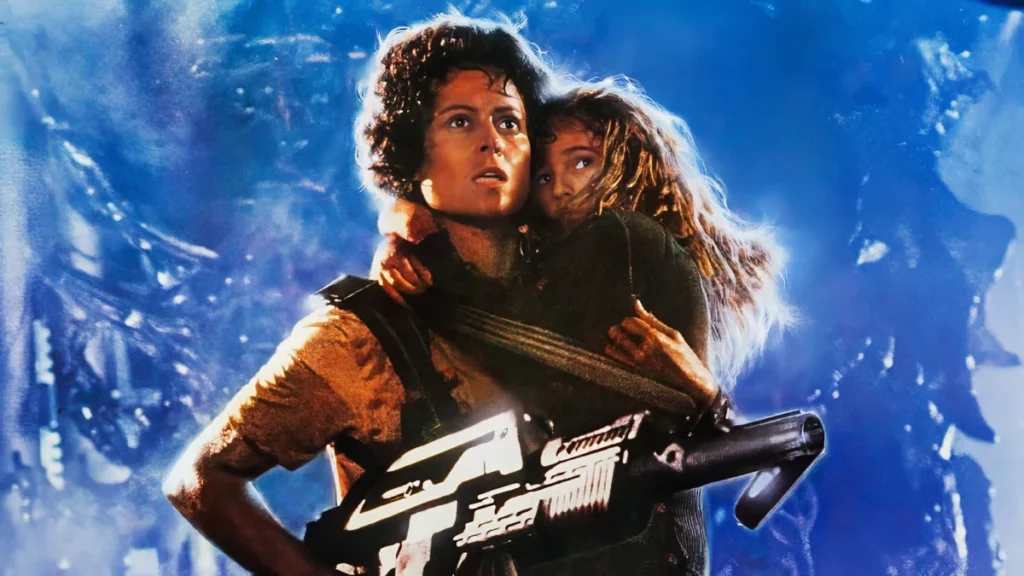

The echoes of the Nostromo’s desperate struggle against an unknowable horror still reverberated through the nascent interstellar colonization efforts of the late 22nd century when a new, even more terrifying chapter began to unfold. James Cameron’s seminal 1986 sequel, Aliens, transcended the confines of its predecessor’s claustrophobic terror to deliver a breathtakingly expansive, action-packed, and emotionally charged narrative that redefined the science fiction genre and cemented Sigourney Weaver’s status as a bona fide action icon. More than just a continuation of Ridley Scott’s groundbreaking 1979 film, Aliens presented a complex tapestry woven from themes of maternal instinct, corporate malfeasance, and the brutal realities of warfare, all set against the unforgiving backdrop of the planet LV-426.
The genesis of Aliens lay in the unresolved dread left by the original Alien. The sole survivor of the commercial towing vessel Nostromo, Warrant Officer Ellen Ripley, had jettisoned the ship’s android, Ash, and destroyed the alien creature before escaping in the Narcissus lifeboat. However, the chilling final moments of the film, with the xenomorph lurking in the escape shuttle’s cramped confines, left audiences with a gnawing sense of unease. Scott’s film, a masterclass in atmospheric horror and creature design, had introduced a terrifyingly perfect organism, a parasitic entity whose life cycle was as brutal as it was efficient. The world of Alien was one where humanity, though technologically advanced, remained vulnerable and often at the mercy of forces beyond its comprehension.
Aliens picks up the narrative thread not long after, or rather, significantly later, due to a narrative conceit that allows for the evolution of both the threat and the protagonist. Ellen Ripley, the sole survivor of the Nostromo incident, is found adrift in hypersleep aboard the Narcissus by a salvage crew. Upon her awakening, she finds herself a pariah, her harrowing account of the xenomorph dismissed as the ravings of a traumatized survivor. Fifty-seven years have passed since the Nostromo’s demise. The intervening decades have seen humanity’s reach extend further into the galaxy, with the establishment of numerous colony worlds. However, the memory of the xenomorph remains a cautionary tale, a dark legend whispered in the void.
The catalyst for Ripley’s reluctant return to the abyss is the sudden and unexplained loss of contact with Hadley’s Hope, a terraforming colony situated on the very planet where the ill-fated Nostromo had made its fateful discovery: LV-426. This colony, established by the Weyland-Yutani Corporation, a powerful and omnipresent entity in the film’s universe, represented a significant investment and a beacon of human expansion. The silence from Hadley’s Hope is not merely a communications failure; it is a deafening void that triggers a primal fear, a premonition of the horrors that may have resurfaced.
The Weyland-Yutani Corporation, driven by its insatiable pursuit of profit and often exhibiting a chilling disregard for human life, dispatches a contingent of United States Colonial Marines to investigate the disappearance. These are not the hapless blue-collar workers of the Nostromo; they are a highly trained, heavily armed force, the vanguard of humanity’s interstellar defense. And crucially, they are accompanied by Ellen Ripley. Initially, Ripley’s involvement is fraught with trepidation. The mere mention of LV-426 conjures images of unimaginable terror. However, the prospect of a colony full of innocent lives facing the same fate as her former crew provides a powerful impetus. Furthermore, the corporation, through its complicity and perhaps even direct manipulation, plays a significant role in ensuring her participation, seeing her as a valuable, albeit reluctant, asset due to her unique firsthand experience.
The mission unfolds with the deployment of the marines, led by the pragmatic and stoic Lieutenant Gorman, alongside the seasoned Sergeant Apone, the tough Corporal Hicks, the wisecracking Private Hudson, and the compassionate Private Vasquez. Ripley, grappling with her post-traumatic stress and a deep-seated fear of the creatures, finds herself an unlikely mentor and protector to the heavily armed soldiers. Her knowledge of the xenomorph’s predatory nature, its terrifying lifecycle, and its cunning is invaluable, providing a vital counterpoint to the marines’ reliance on brute force.
Upon arriving at Hadley’s Hope, the marines find a scene of utter devastation. The colony is a ruin, eerily silent, with signs of a violent struggle and the chilling presence of the xenomorphs evident in the remnants of their acid-blood and desiccated husks. The initial encounter with the creatures is swift and brutal, demonstrating their continued ferocity and adaptability. The marines, initially confident in their superior firepower, soon realize they are facing an enemy unlike any they have encountered. The xenomorphs, in Cameron’s vision, are not just monstrous; they are a highly evolved species, capable of strategic thinking and relentless pursuit.
The narrative pivots as Ripley uncovers a disturbing truth: Weyland-Yutani knew about the xenomorphs. They had deliberately sent the colony to LV-426, aware of the potential for encountering the creatures, not to study them, but to weaponize them. This revelation ignites a fierce rage within Ripley, a maternal instinct not just for her own daughter, whom she was forced to abandon due to her prolonged hypersleep, but for the innocent lives now threatened by the corporation’s avarice. The film masterfully juxtaposes Ripley’s protective instincts with the cold, calculating nature of Weyland-Yutani, personified by the android Bishop, who, unlike Ash, is presented as a potentially benevolent but ultimately subservient tool of the corporation.
The discovery of a sole survivor, a young girl named Newt, hiding within the ravaged colony, further fuels Ripley’s protective fire. Newt, having lost her entire family to the xenomorphs, becomes a surrogate daughter for Ripley, a tangible representation of the innocent lives that must be defended. The motherly bond that forms between Ripley and Newt is the emotional core of the film, transforming Ripley from a survivor into a fierce protector. Her fight is no longer just for her own survival; it is a fight for the future, for the preservation of life against the twin scourges of alien predation and human exploitation.
The climax of Aliens is a tour de force of action filmmaking. The marines, depleted and outmatched, find themselves trapped in the colony’s processing station, facing an overwhelming swarm of xenomorphs. Ripley, armed with a powerful exosuit and an indomitable will, leads the charge, unleashing a torrent of firepower and raw fury. The battle is not just a physical confrontation; it is a desperate struggle for survival against a relentless enemy, with the fate of Newt and humanity hanging precariously in the balance. The introduction of the Queen Mother, a colossal and terrifying matriarchal figure, elevates the threat to an existential level, representing the ultimate embodiment of the xenomorph’s reproductive and destructive power.
The film’s impact on popular culture was profound and enduring. Aliens was a critical and commercial success, earning over $131 million worldwide against a budget of $18.5 million. It garnered seven Academy Award nominations, including Best Actress for Sigourney Weaver, and won for Best Sound Effects Editing and Best Visual Effects. The film’s influence can be seen in countless subsequent action and science fiction films, particularly in its portrayal of strong female protagonists and its sophisticated blend of horror and action.
Beyond its cinematic achievements, Aliens offered a potent social commentary. The Weyland-Yutani Corporation, with its unchecked power and disregard for ethical considerations, served as a cautionary allegory for corporate greed and the potential for unchecked technological advancement to be used for destructive purposes. The film highlighted the vulnerability of ordinary people caught in the machinations of powerful entities.
The character of Ellen Ripley, in particular, became an enduring symbol of resilience and empowerment. Ripley’s journey from a terrified survivor to a hardened warrior, driven by maternal instinct and a fierce sense of justice, resonated deeply with audiences. She was a departure from the typical damsel in distress, a woman who faced unimaginable horrors and emerged not broken, but stronger, more determined, and ultimately, victorious. Her arc in Aliens solidified her status as one of cinema’s most iconic and influential female characters.
The world-building within Aliens was also meticulously crafted. The Colonial Marines, with their distinct personalities, jargon, and military hardware, felt authentic and grounded, despite the fantastical setting. The sheer scale of the xenomorph infestation, from the initial discovery of eggs to the overwhelming swarm, painted a vivid picture of a species perfectly adapted for survival and conquest. The claustrophobic corridors of Hadley’s Hope, contrasted with the vast, desolate landscapes of LV-426, created a sense of both overwhelming danger and profound isolation.
In retrospect, Aliens stands as a remarkable achievement in filmmaking. It managed to be both a thrilling action spectacle and a profound exploration of human resilience, maternal bonds, and the corrupting influence of unchecked corporate power. James Cameron, building upon the foundation laid by Ridley Scott, created a sequel that was not merely a retread but a significant expansion, offering a richer narrative, deeper character development, and an unforgettable cinematic experience that continues to captivate audiences decades later. The legacy of Aliens is not just in its box office returns or its critical acclaim, but in its enduring impact on the science fiction genre and its timeless portrayal of a woman’s unwavering strength in the face of overwhelming darkness.