
The Genesis of the Controversy: A Public Outing and a Plastic Bottle
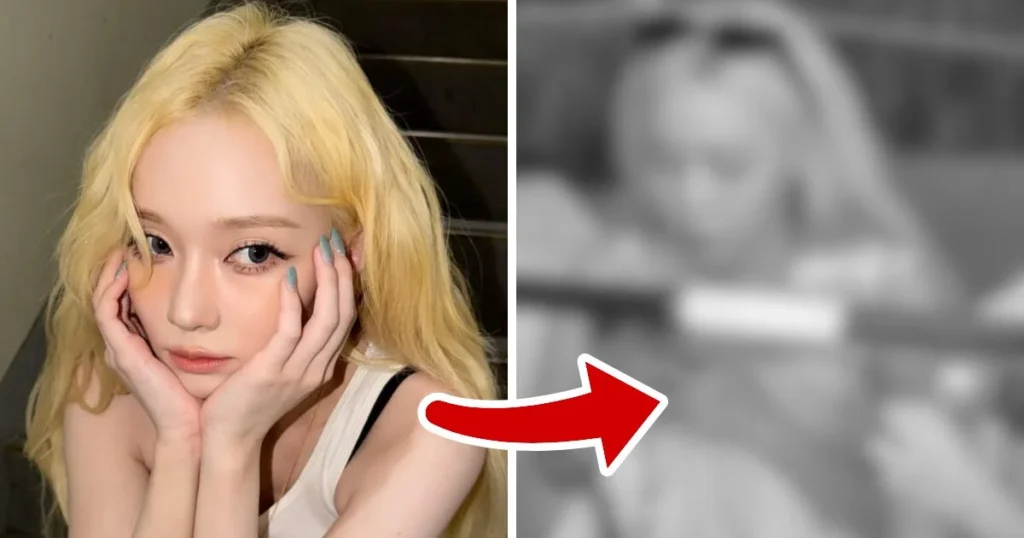
The situation gained traction following a viral post on the popular Korean community portal Nate Pann. The original poster (OP) shared images of Winter enjoying her time at the Seoul Jazz Festival, a major annual cultural event held at the Olympic Park in Seoul. In these candid shots, Winter is seen holding and drinking from a bottle of Pocari Sweat, a well-known electrolyte drink produced by Dong-A Otsuka.
The point of contention arises from Winter’s current professional status as the face of Toreta!, a rival hydration beverage manufactured by Coca-Cola Korea. Winter was officially announced as the brand ambassador for Toreta! earlier this year, featuring in high-profile television commercials and digital marketing campaigns. The brand has heavily leveraged her "refreshing" and "pure" image to appeal to health-conscious consumers. Consequently, her public association with Pocari Sweat—Toreta!’s primary competitor—led some netizens to question if she had breached "advertising laws" or, more accurately, the exclusivity clauses typically found in high-value endorsement contracts.
Understanding the Competitive Hydration Market in South Korea
To understand the gravity of the allegations, one must look at the competitive dynamics between Toreta! and Pocari Sweat. Both products are marketed as ion or electrolyte drinks designed for rapid hydration and mineral replenishment.
Pocari Sweat, launched in Korea in 1987, is the long-standing market leader. It holds a significant share of the sports drink industry, supported by decades of branding that emphasizes scientific hydration. On the other hand, Toreta! is positioned as a "lifestyle" hydration drink, often marketed as a lighter alternative suitable for daily consumption rather than just intense physical activity.
In the South Korean advertising industry, brand loyalty is not just a marketing goal but often a legal requirement for the duration of a contract. When a celebrity signs as a "model" for a specific product, they are frequently prohibited from being seen using a direct competitor’s product in public spaces where they are likely to be photographed. This is intended to protect the "brand equity" and the investment made by the sponsoring company.

Chronology of Events and Public Reaction
The timeline of the incident reflects the rapid speed at which K-pop-related news travels and evolves:
- Early 2024: Winter is appointed as the official brand model for Toreta!, appearing in a series of "Clear and Pure" themed advertisements.
- Late May 2024: Winter attends the Seoul Jazz Festival during her personal downtime.
- May 25–26, 2024: Candid photos of Winter at the festival begin circulating on social media. One specific image shows her with a bottle of Pocari Sweat.
- May 26, 2024: A post titled "Isn’t this a violation of advertising laws?" goes viral on Pann. The author suggests that Winter’s endorsement deal could be terminated due to this perceived lack of brand loyalty.
- May 26, 2024 (Post-Viral): A counter-wave of support emerges from both fans (MYs) and general netizens, defending the idol against what they perceive as an "overreach" by online critics.
The reaction from the broader public has been largely defensive of Winter. Many netizens argued that the Seoul Jazz Festival is a private outing and that expecting an idol to monitor every beverage choice in their personal life is unrealistic. Critics of the original post pointed out that at large festivals, beverage choices are often limited to what the event sponsors or local vendors provide, meaning Winter may not have had a choice if she required hydration.
Contractual Obligations vs. Personal Freedom
In the K-pop industry, the distinction between a "public persona" and a "private individual" is notoriously thin. Most endorsement contracts include "morality" and "exclusivity" clauses. An exclusivity clause generally dictates that the model cannot promote, mention, or be seen using a competitor’s product in a professional capacity.

However, legal experts in the field of entertainment law often distinguish between "active promotion" and "passive consumption." If Winter had posted a photo of Pocari Sweat on her official Instagram account with a caption praising the drink, that would likely constitute a clear breach of contract. Simply being photographed by a third party while holding a competitor’s drink during a private outing is a much more ambiguous area.
History provides several examples of similar "accidental" brand conflicts. For instance, idols who are ambassadors for Samsung Galaxy have occasionally been spotted using iPhones in "behind-the-scenes" footage or private photos, leading to temporary social media storms. In most cases, these incidents result in a private warning from the brand or the agency (SM Entertainment, in Winter’s case) rather than a full termination of the contract or legal action, provided the idol’s overall influence remains positive for the brand.
Potential Implications for Winter and Toreta!
While the viral post suggested that Winter’s endorsement deal might "disappear," industry analysts suggest this is unlikely. Winter’s current market value is at an all-time high, following the massive success of aespa’s recent releases, such as "Supernova" and "Armageddon." For Coca-Cola Korea, the "negative" press generated by a single bottle of Pocari Sweat is likely outweighed by the massive visibility Winter brings to the Toreta! brand.

Furthermore, some marketing experts argue that these "controversies" can sometimes inadvertently benefit the sponsored brand. The intense debate has led to Toreta!’s name being mentioned thousands of times alongside Winter’s in news articles and social media threads, reinforcing her association with the brand even as the "scandal" focuses on a competitor.
The Burden of the "Brand Model" in K-Pop
This incident highlights the immense pressure placed on K-pop stars to be "living advertisements." Unlike Western celebrities, who might represent a brand but are rarely scrutinized for their daily consumer choices, K-pop idols are expected to embody the brand 24/7. This expectation is a byproduct of the "parasocial" relationship between idols and fans, where every action is seen as a reflection of the idol’s character and professional integrity.
The "advertising laws" mentioned by the disgruntled netizen refer to the Fair Trade Commission’s guidelines regarding "backdoor advertising" (advertising without disclosure). However, in this context, the netizen was likely misusing the term to describe a breach of civil contract. There is no evidence that Winter was engaged in "backdoor advertising" for Pocari Sweat; rather, she was a consumer at a public event.

Conclusion and Future Outlook
As of the latest reports, neither SM Entertainment nor Coca-Cola Korea has issued an official statement regarding the festival photos. This silence is typical for minor social media controversies that do not result in actual legal proceedings. Most industry insiders expect the issue to blow over as the news cycle moves toward aespa’s upcoming concert tours and promotional activities.
The "Winter Pocari Sweat" incident serves as a case study in the hyper-vigilance of the K-pop fandom and the complexities of celebrity endorsements in the digital age. While the original poster sought to frame Winter’s actions as a professional failure, the overwhelming public support for the idol suggests a shifting sentiment: a growing segment of the audience believes that idols should be allowed a degree of normalcy in their private lives, even if they are the face of a multi-million dollar advertising campaign.
In the long run, this event is unlikely to tarnish Winter’s reputation as a "CF Queen." If anything, it underscores the intense scrutiny she faces as one of the leading figures of the fourth generation of K-pop, where even a bottle of water can spark a national debate. Moving forward, both agencies and brands may need to navigate these "lifestyle" overlaps with more flexibility as the boundary between an idol’s professional endorsements and their personal autonomy continues to be a site of public negotiation.