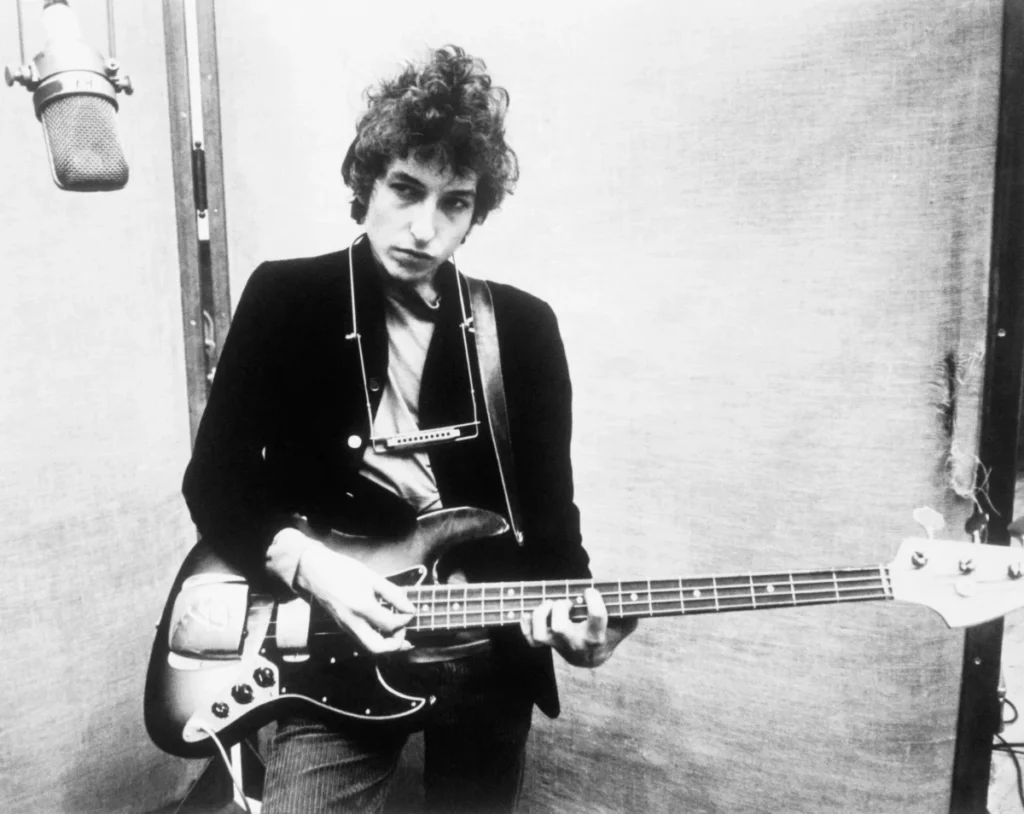

The trajectory of Bob Dylan’s life is often mapped through his discography, yet a parallel narrative exists within the physical structures he has inhabited. From the austere, wind-whipped duplexes of northern Minnesota to the sprawling, multi-structure compounds of Malibu, Dylan’s real estate history serves as a blueprint of his evolution from Robert Zimmerman to a global icon and Nobel laureate. While he is most frequently associated with the folk revival of New York City’s Greenwich Village, his residential footprint spans continents, reflecting a career defined by a tension between public performance and a fierce, often reclusive, need for privacy.
The Formative Years: Minnesota’s Iron Range
Bob Dylan was born Robert Allen Zimmerman on May 24, 1941, in Duluth, Minnesota. His earliest years were spent in the upper unit of a modest duplex at 519 North 3rd Avenue East. Situated on a hillside overlooking Lake Superior, the location was characterized by the harsh industrial and maritime atmosphere of the post-war era. Dylan would later reflect on this environment in 2017, describing it as a "dark place" defined by foghorns, blizzards, and the scarcity of the World War II years. The granite-rock foundation of Duluth provided a stark, somber backdrop for his first five years before his family relocated to Hibbing, Minnesota, in 1948.

In Hibbing, the Zimmermans settled into a 759-square-foot home at 2425 7th Avenue East—a street that has since been renamed Bob Dylan Drive. This residence served as the site of his adolescence, where he taught himself piano and guitar and formed his first high school bands. The home remained in the family until Dylan left for college in 1959. In a testament to his enduring legacy, both the Duluth and Hibbing childhood homes were eventually acquired by Bill Pagel, a dedicated Dylan historian and collector. Pagel purchased the Duluth property for $82,000 in 2001 and the Hibbing house for $320,000 in 2019, with the intent of preserving these sites as landmarks of American cultural history.
Academic Interlude and the Minneapolis Folk Scene
In September 1959, Dylan enrolled at the University of Minnesota in Minneapolis. His initial residence was the Sigma Alpha Mu fraternity house at 915 University Avenue Southeast. However, the rigid structure of fraternity life proved a poor fit for the burgeoning musician. By the middle of his freshman year, he relocated to a small apartment above Gray’s Drugstore in Dinkytown, a bohemian neighborhood adjacent to the university.
This move was pivotal; Dinkytown was the center of the local folk music scene, and it was here that Dylan began performing at venues like the Ten O’Clock Scholar. The proximity to like-minded musicians and the independence of his own apartment facilitated his immersion into the works of Woody Guthrie. This period of intense creative incubation led him to drop out of college in May 1960, setting the stage for his departure to New York City.

The Greenwich Village Revolution and the Hotel Chelsea
Dylan arrived in Manhattan in early 1961, eventually securing a $60-a-month apartment on the third floor of 161 West 4th Street. In his memoir, Chronicles: Volume One, Dylan described the space as a cramped two-room unit with a kitchenette and a fireplace, overlooking a courtyard of fire escapes. Despite its modesty, this apartment was the birthplace of some of the most influential music of the 20th century. During his three-year tenure there, Dylan signed with Columbia Records and released his self-titled debut, as well as The Freewheelin’ Bob Dylan.
As his fame accelerated, Dylan sought the creative anonymity offered by the Hotel Chelsea on West 23rd Street. A legendary haven for artists, the Chelsea provided the backdrop for the composition of much of his 1966 masterpiece, Blonde on Blonde. The hotel’s reputation for housing literary and musical giants—including Leonard Cohen and Patti Smith—aligned with Dylan’s transition from folk singer to rock icon.
The Woodstock Years: Seeking Seclusion
Following a motorcycle accident in July 1966, Dylan retreated from the public eye, moving his young family to Woodstock, New York. His initial residence was a rental above a cafe on Tinker Street, but he soon invested $12,000 in "Hi Lo Ha," an 11-room Arts and Crafts-style house in the Byrdcliffe colony. This period was marked by the "Basement Tapes" sessions with the musicians who would become The Band.

However, the increasing influx of fans and "Dylanologists" searching for the reclusive star made Hi Lo Ha untenable. In 1969, the family moved to a more secluded 100-acre estate in the same region. This Woodstock era was essential for Dylan’s transition into a more domestic life, though he ultimately left the area in the mid-1970s as he prepared for a return to large-scale touring and a shift in his personal life.
The Malibu Compound: A Custom Fortress
In 1979, Dylan made what would become his most significant real estate investment: a property in the Point Dume area of Malibu, California. Initially purchased for $105,000, the estate was transformed into a highly customized compound under the direction of designer Martin Newman. The architecture is a singular blend of Moorish, Spanish Colonial, and Santa Fe styles, reflecting Dylan’s eclectic aesthetic.
According to Newman, the house was built with a philosophy of "using everything," including all seven classic architectural arches. The main house, spanning approximately 6,000 square feet, features a "whale-watching tower," a "storytelling room," and a "cathedral room." The construction process was artisanal, including a dedicated on-site tile factory that produced a million dollars’ worth of handmade tiles. Over the decades, Dylan has systematically acquired adjacent parcels of land to ensure total privacy, creating a fortress-like environment that remains his primary residence to this day.

Manhattan Townhouses and the Turtle Bay Hermitage
Despite his permanent move to the West Coast, Dylan maintained a significant presence in New York City. In 1986, he purchased a four-story brick townhouse in Harlem’s Striver’s Row for $595,000. The 1861 Renaissance Revival-style home offered 4,500 square feet of space but was eventually sold in 2000 for $560,000.
In 1990, Dylan acquired a more exclusive residence in Turtle Bay Gardens, a gated enclave in Midtown Manhattan known for its communal garden and high-profile residents like Katharine Hepburn and Stephen Sondheim. Dylan had previously rented the 5,400-square-foot townhouse in the 1980s before purchasing it. During this period, he lived a largely hermetic life in the city, avoiding the spotlight while raising his younger children. He eventually sold the property in 2005.
International Holdings and the Minnesota Legacy
Dylan’s real estate portfolio also extended internationally. In 2006, he and his brother, David Zimmerman, purchased Aultmore House in the Scottish Highlands for approximately £2.2 million. The Edwardian manor, set on 25 acres, featured 16 bedrooms and several guest cottages. The estate served as a private retreat for nearly two decades before being sold in 2023 for $5.35 million to a Scottish whisky company.

Parallel to his global acquisitions, Dylan has maintained a connection to his roots through a 100-acre farm in Hanover, Minnesota, located along the Crow River. Held by Dylan and his brother since 1974, the property allows him a quiet return to the North Star State. Local lore often cites his occasional appearances at the nearby Hilltop Bar, though these visits have become rarer in recent years.
Analysis: Geography as a Creative Catalyst
A review of Bob Dylan’s residential history suggests that his choice of environment has always been tethered to his creative output. The cramped quarters of West 4th Street mirrored the raw, immediate energy of his early protest songs. The expansive, artisanal complexity of the Malibu compound reflects the later-stage Dylan: a multifaceted artist who defies easy categorization and values the preservation of his private world above all else.
From a real estate perspective, Dylan’s moves have often been prescient. His early entry into the Malibu market and his investment in historic Manhattan townhouses demonstrate a keen understanding of value, even if his primary motivation was seclusion. Today, his properties are more than just residences; they are the silent witnesses to the evolution of an American legend, each structure marking a distinct chapter in a life that has reshaped global culture.

Chronology of Major Bob Dylan Residences
- 1941–1946: 519 North 3rd Avenue East, Duluth, MN (Birthplace).
- 1948–1959: 2425 7th Avenue East, Hibbing, MN (Childhood home).
- 1959–1960: Sigma Alpha Mu / Dinkytown Apartment, Minneapolis, MN (College years).
- 1961–1964: 161 West 4th Street, NYC (The Folk Revival).
- Mid-1960s: Hotel Chelsea, NYC (Composition of Blonde on Blonde).
- 1965–1975: Hi Lo Ha and subsequent 100-acre estate, Woodstock, NY (Post-accident seclusion).
- 1974–Present: 100-acre Farm, Hanover, MN (The Minnesota retreat).
- 1979–Present: Point Dume Compound, Malibu, CA (Primary residence).
- 1986–2000: Striver’s Row Townhouse, Harlem, NYC.
- 1990–2005: Turtle Bay Gardens Townhouse, NYC.
- 2006–2023: Aultmore House, Nethy Bridge, Scotland.
As Dylan continues his "Never Ending Tour," his vast array of homes stands as a reminder of the many lives he has lived within a single career. Whether in the Scottish Highlands or the California coast, these spaces provide the necessary sanctuary for an artist who has spent more than six decades in the relentless glare of the public eye.