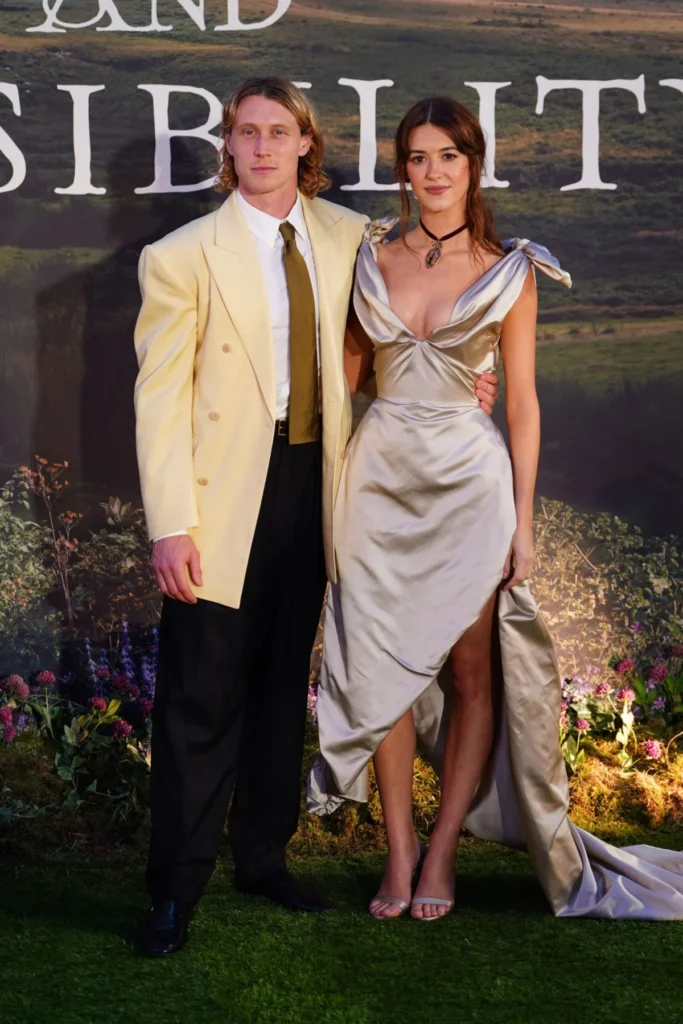

The year 2026 has witnessed an extraordinary resurgence of Regency-era storytelling, effectively turning the clock back two centuries on the global entertainment landscape. While period dramas have long been a staple of British television and cinema, the current influx of Jane Austen adaptations represents a significant shift in audience appetite. From the quiet, contemplative corridors of the BBC to the algorithm-driven content libraries of Netflix, Austen’s influence has never been more pervasive. The release of Georgia Oakley’s Sense and Sensibility, featuring Daisy Edgar-Jones as the pragmatic Elinor Dashwood, serves as the centerpiece of a year that has already seen the successful debut of the BBC’s The Other Bennet Sister and anticipates a high-profile Pride and Prejudice reimagining before the year’s end.
This wave of production is not merely a cyclical trend; it is a calculated response to a profound shift in how audiences consume media. As the world navigates the complexities of the mid-2020s, the structured, etiquette-heavy, and deeply emotional world of the early 1800s provides a compelling foil to the digital-first reality of the modern era.

A Chronology of the Austen Revival
The enduring legacy of Jane Austen’s bibliography—comprising six completed novels—has been punctuated by landmark cinematic moments that have shaped public perception of her work. Following her death in 1817 at the age of 41, her novels transitioned from niche literary classics to the bedrock of Western pop culture.
The most notable surge in this trajectory occurred in 1995. This was a watershed year for the "Austen cinematic universe," characterized by two monumental releases: the BBC’s iconic Pride and Prejudice television series, which cemented Colin Firth’s status as the definitive Mr. Darcy, and the feature film adaptation of Sense and Sensibility, directed by Ang Lee and starring Emma Thompson, Alan Rickman, and Kate Winslet. These projects established a standard for quality that subsequent adaptations have consistently sought to emulate.
Moving into the 21st century, the momentum accelerated following the 250th anniversary of the author’s birth in 1775. By 2025, production houses were already deep into development for the 2026 slate. The current year stands as the most crowded in the history of Austen adaptations, with three major projects arriving within a single 12-month window. This density of output reflects both the intellectual property’s status as a "safe" investment for studios and its proven ability to bridge the gap between generational demographics.

Data and Market Dynamics
Market analysis indicates that the demand for "comfort-viewing" content has spiked by approximately 22% since 2023. Austen adaptations, categorized under the "Prestige Period Drama" umbrella, consistently perform well in global streaming markets. According to recent viewership data, period dramas see a higher-than-average retention rate among viewers aged 18–34, a demographic often associated with high social media usage.
The juxtaposition of this trend with the digital age is telling. While contemporary viewers spend an average of six to eight hours a day on digital platforms, the themes of Austen—restricted social movement, the importance of reputation, and the slow-burn development of romantic intimacy—offer a psychological "slow down." The 2026 adaptations are not merely costume dramas; they are sophisticated character studies that leverage high-production values to explore the tension between individual autonomy and societal obligation.
Voices from the Red Carpet: The Cast Perspective
At the world premiere of Sense and Sensibility in London’s Leicester Square, the atmosphere was defined by a tangible enthusiasm from both fans and the creative team. The cast members, in interviews with The Standard, offered a unified theory on why this specific period continues to capture the modern imagination.

George MacKay, who steps into the role of Edward Ferrars, emphasized the concept of "eternal conundrums." MacKay argued that the specific social constraints of 1811 are simply a framework for universal human experiences. "Everything that she is talking about, while the social context is very specific to the time, is about balancing your own wants and yearnings and passions up against what is expected socially," MacKay noted. For him, the modern viewer’s struggle to find authenticity in a performative digital world is mirrored in the struggles of the Dashwood sisters.
Director Georgia Oakley, reflecting on the 200-year anniversary of Austen’s passing, highlighted the author’s inherently contemporary voice. "She was writing about themes at the time that were relevant to her and the society she grew up in, but that are inherently contemporary," Oakley stated. "That is why we cannot move away from it, because it is still so relevant today."
This sentiment was echoed by the younger cast members, including Bodhi Rae Brethnach, who plays Margaret Dashwood. Brethnach noted that the core themes—sisterhood, the complexities of heartbreak, and the limitations placed on women’s agency—are as salient today as they were in the early 19th century.

The Return of Yearning
Perhaps the most compelling analysis of the current trend comes from Turlough Convery, who portrays Sir John Middleton. Convery posited that the rise of social media has paradoxically created a deficit of genuine connection, leaving audiences craving the "yearning" found in Austen’s prose.
"In a world where we are so based on social media, so based away from one another, not connected to each other, there is a deep desire for yearningness there," Convery said. He suggested that while technology allows for global communication, it has stripped away the mystery and the necessity for patience in human relationships. Austen’s characters, who must wait months for a letter or navigate the physical space of a ballroom to exchange a glance, embody a level of emotional anticipation that is largely absent from modern life.
Frank Dillane, who portrays the romantic interest John Willoughby, framed the trend as a return to structure. In a world characterized by the "paradox of choice," where every decision is immediate and ephemeral, the rigid etiquette and clearly defined rules of the Regency era provide a sense of psychological comfort. "Maybe we are sort of yearning for the simplicity of rules to make our lives a little easier to understand," Dillane observed.

Broader Implications and Future Outlook
The success of the 2026 Austen slate has significant implications for the entertainment industry. It validates the "legacy IP" strategy, confirming that stories with strong, established emotional cores can be revitalized indefinitely provided they are handled with cultural sensitivity and modern aesthetic sensibilities.
Furthermore, the industry is seeing a shift in how these stories are being told. The 2026 adaptations are moving away from the "museum piece" style of filming, opting instead for more dynamic camerawork, modern musical scoring, and casting choices that reflect the diversity of contemporary society. By blending the historical integrity of the source material with the technical advancements of modern filmmaking, producers are ensuring that Austen remains not just a relic of literature, but a living, breathing part of modern discourse.
As the industry looks toward 2027 and beyond, the "Austen Effect" is unlikely to dissipate. The success of this year’s projects provides a blueprint for future adaptations: focus on the psychological interiority of the characters, maintain the tension between personal desire and public duty, and lean into the universal human need for connection. In a world that feels increasingly fragmented, the promise of a clear, structured, and emotionally resonant narrative—even one written two centuries ago—remains a powerful draw for audiences across the globe. Whether through a new television series or a major motion picture, the dialogue between Jane Austen and the modern world continues to evolve, proving that some stories, like the human condition itself, never truly go out of style.