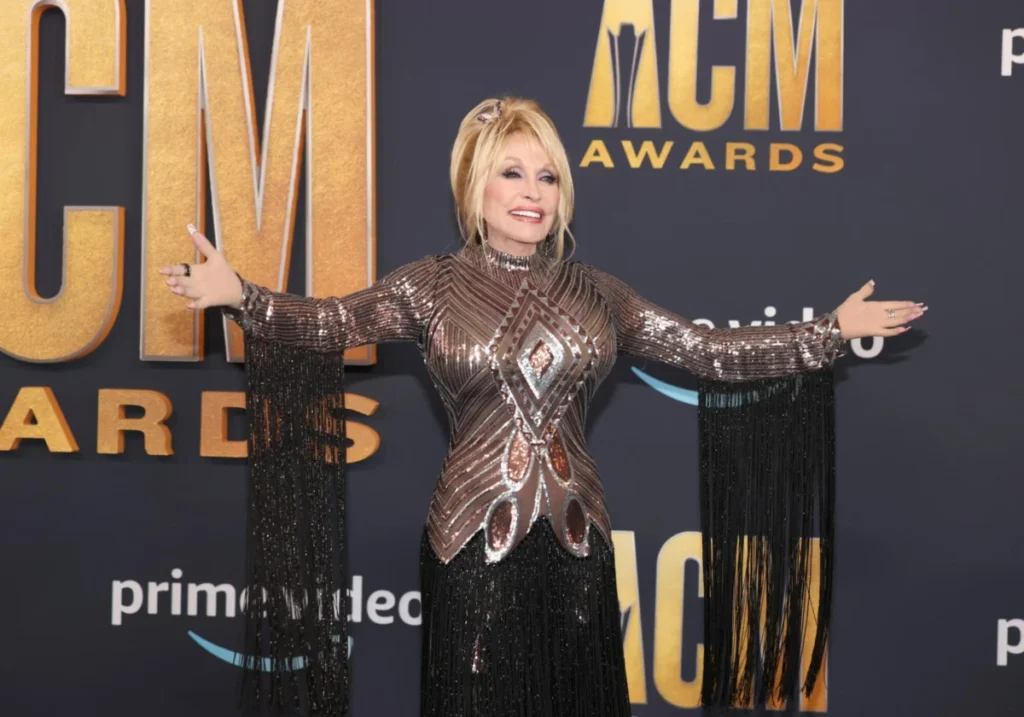

The Metropolitan Nashville Airport Authority board of commissioners has voted unanimously to initiate the formal process of renaming Nashville International Airport to honor the late country music icon Dolly Parton. The decisive 6-0 vote, taken on Friday, September 11, represents the foundational step in a comprehensive, multi-phase transformation that will eventually attach the legendary singer-songwriter’s name to one of the busiest transportation hubs in the American South.
While the board has officially committed to the transition, a final, specific moniker has not yet been selected. Airport authorities have indicated that they are currently engaged in close consultations with key stakeholders to determine the precise method by which Parton’s name, image, and monumental legacy will be integrated into the physical and operational identity of the facility.
The decision comes in the wake of Parton’s passing on August 25 at the age of 80, following a brief and private battle with cancer. Her death sparked an outpouring of global grief and immediate calls from public officials, fans, and cultural institutions to permanently enshrine her name in her home state’s capital.
Chronology of the Renaming Campaign
Although the airport authority’s vote on September 11 formally initiated the administrative workflow, the movement to rename Nashville International Airport after the Tennessee native has a history that predates her passing.
Early 2025: A grassroots public petition is launched online, advocating for the renaming of the facility to "Dolly Parton International Airport." The initiative steadily gains traction among travelers and local residents who view the singer as the ultimate ambassador of Tennessee culture.
August 25, 2025: Dolly Parton passes away at the age of 80, prompting a massive wave of national and international mourning. The pre-existing petition experiences an unprecedented surge in digital engagement, ultimately surpassing 175,000 signatures within weeks.
August 26–31, 2025: High-ranking state and local government officials publicly endorse the concept. Tennessee Governor Bill Lee and Nashville Mayor Freddie O’Connell voice strong support for dedicating the airport to the iconic performer.
September 1, 2025: The Nashville Metro Council unanimously adopts a formal resolution supporting the renaming effort, signaling unified local government backing.
September 11, 2025: The Metropolitan Nashville Airport Authority board of commissioners convenes and votes 6-0 to begin the renaming process. Because the airport’s existing regulations stipulated that properties could only be named after individuals deceased for a minimum of two years, the board formally modifies its institutional policy to accommodate the historic tribute.
Over the coming months, airport leadership and representatives from the Dollywood Foundation—the nonprofit organization established by Parton in 1988—will collaborate to finalize the new designation and oversee the logistical rollout of the rebranding effort.
Policy Adjustments and Governance
The unanimous vote by the Metropolitan Nashville Airport Authority required a strategic procedural adjustment. Standard operational guidelines for the authority historically mandated a mandatory waiting period, dictating that any public property or facility under its jurisdiction could not bear the name of an individual until at least two years had passed following their death.
Recognizing the singular cultural stature of Dolly Parton and the overwhelming public desire to honor her immediately, the board commissioners elected to amend this policy. This regulatory change reflects the extraordinary nature of the tribute, clearing the legal and administrative hurdles necessary to advance the project without unnecessary delay.
According to statements released by the airport authority, the final nomenclature will be determined through a joint partnership between aviation executives and the Dollywood Foundation. This ensures that Parton’s estate and her philanthropic entities retain direct creative and advisory input regarding how her identity is represented across the airport’s terminals, signage, and marketing materials. Detailed plans regarding the official name, structural changes, and unveiling timelines are expected to be released to the public in the coming months.

Bipartisan Political Support and Public Reaction
The initiative to rename Nashville International Airport has achieved a rare milestone in contemporary American politics: complete bipartisan consensus. Elected officials from across the political spectrum have championed the cause, emphasizing Parton’s universal appeal and her status as a unifying cultural figure.
Tennessee Governor Bill Lee, a Republican, was among the first prominent leaders to advocate for the change immediately following the artist’s death. In a formal statement released in late August, Governor Lee remarked on the appropriateness of the tribute given the airport’s role as a primary gateway to the state. "At a place where Tennessee welcomes the world, it is fitting that Nashville International Airport would bear the name of our state’s favorite daughter," Lee stated.
Similarly, Nashville’s Democratic Mayor, Freddie O’Connell, threw his full administrative weight behind the proposal. The subsequent unanimous adoption of a supporting resolution by the Nashville Metro Council on September 1 demonstrated cohesive alignment between city leadership, state government, and aviation authorities.
This unified front reflects Parton’s unique ability to transcend political, generational, and geographic divides. Throughout her lifetime, she was frequently cited not only as a titan of the music industry but also as a bridge-builder who maintained widespread affection across diverse demographics.
A Legacy of Music, Commerce, and Philanthropy
To understand the profound significance of renaming Nashville’s primary aviation hub in her honor, one must examine the staggering scope of Dolly Parton’s seven-decade career. Born in a modest two-room cabin in Sevier County, Tennessee, as one of twelve children, Parton rose from humble Appalachian beginnings to become a global entertainment icon.
Over the course of her historic career, Parton sold more than 100 million records worldwide, establishing herself as one of the best-selling music artists of all time. Her commercial and artistic achievements span multiple genres, most notably country and pop. She achieved 25 number-one singles on the Billboard Hot Country Songs chart—a record for a female artist that remains unbroken. Her crossover success was cemented by iconic Billboard Hot 100 chart-toppers such as "9 to 5" and "Islands in the Stream" (a duet with Kenny Rogers). Her enduring influence was further validated in 2022 when she was inducted into the Rock and Roll Hall of Fame.
Beyond her recorded output and electrifying live performances, Parton’s cultural footprint was magnified by her extensive entrepreneurial ventures, including the Dollywood theme park in Pigeon Forge, Tennessee, which serves as a major economic engine for the state’s tourism sector.
Equally significant is her philanthropic legacy. Through the Dollywood Foundation, Parton established the Imagination Library in 1995, an initiative designed to foster a love of reading among preschool children by mailing free, high-age-appropriate books monthly from birth until school entry. The program has scaled globally, distributing hundreds of millions of books to children in the United States, Canada, the United Kingdom, Australia, and the Republic of Ireland. Her charitable contributions also include significant disaster relief efforts, medical research funding, and educational scholarships within her home state.
Broader Impact and Economic Implications for Nashville Aviation
The decision to transition Nashville International Airport into a themed, eponymously honored facility carries substantial operational, cultural, and economic implications for the region.
Nashville International Airport (BNA) has experienced unprecedented passenger growth over the past decade, driven by the explosive economic expansion of Middle Tennessee and Nashville’s booming tourism industry. As a major economic driver for the region, managing millions of arriving and departing travelers annually, the airport serves as the primary physical introduction to Music City for domestic and international visitors.
By attaching Dolly Parton’s name to the airport, local leaders are intentionally weaving the region’s cultural heritage directly into its critical infrastructure. Industry analysts suggest that the rebranding could enhance the airport’s global brand identity, transforming the transit hub from a conventional transportation facility into an experiential extension of Nashville’s cultural narrative. Similar airport renamings globally—such as Liverpool John Lennon Airport in the United Kingdom or Louis Armstrong New Orleans International Airport—have demonstrated that honoring local icons can deepen regional pride, boost tourism engagement, and create unique merchandising and artistic partnership opportunities within terminal spaces.
Furthermore, the involvement of the Dollywood Foundation ensures that the rebranding will likely maintain a strong philanthropic connection. Observers speculate that future terminal developments could incorporate interactive exhibits celebrating Tennessee music history, displays highlighting Parton’s charitable endeavors, or physical installations dedicated to the Imagination Library, turning the travel experience into an educational and cultural showcase.
As the Metropolitan Nashville Airport Authority proceeds with the complex logistical phases required to implement the change, travelers, fans, and local officials alike await the official unveiling of the new name. For a city that defines itself largely through the rhythm and storytelling of country music, dedicating its primary aviation gateway to Dolly Parton ensures that every visitor arriving in the Volunteer State will be greeted by the enduring spirit of its most celebrated cultural ambassador.