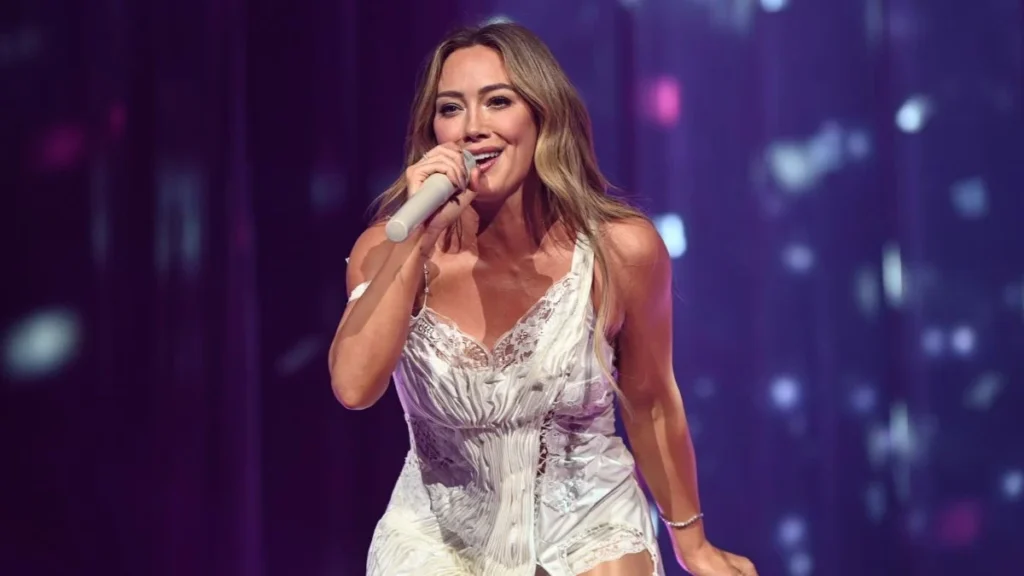

Hilary Duff has transformed her highly anticipated Lucky Me Tour into a dynamic runway, showcasing a series of avant-garde and high-fashion ensembles that have captivated both music critics and style enthusiasts alike. During her recent high-profile concert stop in London, the multi-platinum recording artist and actress debuted arguably her most daring and talked-about stage look to date: a custom deconstructed micro minidress designed by Lou de Betoly. The striking all-white ensemble, which blurred the lines between lingerie, contemporary art, and high fashion, featured an asymmetrical silhouette that functioned primarily as a high-cut bodysuit on one side, complemented by a dramatic, sweeping train that trailed behind her as she moved across the stage.
The London performance marked a significant milestone in the European leg of the tour, drawing capacity crowds and generating substantial buzz across fashion and entertainment publications. Duff’s sartorial choices for the evening reflected a calculated shift toward high-concept stage costuming, signaling her ongoing evolution as a modern style icon who is unafraid to take risks with her performance wardrobe.
Anatomy of a Showstopper: The Lou de Betoly Creation
The centerpiece of Duff’s London fashion lineup was the intricate Lou de Betoly creation, a garment that demanded attention through its unconventional proportions and meticulous craftsmanship. The dress incorporated delicate lace detailing paired with a fitted, lingerie-inspired bodice that emphasized structure while maintaining a soft, romantic aesthetic. Thin, minimalist straps delicately framed her shoulders, drawing the eye upward, while expertly gathered fabric introduced rich texture and depth across the front of the bodice.
The defining characteristic of the outfit, however, was its radical asymmetry. By combining a barely-there bodysuit construction on one side with an expansive, flowing fabric train, the design exposed a considerable amount of leg, creating a striking visual contrast that was tailor-made for the stage. The juxtaposition of structured tailoring and fluid movement allowed the dress to react dynamically to Duff’s choreography and stage presence.
To complete the monochromatic look, Duff paired the deconstructed micro minidress with sleek white knee-high boots that elongated her silhouette and maintained the crisp, uniform color palette. Her signature blonde hair was styled in effortless loose waves, framing her face, while a soft glam makeup palette provided a polished, understated finish. By keeping her hair and makeup relatively subdued, Duff ensured that the intricate architecture of the Lou de Betoly dress remained the undisputed focal point of the ensemble.
A Multi-Look London Showcase
While the white Lou de Betoly creation dominated fashion headlines, it was merely one of several distinct and memorable outfits that Duff debuted during her London concert. The evening’s wardrobe strategy was characterized by rapid, theatrical costume changes that mirrored the energetic ebbs and flows of her concert setlist.
In an early standout moment, Duff emerged in a shimmering silver minidress adorned with dramatic, elongated fringe. The sparkling garment was specifically engineered for performance, capturing and reflecting stage lights while generating kinetic energy with every movement, evoking a distinctly modern, disco-inspired aesthetic.
Later in the evening, the performer transitioned into a second silver metallic dress, this time featuring intricate, geometric cutout details that highlighted contemporary tailoring trends. This sleek, reflective garment offered a sharper, more futuristic contrast to the softer textures of her earlier numbers.
Demonstrating her versatility, Duff also incorporated relaxed, streetwear-influenced separates into her performance wardrobe. At one point, she donned a pale blue cropped top paired with oversized, utilitarian cargo-style jeans, layered underneath a sheer white fabric that added dimension to the casual look. In a more intimate, laid-back moment later in the show, she traded her high-fashion stage glamor entirely for a classic graphic white T-shirt and loose blue jeans, interacting casually with the audience while holding a cocktail onstage.
Despite the variety of genres represented in her wardrobe—ranging from disco glamor to utilitarian streetwear—the Lou de Betoly creation stood out as the defining sartorial statement of the night, successfully bridging the gap between high fashion and theatrical performance art.
Tour Background and the Evolution of Concert Fashion
The Lucky Me Tour represents a significant chapter in Hilary Duff’s career, blending nostalgia-driven fan engagement with a renewed artistic output. As artists increasingly leverage live performances as comprehensive brand experiences, the intersection of music and fashion has become more critical than ever. In recent years, major concert tours—most notably those by contemporary pop icons—have effectively doubled as high-fashion showcases, with designers vying to create custom, museum-quality pieces for the stage.
Duff’s embrace of independent and avant-garde designers like Lou de Betoly for The Lucky Me Tour underscores a broader industry trend. Rather than relying solely on traditional mass-market costume houses, modern headliners are increasingly collaborating with cutting-edge European design houses to establish a distinct, elevated visual identity. This strategic approach not only elevates the production value of the concert experience but also extends the artist’s cultural footprint into the realms of high fashion and editorial media.
Industry Implications and Critical Reception
The positive critical reception of Duff’s London wardrobe highlights the growing appetite for risk-taking in pop culture fashion. Fashion analysts and style commentators have noted that Duff’s tour wardrobe successfully avoids the predictable formulas often associated with legacy pop acts, opting instead for a curated mix of irony, sophistication, and modern femininity.
By selecting Lou de Betoly—a label known for its surrealist touches, exquisite textile manipulation, and playful subversion of traditional silhouettes—Duff signaled a sophisticated understanding of contemporary fashion trends. The deconstructed micro minidress, in particular, has been cited by fashion insiders as a masterclass in stage styling, proving that garments can be simultaneously high-concept, functional, and visually arresting under intense concert lighting.
Furthermore, the rapid public engagement generated by these outfits on social media platforms demonstrates the tangible commercial and cultural impact of tour-related fashion moments. As The Lucky Me Tour continues its itinerary, anticipation remains high regarding what subsequent cities will witness, cementing Hilary Duff’s current era as one defined just as much by sartorial reinvention as by musical performance.