
The residential design landscape for 2026 is witnessing a profound shift in kitchen architecture, characterized by a dual focus on monumental physical presence and sophisticated technological concealment. As homeowners increasingly view the kitchen as the primary theater for both domestic labor and social entertaining, the industry is responding with innovations that prioritize high-capacity utility and earthy, permanent aesthetics. From workstation sinks spanning more than six feet to cabinetry that rotates on its own axis, the upcoming cycle of interior design signals an end to the era of sterile minimalism in favor of "maximalist utility."
The Evolution of the Professionalized Home Kitchen
The most visible manifestation of the 2026 trend cycle is the dramatic expansion of the kitchen sink. No longer relegated to a mere cleanup zone, the sink has evolved into a multi-functional "workstation" that serves as the anchor for meal preparation and social gatherings. This shift is driven by a change in entertaining habits, where the barrier between the host’s preparation and the guests’ presence has largely dissolved.

Leading manufacturers are pushing the boundaries of scale. Kohler’s Synthos Workstation exemplifies this movement, offering modular undermount basins and multi-level ledges that extend up to 72 inches. According to Michael Seum, Vice President of Industrial Design at Kohler, the sink has transitioned into a "buffet or bar anchor," moving beyond its traditional plumbing roots.
The trend is supported by specialized manufacturers like Ohio-based Create Good Sinks, which has introduced 16-gauge stainless steel models reaching 74 inches, and an apron-front version measuring a record-breaking 84 inches. Other industry leaders, including Elkay and Ruvati, have followed suit with models integrated with colanders, cutting boards, and basket strainers. Market data suggests that these "supersinks" are becoming standard in high-end residential developments, serving double duty as preparation centers and, occasionally, as high-capacity cooling stations for beverages during large-scale events.
A Chromatic Shift: From Cool Greys to Earthy Reds
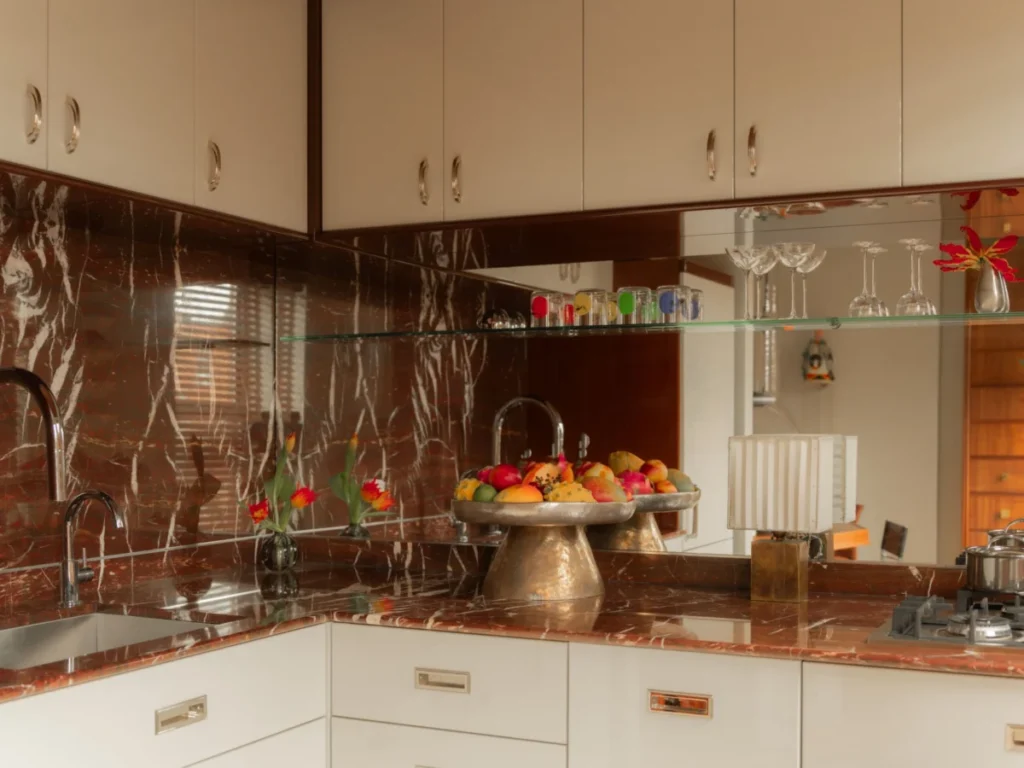
The visual palette of 2026 marks a definitive departure from the "all-white" and "cool grey" aesthetics that dominated the previous decade. Design experts are noting a surge in interest for deeper, more resonant earth tones, specifically within the red and terracotta spectrum. This transition is being led by influential tastemakers who are opting for stones that offer warmth and geological character.

Athena Calderone, a prominent voice in the design community, recently transitioned from the airy Calacatta marble of her previous projects to a dusky red Kinnekulle limestone for her Manhattan residence. Similarly, designer Mark Grattan has utilized Rouge Griotte marble for high-impact countertops and backsplashes.
Tina Ramchandani, a New York-based designer, notes that this shift toward "earthy reds" connects residents to nature in a way that stark whites cannot. Stones such as Rosso Lavante, Rosso Collemandina, and Paonazzo Breccto are increasingly specified for both residential kitchens and commercial cocktail bars. This trend reflects a broader psychological move toward "cocooning"—creating spaces that feel grounded, permanent, and visually rich.
The Resurgence of Ceramic and Tile Artistry
While ceramic has been a staple of kitchen design for centuries, 2026 sees the material breaking away from the backsplash and onto the countertop. This movement is fueled by a desire for localized sourcing and a rejection of the environmental and health costs associated with global slab quarrying and synthetic quartz manufacturing.

Designer Noz Nozawa is at the forefront of this movement, championing ceramic tile countertops as a sustainable and aesthetically versatile alternative to stone slabs. Despite some consumer hesitation regarding grout maintenance, modern grout technology is significantly more resistant to stains and bacteria than the iterations found in 1990s suburban homes. Nozawa’s approach involves using a grid of rectangular tiles in a checkerboard of matte and glossy finishes, emphasizing the tactile and artisanal quality of the material.
The ceramic trend extends to hardware and furniture as well. Artek’s collaboration with Heath involves cladding tables in ceramic tile, while Nest Studio has expanded its line of handmade ribbed ceramic cabinet hardware in collaboration with ceramicist Jonathan Castro. Jessica Davis, creative director at Nest Studio, emphasizes that ceramic hardware is "inherently durable and easy to clean," providing a seamless visual link between cabinetry and tiled surfaces.
Stealth Utility: Kinetic Cabinetry and Hidden Storage
As kitchens become more integrated into open-plan living areas, the demand for "stealth utility"—the ability to hide tools and appliances when not in use—has reached an all-time high. Manufacturers are utilizing advanced engineering to maximize storage without compromising the visual flow of the home.

The German manufacturer Hettich has introduced the FurnSpin system, a kinetic fitting that allows cabinets of any height to rotate 360 degrees on their axis. This allows a kitchen island corner to transition from a closed, monolithic surface to an open shelving unit with a single motion.
Complementing this is Henrybuilt’s "Invisible Bar Block," a customizable storage solution made from paperstone and powder-coated aluminum. Designed to be inset into countertops, it keeps essential tools like cutlery and spices within reach but entirely out of sight. Scott Hudson, CEO of Henrybuilt, describes this philosophy as treating the kitchen like a "professional workshop" where tools are accessible but do not clutter the workspace.
Advanced Hydration and the Rise of the Beverage Station
The "beverage center" has officially graduated from a luxury add-on to a core kitchen requirement. In 2026, the integration of advanced water filtration and dispensing systems is a primary focus for appliance manufacturers.

Zip Water’s HydroTap systems, which dispense chilled, boiling, and sparkling water from a single faucet, have become a benchmark for high-end renovations. Kohler has entered this space with the Aquifer 4-in-1 Beverage System, offering similar multi-functionality with a focus on high-performance filtration.
Perhaps the most significant technological leap in this category comes from Whirlpool, which has successfully integrated "nugget ice" dispensers directly into refrigerator doors. Previously, chewable pellet ice—highly popular in the "drive-through" beverage market—required standalone countertop appliances. By moving this technology into the French-door refrigerator, manufacturers are freeing up valuable counter space while catering to specific consumer preferences for specialized ice textures.
The Kitchen as a Multi-Generational Study Hub
The post-pandemic home continues to evolve as a site of overlapping activities. Designers are now frequently asked to incorporate "study halls" or workstations directly adjacent to or within the kitchen footprint. This trend acknowledges the reality that the kitchen is the household’s nerve center, where parents prepare meals while children complete schoolwork.

Chicago-based designer Wendy Labrum reports that "clients are prioritizing connection," leading to the inclusion of small, integrated desks that match the kitchen’s cabinetry. Rebekah Zaveloff of Imparfait Design Studio has taken this further by designing "kids’ offices"—separate but glass-walled spaces off the kitchen—that allow for supervision and proximity without the noise of the main cooking area. This architectural adjustment reflects a permanent shift in how families utilize their square footage, moving away from formal dining rooms toward multifunctional "great rooms."
Sustainability and Integrated Waste Management
Environmental mandates are beginning to dictate kitchen design on a structural level. With major cities like New York implementing mandatory composting programs, the "garbage zone" is being re-engineered.
New systems, such as those designed by PCD Studios, allow composting units to be built directly into the cabinetry. These systems use heat and mechanical motion to dehydrate and transform food waste into nutrient-rich soil overnight, eliminating the odors and aesthetic issues associated with traditional countertop bins.

Furthermore, even the humble garbage disposal is undergoing a design overhaul. The Composer One disposal features a "drain iris" for noise reduction and integrated under-cabinet lighting, signaling that even the most utilitarian aspects of the kitchen are being subjected to high-design standards.
Analysis of Broader Implications
The kitchen trends of 2026 reflect a broader economic and social reality: as the cost of housing remains high, homeowners are investing more heavily in the "heart of the home" to ensure it serves every possible function. The shift toward monumental sinks and professional-grade appliances suggests a move toward "investment grade" renovations—choosing materials and scales that will remain functional for decades.
Moreover, the emphasis on local sourcing (seen in the tile trend) and integrated composting indicates that sustainability is no longer an optional "green" feature but a fundamental requirement of modern luxury. The kitchen of 2026 is not just a place to cook; it is a highly engineered, multi-functional environment designed to manage waste, facilitate work, and host social life with equal efficiency. This evolution marks the final transition of the kitchen from a service room to the most technologically advanced and aesthetically significant room in the contemporary home.