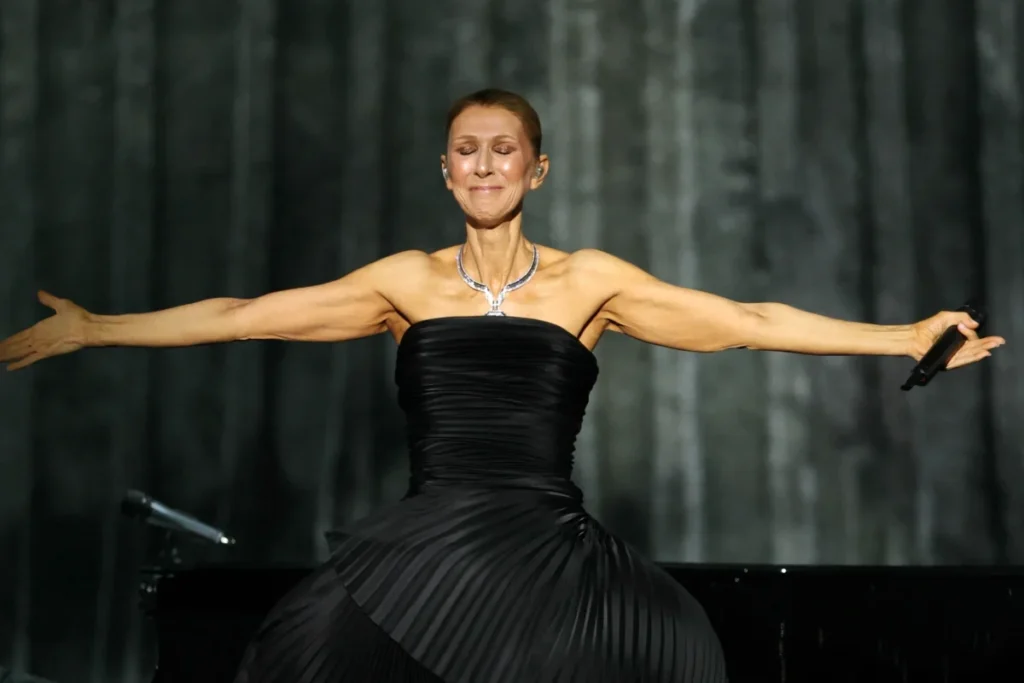

The return of one of the world’s most celebrated vocalists materialized on Saturday night as Céline Dion stepped onto the stage at the Plenitude Arena in Nanterre, just west of Paris, marking her first live concert performance in six years. The event served as the opening night of an eagerly anticipated 26-night residency in the French capital, drawing an audience of 30,000 enthusiastic fans. This monumental comeback performance represents the beginning of a massive autumn schedule that will see the Canadian icon perform 16 dates, welcoming a total of 480,000 attendees over the course of the season.
The path to this historic evening was paved with unprecedented demand. When tickets for the residency first went on sale, every single seat was purchased within hours. The sheer volume of eager buyers overwhelmed ticketing infrastructure, forcing the implementation of an exclusive access lottery that drew an astonishing nine million registrants worldwide. For an artist who has spent decades dominating international charts, the intense public response underscored an enduring global devotion that had only intensified during her prolonged absence from the public eye.
Years of Resilience and Medical Challenges
Dion’s triumphant return comes after a harrowing multi-year battle with stiff-person syndrome (SPS), a rare and progressive neurological disorder that causes muscle rigidity and painful spasms, severely impacting vocal cords and mobility. The singer publicly shared her diagnosis in late 2022, forcing the cancellation of her highly successful Courage World Tour and retreating from public performances to focus on intensive physical therapy and vocal rehabilitation.
Throughout her hiatus, industry experts and fans alike questioned whether the legendary belter would ever perform live again. Stiff-person syndrome affects the central nervous system, and for a vocal athlete whose signature performances rely on absolute physical control and immense respiratory stamina, the diagnosis presented a career-threatening hurdle. Saturday night’s performance answered those lingering questions definitively, proving that extensive medical treatment, rigorous rehabilitation, and sheer determination could restore her to the stage.
A Chronology of the Opening Night Spectacle
The evening’s events unfolded with the breathless anticipation typical of a historic cultural moment. Doors opened hours in advance, welcoming a star-studded audience that included high-profile figures such as Michelle Obama, Oprah Winfrey, French pop star Aya Nakamura, and astronaut Thomas Pesquet.
Although the show commenced 47 minutes behind schedule—building the tension within the packed arena—the subsequent two-and-a-half-hour performance delivered an emotional tour de force that concluded at 11:14 p.m. local time. Comprising 29 songs, the setlist traversed the entirety of Dion’s illustrious career, balancing intimate French-language selections with globally recognized English pop anthems.
The chronology of the evening highlighted Dion’s multifaceted artistry:
- The Emotional Opening: Dion opened the night visibly moved, shedding tears as she performed "On Ne Change Pas," instantly establishing a deeply personal connection with the Parisian crowd.
- The French Connection: Paying homage to the country that helped launch her international superstardom, a significant portion of the setlist drew from D’eux, the iconic album written entirely by Jean-Jacques Goldman that remains the best-selling French-language record in music history. She also used the stage to debut "Dansons," her brand-new 2026 comeback single penned once again by Goldman.
- The Theatrical Shift: Mid-show, the concert took a bold and unexpected turn into dance-pop territory. Underneath a sweeping mirror-ball lighting rig, Dion delivered high-energy renditions of Donna Summer’s "I Feel Love," Eurythmics’ "Sweet Dreams," and a sharply reworked version of her own smash hit "I’m Alive."
- Classical and Gospel Interludes: Demonstrating her remarkable vocal versatility, Dion sang the dramatic opera aria "La Wally" surrounded by falling artificial snow, later bringing out a full gospel choir to elevate a soaring rendition of "Pour Que Tu M’aimes Encore."
- The Grand Finale: In a breathtaking display of raw vocal power, Dion stripped away all instrumentation to deliver a stunning a cappella version of "All by Myself," leaving the 30,000-person audience spellbound before closing out the evening.
Staging, Design, and Artistic Choices
In stark contrast to the high-concept, pyrotechnic-heavy productions that dominate modern pop music tours, the production design for Dion’s Paris residency was deliberately minimalist. Aside from a grand, adaptable multi-level set and sophisticated lighting architecture, producers deliberately omitted heavy visual distractions.
This creative choice was intentional, designed to keep the entire focus squarely where it belonged: on Dion’s voice. Without the safety net of heavy staging or distracting visual effects, the performance relied completely on the purity of her tone, the emotional weight of her delivery, and the undeniable chemistry between the performer and her audience. Music critics noted that the stripped-back aesthetic highlighted the maturity and resilience embedded in her vocals, proving that her instrument has lost none of its signature clarity and power.
Supporting Data and Commercial Impact
The economic and cultural footprint of Céline Dion’s Paris residency extends far beyond the walls of the Plenitude Arena. Tourism boards in the French capital reported a substantial surge in hotel bookings and hospitality revenue coinciding with the residency dates.
Key figures surrounding the event illustrate its massive scale:
- 26: The total number of nights scheduled for the Paris residency.
- 30,000: The capacity crowd gathered for the opening night at the Plenitude Arena in Nanterre.
- 480,000: The cumulative number of tickets sold across the first 16 dates scheduled for the autumn run.
- 9,000,000+: The total number of individuals who registered for the initial ticket access lottery.
- 29: The number of songs performed during the two-and-a-half-hour opening night setlist.
Broader Implications for the Live Music Industry
Dion’s successful return carries profound implications for the global live entertainment sector. Her journey highlights a growing shift toward honoring legacy artists who navigate complex health challenges, while also redefining how major concert residences can be structured. By opting for a multi-night residency in a single European hub rather than embarking on a grueling global tour, Dion has established a sustainable model for artists managing chronic medical conditions without sacrificing the massive financial and cultural scale of their performances.
Furthermore, the triumphant comeback serves as a beacon of hope and representation for millions of individuals living with invisible illnesses, chronic pain, and autoimmune or neurological conditions like stiff-person syndrome. By speaking transparently about her diagnosis and returning to the global stage at the highest level of artistic excellence, Dion has transformed her personal adversity into a powerful narrative of endurance.
As the remaining dates of the Paris residency unfold in the coming weeks, the music world will undoubtedly continue to watch closely. Saturday night proved that Céline Dion’s voice—and her unbreakable bond with her audience—remains as formidable as ever.