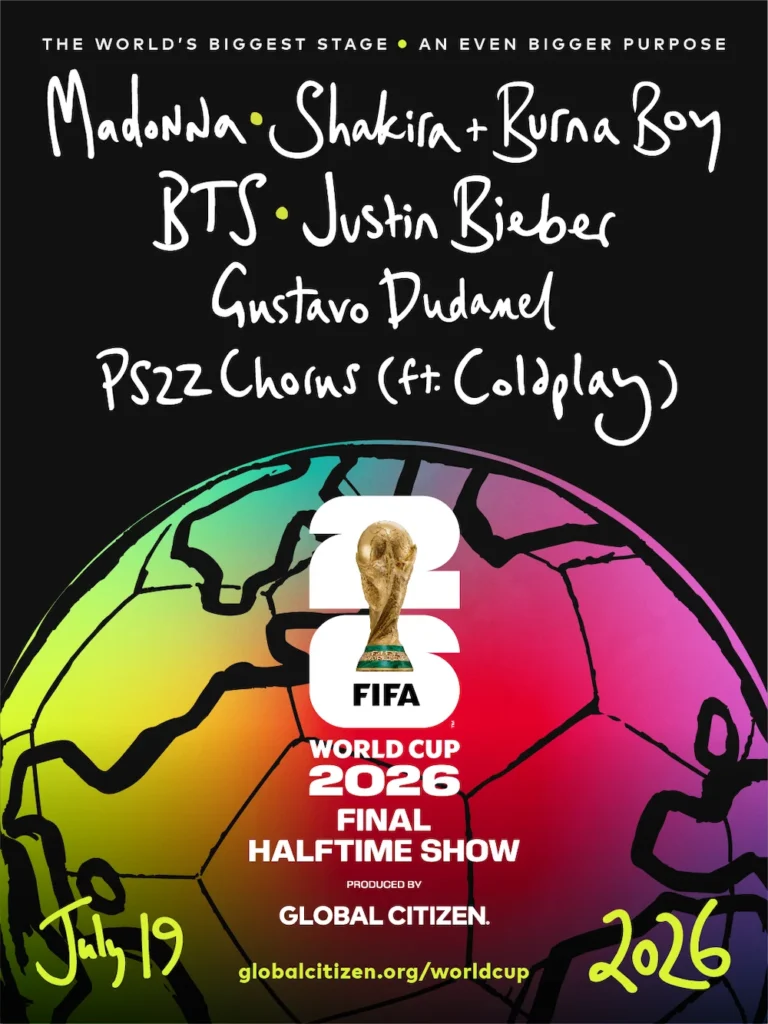

The entertainment world is abuzz with the official announcement that pop superstar Justin Bieber has joined an already stellar lineup for the inaugural FIFA World Cup Final Halftime Show, slated to captivate a global audience on July 19th. This groundbreaking event, marking the first halftime show in the history of the FIFA World Cup Final, will take place at the iconic New York New Jersey Stadium, also known as MetLife Stadium, bringing together an unprecedented assembly of musical talent. Bieber is set to co-headline the 11-minute spectacle alongside music legends Madonna, global phenomenon Shakira, and K-pop titans BTS, promising a truly unforgettable performance that transcends cultural and generational boundaries.
A Star-Studded Ensemble for a Historic Event
The decision to introduce a halftime show for the FIFA World Cup Final represents a significant evolution in the presentation of the world’s most-watched sporting event. For decades, the final match has been the pinnacle of international football, drawing billions of eyes, but the entertainment aspect during the interlude has traditionally been more understated, often featuring local cultural performances or brief musical interludes. This year, however, FIFA, in partnership with Global Citizen, is aiming to elevate the experience to an unprecedented level, akin to the scale and star power typically associated with events like the Super Bowl Halftime Show, but with an even greater global reach and a distinct philanthropic mission.
Beyond the four announced co-headliners, the lineup further boasts a diverse array of artists designed to appeal to every corner of the globe. Nigerian Afrobeats sensation Burna Boy, known for his infectious rhythms and powerful lyrics, will bring a vibrant energy. Acclaimed Venezuelan conductor Gustavo Dudamel, a maestro celebrated for his dynamic interpretations and work with youth orchestras, will undoubtedly add a classical, orchestral grandeur, symbolizing the universal language of music. The inclusion of New York’s PS22 Chorus highlights local talent and the spirit of the host region, while British rock stalwarts Coldplay, whose frontman Chris Martin curated the entire production, will also take to the stage. Adding a touch of beloved nostalgia and family-friendly appeal, characters from Sesame Street and The Muppets, including the iconic Kermit the Frog and Miss Piggy, are also scheduled to make appearances, underscoring the event’s broad demographic appeal.
The selection of these artists reflects a strategic effort to create a truly global spectacle. Madonna, the "Queen of Pop," brings unparalleled experience in large-scale productions and a legacy spanning over four decades. Shakira, with her electrifying stage presence and previous World Cup anthems like "Waka Waka (This Time for Africa)" and "La La La," is synonymous with the tournament’s festive spirit. BTS, with their fervent ARMY (fanbase) and groundbreaking global impact, represent the cutting edge of contemporary music and youth culture. Justin Bieber, a consistent chart-topper and social media powerhouse, ensures massive engagement across digital platforms. This multi-genre, multi-generational, and multi-cultural lineup is engineered to resonate with the diverse global audience of the World Cup.
The Genesis of a Global Spectacle: Why Now?
The concept of a formalized halftime show for the FIFA World Cup Final marks a pivotal moment for the tournament. While opening and closing ceremonies have long been a feature, the intermission of the final match has typically focused on pitch maintenance and a brief respite. The decision to introduce a dedicated, star-studded halftime show for the 2026 event can be attributed to several converging factors. Firstly, the increasing commercialization and entertainment value expected from major global sporting events. The success of the Super Bowl Halftime Show in captivating audiences and generating immense cultural buzz has likely served as a significant inspiration. Secondly, the co-hosting arrangement for the 2026 World Cup across the United States, Canada, and Mexico, particularly with the final in the New York metropolitan area, a global hub for entertainment and media, provides an ideal backdrop for such a grand production.
Furthermore, the partnership with Global Citizen underscores a growing trend of integrating social impact and philanthropy into major events. FIFA’s move to align its most prestigious match with a charitable cause reflects a broader commitment to corporate social responsibility and leveraging its immense platform for positive change. The confluence of sport, entertainment, and humanitarianism positions this halftime show not just as a performance, but as a global moment designed to inspire action.
Curating a World-Class Performance: Chris Martin and Global Citizen’s Vision
The curation of this monumental event has been entrusted to Chris Martin, the frontman of Coldplay, in his ongoing capacity with Global Citizen. Martin’s involvement brings a unique blend of artistic vision and a deep understanding of humanitarian causes. His role extends beyond simply performing; it involves assembling a lineup that is not only musically compelling but also aligned with the show’s underlying mission to promote education. Global Citizen, an international advocacy organization dedicated to ending extreme poverty, has a proven track record of orchestrating large-scale events that combine celebrity power with calls to action. Their festivals and campaigns have successfully mobilized billions of dollars for various global initiatives.
Hugh Evans, Co-Founder and CEO of Global Citizen, articulated the monumental scale of this endeavor, stating, "This is the single largest gathering of artists united for a cause since Live Aid, and it could well be the most-watched 11 minutes of broadcast music performance in history." This statement draws a direct parallel to the iconic 1985 Live Aid concerts, which united musicians worldwide to raise funds for famine relief in Ethiopia, signifying the profound historical and philanthropic weight placed on this upcoming halftime show. Martin’s leadership in curating such a diverse and impactful roster speaks to his commitment to using music as a force for good. His experience with Coldplay’s globally renowned stadium tours and their own philanthropic efforts makes him an ideal choice to weave together disparate musical styles into a cohesive and impactful performance.

A Platform for Philanthropy: The FIFA Global Citizen Education Fund
At the heart of this star-studded performance lies a profound charitable objective: to spotlight and support the FIFA Global Citizen Education Fund. This joint initiative between FIFA and Global Citizen aims to raise an ambitious $100 million to expand access to education and football opportunities for children across the globe. The organizers have confirmed that substantial progress has already been made, with more than $50 million already raised, demonstrating the early success of the campaign. A tangible commitment to this fund is integrated directly into the tournament’s financial model, with $1 from every ticket sold to all FIFA World Cup 2026 matches contributing directly to the campaign throughout the tournament.
The fund’s dual focus on education and football opportunities is strategic. Education is recognized globally as a fundamental human right and a powerful tool for poverty alleviation and social mobility. By linking it with football, the world’s most popular sport, the initiative taps into a universal passion that transcends geographical and socioeconomic barriers. Football can serve as a conduit for teaching teamwork, discipline, leadership, and health, while also providing a safe and engaging environment for children. The funds raised will go towards initiatives that build schools, provide learning materials, train teachers, and establish football programs in underserved communities, directly impacting the lives of countless children who currently lack these essential resources. This integrated approach leverages the emotional connection people have with the sport to drive meaningful, long-term change in education.
Unprecedented Global Reach: Viewership Projections and Impact
The decision to feature a lineup of this magnitude for the FIFA World Cup Final Halftime Show is underpinned by the tournament’s unparalleled global viewership, which dwarfs almost any other broadcast event. For comparison, the 2022 FIFA World Cup Final between Argentina and France garnered an estimated 1.5 billion viewers worldwide. This staggering figure far surpasses the audience for events like the Super Bowl, which, despite its massive popularity, remains primarily a US-centric phenomenon. This year’s Super Bowl, for instance, drew an impressive 125.6 million average viewers in the US, but this is a fraction of the World Cup’s global reach.
The potential for the FIFA World Cup Final Halftime Show to become "one of the most-watched musical broadcasts ever" is not an exaggeration. The 11-minute performance will be beamed into billions of homes across virtually every country, making it an unparalleled platform for the artists involved and, crucially, for the Global Citizen Education Fund. The immense exposure will not only entertain but also raise critical awareness and support for the fund’s mission. Justin Bieber himself highlighted this dual impact, stating, "I’m grateful to be part of this Halftime Show, and even more grateful knowing it’s already helping expand access to education for children around the world." This sentiment encapsulates the unique blend of entertainment and purpose that defines this historic event. The cultural impact of seeing such diverse artists united on such a stage will undoubtedly spark global conversations, extending the reach and influence of the event far beyond the duration of the broadcast.
The Road to the Final: Tournament Context
The announcement of the halftime show lineup arrives as the 2026 FIFA World Cup enters its thrilling final stages, building anticipation for the championship match. The tournament’s intensity is escalating with the quarterfinals currently underway. Fans globally tuned in for the clash between France and Morocco on Thursday, followed by Spain vs. Belgium on Friday. The weekend brings two more high-stakes encounters: Norway vs. England and Argentina vs. Switzerland on Saturday. The victorious teams from these matches will advance to the semifinals next week, setting the stage for the ultimate showdown.
The culmination of the tournament on July 19th will not only crown the world champion in football but also usher in a new era of global sports entertainment with this inaugural halftime show. The progression of the tournament, marked by incredible athleticism, dramatic upsets, and unifying moments, provides the perfect dramatic backdrop for an event designed to celebrate human achievement and collective action. The atmosphere leading up to the final, already charged with national pride and sporting excitement, will now be further amplified by the promise of a world-class musical spectacle.
Beyond the Music: Broader Implications for Sport, Entertainment, and Charity
The introduction of the FIFA World Cup Final Halftime Show carries significant implications across several sectors.
- For FIFA and Global Sports Events: This move sets a new benchmark for how major sporting organizations can integrate high-profile entertainment with meaningful social impact. It signals a shift towards viewing sports finals not just as competitions, but as comprehensive global entertainment spectacles with a conscience. It could inspire other major sporting events to follow suit, fostering a trend where philanthropy is woven into the fabric of large-scale broadcasts.
- For the Entertainment Industry: The halftime show offers an unprecedented platform for artists to reach billions of viewers simultaneously. The curated lineup also demonstrates the power of diverse genres and global artists to unite audiences. It solidifies the trend of major sporting events becoming some of the most coveted stages for musical performance, potentially eclipsing traditional music awards shows in terms of raw viewership.
- For Global Citizen and Philanthropy: This partnership provides Global Citizen with its largest platform to date, showcasing its model of advocacy through mass engagement. The integration of fundraising ($1 per ticket) directly into the event’s financial structure is a powerful example of how large-scale events can generate substantial, sustainable funding for critical causes. It reinforces the idea that collective action, even through small contributions, can lead to significant global change.
- For the Host Cities and Nations: Hosting the World Cup Final and its associated halftime show brings immense prestige, tourism, and economic benefits. The New York New Jersey Stadium, as a primary venue, will be spotlighted globally, further cementing its status as a premier destination for major events. The cultural exchange facilitated by such a diverse lineup and audience will also leave a lasting legacy.
In conclusion, the inaugural FIFA World Cup Final Halftime Show featuring Justin Bieber, Madonna, Shakira, and BTS, among others, is poised to be more than just a musical interlude. It represents a confluence of global sport, cutting-edge entertainment, and profound philanthropy. As billions tune in on July 19th, they will witness not only the crowning of a football champion but also a historic moment where the power of music is harnessed to unite the world and champion the universal right to education for children everywhere. This event is set to redefine the spectacle of the World Cup Final, leaving an indelible mark on both sports and global humanitarian efforts.