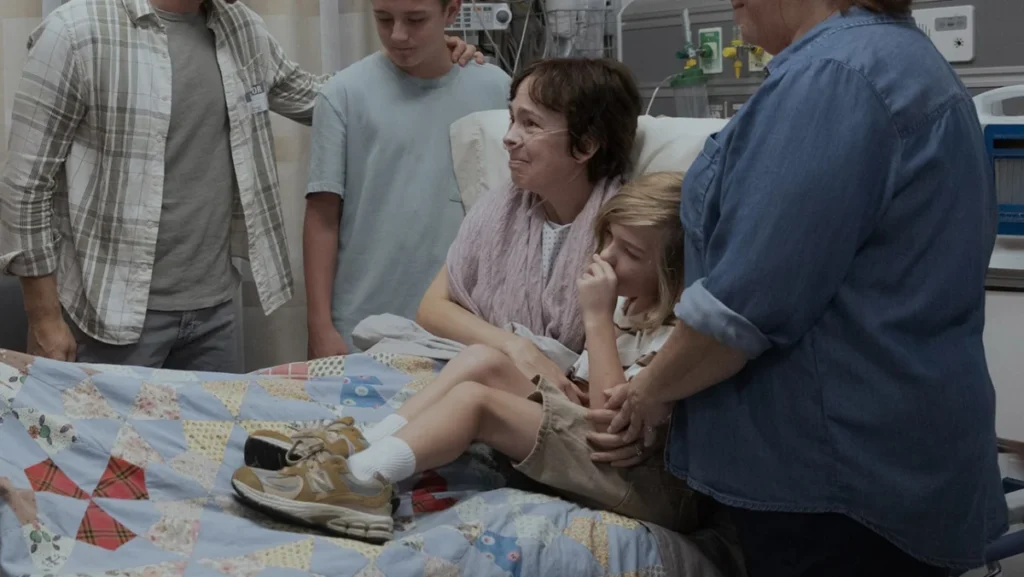

Actress Brittany Allen has achieved a significant milestone in her career, earning an Emmy nomination for Outstanding Guest Actress in a Drama Series for her compelling portrayal of Roxie Hamler in HBO’s acclaimed medical drama, The Pitt. This recognition is particularly noteworthy as Allen secured the nomination through a self-submission process, a move she undertook after the network did not include her in their official slate for Emmy consideration. Her journey, bolstered by a strategic social media campaign, underscores the evolving landscape of awards recognition and highlights the tenacity required of working actors in a competitive industry.
The Resounding Impact of Roxie Hamler
Allen’s performance as Roxie Hamler resonated deeply with audiences and critics alike during the second season of The Pitt. Her character, a terminally ill cancer patient, navigates a six-episode arc that begins with a broken leg leading her to the hospital, ultimately culminating in the heartbreaking decision to remain there to die, rather than return home to her family. The role demanded immense emotional depth and vulnerability, which Allen delivered with profound sensitivity, capturing the raw human experience of confronting mortality.
As the episodes aired, a passionate fan reaction began to swell, with viewers expressing how deeply moved they were by Roxie’s storyline and Allen’s performance. This organic groundswell of support quickly translated into industry buzz, with Allen’s name appearing on several prominent early Emmy predictions lists, including the "Feinberg forecast" and "Gold Derby," signals that her work was indeed catching the attention of awards strategists and commentators. The Pitt itself, an intense and often harrowing medical drama, provides a fertile ground for such powerful character studies, making Hamler’s narrative a poignant focal point within its ensemble cast. The series is known for its unflinching look at the medical profession and the human stories intertwined with it, providing a robust platform for guest stars to make a lasting impression.
The Path to Self-Submission: A Working Actor’s Stand
Despite the burgeoning buzz and critical anticipation, HBO, the network behind The Pitt, opted not to submit Allen for Emmy contention. This decision, while not uncommon given the vast number of talented performers on large-scale productions, prompted Allen to take matters into her own hands. In a powerful declaration of self-advocacy, she decided to personally submit herself for consideration in the Outstanding Guest Actress in a Drama Series category.
Allen articulated her decision with a candidness that resonated with many within the industry: "As a working-class actor, I have become very familiar with being overlooked in my career, and you toughen your skin, and you just keep your head down, and you keep working, and you keep bettering yourself. And then you reach a point where you go, you know what? I don’t want to get overlooked anymore." This sentiment reflects a broader reality for many actors who consistently deliver strong performances but often lack the institutional backing or high-profile representation that can secure awards nominations. It underscored her determination to stand behind her work meaningfully, particularly when presented with an opportunity to reclaim agency in a profession that frequently leaves outcomes feeling beyond an individual’s control.
Allen was not alone in this unconventional path. Jeff Kober, another guest star on The Pitt, also self-submitted for his performance and received a nomination in the Outstanding Guest Actor in a Drama Series category. While their storylines were separate, and they never met on set due to the immersive nature of the production, their parallel success highlights a growing trend of actors taking proactive measures to gain recognition when traditional avenues fall short.
Navigating the Emmy Submission Process
The Emmy Awards submission process is a multi-layered system, primarily driven by studios and networks. These entities typically submit their eligible productions and performers for various categories, often making strategic choices based on perceived chances of success, internal priorities, and the sheer volume of talent involved. For a major network like HBO, with a sprawling roster of critically acclaimed series and hundreds of performers, the task of "whittling down" who to submit is a complex logistical and strategic undertaking.
Casey Bloys, Head of HBO, addressed the network’s position on such matters, telling The Hollywood Reporter, "The Pitt has hundreds of performers and we simply, just strategically, can’t submit everybody. It’s just the reality. But we encourage people to self-submit and I love that she got nominated." This statement provides insight into the practical challenges faced by large studios, where even exceptional performances can sometimes be overlooked in the official submission process due to sheer volume and strategic allocation of resources. While studios cover the submission fees for their chosen candidates, individual self-submissions typically require the actor or their representatives to pay these fees, which can range from a few hundred to over a thousand dollars per category, a significant investment for a working actor.
The Power of a Grassroots Campaign
Having decided to self-submit, Allen, along with her husband, embarked on a unique, self-funded "For Your Consideration" campaign. Initially, she worked with a publicist for about a month, generating some initial press. However, for financial reasons, she soon took full control of the campaign herself. This decision, born out of necessity, transformed into a powerful, authentic, and highly effective grassroots effort.
In the crucial final week of voting, Allen and her partner strategically utilized social media to draw attention to her performance and her self-submission. One particularly impactful move was sharing a scene from her original audition tape online, which quickly "made the rounds" and resonated widely. Following this, she directly posted about her self-submission, openly appealing for support. The response was immediate and overwhelmingly positive. People rallied around her story and her performance, largely because Roxie’s storyline had already deeply moved them. This demonstrated the potent ability of social media to democratize awards campaigning, allowing artists to connect directly with audiences and voters, bypassing traditional, often cost-prohibitive, marketing channels. Her campaign became a testament to the idea that genuine connection and compelling work can sometimes trump massive promotional budgets.
Reflecting on Network Disappointment and Industry Realities
Allen admitted to an initial "sting" of disappointment when HBO chose not to submit her. However, she quickly contextualized this feeling within the broader realities of an actor’s life. "You get used to disappointment as an actor, it’s not something you take personally," she reflected, acknowledging the immense scale of HBO’s productions and the impossibility of submitting every deserving performer. Her ability to quickly pivot from disappointment to proactivity — figuring out "what’s another angle, what’s another way in" — underscores the resilience essential for longevity in the entertainment industry.
HBO’s stance, as articulated by Casey Bloys, reflects the complex calculus involved in awards season. With hundreds of potential nominees across numerous shows, strategic decisions must be made, often prioritizing lead categories or established stars. The network’s encouragement of self-submissions, while seemingly passing the financial and logistical burden to the individual, also offers an alternative pathway for recognition that, in Allen’s case, proved successful. This dynamic highlights an ongoing tension between corporate strategy and individual artistic merit within the awards ecosystem.
A Career Forged in Resilience: From Daytime to Primetime
Brittany Allen’s Emmy nomination for The Pitt is not an overnight success but rather the culmination of a long and often challenging career. Starting as a young actor in Canada, she eventually transitioned to the U.S. industry, notably joining the cast of the long-running soap opera All My Children. Her experience on that show provided an early, formative lesson in the industry’s unpredictable nature.
She recounted being let go from All My Children and even recast due to a lack of fan response to her portrayal of the character. This led to a nine-month period of unemployment in Los Angeles. Yet, remarkably, she later received a Daytime Emmy Award nomination for her work during her final months on the show, ultimately winning the award. This experience was a "microcosm of how this industry can change drastically from one day to the next." Allen learned early on not to be swayed by the "lowest of lows" or the "highest of highs," recognizing that perceptions can shift rapidly. "I’m still the same actor I was a week ago. I’m still bringing the same work to the table, but now suddenly people want to meet me," she recalled, emphasizing the importance of staying grounded and focusing on the craft, regardless of external validation or lack thereof. This prior Emmy win, though in a different sphere (Daytime vs. Primetime), established her as an award-winning talent and instilled a crucial understanding of perseverance.
The Tangible and Intangible Impacts of an Emmy Nomination
The impact of an Emmy nomination, particularly for a working actor, can be profound and multi-faceted. For Allen, the immediate tangible benefit appears to be a potential breakthrough in representation. She revealed that she had been trying to secure an agent in the United States for months without success. The Emmy nomination, however, "is proving that things might change on that front." An agent is a critical component of an actor’s career, opening doors to auditions, negotiating contracts, and strategizing career moves, making this potential shift a significant development.
Beyond the practical, there’s a deep personal validation. Allen described her feeling upon seeing her name on the nomination list as a "calm sense of accomplishment." She reflected, "It’s funny sometimes when big news comes your way, it doesn’t hit you with a loud scream and champagne popping, it’s actually something more deep and meaningful than that." This quiet sense of achievement speaks to the years of dedication, struggle, and unwavering commitment to her craft that led to this moment. It is a testament to her talent and her resilience finally being recognized on one of the industry’s biggest stages.
The Unseen Costs: The Financial Burden of Awards Campaigns
While the nomination brings immense joy and opportunity, Allen was remarkably candid about the financial realities of awards campaigning. The journey doesn’t end with a nomination; the path to potentially winning an Emmy involves further campaigning, which comes with substantial costs. "The honest truth is that campaigning is an expensive venture. It costs many, many thousands of dollars to hire a publicist, to hire a stylist, to hire hair and makeup artists for all the events," she explained.
For a "working-class actor" like Allen, who has not worked since her time on The Pitt, weighing these financial implications is a critical decision. She is currently evaluating the efficacy of hiring a publicist versus continuing her self-managed campaign, considering both the potential benefits and the significant monetary investment required. This open discussion sheds light on a rarely talked-about aspect of awards season: the financial barriers that can prevent even nominated talent from fully participating in the promotional circuit. It underscores how the playing field is often uneven, favoring those with substantial financial backing or network support. Allen’s humorous yet earnest appeal for "cool women with great fashion sense who want to help a mom out who’s rocking sneakers and oversized T-Shirts these days" highlights the very real challenges faced by actors trying to navigate this expensive phase of an awards campaign.
Looking Ahead: Redefining Success and Impact
Ultimately, Allen’s biggest goal stemming from this Emmy nomination is not merely the award itself, but the opportunity it represents for her future career. "My biggest goal with this moment is that I can use it as a jumping off point to do more roles like Roxie," she stated. Her experience inhabiting such a "complex, deep, profound human" on a show like The Pitt has only intensified her desire to tackle similar challenging and artistically fulfilling characters.
She hopes the increased visibility that an Emmy nomination brings will enable her to step onto more sets and "explore complex, dark, challenging female characters with great artists." This aspiration speaks to a desire for artistic growth and collaboration, rather than simply chasing fame or fortune. Her story serves as an inspiration and a blueprint for other working actors: a powerful reminder that talent, when coupled with unwavering determination and a willingness to self-advocate, can indeed break through traditional barriers and lead to well-deserved recognition in Hollywood. Her success not only elevates her own career but also sparks a conversation about how the industry can better support and acknowledge talent that might otherwise be overlooked.