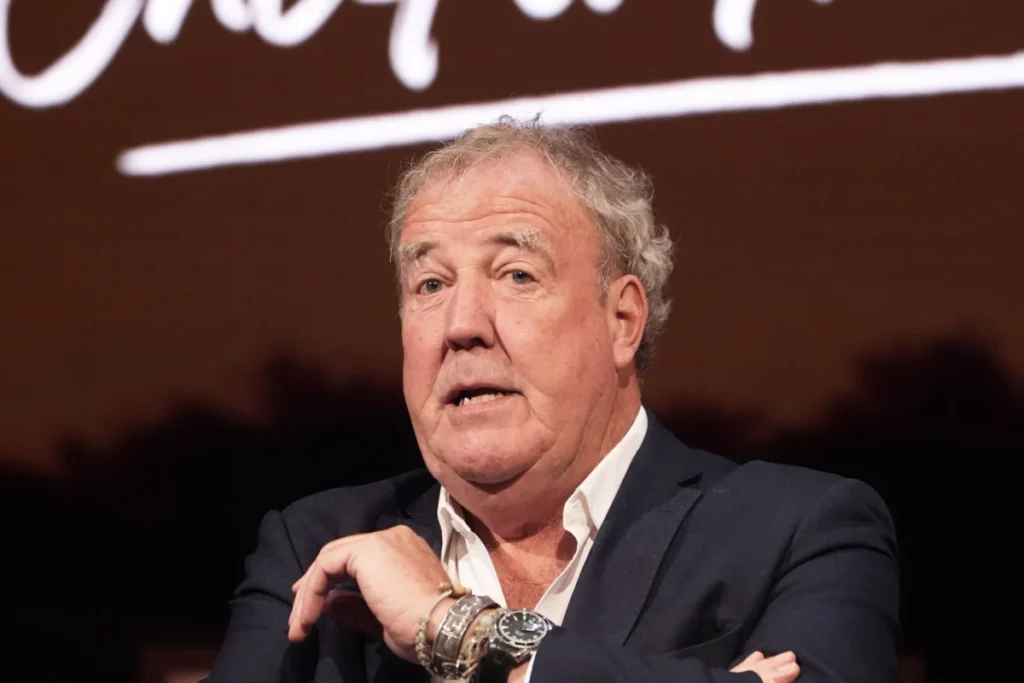

The public announcement by renowned television presenter Jeremy Clarkson regarding his diagnosis with "aggressive" prostate cancer has triggered an extraordinary surge in public engagement with vital health resources, leading to record-breaking traffic on national health websites and charity platforms. This revelation, shared initially on his popular reality series "Clarkson’s Farm" and subsequently confirmed in a national interview, has shone a critical spotlight on a disease that affects one in eight men, often without early symptoms, and has propelled prostate cancer awareness to levels not seen in years.
A High-Profile Diagnosis and Its Immediate Repercussions
Jeremy Clarkson, 66, disclosed his battle with "aggressive" prostate cancer in recent episodes of his Amazon Prime Video series, "Clarkson’s Farm." The diagnosis, though serious, was fortunately discovered at an early stage. Following this public disclosure, Clarkson provided a crucial update in an interview with The Sunday Times, confirming that a PSA (Prostate-Specific Antigen) test two months prior had shown no indication of cancer, and, remarkably, he was already in remission. This rapid progression from diagnosis to remission underscores the unpredictable nature of the disease and the critical importance of timely intervention.
The immediate aftermath of Clarkson’s revelation saw a dramatic increase in traffic to official health information channels. The National Health Service (NHS) website experienced a staggering 640 per cent increase in visits concerning prostate cancer information compared to an average week. This figure represented the highest weekly total recorded since February, surpassing even the heightened awareness period following former Prime Minister Lord Cameron’s diagnosis. This unprecedented spike highlights the profound influence of high-profile personalities in drawing public attention to crucial health matters.
Concurrently, the charity website prostatecanceruk.org also reported a significant uptick in user engagement. In the week following Clarkson’s announcement, the site registered 170,813 users, marking a substantial 74 per cent increase above its weekly average. Furthermore, the charity’s award-winning online risk checker, a tool designed to help men understand their personal risk of developing prostate cancer, was completed by over 50,000 individuals within the same week. This represents the biggest weekly spike for the risk checker in a year and a half, indicating that Clarkson’s story motivated tens of thousands to actively assess their health risks.
The Silent Threat: Understanding Prostate Cancer
Prostate cancer remains the most common cancer among men in the UK, with statistics indicating that one in eight men will be diagnosed with the disease in their lifetime. For men over 50, those with a family history of prostate cancer, and men of Black African or Caribbean descent, the risk is even higher. Despite its prevalence, prostate cancer is often referred to as a "silent killer" because it typically develops without noticeable symptoms in its early stages.
The prostate gland, a small gland located below the bladder in men, produces seminal fluid. Prostate cancer usually begins to grow on the outer part of the prostate, which means it does not immediately press on the urethra – the tube that carries urine from the bladder out of the body. Consequently, symptoms related to urination often do not appear until the cancer has grown considerably or has begun to spread to other parts of the body. This characteristic makes early detection challenging and underscores why public awareness campaigns are so vital.
When symptoms do emerge, they can include changes to the way a man urinates, such as needing to urinate more frequently, especially at night; difficulty starting or stopping urination; a weak or interrupted flow; or a feeling that the bladder hasn’t fully emptied. Other, more serious symptoms that can indicate advanced disease include blood in the urine or semen, unexplained weight loss, and persistent pain in the back, hips, or pelvis, which may suggest the cancer has spread to the bones. Tragically, for over 10,000 men each year, the diagnosis comes too late for a curative treatment.
Expert Commentary and Call to Action
Chiara De Biase, Prostate Cancer UK’s fundraising and health strategy director, lauded the impact of Clarkson’s story. "There’s little doubt that Jeremy’s story has struck a chord and we thank him once again for sharing his story last week," De Biase stated. She emphasized the critical nature of early diagnosis, contrasting Clarkson’s fortunate early detection with the grim reality faced by many others. "Thankfully Jeremy’s disease was diagnosed at an earlier stage, but that’s not always the case, sadly," she noted, highlighting the disparity in outcomes.
De Biase passionately articulated the charity’s ongoing mission: "Over 10,000 dads, brothers, sons and friends are diagnosed too late for a cure every year. It’s why high-profile stories like this are incredibly impactful, but the fact that the responsibility to know if you’re at higher risk of prostate cancer and to act on it still rests entirely on men’s shoulders simply has to change." This statement encapsulates the core challenge in prostate cancer management: the absence of a universal screening programme, which places a heavy burden of vigilance on individual men.

The medical community, including oncologists and urologists, has consistently welcomed increased public awareness, stressing that while a national screening programme for prostate cancer is not yet established due to the complexities and potential harms (such as overdiagnosis and overtreatment), targeted PSA testing for at-risk individuals remains crucial. The PSA test, a blood test that measures the level of prostate-specific antigen, can indicate potential issues with the prostate, including cancer. However, elevated PSA levels can also be caused by non-cancerous conditions, leading to false positives, and some aggressive cancers may not cause high PSA levels, leading to false negatives. This diagnostic dilemma is precisely why Prostate Cancer UK is committed to finding a more accurate and safer screening method, as evidenced by their "Transform trial."
De Biase further underscored the tangible results of Clarkson’s public sharing: "The figures over the past seven days have been incredible. Since Jeremy selflessly shared his story, more than 50,000 people have completed our award-winning online risk checker over the past week, the biggest weekly spike for a year and a half. Our website has shown a massive increase in traffic too, so this all adds up to men taking crucial action, which could save their lives." This outcome represents a significant public health achievement, demonstrating the direct link between celebrity advocacy and life-saving action.
Chronology of a Pivotal Health Announcement
The timeline surrounding Jeremy Clarkson’s prostate cancer journey and its public impact is concise yet potent:
- Two Months Prior: Clarkson undergoes a routine PSA test, which, at the time, shows no indication of cancer. This highlights the rapid progression aggressive forms of the disease can take, or the limitations of a single PSA reading.
- Recent Past: An "aggressive" prostate cancer is diagnosed, thankfully at an early stage. The specifics of how and when this diagnosis occurred are not fully detailed but are revealed in his reality show.
- Broadcast of "Clarkson’s Farm": Episodes featuring his diagnosis air, bringing the personal health challenge of one of Britain’s most recognisable figures to millions of viewers.
- Subsequent "The Sunday Times" Interview: Clarkson confirms his diagnosis and, crucially, reveals he is already in remission, offering a glimmer of hope and demonstrating the potential for positive outcomes with early detection.
- The Week Following Revelations:
- NHS website records a 640% increase in prostate cancer-related traffic, its highest weekly figure in recent memory.
- Prostate Cancer UK’s website sees 170,813 users, a 74% increase.
- Over 50,000 men complete Prostate Cancer UK’s online risk checker, marking the largest weekly surge in 18 months.
This sequence of events illustrates the immediate and powerful ripple effect of a public figure’s health disclosure.
Broader Implications and the Path Forward
Jeremy Clarkson’s candidness has not only driven immediate action but also opened up broader discussions about public health policy, the role of celebrity advocacy, and the future of cancer screening.
The Power of Celebrity Advocacy: Clarkson’s reach, stemming from decades in television, particularly with shows like "Top Gear" and "The Grand Tour," means his voice resonates with a vast and diverse audience, many of whom may not typically engage with health awareness campaigns. His pragmatic, often humorous approach to serious topics makes his personal health struggles relatable, cutting through potential barriers of fear or embarrassment that can prevent men from seeking medical advice. This phenomenon, often termed "the Angelina Jolie effect" or "the Kylie Minogue effect" in other cancer contexts, proves that personal stories from public figures can be far more impactful than generic public service announcements.
Policy and Screening Debates: The fact that prostate cancer remains "the most common cancer without a screening programme" is a significant point of contention within public health circles. While organisations like Prostate Cancer UK are actively researching safer and more effective screening methods through trials like "Transform," the debate continues regarding the implementation of a national screening programme. The challenges involve balancing the benefits of early detection against the risks of overdiagnosis (identifying cancers that would never cause harm) and overtreatment (leading to unnecessary side effects like incontinence and erectile dysfunction). High-profile cases like Clarkson’s inevitably intensify the pressure on policymakers and healthcare providers to review and potentially revise current guidelines.
Sustaining Momentum: While the initial surge in awareness is commendable, the long-term challenge lies in sustaining this momentum. Public health campaigns often see immediate spikes in engagement that gradually recede. The goal for charities and health bodies is to convert this temporary interest into sustained vigilance and proactive health-seeking behaviour among men. This requires ongoing education, accessible resources, and consistent messaging about risk factors, symptoms, and the importance of discussing concerns with a doctor.
Research and Development: The mention of the "Transform trial" by Prostate Cancer UK highlights the critical need for continued investment in research. The development of more accurate, less invasive diagnostic tools and screening methods is paramount to revolutionizing prostate cancer care. Such advancements could mitigate the current dilemmas associated with PSA testing and pave the way for a more effective national screening strategy.
In conclusion, Jeremy Clarkson’s open discussion about his prostate cancer diagnosis and subsequent remission has served as a powerful catalyst for public health engagement. The dramatic spikes in website traffic and risk checker completions are not merely statistics; they represent tens of thousands of men taking crucial steps towards understanding their health, potentially saving lives. As Chiara De Biase eloquently stated, "We want a world where no man dies from prostate cancer – and every man gets the personalised care he needs to live a long, full life. Thanks to Jeremy and our supporters we are making positive steps in that quest." While the journey towards comprehensive prostate cancer screening and eradication is ongoing, the past week’s events underscore the profound impact that a single, brave voice can have in advancing this vital mission.