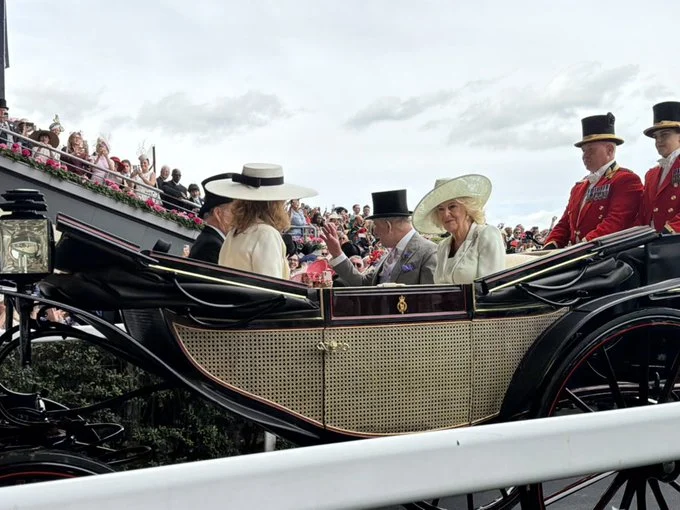

Ascot Racecourse, Berkshire – The regal spectacle of Royal Ascot reached a crescendo on Thursday, the much-anticipated Gold Cup Day, as Their Majesties King Charles III and Queen Camilla presided over the traditional carriage procession. The sovereign couple, alongside an esteemed contingent of the Royal Family and distinguished guests, graced the Berkshire downs with their presence, marking a highlight of the five-day flat racing festival and a testament to its enduring connection with British heritage. This annual procession, a quintessentially British display of pageantry and tradition, has opened each day of Royal Ascot since its inception in 1825, and its continuation underscores the event’s deep historical roots and its significance within the social calendar.
The arrival of the Royal procession is a meticulously orchestrated event, drawing thousands of spectators to the famous racecourse. The sight of the gleaming carriages, pulled by magnificent Windsor Greys, carrying impeccably dressed royals and their guests, signals the commencement of a day steeped in both sporting excellence and aristocratic tradition. This year’s procession on Gold Cup Day, arguably the most prestigious day of the meeting, further amplified the sense of occasion, offering a fitting prelude to the day’s premier racing action, which includes the iconic Gold Cup race.
The Royal Procession: A Glimpse into Tradition and Esteem
King Charles III and Queen Camilla occupied the lead carriage, setting a dignified tone for the procession. Their Majesties were accompanied by the Earl of Snowdon and Ms Isabelle de la Bruyère, a pairing that reflects the personal connections and esteemed individuals chosen to share in this prominent moment. The Earl of Snowdon, son of the late Princess Margaret, brings a direct lineage to the Royal Family’s long-standing association with Ascot, while Ms de la Bruyère’s presence adds a layer of personal significance to the King and Queen’s entourage. Their journey along the course was met with enthusiastic applause and cheers from the assembled racegoers, a testament to the enduring affection for the monarchy.
Following closely behind, the second carriage featured The Princess Royal, Princess Anne, and her husband, Vice Admiral Sir Tim Laurence. They were joined by The Duke and Duchess of Edinburgh, Prince Edward and Sophie. Princess Anne, a known equestrian enthusiast and a regular attendee at Royal Ascot, along with the Duke and Duchess of Edinburgh, received a particularly warm reception. Their presence further solidified the Royal Family’s deep engagement with the event, showcasing a united front of royal patronage. The Duke and Duchess of Edinburgh, in particular, have increasingly taken on prominent public roles, and their inclusion in this key procession highlights their growing importance within the Royal household.
The third carriage showcased a diverse and distinguished assembly, including Princess Zahra Aga Khan, HH Sheikh Hamad bin Abdullah Al Thani, Zara Tindall, and the celebrated champion trainer Willie Mullins. Princess Zahra Aga Khan represents a significant link to international aristocracy and philanthropy, while HH Sheikh Hamad bin Abdullah Al Thani signifies the global appeal and investment in British racing. Zara Tindall, daughter of Princess Anne and a former equestrian Olympian, brings a sporting pedigree and a personal connection to the world of horses. The inclusion of Willie Mullins, whose horses have achieved remarkable success at Royal Ascot in recent years, is a fitting acknowledgment of the vital role played by leading figures in the racing industry. Mullins’ presence, alongside other prominent racing personalities who often feature in later carriages, underscores the event’s dual nature as both a royal engagement and a premier sporting competition.
Adding a touch of contemporary glamour and cultural influence, the fourth carriage carried Lord and Lady Cavendish, alongside the acclaimed actor Stanley Tucci and his wife, literary agent Felicity Blunt. Lord Cavendish, a prominent figure in British society, and his wife represent the traditional establishment, while the Tuccis bring a distinct flavour of international celebrity and artistic achievement. Their presence injects a modern dynamism into the age-old tradition, demonstrating Royal Ascot’s ability to attract a broad spectrum of influential individuals from various fields.
A Tradition of Spectacle and Significance
The Royal procession at Ascot is more than just a ceremonial arrival; it is a cornerstone of the event’s identity. Its origins date back to the very beginnings of Royal Ascot, when King George IV first decreed that the royal party should travel from Windsor Castle to the racecourse. This tradition has been meticulously upheld, evolving into the grand spectacle witnessed today. The procession typically features multiple carriages, each carrying members of the Royal Family and their invited guests, moving at a stately pace along the length of the racecourse before the day’s racing commences. This creates an unparalleled opportunity for the public to see the Royals up close, fostering a sense of connection and shared experience.
The timing of the procession on Gold Cup Day is particularly poignant. Gold Cup Day is one of the most historic and prestigious races in the British flat racing calendar, often referred to as "the blue riband" of the meeting. It is a day that attracts the finest horses and jockeys, and its rich history is intertwined with royal patronage. The presence of the King and Queen, leading the procession on this significant day, reinforces the monarchy’s enduring support for horse racing and its historical role in shaping the sport.
Supporting Data and Historical Context
Royal Ascot has been a fixture of the British social and sporting calendar for over 300 years, with its origins tracing back to 1711 when Queen Anne established the racecourse. The event has evolved from a relatively modest affair into one of the world’s most celebrated race meetings, attracting global attention and significant economic investment. Attendance figures for Royal Ascot consistently reach hundreds of thousands over the five days, with Gold Cup Day often drawing the largest crowds. This year, organizers anticipated a record attendance, buoyed by favourable weather forecasts and a strong lineup of runners.
The economic impact of Royal Ascot extends far beyond the racecourse itself. It generates substantial revenue for the hospitality and tourism sectors in Berkshire and the wider Thames Valley region. Furthermore, it serves as a vital platform for the thoroughbred breeding and racing industries, with significant prize money on offer and substantial betting turnover. The prestige associated with winning at Royal Ascot, particularly the Gold Cup, can significantly enhance the value of a horse and its breeding potential.
The tradition of the carriage procession, specifically, has remained remarkably consistent. While the composition of the royal party and their guests may vary, the core elements of regal display and public engagement have been preserved. The carriages themselves are often drawn from the Royal Mews, showcasing the finest examples of equine husbandry and carriage craftsmanship. The precision and discipline of the carriage drivers and the Windsor Greys are a testament to the ongoing commitment to maintaining these historical traditions.
Reactions and Inferred Sentiments
While direct quotes from participants were not available at the time of reporting, the warm reception from racegoers provided a clear indication of public sentiment. The cheers and applause that greeted each carriage, particularly that of Their Majesties, underscored the continued public appreciation for the Royal Family’s involvement in such cherished national events. The smiles and waves from the occupants of the carriages suggested a reciprocal acknowledgement of this enthusiasm.
For the racing community, the presence of the King and Queen, and indeed the broader Royal Family, is always a significant honour. Champion trainers and owners often express their pride and gratitude for the opportunity to compete at an event so closely associated with the Crown. The inclusion of figures like Willie Mullins in the procession serves as a recognition of their contributions to the sport’s success and prestige.
Analysis of Implications
The continued prominence of the Royal Family at Royal Ascot, and particularly their leading role in the carriage procession on Gold Cup Day, has several implications. Firstly, it reinforces the enduring connection between the monarchy and British sporting heritage. This association lends a unique gravitas and national significance to the event, elevating it beyond a mere sporting competition.
Secondly, the Royal presence contributes to the international allure of Royal Ascot. For global audiences, the image of the Royal Family at such an event is an iconic representation of British culture and tradition. This undoubtedly attracts international visitors and investment, further cementing Ascot’s status on the world stage.
Thirdly, the procession serves as a powerful tool for public engagement. By making themselves visible and accessible, albeit in a formal setting, the Royal Family fosters a sense of connection with the populace. This visibility is crucial for maintaining public support and relevance in the modern era. The carefully curated guest list for each carriage also offers insights into the individuals and institutions that the Royal Family chooses to honour and associate with.
In conclusion, the King and Queen’s leading role in the Royal Ascot carriage procession on Gold Cup Day was a moment of significant pageantry and cultural resonance. It underscored the event’s deep historical roots, its sporting prowess, and its enduring connection with the British monarchy, offering a captivating spectacle that delighted thousands and reaffirmed Royal Ascot’s place as a premier event on the national and international calendar. The continuation of this cherished tradition, observed with such enthusiasm by both participants and spectators alike, serves as a powerful testament to its lasting appeal and its integral role in the fabric of British heritage.