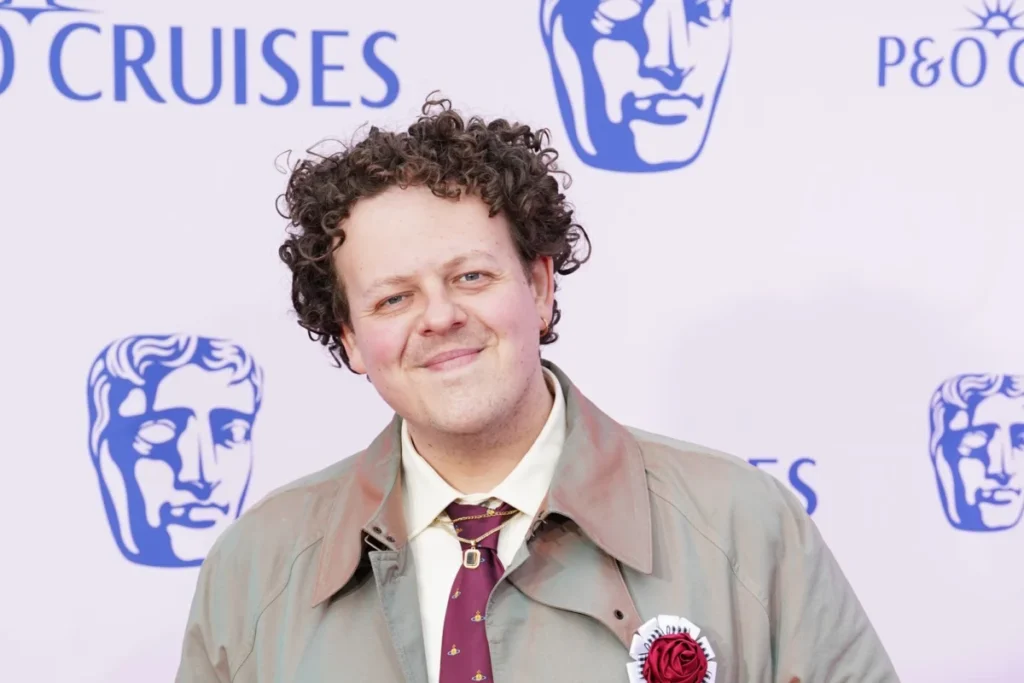

Jack Rooke, the acclaimed creator of the BAFTA-winning Channel 4 series Big Boys, has issued a compelling call for the establishment of more accessible pathways into the creative industries for young people, expressing profound concern over what he describes as the diminishing landscape of arts funding and support that once nurtured his own career. Speaking on the Roundhouse podcast, "Making Space," the 32-year-old writer and comedian underscored the urgent necessity of safeguarding creative opportunities for the next generation, advocating for an industry that is welcoming and inclusive rather than daunting and exclusive. His remarks highlight a critical juncture for the UK’s vibrant creative sector, which, despite its significant economic contributions, faces persistent challenges in ensuring equitable access and sustainable development for emerging artists.
Rooke, whose semi-autobiographical sitcom Big Boys has garnered widespread critical acclaim for its poignant yet humorous exploration of university life, mental health, and male friendship, articulated a vision where creativity is celebrated in all its forms, free from the pressure of immediate perfection. "We need young people to become our next generation of artists," Rooke stated during the podcast, emphasising the counterproductive nature of erecting barriers. "We can’t continuously create blocks and harder routes in. We need to create more routes in. Encouraging very small acts of creativity leads to bigger ones. We live in a world of rewarded excellence, but creativity doesn’t have to be perfect. Some of the best art I’ve ever seen is on a dirty car window." This sentiment champions a fundamental shift in perspective, moving away from a meritocratic system that often overlooks raw potential in favour of established polish, towards one that fosters experimentation and intrinsic artistic expression.
The Disappearing Ladder: A Personal and Systemic Concern
Rooke’s personal experience forms the bedrock of his advocacy. He openly shared his apprehension regarding the current state of the arts landscape, noting that "every bit of funding or support that helped me make work and build a career seems to have disappeared." This observation resonates with broader trends observed across the UK’s cultural sector, where significant reductions in public funding, particularly at local authority levels, have created an increasingly challenging environment for grassroots initiatives and emerging artists. Data from organisations like the Creative Industries Federation and Arts Council England have consistently highlighted the squeeze on resources, exacerbated by factors such as austerity measures, the economic impact of the COVID-19 pandemic, and evolving government priorities. Between 2010 and 2020, local authority spending on culture and heritage in England saw a real-terms decrease of over 30%, according to analyses by the Local Government Association, directly impacting community arts centres, youth programmes, and local grants that often serve as crucial entry points for aspiring creatives.
The implications of such funding cuts are far-reaching. They not only limit the direct financial support available but also contribute to the erosion of essential infrastructure – workshops, mentorship programmes, accessible performance spaces – that nurtures talent outside of traditional, often expensive, educational pathways. For young individuals from lower socio-economic backgrounds, who may lack the financial safety net to pursue unpaid internships or further costly training, the disappearance of these funded routes can be an insurmountable obstacle. This exacerbates existing issues of social mobility and diversity within the creative industries, which have historically struggled with representation across various demographics.

The Role of the Roundhouse and Young Creatives Commission
Rooke’s involvement as a commissioner for the Young Creatives Commission (YCC), an independent initiative by the Roundhouse, underscores his commitment to practical solutions. The Roundhouse, an iconic multi-arts venue and youth charity based in Camden, London, has a long-standing history of empowering young people through creativity. For over five decades, it has provided opportunities for individuals aged 11-30 to develop their skills in music, media, and performing arts, often reaching those who are excluded from mainstream provisions. The YCC specifically aims to improve arts access for young people, reflecting the charity’s broader mission to unlock creative potential and build confidence.
By joining the YCC, Rooke lends his influential voice and experience to a platform dedicated to addressing the very issues he champions. His collaboration with the Roundhouse exemplifies a growing trend among established artists to actively engage in advocacy and mentorship, leveraging their success to pave the way for future generations. This symbiotic relationship between prominent figures and grassroots organisations is vital in attracting attention, resources, and policy changes to support the arts ecosystem.
Jack Rooke’s Journey and the Success of Big Boys
Jack Rooke’s own career trajectory serves as a testament to the transformative power of accessible creative opportunities. His unique blend of stand-up comedy, theatre, and television writing often delves into themes of grief, mental health, sexuality, and friendship with a distinctive blend of vulnerability and sharp wit. Prior to Big Boys, Rooke gained recognition for his critically acclaimed stage shows, including "Good Grief" and "Happy Hour," which explored his personal experiences with loss and mental wellbeing. These early works, often developed with support from arts organisations and funding bodies, allowed him to hone his craft and establish his distinctive voice.
The success of Big Boys, which premiered on Channel 4, marks a significant milestone in his career. The semi-autobiographical sitcom, starring Derry Girl actor Dylan Llewellyn as Jack (a character inspired by Rooke himself) and Jon Pointing as his unlikely university roommate Danny, resonated deeply with audiences for its authentic portrayal of student life and its sensitive handling of complex themes. The series has been lauded for its refreshing take on male friendship, its destigmatisation of mental health struggles, and its nuanced depiction of LGBTQ+ experiences. Its critical success was cemented when Rooke won the prestigious BAFTA Television Craft award for best comedy writer earlier this year, a repeat victory after also securing the award in 2024 for the same series. This back-to-back recognition highlights not only Rooke’s exceptional talent but also the industry’s acknowledgement of the show’s cultural significance and its powerful storytelling. The visibility and impact of Big Boys provide Rooke with a powerful platform from which to advocate for systemic change, as his own journey exemplifies the potential that can be unleashed when talent meets opportunity.
Barriers to Entry and the Call for Diversified Pathways
Rooke’s call for "more routes in" speaks to the multifaceted challenges young people face when attempting to break into the creative industries. These barriers extend beyond mere financial constraints and include a lack of formal arts education in schools, particularly in disadvantaged areas; the prevalence of unpaid internships that favour those with independent means; the perceived elitism and exclusivity of certain networks; and the geographic concentration of opportunities in major urban centres like London, making it difficult for regional talent to access entry-level roles.
The diminishing emphasis on arts subjects in the national curriculum in favour of STEM (Science, Technology, Engineering, and Mathematics) subjects has also been a significant concern for educators and arts advocates. While STEM fields are crucial, the neglect of STEAM (incorporating Arts) can stifle creativity, critical thinking, and problem-solving skills that are equally vital in the modern economy. Without robust arts education from an early age, many young people may never discover their creative talents or consider a career in the arts, perpetuating a cycle of limited access.
Moreover, the "rewarded excellence" culture that Rooke critiques can discourage experimentation. Many young artists are hesitant to share imperfect work, fearing judgment in an industry often perceived as demanding immediate polish and commercial viability. This pressure can stifle the organic development of unique artistic voices, pushing aspiring creators towards safer, more conventional paths rather than innovative, boundary-pushing work. Rooke’s anecdote about "the best art on a dirty car window" serves as a powerful metaphor for valuing spontaneous, unrefined creativity, advocating for spaces where experimentation is encouraged, not just perfection.
Broader Implications: The Value of a Diverse Creative Sector
The implications of an inaccessible creative industry extend far beyond individual career aspirations. The UK’s creative sector is a powerhouse, contributing significantly to the national economy. Prior to the pandemic, the creative industries were growing at twice the rate of the wider UK economy, contributing over £115 billion in Gross Value Added (GVA) and employing over 2 million people. A diverse and inclusive talent pipeline is essential for sustaining this growth, ensuring a constant influx of fresh ideas, perspectives, and innovation. Without it, the industry risks becoming homogenous, losing its competitive edge and its ability to reflect and enrich the diverse tapestry of British society.

Furthermore, accessible arts opportunities play a crucial role in social cohesion and individual well-being. Engagement in creative activities has been linked to improved mental health, enhanced critical thinking skills, and increased civic participation. For young people, particularly those facing social or economic disadvantages, creative outlets can provide a sense of purpose, a means of expression, and a pathway to self-discovery. When these opportunities dwindle, society as a whole loses out on not only economic benefits but also on the intangible cultural enrichment and social capital that a thriving, diverse arts sector provides.
A Call to Action for Policy Makers and Industry Leaders
Jack Rooke’s impassioned plea serves as a potent reminder for policymakers, educational institutions, and industry leaders to re-evaluate their strategies concerning the creative industries. To truly create "more routes in," a multi-pronged approach is required. This would involve:
- Increased and Sustainable Public Funding: Reversing the trend of cuts to local and national arts funding, ensuring that organisations like the Roundhouse and numerous smaller initiatives can continue their vital work. This includes dedicated funding streams for youth arts programmes and emerging talent.
- Revitalised Arts Education: Reintegrating and strengthening arts subjects within the national curriculum, ensuring that all young people, regardless of their background, have access to high-quality creative education from an early age.
- Industry Reform: Encouraging ethical practices within the creative sector, such as fair pay for entry-level positions and internships, and actively challenging nepotism and elitism. Mentorship programmes and industry-led initiatives to scout and develop diverse talent are also crucial.
- Decentralisation of Opportunities: Investing in regional arts infrastructure and fostering creative hubs outside of London to ensure that talent across the UK has equitable access to training, networking, and employment opportunities.
- Valuing Diverse Forms of Creativity: Shifting the narrative away from a singular definition of "success" and embracing a broader appreciation for experimental, community-based, and non-commercial art forms, as Rooke suggests with his "dirty car window" analogy.
Rooke’s voice, amplified by his success and platform, adds significant weight to the ongoing discourse surrounding the future of the creative industries. His advocacy, rooted in both personal experience and a deep understanding of systemic issues, calls for a renewed commitment to nurturing the next generation of artists. The full interview on the Roundhouse’s "Making Space" podcast, available on their website and all major podcast platforms, offers further insight into his perspective and serves as a vital contribution to this critical conversation. As the UK looks to maintain its global standing as a creative powerhouse, ensuring an accessible and supportive environment for young talent like Jack Rooke once was, is not just an aspiration but an economic and cultural imperative.