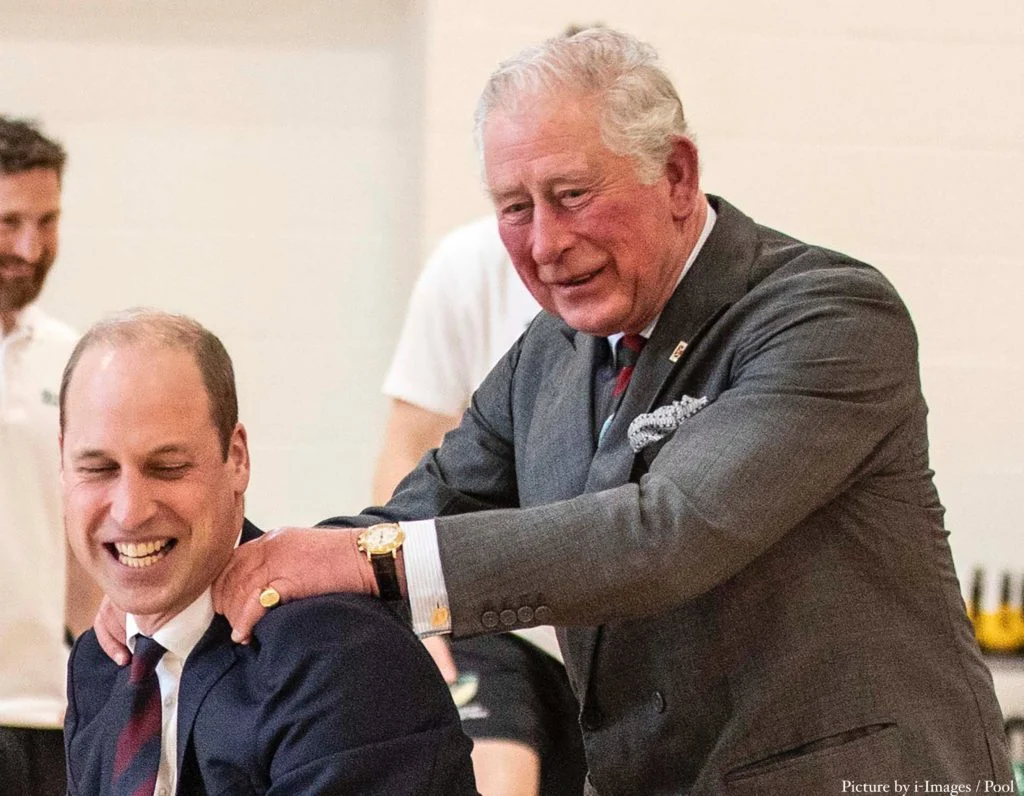

In an unprecedented move towards greater financial transparency, His Majesty King Charles III has become the first reigning British monarch to publicly disclose the amount of personal tax he has paid. For the 2024-25 financial year, the King contributed £12.9 million to HM Revenue & Customs. This disclosure, published within the Royal Household’s latest annual accounts, positions His Majesty among the United Kingdom’s highest individual taxpayers and marks a significant departure from historical royal financial practices.
Complementing this landmark revelation, His Royal Highness The Prince of Wales has also shared details of his tax contributions. For the same financial period, Prince William paid £7.76 million in income and capital gains tax. Kensington Palace stated that this decision reflects Prince William’s commitment to fostering increased openness regarding his financial affairs. Collectively, since King Charles ascended to the throne and Prince William inherited the management of the Duchy of Cornwall, the pair have contributed over £50 million in taxes.
A New Era of Royal Financial Accountability
The voluntary disclosure of these substantial tax figures by both the King and the Prince of Wales signifies a deliberate effort to enhance public understanding of the monarchy’s financial accountability. This initiative follows a long-standing tradition, albeit one that has evolved. While neither the monarch nor the heir to the throne is legally obligated to pay income or capital gains tax, this practice was voluntarily adopted in 1993. At that time, Queen Elizabeth II and the then Prince of Wales agreed to commence paying income tax, a move that responded to public scrutiny and calls for greater transparency surrounding royal finances. The current disclosures represent a further evolution of this commitment to openness, moving beyond the historical precedent of voluntary payment to explicit revelation of the sums involved.
The published accounts, however, do not offer a granular breakdown of the precise methodologies used to calculate each individual’s tax liability. This level of detail, often provided by private individuals or corporations, remains undisclosed, maintaining a degree of privacy within the broader transparency initiative.
Sources of Royal Income and Taxable Assets
King Charles’s private income is primarily derived from the Duchy of Lancaster. This historic estate, comprising a diverse portfolio of land, commercial properties, and investments, serves as an independent source of funding for the reigning monarch. For the 2025-26 financial year, the Duchy of Lancaster generated an income of £25.2 million. In addition to this, His Majesty also pays tax on income generated from his private estates at Balmoral and Sandringham, as well as from his personal investments and savings.
Prince William’s financial resources are predominantly drawn from the Duchy of Cornwall. This substantial estate, valued in the billions, is traditionally held by the heir to the throne. Kensington Palace has clarified that Prince William pays income tax at the highest applicable rate on any net surplus. This calculation is made after deducting official costs associated with the Duchy’s operations, with these deductions subject to independent auditing processes.
Strategic Financial Decisions: Dartmoor Prison and Community Regeneration
In a notable development, Prince William has elected to forgo the annual rental income of £1.5 million previously generated by Dartmoor Prison. This decision follows the prison’s closure in 2024, a consequence of the discovery of high levels of radon gas. The funds that would have been received from the rental agreement will now be directed towards regeneration projects within the nearby community of Princetown, underscoring a commitment to local economic and social development. This move highlights a proactive approach to leveraging assets for broader societal benefit.
Shifting Landscape of the Sovereign Grant
The latest annual accounts also signal significant adjustments to the funding model of the Sovereign Grant, the public funding mechanism for the monarch’s official duties. From the 2027-28 financial year onwards, the Sovereign Grant will be set at £99.9 million per annum. This adjustment is part of a new funding formula agreed upon by the Royal Trustees and represents a decrease from the current £137.9 million. The reduction is directly linked to the conclusion of the decade-long refurbishment of Buckingham Palace.
Despite this reduction, the future grant level remains substantially higher than the £51.8 million received three years prior. Palace officials have outlined the intended purposes of this funding, which include the upkeep of historic royal residences, the enhancement of cybersecurity measures, and the financing of environmental improvements. A specific example cited is an £11 million programme dedicated to replacing aging boilers at Windsor Castle, illustrating a focus on modernising and maintaining heritage properties.
Addressing Concerns Over Public Expenditure
Mr. James Chalmers, the Keeper of the Privy Purse, has proactively addressed potential concerns regarding the level of public funding. He firmly rejected any suggestion that the Sovereign Grant constitutes excessive public spending, emphasizing that it is "not a blank cheque." Mr. Chalmers underscored the rigorous oversight mechanisms in place, including Treasury scrutiny, independent auditing, and strict adherence to value-for-money principles. He further clarified that the grant’s purpose is to fund "the work of the institution – not private lives or private wealth," drawing a clear distinction between official royal duties and personal financial matters.
Future Royal Residences: Buckingham Palace and Clarence House
The annual accounts have also confirmed a decision regarding the future residential arrangements of King Charles and Queen Camilla. Following the completion of the £369 million refurbishment of Buckingham Palace next year, the King and Queen will continue to reside at Clarence House. Palace officials explained that this decision will facilitate increased public access to Buckingham Palace, allowing it to function more fully as the ceremonial and administrative heart of the monarchy, while Clarence House will remain their principal residence. This arrangement aims to balance the operational needs of the monarchy with public engagement and access to iconic royal landmarks.
Implications and Broader Context
The unprecedented disclosure of personal tax contributions by King Charles and Prince William carries significant implications for the future relationship between the monarchy and the public. In an era where transparency and accountability are increasingly valued, this move is likely to be perceived positively by many, potentially bolstering public trust and support.
Historical Context of Royal Finances and Taxation:
- Pre-1993: The monarch was largely exempt from income tax and capital gains tax. A significant portion of royal expenditure was covered by parliamentary grants, including the Civil List.
- 1993 Agreement: Following public pressure and criticism regarding royal finances, Queen Elizabeth II and the then Prince of Wales agreed to pay income tax on their private income, excluding revenue from the Crown Estate, which goes to the Treasury.
- The Sovereign Grant: Introduced in 2012, the Sovereign Grant replaced the Civil List. It is calculated as a percentage of the profits from the Crown Estate, a portfolio of land and property owned by the monarch in right of the UK. The percentage has varied over time.
- Duchies of Lancaster and Cornwall: These are private estates owned by the monarch and the heir to the throne, respectively. Their income is used to fund the private expenses of the monarch and the heir, and any surplus is taxable.
Analysis of the Disclosures:
The figures released—£12.9 million for King Charles and £7.76 million for Prince William—are substantial and reflect the significant income generated by their respective private estates. For King Charles, the £12.9 million represents a significant portion of the £25.2 million income from the Duchy of Lancaster, alongside other private income sources. For Prince William, the £7.76 million from the Duchy of Cornwall indicates a substantial net surplus after operational costs.
The decision to disclose these figures, rather than simply continuing the voluntary payment, is a strategic one. It moves the narrative from an obligation to a demonstration of commitment. This proactive stance addresses potential criticisms of opacity and reinforces the idea that the monarchy, while distinct, is contributing significantly to the national exchequer in a tangible and verifiable manner.
Potential Reactions and Future Trends:
While official statements have been positive, it is anticipated that public and media reactions will be varied. Some may see this as a welcome step towards greater accountability, while others might scrutinize the figures further, seeking more detailed breakdowns or comparisons. This move could set a precedent for future monarchs and senior royals, solidifying greater financial transparency as a norm. It also highlights the complex interplay between the monarchy’s historic privileges and the modern expectation of public accountability.
The ongoing refurbishment of Buckingham Palace and the subsequent adjustment to the Sovereign Grant also reflect a period of transition for the monarchy. The decision to maintain Clarence House as the King’s primary residence signals a pragmatic approach to resource management and public access.
In conclusion, King Charles’s groundbreaking disclosure of his tax payments, alongside Prince William’s parallel revelation, marks a pivotal moment in the monarchy’s engagement with financial transparency. These actions, coupled with strategic decisions regarding estate management and public funding, signal a monarchy actively adapting to contemporary expectations while maintaining its unique constitutional role. The long-term impact will be observed in public perception and the evolving relationship between the Crown and its subjects.