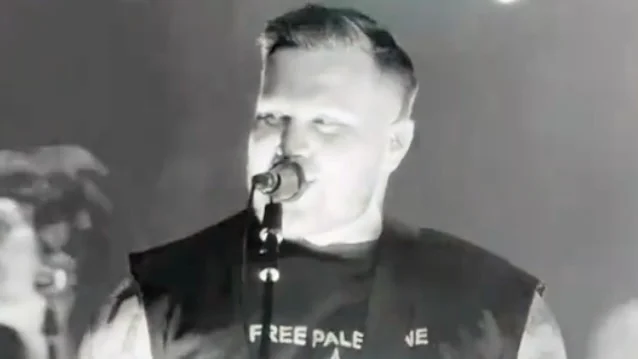

The atmosphere at Gillette Stadium on Friday evening was charged with a mixture of musical fervor and political tension as country music sensation Zach Bryan took the stage. During his performance at the home of the New England Patriots, Bryan opted for a sartorial choice that immediately drew national attention: a t-shirt bearing the phrase "Free Palestine." The move, which was captured by numerous concertgoers and shared rapidly across social media platforms, has sparked a firestorm of commentary regarding the intersection of celebrity, political expression, and the proprietary rights of venue ownership.
The Context of the Statement
The choice of venue is widely perceived as a deliberate component of the message. Gillette Stadium is owned by Robert Kraft, the billionaire businessman and chairman of the Kraft Group. Kraft has been a vocal supporter of Israel and has frequently utilized his platform to advocate against rising antisemitism, notably through his Foundation to Combat Antisemitism. By wearing the shirt in a venue owned by a figure so publicly aligned with the opposing side of the current geopolitical discourse, Bryan has essentially forced a confrontation between artist autonomy and the political interests of high-profile venue operators.
The visual statement draws direct parallels to recent events involving rapper Macklemore. Last month, while performing at a show featuring Ed Sheeran, Macklemore expressed similar sentiments regarding the Palestinian cause. Reports subsequently emerged that Robert Kraft had spearheaded a pressure campaign to have the rapper removed from future tour dates and appearances associated with venues within his influence. By choosing to wear the shirt at the very site where such a controversy recently unfolded, Bryan’s actions are being interpreted by industry analysts as a calculated act of defiance.
A Chronology of Rising Tensions
The timeline of these events highlights a growing trend of artists using their global platforms to weigh in on the humanitarian crisis in Gaza.
- Late 2023: As the conflict in the Middle East intensified, musicians across various genres began to face increasing pressure from fanbases to comment on the situation.
- September 2026: Rapper Macklemore vocalized support for the "Free Palestine" movement during an opening set for Ed Sheeran at a high-profile venue. The aftermath saw a swift, reported response from ownership groups, including those connected to the Kraft organization, which sought to distance their stages from the political messaging.
- October 2026: Zach Bryan, currently one of the most commercially successful touring artists in the country, arrived at Gillette Stadium for a two-night stand.
- Friday, October 2026: Bryan took the stage in the shirt, with videos surfacing on TikTok and X (formerly Twitter) within minutes, confirming the garment’s text and the audience’s vocal reaction.
- Saturday, October 2026: A second performance remains on the calendar. As of Saturday morning, there has been no official word on whether the venue intends to implement any restrictions or if the concert will proceed as scheduled.
Industry Implications and Venue Policy
The incident brings to the forefront the complex legal and contractual relationship between artists and the venues they book. Historically, performance contracts include "morality clauses" or "conduct stipulations" that allow owners to cancel events if an artist’s behavior is deemed damaging to the venue’s brand or reputation. However, the application of these clauses to political speech is a legal grey area.
Industry experts suggest that while private venues technically reserve the right to restrict content or terminate contracts, doing so in the public eye often triggers a "Streisand Effect," where the attempt to censor an artist only amplifies the reach of their message. Furthermore, such actions risk alienating younger demographics who increasingly expect their favorite artists to engage with global social justice movements.
Perspectives on Artist Advocacy
The public reaction has been deeply polarized, mirroring the broader national divide on the issue. Supporters of Bryan argue that the stage has always been a space for political protest, citing the legacy of artists like Bob Dylan, Joan Baez, and the anti-war music of the 1960s and 70s. From this perspective, Bryan is exercising his First Amendment right to expression, and his audience is the primary stakeholder in his performance.
Conversely, critics and some industry stakeholders argue that major stadium tours are professional environments where the artist has a duty to respect the venue owners’ personal and philanthropic stances. They argue that by using the stage as a platform for a highly contentious political slogan, the artist disrupts the professional harmony required to maintain a massive touring operation.
Analysis of the Financial and Cultural Landscape
For an artist of Zach Bryan’s stature, the risk-to-reward ratio of such a move is significant. Bryan has built his career on a brand of "authenticity" and "raw honesty," values that are highly prized by his core demographic. By taking a political stance, even one that is controversial, he reinforces his brand identity as an artist who does not cater to corporate interests or industry pressures.
However, the financial implications cannot be ignored. Major stadium tours rely on a complex network of corporate sponsorships, local municipal permits, and private venue partnerships. If high-profile owners like Robert Kraft decide to blacklist artists who engage in certain types of political messaging, it could lead to a fragmented touring landscape where artists are effectively segregated into "permissible" and "restricted" venues.
Official Responses and Future Outlook
As of this writing, representatives for Robert Kraft and the Kraft Group have not issued a formal statement regarding the incident. Requests for comment sent to Bryan’s management team have likewise remained unanswered.
Legal observers note that if the venue were to cancel the Saturday night show, they might face significant contractual hurdles, including breach of contract lawsuits, unless the specific terms of the booking explicitly prohibited political attire. Given the precedent set by the Macklemore situation, many are watching closely to see if the outcome for Bryan will be different.
The broader implications suggest that the music industry is entering a new era of "political gatekeeping." As venues become more aligned with the personal ideologies of their billionaire owners, artists may find their ability to perform contingent upon their willingness to self-censor. Conversely, if artists continue to push back, it may force a reassessment of the power dynamics between the creative class and the owners of the infrastructure that supports them.
Conclusion
The image of Zach Bryan standing on the Gillette Stadium stage, dressed in a "Free Palestine" shirt, is more than a fleeting moment of concert footage. It is a snapshot of the current cultural zeitgeist, where the lines between art, commerce, and geopolitics have become increasingly blurred. Whether this leads to a shift in venue policies or simply remains a footnote in the history of the 2026 touring season, the incident serves as a stark reminder that in the modern era, no stage is truly apolitical.
As the industry waits to see how the Saturday night performance unfolds, the focus remains on the tension between the freedom of the individual creator and the authority of the institution. For now, the narrative surrounding one of the year’s most anticipated tours has shifted from the music itself to the broader conversation about what is—and what is not—acceptable in the public square.