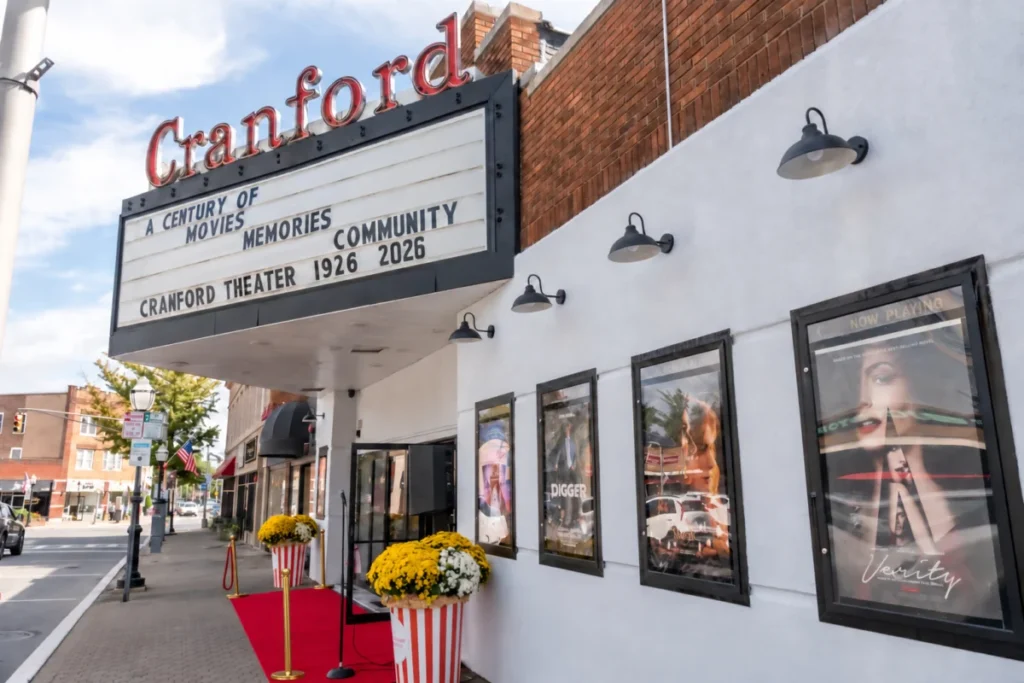

In an era defined by digital streaming algorithms, multiplex consolidation, and the relentless commercial pressures facing independent businesses, few cultural institutions can claim a century of uninterrupted community service. Yet, nestled in the heart of Union County, New Jersey, the Cranford Theater stands as a testament to the enduring magic of the silver screen. As the last independent, family-run cinema in the county, this five-screen cultural anchor is fast approaching its monumental centennial. Guided by owner Doreen Sayegh—whose life has been inextricably linked to the scent of popcorn and the glow of the marquee since childhood—the theater is preparing to honor its storied past while boldly charting a course for its next hundred years.
The celebration of the theater’s upcoming milestone on November 29, 2026, will feature a nostalgic throwback screening of Padlocked, the silent film that originally inaugurated the venue on November 29, 1926, complete with a live organ accompaniment. But beneath the celebratory veneer lies a narrative of fierce perseverance. Sayegh’s journey is one defined by global crises, devastating infrastructural failures, and an unyielding commitment to keeping the communal theatrical experience alive in an increasingly isolated digital age.
A Family Legacy Forged in the Projection Booth
Doreen Sayegh’s relationship with the exhibition industry is generational. Steeped in the trade by her father, Jesse Y. Sayegh, who operated an independent chain of movie theaters throughout New Jersey during the 1990s, Sayegh practically grew up in the aisles of local cinemas. During an era when independent operators faced significantly less market disruption from home entertainment alternatives, Jesse Sayegh acquired the twin-screen Cranford Theater from Cineplex Odeon in 1997, subsequently expanding and reopening it as a five-screen community venue a year later.
For Doreen, the cinema was both a playground and an educational institution. "I sold my first popcorn at 8 years old, I could barely see over the concession counter," she recalls. By age 11, she had advanced to selling tickets, eventually working every conceivable job in the building, from usher and box office cashier to theater manager.
Though Jesse Sayegh retained ownership of the physical property, the theater business changed hands in 2010 when it was sold to Bud Mayo’s Digiplex Destinations. Sayegh elected to stay on, weathering subsequent changes in management as the industry struggled against the rising tide of on-demand home viewing.
The turning point arrived in 2019. While giving a prospective new tenant a tour of the facility, Sayegh experienced a moment of profound clarity. Standing on the roof and surveying the bustling Cranford downtown, she realized her heart remained tied to the venue. With her father’s backing, she repurchased the operation and executed a comprehensive interior renovation, proudly reopening the doors in November 2019 just in time for the lucrative holiday movie season.
Chronology of Crisis: The Pandemic and the Drive-In Phenomenon
The revitalization of the Cranford Theater was abruptly threatened just months later by the onset of the COVID-19 pandemic. By March 2020, as municipal and state lockdowns loomed, box office revenues vanished overnight.
"By the time we got to March, the night before we closed down, we had maybe seven people in the building, and four of them were employees," Sayegh recalls.
Rather than succumbing to the economic paralysis affecting the broader arts and entertainment sector, Sayegh pivoted toward grassroots innovation. To maintain revenue and community engagement, she instituted curbside concessions, handing fresh popcorn and candy through car windows to local families. Simultaneously, she secured the lease for a nearby parking lot and transformed it into a pop-up drive-in theater, screening classic films on an outdoor setup.
The logistical rollout of the drive-in proved immediately successful, albeit overwhelmingly stressful. Sayegh recalls an alert system on her mobile phone designed to sound with every ticket purchase: "I remember the day I was in the parking lot, in the heat and my phone started dinging as soon as the tickets went on sale. And then it just stopped." Fearing a catastrophic technical failure, she contacted her web hosting provider, only to learn that unprecedented local demand had crashed their servers. "You’re sold out. You sold out in 90 seconds, for three nights," the representative informed her.
The outdoor screening series quickly expanded to six nights a week. Rather than capitalizing on the windfall for personal gain, Sayegh redirected her focus toward philanthropic initiatives, partnering with local organizations for community fundraisers. Among the most notable events was a 2020 screening of Willy Wonka and the Chocolate Factory, which featured hidden "golden tickets" distributed throughout Cranford businesses, granting lucky finders free admission.
Navigating Post-Pandemic Headwinds and Industry Shifts
As the economy gradually reopened, the exhibition sector faced structural alterations. The acceleration of studio streaming strategies—where major motion pictures debuted simultaneously on home subscription services—combined with the compounding disruptions of the 2023 Writers Guild of America and SAG-AFTRA strikes, created a volatile theatrical landscape.
For independent venues, competing against the convenience of home viewing required a fundamental shift in business philosophy. Sayegh recognized that simply opening the doors and selling concessions was no longer a viable long-term strategy.
"That was definitely a tough time, because our goal is to get people off their couches and into our seats to enjoy movies together on the big screen," she notes.

To counteract consumer inertia, Sayegh diversified the venue’s programming calendar. Moving beyond traditional Hollywood studio fare, the Cranford Theater began hosting live comedy performances, intimate piano recitals, community film festivals, and specialized indie screenings. This multi-faceted event model successfully transformed the cinema from a passive viewing house into an active cultural hub.
The 2025 Ceiling Collapse and the Triumph of Rebuilding
Just as these operational adaptations began yielding sustained financial stability, the theater suffered a catastrophic infrastructural setback. In April 2025, a structural failure resulted in a partial ceiling collapse inside the auditorium. Fortunately, the incident occurred during a period of low occupancy, and staff executed a swift, orderly evacuation.
"No one was hurt," Sayegh emphasizes when reflecting on the incident. "That was most important to me, because that would have changed the whole story. And the fact that no one was hurt meant I knew I was going to rebuild."
The subsequent restoration process forced a seven-month closure, putting the venue’s financial resilience to a severe test. However, community support remained steadfast. On November 26, 2025, the historic theater relit its marquee and neon signage, welcoming audiences back inside its revitalized auditorium just ahead of its 99th anniversary.
The New Jersey Production Boom and Local Cinema
The reopening of the Cranford Theater coincided with a broader economic revitalization within New Jersey’s creative sector. Bolstered by aggressive state tax credits, modernized infrastructure incentives, and growing studio investments, the Garden State has experienced a dramatic renaissance in film and television production, rivaling traditional hubs like New York and California.
This regional production boom has provided independent theaters like the Cranford with unique programming opportunities. Sayegh has capitalized on the trend by hosting exclusive advance screenings and locally-focused projects, including Steven Spielberg’s Disclosure Day, Steven Soderbergh’s supernatural thriller Presence (which was filmed on location in Cranford), Mother’s Instinct starring Anne Hathaway and Jessica Chastain, and Maybe I Do, featuring Diane Keaton and William H. Macy.
"I love it when you have new visitors to our town, cast and crew coming in and they go out into our community and they grab a cup of coffee and a bite to eat," Sayegh observes, highlighting the direct economic multiplier effect that independent cinemas bring to local downtown districts.
The theater’s upcoming holiday calendar features Peter Farrelly’s I Play Rocky, a biographical drama detailing the arduous creation of Sylvester Stallone’s 1976 classic. For Sayegh, the thematic parallels between the legendary underdog sports film and the trajectory of her own family-operated business are unmistakable.
"The story of Rocky is so rooted in perseverance, resilience and continuing to fight when the odds are against you, and in many ways those themes resonate with the Cranford Theater’s own story and everything it has survived over the course of 100 years," she says.
Broader Economic and Community Implications
The survival and adaptation of the Cranford Theater offer valuable insights into the macroeconomic health of downtown commercial districts. Small, independent cinemas historically serve as vital economic anchors for surrounding retail businesses, restaurants, and municipal service providers. When a community theater closes, the ripple effects are felt throughout the local pedestrian economy. By actively curating community events, partnering with municipal organizations, and anchoring downtown foot traffic, Sayegh’s management model demonstrates how historic cultural venues can remain economically viable in the twenty-first century.
Furthermore, Sayegh credits her foundational business ethos to the mentorship of her father, whose core principles—honoring agreements, treating patrons and staff with mutual respect, and programming according to community demand rather than personal artistic bias—continue to guide daily operations.
Looking Forward: The Next Century
As the Cranford Theater looks toward its centennial celebration in late 2026, Sayegh remains focused on balancing historical preservation with forward-thinking innovation. While honoring the generations of cinemagoers who walked through the doors during the roaring twenties, the postwar era, and the digital transition, she is also cultivating the venue’s future.
The family tradition quietly enters its next chapter through Sayegh’s five-year-old daughter, Natalia, who is growing up within the theater much as Sayegh did decades prior.
"She is already watching and learning what it means to welcome people, take care of a theater and, most importantly, serve a community," Sayegh reflects. "I would love to see her running the show one day, although ultimately that will be her story to write."
Through systemic resilience, creative community engagement, and an unwavering belief in the communal power of the big screen, the Cranford Theater has proven that while technologies and times may change, the fundamental human desire to share a story together in the dark remains timeless.