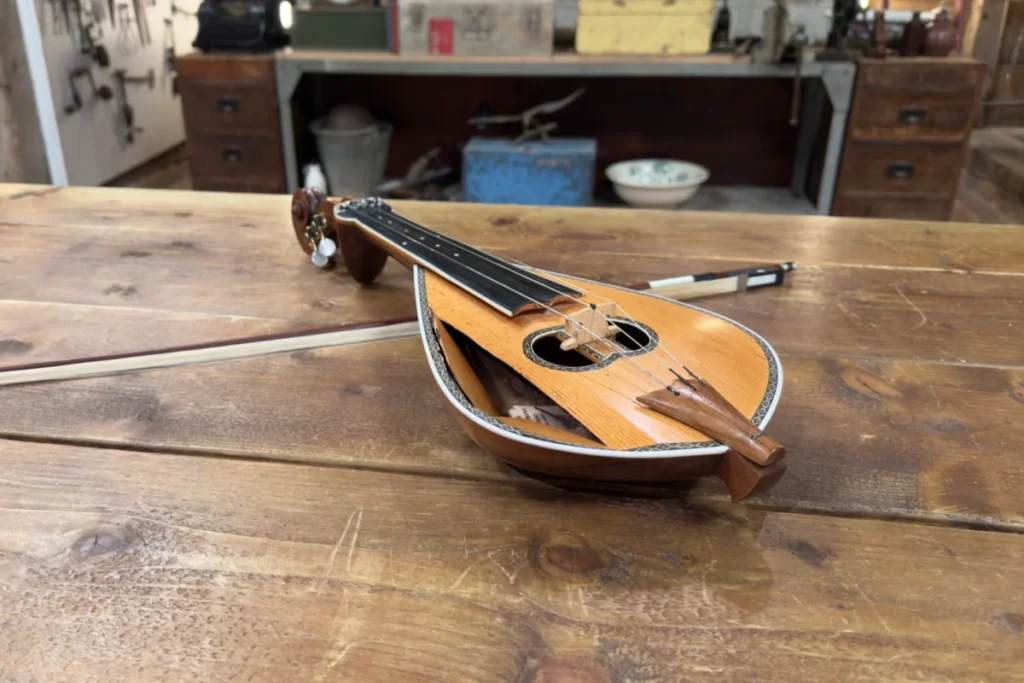

The recent episode of BBC One’s much-loved programme, "The Repair Shop," has garnered widespread acclaim for what viewers and the family involved have described as an "impossible" and deeply moving restoration. At the heart of this emotionally charged story was a Cretan lyra, a unique folk instrument, belonging to Alex MacLennan, who tragically passed away at the age of 31 after a battle with motor neurone disease (MND). His mother, Emma MacLennan, entrusted the broken instrument to the expert craftspeople of the barn, hoping to breathe new life into an object that held the deepest personal significance, a tangible link to her cherished son. The successful restoration has not only brought immense comfort to the family but has also shone a powerful spotlight on the devastating impact of MND, resonating profoundly with audiences across the nation.
A Son’s Legacy: The Story of Alex and His Cretan Lyra
Alex MacLennan’s connection to the Cretan lyra was deeply personal, woven into the fabric of his family heritage and his passion for culture. His grandmother hailed from Crete, the largest of the Greek islands, a place rich in history, myth, and a distinctive musical tradition. This ancestral link spurred Alex to immerse himself fully in Cretan culture. He dedicated himself to learning the local dialect, an intricate language that served as a gateway to understanding the island’s soul. More significantly, he taught himself to play the Cretan lyra, a three-stringed, pear-shaped bowed instrument that is the cornerstone of Cretan folk music. This instrument, with its haunting melodies and vibrant history, became an extension of Alex’s identity, a testament to his dedication and his bond with his heritage. The lyra, often likened to a small fiddle, is traditionally carved from a single piece of wood, typically mulberry or walnut, and played upright on the knee, with the bow touching the strings from the side rather than pressing down. Its distinctive sound is central to traditional Cretan gatherings, dances, and celebrations, embodying the spirit of the island.
Alex’s ability to play the lyra was a source of immense joy and connection, allowing him to express himself and honour his roots. However, this profound connection was cruelly severed by the onset and progression of motor neurone disease. MND is a progressive neurological condition that attacks the nerves in the brain and spinal cord, leading to muscle weakness and wasting. As the disease advanced, Alex’s physical capabilities diminished, eventually robbing him of the dexterity and strength required to play his beloved instrument. The lyra, once a vibrant vessel for his spirit, fell silent, becoming a poignant symbol of all that MND had taken from him. Following Alex’s death, the instrument remained, broken and unplayed, a painful reminder of loss, yet also a powerful symbol of his life and passions.
The Challenge in the Barn: Restoring the "Unimaginably Impossible"
The task of restoring Alex’s Cretan lyra was taken on by instrument expert Becky Houghton, a specialist known for her meticulous attention to detail and profound understanding of complex musical instruments. Upon its arrival at "The Repair Shop," the lyra presented a formidable challenge. The instrument was not merely old; it bore the marks of significant damage, likely from years of use and the passage of time. Restoring a Cretan lyra is inherently complex due due to its unique construction and the specific materials used. Unlike more common stringed instruments, the lyra often features intricate carvings and a distinct tuning system. The body, traditionally carved from a single block of wood, is susceptible to cracks and warping, which can severely impact its acoustic properties. The soundboard, typically made of thin softwood, requires delicate repair to maintain its resonance. The three strings, traditionally gut or silk, require careful tensioning and bridge adjustments to achieve the correct pitch and tone.

Ms. MacLennan’s own words underscored the magnitude of the task: "I was amazed at the fact that they could restore it. It’s frankly something that seemed incredible to me. A very difficult thing to accomplish. So we were astonished, both me and my daughter." This sentiment was likely shared by the repair team, who often face instruments with both structural damage and deep emotional significance. For Becky Houghton, the process would have involved painstaking work: carefully assessing the extent of the damage, sourcing appropriate materials that matched the original craftsmanship, repairing any cracks or breaks in the wooden body, restoring the intricate scroll and pegs, and finally, stringing and tuning the instrument to ensure it could once again produce its characteristic sound. The challenge was not just mechanical; it was about preserving the soul of the instrument, ensuring that its voice, once lost, could truly sing again. The dedication required to bring such a piece back to life reflects the ethos of "The Repair Shop" – a commitment to craftsmanship, historical preservation, and above all, compassion for the stories behind the objects.
An Emotional Revelation: "Like Having Him Restored"
The moment of the lyra’s reveal on "The Repair Shop" is consistently one of the most anticipated and emotional segments for viewers, and Alex’s story was no exception. For Emma MacLennan and her daughter, seeing the restored instrument was an overwhelming experience. Ms. MacLennan articulated the profound impact, stating, "It was very moving, because we lost our son to motor neurone disease, and in some way, having the lyra restored was a bit like having him restored." This powerful statement encapsulates the therapeutic nature of the show’s work. Objects, especially those tied to loved ones, become vessels of memory, embodying a person’s presence, passions, and life story. When such an object is broken, it can mirror the brokenness felt through grief. Its restoration, therefore, can offer a form of solace, a symbolic mending of the heart.
She further elaborated on this sentiment: "He was broken by his disease, but now something that meant a lot to him was back and functioning and could give voice to him again." This speaks to the idea that while Alex’s physical body succumbed to MND, his spirit, his love for music, and his connection to his heritage could still resonate through the lyra. The instrument, once silenced, now had the potential to sing Alex’s song, allowing his memory to live on in a tangible, audible form. This emotional resonance is a hallmark of "The Repair Shop," where the focus extends beyond mere repair to the preservation of invaluable personal histories and the healing power of craftsmanship. The family’s astonishment at the "impossible" achievement by Becky Houghton highlights not only the technical skill involved but also the deep emotional impact of seeing a cherished piece brought back from the brink.
Understanding Motor Neurone Disease: A Devastating Condition
Alex MacLennan’s story serves as a poignant reminder of the brutal reality of motor neurone disease (MND). According to the NHS and other leading medical organisations such as the MND Association, it is a life-shortening, progressive disease that attacks the nerves in the brain and spinal cord, known as motor neurones. These motor neurones send messages from the brain to the muscles, controlling movement, speech, and breathing. In MND, these neurones progressively degenerate, leading to muscle weakness, stiffness, and wasting.
The disease manifests in various ways, but common symptoms include weakness in the limbs, slurred speech (dysarthria), difficulty swallowing (dysphagia), and eventually, respiratory failure. The progression of MND varies from person to person, but it is relentlessly degenerative, with symptoms worsening over months or years. The average life expectancy after diagnosis is tragically short, typically between two and five years, although some individuals live much longer.

Crucially, there is currently no cure for MND. Treatment focuses primarily on managing symptoms, improving quality of life, and providing support to patients and their families. This can include physiotherapy to help maintain mobility, occupational therapy to adapt to daily challenges, speech and language therapy, and respiratory support. Medications can help manage specific symptoms like muscle cramps or excessive salivation.
Ms. MacLennan eloquently described the devastating nature of the disease: "It’s a really dreadful disease. It takes everything away from you. It takes your ability to walk, to use your arms, and eventually, to speak, to breathe, and not being able to breathe is what kills you." Beyond the physical deterioration, the mental toll is immense. She continued, "Mentally, if you can imagine, you’re just the same person, it’s just you’re trapped in a body that doesn’t respond to anything." This stark description highlights the profound psychological suffering experienced by individuals with MND, who remain cognitively intact while their bodies fail them. Watching a loved one endure such a decline is an unimaginable pain for families, as Ms. MacLennan painfully articulated: "So our precious son — who we absolutely adored, he was our best friend to all of us — we just watched him being tortured with his disease." Alex’s story, brought to national attention through "The Repair Shop," undeniably contributes to vital public awareness of MND, a condition that affects approximately 5,000 adults in the UK at any one time, with around 2,500 new diagnoses each year. Increased awareness is crucial for funding research, improving patient care, and supporting affected families.
The Enduring Legacy: Hope for the Future
The restoration of Alex’s Cretan lyra is not merely the end of a repair journey; it marks the beginning of a new chapter for the instrument and the MacLennan family. The lyra now occupies a place of honour in the front bedroom of Ms. MacLennan’s house, "waiting" for their grandson to be old enough to learn to play it. This forward-looking sentiment transforms an object of grief into a symbol of hope and continuity, ensuring Alex’s musical legacy will endure through future generations. Furthermore, some members of the family have expressed an interest in learning the instrument themselves, a testament to Alex’s inspiring passion and the instrument’s renewed voice. This collective family endeavour to embrace the lyra’s music will serve as a living memorial, keeping Alex’s spirit alive through the melodies he once cherished.
The Broader Impact of "The Repair Shop": Craftsmanship, Sustainability, and Humanity
Ms. MacLennan’s praise for "The Repair Shop" extended beyond the personal impact of her son’s lyra. She reflected on the programme’s wider appeal and its positive influence: "It was absolutely fabulous. It was like walking into a huge group hug. The thing I love about the programme is that it’s so positive. It leaves you feeling good about humanity." This speaks to the show’s unique ability to tap into universal themes of connection, memory, and the value of human skill and empathy. In an increasingly fast-paced and disposable world, "The Repair Shop" offers a comforting counter-narrative.
The programme consistently champions the values of sustainability and craftsmanship. As Ms. MacLennan noted, "It also celebrates reusing things in a throwaway world, and it celebrates human skill." In an era dominated by mass production and planned obsolescence, "The Repair Shop" highlights the intrinsic value of well-made items, the artistry involved in their creation, and the importance of preserving them rather than discarding them. The expert restorers, each a master in their respective craft – from horology to ceramics, textiles to musical instruments – demonstrate the profound knowledge, patience, and dedication required to breathe new life into seemingly irreparable objects. Their skills are not merely technical; they are often an act of archaeological reconstruction, understanding the original methods and materials to ensure an authentic restoration.

The show’s format, which combines poignant personal stories with the mesmerising process of intricate repair, has resonated with millions, consistently drawing high viewing figures for BBC One. Its success lies in its ability to evoke strong emotions – nostalgia, empathy, joy – while simultaneously educating viewers about traditional crafts and the importance of heritage. The programme fosters a sense of community, both within the barn among the restorers and among its vast audience, who share in the collective appreciation for history, memory, and the remarkable human capacity for creation and restoration.
A Timeless Narrative of Loss, Love, and Legacy
The journey of Alex MacLennan’s Cretan lyra from a broken relic to a beautifully restored instrument is more than just a television episode; it is a powerful narrative of enduring love, profound loss, and the healing potential of remembrance. The "impossible" restoration stands as a testament to the extraordinary skill of the craftspeople at "The Repair Shop" and their commitment to preserving not just objects, but the precious memories and stories embedded within them.
The episode, which aired on BBC One and BBC iPlayer on Wednesday, has undoubtedly left a lasting impression, prompting reflection on grief, the challenges of living with MND, and the simple yet profound joy of seeing something cherished brought back to life. For the MacLennan family, the lyra is no longer just an instrument; it is a vibrant, resonant echo of Alex’s life, a symbol of his passions, and a hopeful promise for future generations to connect with his spirit through the universal language of music. "The Repair Shop" continues to invite members of the public to submit items for future series, offering a beacon of hope for those seeking to mend not just objects, but the emotional ties that bind them to their past.