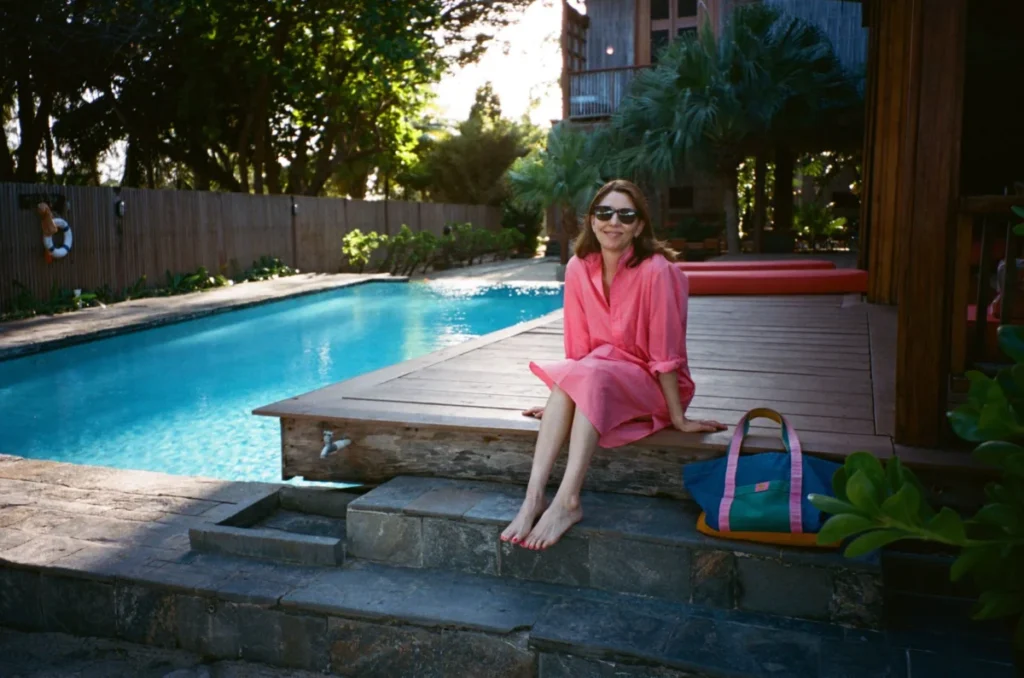

For more than two decades, the acclaimed filmmaker Sofia Coppola has maintained a private residence within the lush environs of the Turtle Inn resort in Belize, a property that serves as both a personal family sanctuary and a testament to her exacting aesthetic standards. Known for a cinematic style defined by atmospheric precision—from the pastel-hued decadence of Marie Antoinette to the ethereal, haunting interiors of The Virgin Suicides—Coppola has applied that same rigorous creative vision to her own architectural footprint on the Placencia Peninsula. The result is a structure that balances the functional requirements of a family home with the sophisticated, minimalist sensibilities of a modern retreat, standing as a distinct departure from the traditional tropical vernacular.

The Genesis of a Private Sanctuary
The history of the beach house is inextricably linked to the broader legacy of the Coppola family in Belize. Sofia Coppola’s father, the legendary director Francis Ford Coppola, was a pioneer in the Belizean luxury eco-tourism sector, acquiring the Blancaneaux Lodge in the early 1980s and later expanding his portfolio with Turtle Inn. Sofia Coppola’s decision to build her own residence on a plot adjacent to the main resort was a significant step in establishing her creative and personal independence.
The project began approximately 20 years ago, coinciding with the birth of her eldest daughter, Romy. Seeking an architect who could translate her specific tastes into a physical structure, Coppola turned to Laurent Deroo. The two had met under uniquely artistic circumstances: Deroo, a French architect, had designed an installation for an A.P.C. store that Coppola encountered while filming scenes for Lost in Translation. This professional serendipity led to a collaboration characterized by what Deroo describes as an "obsessive" attention to detail.

Deroo recalls that Coppola’s directive was clear: she wanted a space that avoided the "folklore" often associated with Caribbean architecture. While the existing Turtle Inn bungalows were inspired by Southeast Asian design—featuring thatched roofs and ornate woodwork—Coppola sought something more streamlined, contemporary, and integrated into the natural landscape without being "falsely exotic."
Architectural Philosophy and Tropical Modernism
The construction of the Coppola beach house presented unique geographical and environmental challenges. The property is situated on a narrow strip of land between a tranquil bay and the open oceanfront. Deroo’s design had to account for the intense tropical sun, the humidity of the region, and the need for natural ventilation, all while maintaining the privacy of the occupants and the views of the water.

The architectural solution was a masterclass in "Tropical Modernism." Deroo utilized a palette of modest, locally sourced materials to create a sense of "rich coherence." The structure primarily features solid local hardwoods, plywood, and corrugated metal roofing. By elevating certain sections of the house on stilts, Deroo not only protected the living quarters from potential storm surges but also facilitated the flow of ocean breezes, reducing the reliance on artificial cooling.
The layout is designed to foster a seamless transition between communal and private spheres. The villa includes:

- A stilted bedroom level: Providing elevated views of the Caribbean Sea while ensuring privacy from the resort’s public areas.
- A central garden: Acting as a connective tissue between guest rooms and the main living areas, the garden integrates native flora directly into the home’s footprint.
- Lateral orientation: The building is positioned laterally to the view, creating an intimate central courtyard that houses a private pool and a living deck.
Deroo notes that the relationship between the building and the beach was a primary concern. The goal was to ensure that the structure did not block sunlight or impede the "climatic benefits" of the site, allowing the house to "coexist" with the environment rather than dominate it.
A Creative Crucible: The Priscilla Connection
Beyond its role as a vacation home, the Belizean retreat has become a vital component of Coppola’s creative process. During the global lockdowns of 2020, Coppola, her husband (Phoenix frontman Thomas Mars), and their children decamped to Turtle Inn for several months. This period of isolation in a tranquil environment provided the necessary headspace for Coppola to draft the screenplay for her 2023 biopic, Priscilla.

Coppola has frequently cited the "tranquil" nature of the property as an antidote to the frantic pace of city life and the pressures of film production. The absence of urban distractions allows for a deep focus that she finds difficult to replicate elsewhere. The house serves as a "writerly refuge," where the routine of morning walks on the beach and the rhythmic sound of the ocean provide a backdrop for conceptualizing her next projects. Even outside of global crises, Coppola returns to the house several times a year, often hosting "writing retreats" with colleagues to brainstorm and refine scripts.
Interior Narrative: Consistency and Personal Touch
One of the most striking aspects of the Coppola residence is its temporal consistency. Unlike many luxury properties that undergo frequent renovations to keep pace with changing trends, Coppola’s beach house has remained largely unchanged for two decades. This stability reflects a confidence in the original design and a deep sentimental attachment to the space.

The interiors were curated with the help of artist Agnes Barley, a long-time friend of Coppola. Together, they sourced sun-proof fabrics and durable materials that could withstand the rigors of a coastal environment without sacrificing elegance. The decor is a blend of high design and personal history, featuring:
- Custom Furniture: Much of the seating and cabinetry was designed specifically for the dimensions of the house.
- Family Archives: The walls are adorned with old family photographs, grounding the modern structure in the Coppola family’s long history in Belize.
- Leisure Amenities: A dedicated television den filled with pillows and a vast collection of board games underscores the home’s primary function as a place for family bonding.
This "far away and simple" feel is precisely what Coppola prizes. In her own words, the residence allows her to be "the neighbor that still gets to order room service," enjoying the amenities of a world-class resort while maintaining the sanctity of a private home.

The Coppola Hideaways and the Belizean Tourism Context
The beach house is part of "The Coppola Hideaways," a portfolio of boutique hotels that includes properties in Italy, Guatemala, and Argentina. When Coppola is not in residence, the house is available for rent to the public, offering a rare opportunity for guests to experience the director’s personal aesthetic firsthand.
The inclusion of such a high-profile personal residence in the rental market has broader implications for the Belizean tourism industry. Belize has increasingly positioned itself as a destination for "high-value, low-impact" tourism. The Coppola brand has been instrumental in this shift, moving the focus away from mass-market Caribbean tourism toward a model that emphasizes environmental stewardship, architectural integrity, and cultural authenticity.

Guests who book the Coppola beach house are provided with a level of service that mirrors the director’s own lifestyle, including:
- Private Butler Service: Ensuring a seamless experience tailored to individual needs.
- Access to a Moke car: A classic open-air vehicle used for navigating the local area on a first-come, first-served basis.
- Integration with Turtle Inn: Access to the resort’s Thai spa, dive shop, and restaurants, while retaining a private pool and beachfront.
Socio-Economic Impact and Broader Implications
The longevity of Coppola’s involvement in Belize highlights a trend of long-term investment by high-profile individuals in developing tourism markets. Rather than a fleeting celebrity association, the Coppola family’s four-decade presence in the country has contributed to the local economy through job creation and the promotion of Belizean craftsmanship. The use of local wood and construction techniques in the beach house is a prime example of how luxury development can support regional industries.

Furthermore, the architectural success of the residence has influenced other developments in the region. By proving that a minimalist, modern aesthetic can thrive in a tropical climate, Coppola and Deroo have provided a template for sustainable luxury that avoids the clichés of "island style."
Conclusion: The Enduring Legacy of the Beach House
As it enters its third decade, Sofia Coppola’s Belizean retreat remains a singular achievement in residential design. It is a space that reflects the maturity of its owner—a place where the "meticulous conceptualization" of her films is applied to the art of living. For Coppola, the house is more than a piece of real estate; it is a vessel for memories, a crucible for creativity, and a stable anchor in a career defined by movement and transformation.

In an era of disposable luxury and constant renovation, the fact that Coppola’s vision for the house has remained unchanged since its inception is perhaps the ultimate testament to its success. It stands as a reminder that when design is approached with specificity, respect for the environment, and a clear personal narrative, it can create a sanctuary that is truly timeless. The beach house at Turtle Inn is not just a home; it is a vital part of the Sofia Coppola story, continuing to inspire her work and provide a serene backdrop for the next generation of the Coppola family.