
The release of the A24 psychological drama Mother Mary has sparked critical debate regarding the cinematic exploration of modern pop superstardom, trauma, and the complex intersection of fashion and music. Directed by acclaimed filmmaker David Lowery, the feature film boasts an all-star cast led by Anne Hathaway as the titular pop icon Mary and Michaela Coel as her creative foil, alongside Sian Clifford, Hunter Schafer, Kaia Gerber, FKA twigs, Jessica Brown Findlay, and Alba Baptista. While the film has garnered significant attention for its visual ambition, high-fashion integration, and powerhouse performances, critics have noted a stark narrative divergence between its sharply observed first half and its increasingly convoluted conclusion.

Main Facts and Production Background
Mother Mary centers on the high-stakes, insular world of global pop music, examining the psychological toll exacted on artists who attain unprecedented levels of fame. The narrative investigates the tumultuous relationship between Hathaway’s pop star persona and Coel’s character, exploring themes of creative dependency, personal trauma, and the symbiotic yet destructive nature of artistic collaboration.

Production on the A24 project drew intense industry interest due to its unprecedented collaboration with the upper echelons of the international fashion community. Principal costume design was spearheaded by Dina Baigeler, who constructed a wardrobe designed to visually encapsulate the hyper-stylized iconography of contemporary stadium tours. Furthermore, the film features a bespoke, physics-defying final garment created by avant-garde Dutch fashion designer Iris van Herpen, a piece that has since become a focal point of critical analysis regarding the film’s merging of corporeal reality and ethereal surrealism.
Chronology and Narrative Arc

The production timeline of Mother Mary aligns with a broader industry trend toward high-concept, music-industry-focused dramas that deconstruct the mythology of the modern celebrity. Development on the film progressed quietly through A24, utilizing a robust ensemble cast known for crossing traditional boundaries between indie cinema, high fashion, and commercial pop music.
Upon its theatrical release in October 2026, the film’s narrative structure immediately drew scrutiny from reviewers. The opening acts establish a grounded, incisive workplace and creative dynamic, sharply charting the mechanics of fame, the pressures of artistic output, and the intimate architecture of an exclusive British fashion atelier overseen by Coel’s character, Sam. However, as the runtime progresses, Lowery’s script pivots sharply into ambiguous, surrealist territory. The film introduces heavy-handed metaphors concerning trauma and interpersonal betrayal, ultimately concluding without offering definitive resolutions to central plot points, such as the fate of the protagonist’s definitive musical work and the true nature of the central relationship.

Costume Design and Pop Iconography Analysis
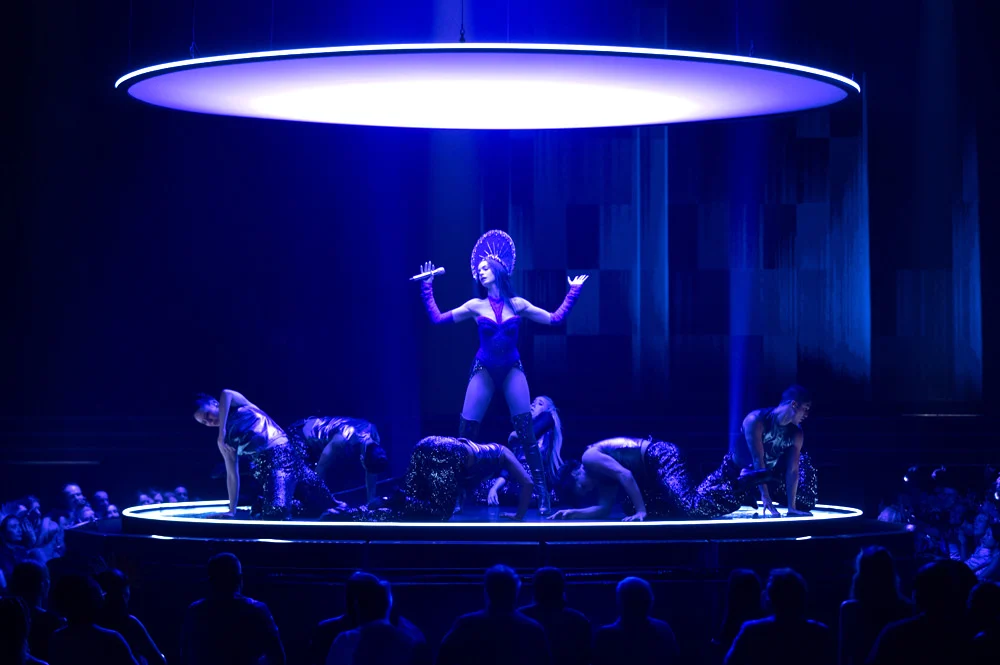
A central pillar of Mother Mary’s marketing and critical reception is its meticulous approach to wardrobe, which serves as a primary vehicle for character development and thematic commentary. Baigeler’s costume design explicitly references contemporary musical royalty, drawing clear visual parallels to the heavily accessorized bodysuits of Taylor Swift, the architectural halo crowns and regal staging of Beyoncé, and the high-concept, avant-garde couture presentations historically associated with Lady Gaga.

Despite these deliberate nods, cultural critics have pointed out potential narrative dissonance in the film’s pastiche of pop iconography. By blending visual markers from distinctly different cultural and demographic fanbases—ranging from mainstream pop audiences to deeply ingrained queer and Black communities—without anchoring Mary within a specific cultural context, the film occasionally struggles to define the exact sociopolitical positioning of its protagonist.
Conversely, the sartorial choices assigned to Sam and her professional environment received widespread acclaim for their authenticity. The depiction of a successful British fashion designer’s atelier, residence, and working relationships—bolstered by Hunter Schafer’s precise performance as an elite fashion assistant—was noted for its acute sociological accuracy. The pervasive use of color theory, specifically the counterbalancing interplay between aggressive reds and melancholic blues, provides a visual ledger of the psychological deterioration and codependency binding the two central characters together.

Official Responses and Industry Reception
Representatives for A24 and the creative team behind Mother Mary have positioned the film as a deliberate departure from standard biographical formulas, opting instead for an impressionistic, psychological tone poem. While commercial metrics indicate strong initial audience curiosity driven by the star-studded cast and high-profile fashion partnerships, critical consensus remains divided.

Reviewers have universally praised the performances of Hathaway and Coel, noting that both actors elevate the material through grounded emotional intensity. Hathaway’s portrayal of vulnerability combined with Coel’s commanding presence anchors the film even as its script drifts into vagueness. Similarly, the contribution of Iris van Herpen has been lauded as a masterclass in utilizing haute couture as a narrative device. The bespoke final dress—meticulously molded to echo Hathaway’s exact physical dimensions while evoking organic, floral, and muscular architecture—has been cited by critics as a more successful articulation of the film’s themes than the screenplay itself.
Broader Impact and Implications

The release of Mother Mary highlights a growing appetite within prestige cinema for projects that interrogate the psychological infrastructure of modern celebrity culture. By merging the worlds of high-end fashion, supernatural ambiguity, and pop music iconography, Lowery’s film contributes to a burgeoning cinematic subgenre that attempts to capture the fragmented reality of 21st-century fame.
However, the film’s reception also underscores the risks inherent in stylistic maximalism. When a narrative relies heavily on open-ended metaphor and withholding resolution, it risks alienating audiences seeking a cohesive narrative payoff. The dialogue surrounding Mother Mary suggests that while visual storytelling, costume design, and lead performances can achieve remarkable heights, they cannot entirely compensate for a script that buckles under the weight of its own symbolism. As the entertainment and fashion industries continue to intersect on screen, Mother Mary will likely be studied as a striking example of ambition and execution operating in a compelling, if occasionally frustrating, state of tension.