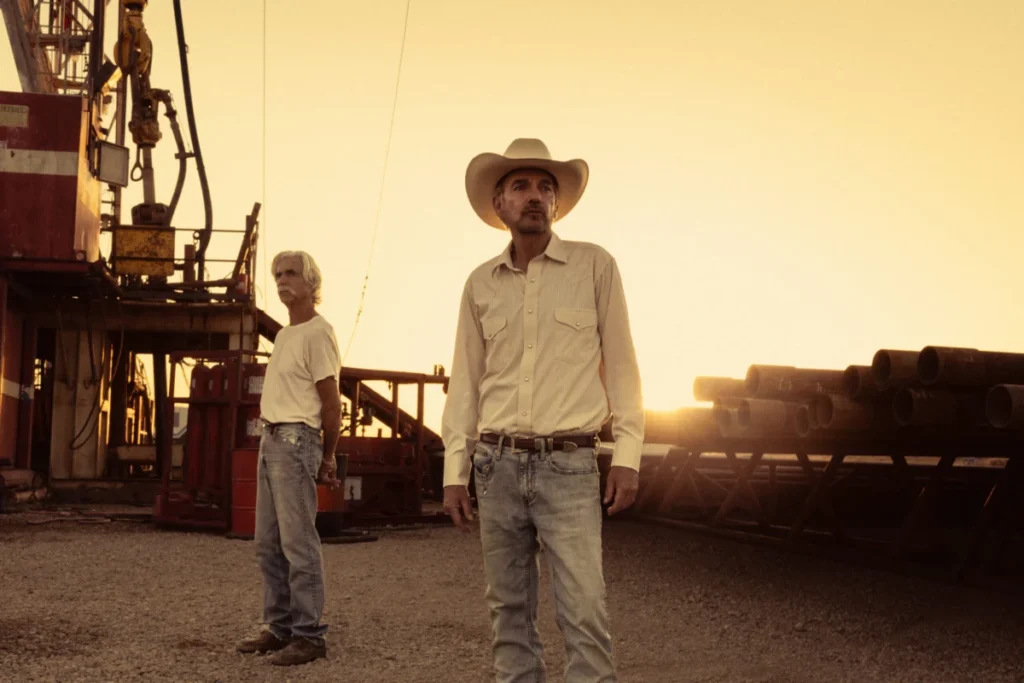

The world of modern-day oil barons and Texan grit on Paramount+’s "Landman" is largely defined by the sharp wit and complex pronouncements of its central figure, Tommy Norris, portrayed with signature gravitas by Billy Bob Thornton. As the series progresses through its initial seasons, Norris has cemented his reputation not just as a shrewd businessman, but as a masterful orator, capable of delivering lines that are both memorable and deeply revealing of his character and the world he inhabits. This exploration delves into some of Tommy Norris’s most impactful monologues, examining the context, delivery, and underlying themes that make them resonate with audiences and critics alike.

The Eloquent Landman: Defining Tommy Norris Through His Words
Tommy Norris is more than just a character; he’s a force of nature, a man whose command of language is as formidable as his prowess in the volatile oil industry. Whether defending the controversial practice of hydraulic fracturing, navigating the tumultuous waters of his personal relationships, or facing down adversaries, Norris’s speeches are not mere dialogue; they are windows into his philosophy, his pragmatism, and his unyielding spirit. These monologues serve as crucial narrative devices, offering insights into the show’s exploration of ambition, morality, and the rugged individualism often associated with the oil-rich landscapes of Texas.

The effectiveness of Thornton’s portrayal lies in his ability to imbue these often lengthy speeches with a natural cadence and an undercurrent of raw emotion. He can shift from folksy charm to cutting sarcasm, from defensive justification to outright threat, all within the span of a few sentences. This linguistic dexterity allows "Landman" to delve into the complexities of its characters and the industry it depicts, using Tommy’s words to both entertain and provoke thought.
Chronicles of a Wordslinger: Key Monologues and Their Significance

The first two seasons of "Landman" have provided a rich tapestry of Tommy Norris’s verbal performances. Each monologue, delivered in a distinct context, sheds light on different facets of his character and the narrative arcs of the show.
One of Tommy’s most striking defenses of the oil industry comes when he explains its ubiquity and necessity. In a moment that underscores his deep-seated belief in the sector’s vital role in modern life, he asserts, "Our whole lives depend on [petroleum]… Your cellphone case, artificial heart valves. Any kind of clothing that’s not made with animal or plant fibers. Soap, fking hand lotion, garbage bags, fishing boats. You name it. Every fking thing. And you know what the kicker is? We’re gonna run out of it before we find its replacement." This statement, delivered with a conviction that borders on evangelical zeal, serves as a powerful justification for his career and the industry he champions. It contextualizes the oil business not merely as a source of wealth, but as a fundamental pillar of contemporary society, highlighting the intricate dependency that modern civilization has on fossil fuels. The implication is clear: to dismantle the oil industry is to dismantle the very fabric of modern existence, a point Tommy argues with unassailable logic, at least from his perspective.

His ability to articulate complex situations with disarming simplicity is further showcased when he defends Rebecca Savage (Kayla Wallace) to Nathan (Colm Feore). Recognizing that Rebecca, a lawyer, might be underestimated in the cutthroat world of oil deals, Tommy cuts through the perceived lack of technical expertise with a blunt assessment: "She don’t need experience with offshore drilling. She needs experience with bullstting."** This cynical yet accurate observation reveals Tommy’s pragmatic approach to business and his understanding of the human element involved. He recognizes that in many high-stakes negotiations, persuasive rhetoric and an understanding of human psychology can be as, if not more, valuable than technical knowledge. This statement also positions him as a mentor figure, guiding Rebecca and acknowledging her strengths in a male-dominated arena.
The tumultuous relationship between Tommy and his ex-wife, Angela (Ali Larter), is a constant source of dramatic tension and often, the catalyst for some of his most impassioned speeches. When expressing his frustration with Angela’s unpredictable nature and their cyclical entanglement, he delivers a darkly humorous, albeit exasperated, lament: "You’re driving me to suck freon out the back of an A/C unit. I’m settling for a cigarette." This colorful metaphor vividly captures his extreme exasperation and the volatile, almost self-destructive, dynamic they share. It speaks to a deep-seated frustration that goes beyond simple annoyance, hinting at the profound emotional toll their relationship takes on him.

Tommy’s encounters with adversity often elicit his most potent pronouncements. When kidnapped and threatened by cartel leader Jimenez (Alex Meraz), Tommy’s response is not one of terror, but of defiance, seasoned with a darkly pragmatic adage: "Well, wish in one hand, st in the other, see which one fills up first."** This classic expression, delivered with Tommy’s characteristic flair, underscores his resilience and his refusal to be cowed by intimidation. It highlights his belief that action, not idle hope, is the true path to survival and success, a philosophy deeply ingrained in his character and his life experiences.
Amidst the high-stakes dealings and personal dramas, Tommy also exhibits moments of genuine gratitude. After a significant period of estrangement and turmoil, he expresses his appreciation for Angela’s return to his life with a heartfelt, if characteristically rough-around-the-edges, declaration: "You know what I realized? What a gift it is to have you back in my life. You’re a beautiful tornado of a gift, honey, and I know I damn sure don’t deserve it." This admission of vulnerability and gratitude marks a significant emotional beat for the character, showcasing a depth of feeling that often remains buried beneath his gruff exterior. It acknowledges the destructive yet undeniably compelling nature of their connection.

His sharp observations extend to societal critiques, often delivered with a healthy dose of cynicism. Reacting to a group of affluent individuals expressing discontent, he remarks: "A bunch of pissed-off millionaires bitching about how much they hate millionaires and Trump and men and you and me and everybody else they got a bee up their ass about. It’s pretty funny…. Well, it ain’t ‘joke’ funny; it’s like ‘fart in church’ funny." This witty, albeit acerbic, commentary on perceived hypocrisy and performative outrage reveals Tommy’s grounded perspective and his disdain for what he sees as superficial complaints from those who have little to truly complain about. The “fart in church” analogy perfectly captures his sense of uncomfortable absurdity.
The show also uses Tommy’s monologues to offer insights into the cultural landscape of Texas. When explaining the prevalence of gun ownership to Rebecca, he states, "You don’t need a license to carry concealed in this state. That’s why we all wave at each other when we drive. ‘Cause everybody’s fking armed."** This observation, delivered with a dry wit, highlights a cultural norm and a certain understanding of personal liberty prevalent in the region, while also subtly hinting at the underlying tension that such widespread armament can create. It’s a piece of cultural commentary delivered through character interaction.

Even his attempts at personal improvement are framed with his unique brand of humor. Discussing his efforts to curb his drinking, he boasts, "I quit drinking. I’ll stick with beer…. It’s a Michelob Ultra. There’s more alcohol in orange juice." This self-deprecating and understated admission of his "sobriety" showcases his characteristic nonchalance and his ability to find humor even in personal struggles. It’s a testament to his ongoing battle with his vices, presented with a wink and a nod.
His primal understanding of existence and survival is evident in his response to a waitress suggesting breakfast is the most important meal of the day: "You think our ancestors had breakfast? You think cavemen sat around a fking fire eating waffles? No, I guarantee you. If they ate breakfast at all, it was probably bone marrow and an impala they dried out over a fire. I guarantee you they didn’t have cornflakes."** This is Tommy at his most elemental, connecting modern conveniences to a more rugged, survivalist past. It’s a humorous yet thought-provoking assertion that challenges conventional wisdom and highlights his perspective on basic needs and human history.

Perhaps one of his most visceral pronouncements comes when he seeks retribution for an attack on his son, Cooper (Jacob Lofland). His promise of vengeance is chillingly direct: "You fked with the wrong hillbilly. I’m going to take 30 years of your life away from you, and if you ever come back to this place, I’m going to take the rest of it."** This declaration of paternal fury is a stark reminder of the protective instincts that lie beneath Tommy’s often-cynical exterior. It showcases a darker, more dangerous side of the character, driven by love and a fierce sense of justice.
Thematic Resonance and Broader Implications

The monologues of Tommy Norris are not just isolated instances of clever writing; they are integral to the thematic fabric of "Landman." Through his words, the series explores:
- The Complexities of the Oil Industry: Tommy’s passionate defenses and cynical observations offer a multifaceted view of the oil business, acknowledging its economic importance while not shying away from its controversies and ethical quandaries. His arguments about the pervasiveness of petroleum products in modern life are particularly compelling, forcing viewers to consider their own reliance on fossil fuels.
- Ambition and Morality: The show constantly probes the fine line between ambition and ethical compromise. Tommy’s justifications for his actions, however pragmatic, often raise questions about the moral cost of success in a cutthroat industry. His monologues serve as his defense, his rationale, and his internal monologue laid bare.
- Texas Identity and Culture: Tommy embodies a particular brand of Texan spirit – fiercely independent, resourceful, and often unapologetically blunt. His language, his values, and his worldview are deeply rooted in the region, offering viewers a glimpse into the cultural nuances of the Lone Star State. His pronouncements on gun ownership and his general demeanor paint a vivid picture of a specific cultural identity.
- The Nature of Relationships: The volatile dynamics of Tommy’s relationships, particularly with Angela, are often laid bare through his speeches. These moments reveal his capacity for love, his deep-seated frustrations, and his enduring complexities as a human being, even within the context of a high-stakes business world.
Looking Ahead: The Future of Tommy Norris’s Oratory

With "Landman" confirmed for a third season, audiences can anticipate more of Tommy Norris’s distinctive brand of eloquence. His ability to articulate complex ideas, deliver sharp wit, and reveal moments of unexpected vulnerability suggests that his monologues will continue to be a driving force in the narrative. As the series delves deeper into the machinations of the oil industry and the personal lives of its characters, Tommy’s words will undoubtedly serve as crucial anchors, guiding viewers through the intricate world he inhabits. The anticipation for what new pronouncements and philosophical insights Tommy Norris will offer in the future remains high, cementing his status as one of television’s most compelling and articulate characters.
The ongoing success of "Landman" and the enduring appeal of Billy Bob Thornton’s portrayal of Tommy Norris are intrinsically linked to the quality of the dialogue. These monologues, carefully crafted and powerfully delivered, are not just speeches; they are performances within performances, offering a profound and often entertaining exploration of character, industry, and the human condition. As the show continues its run, the legacy of Tommy Norris’s words will undoubtedly grow, solidifying his place as a memorable figure in contemporary television.