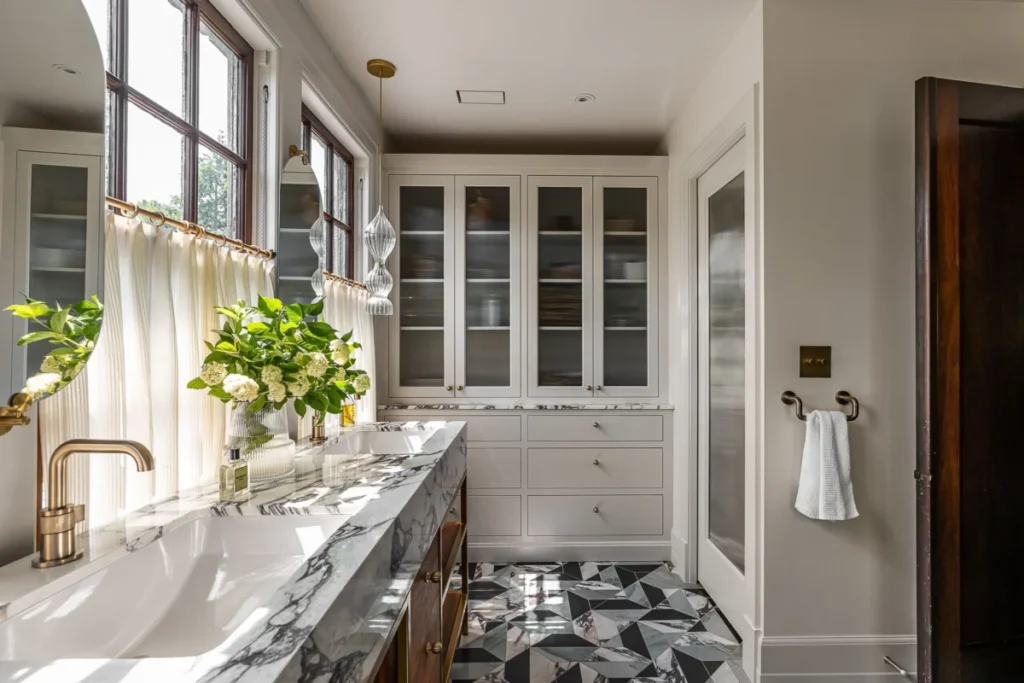

The landscape of modern interior design is increasingly defined by the challenge of maximizing utility within shrinking urban footprints. As residential square footage in major metropolitan hubs like New York City continues to command a premium, the bathroom has emerged as a primary focus for innovative storage solutions. While open shelving and over-the-toilet racks have long served as the default for small-space organization, a significant shift is occurring toward closed wall cabinetry. This transition is driven by a dual desire for "storage sanity"—the ability to house essential but unappealing toiletries out of sight—and the elevation of the bathroom from a purely utilitarian room to a curated sanctuary.

The contemporary bathroom wall cabinet serves as a "coy decoy," masking the chaotic reality of daily hygiene products behind sophisticated paneling, reeded glass, and artisan-crafted wood. Industry analysts note that the global bathroom furniture market, valued at approximately $10.2 billion in 2023, is projected to grow as homeowners prioritize organization-led renovations over full-scale structural overhauls.
The Evolution of Vertical Storage in the Domestic Sphere
Historically, bathroom storage was dominated by the built-in medicine cabinet, a staple of early 20th-century architecture. In the 1930s, these units were often recessed into the wall, providing a flush look but offering limited depth. As housing trends moved toward mid-century modernism and later the "McMansion" era of the 1990s, bathrooms grew in size, shifting storage focus toward expansive floor vanities.
.jpeg)
However, the current "Tiny Home" movement and the revitalization of historic urban apartments have forced a return to vertical, wall-mounted solutions. Unlike open shelves, which require a high level of "shelf styling" to remain aesthetically pleasing, modern wall cabinets allow for high-density storage that remains hidden. This is particularly relevant for items such as toilet paper rolls, feminine hygiene products, and cleaning supplies, which are essential but detract from a room’s design when left on display.
Strategic Materiality: The Importance of Kiln-Dried Construction
One of the most critical factors in selecting bathroom cabinetry is the material’s ability to withstand a high-moisture environment. Bathrooms are subject to extreme fluctuations in humidity and temperature, which can cause standard wood to warp, crack, or develop mold.

Professional furniture designers emphasize the use of kiln-dried timber. Kiln-drying is a controlled process of reducing the moisture content in wood before it is used in manufacturing. By bringing the moisture level down to a specific percentage (usually between 6% and 8%), the wood becomes significantly more stable. Brands like West Elm and Pottery Barn have integrated kiln-dried wood into their "contract grade" designations, ensuring that pieces like the Isley or Manzanita cabinets can endure years of steam and splashing without structural failure.
Analysis of Leading Storage Solutions and Design Aesthetics
The current market offers a spectrum of styles ranging from industrial minimalism to ornate traditionalism. Each design choice reflects a specific psychological approach to the home environment.

The Vintage-Modern Hybrid: West Elm Isley
The West Elm Isley bathroom cabinet represents a trend toward "transitional" design. By utilizing fluted or reeded glass—a hallmark of early 20th-century Art Deco and mid-century aesthetics—the piece provides a visual "wink" to history. The cerused wood finish adds texture without overwhelming a small space. From a functional standpoint, the integration of door pulls directly into the frame reduces visual clutter, a key tenet of modern minimalism.
Democratic Design and Accessibility: IKEA ÄNGSJÖN
IKEA’s ÄNGSJÖN series remains a benchmark for affordable, high-gloss minimalism. In small bathrooms, white high-gloss finishes are strategically used to reflect light, making the room appear larger than its physical dimensions. The inclusion of soft-close hinges is a subtle but significant upgrade in the affordable segment, addressing the "noise pollution" of a busy household. Furthermore, IKEA’s 10-year limited warranty serves as a corporate statement on the durability of their moisture-resistant foils and laminates.

Industrial Boldness: Ferm Living Classic Haze
The "Unexpected Red Theory"—a design concept suggesting that a touch of red can elevate any room—is exemplified by the Ferm Living Classic Haze cabinet in oxide red. Constructed from powder-coated steel, this unit moves away from traditional wood, offering an industrial aesthetic that is inherently resistant to rot. The reeded glass provides a "blur" effect, allowing the shapes of colorful perfume bottles to show through while hiding the labels of less attractive items.
Traditional Craftsmanship: Anthropologie and Magnolia
For those seeking a "Modern Farmhouse" or "Grandmillennial" look, pieces like the Anthropologie Pippa and the Magnolia Archie focus on tactile details. The Pippa cabinet utilizes bobbin trim (also known as spool furniture), a technique dating back to the 17th century that has seen a massive resurgence in the 2020s. Meanwhile, Magnolia’s use of mango wood and scalloped edges emphasizes a "homey" and "earthy" atmosphere, countering the often cold, sterile feeling of porcelain-heavy bathrooms.

Chronology of a Bathroom Organization Upgrade
The process of transitioning from a cluttered bathroom to an organized one typically follows a specific chronological path for the modern consumer:
- The Clutter Threshold: The homeowner reaches a point where open shelving or vanity drawers can no longer accommodate daily-use items, leading to "visual noise."
- Assessment of Vertical Space: Measurement of the area over the toilet or adjacent to the mirror. This is often the most underutilized "real estate" in a home.
- Selection Based on Humidity Factors: Consumers move from purely aesthetic choices to functional ones, looking for terms like "kiln-dried," "moisture-resistant," or "solid wood."
- Installation and Curation: The mounting of the cabinet (often requiring toggle bolts for drywall to support the weight of glass and wood).
- The "Decoy" Effect: The transfer of unappealing items (rolls of paper, medications) into the cabinet, leaving only "hero products" (designer soaps, plants) on the open surfaces.
Supporting Data: The Impact of Organization on Well-being
Recent studies in environmental psychology suggest that domestic organization has a direct correlation with stress reduction. A 2022 survey of 2,000 homeowners found that 78% felt a "sense of calm" after decluttering their bathrooms. Because the bathroom is often the first and last room a person visits each day, its state of order can set the tone for mental clarity.

Economically, small-scale upgrades like high-quality wall cabinetry offer a high return on investment (ROI). Real estate experts suggest that while a full bathroom remodel can cost upwards of $20,000, a $500 investment in premium cabinetry and updated hardware can significantly increase a home’s "walk-through appeal" during a sale.
Market Implications and the Future of Bathroom Furniture
As we look toward the latter half of the decade, the trend in bathroom cabinetry is moving toward "smart storage." This includes integrated LED lighting within cabinets and internal power outlets for charging electric toothbrushes and shavers behind closed doors.

Brands like Mustard Made are also tapping into the "customization" market. By offering cabinets in a dozen or more colors, they allow homeowners to express personality in a room that was previously ignored by the "color revolution." The shift toward "secret storage"—cabinets with locks or bolt mechanisms—also reflects a growing desire for privacy in shared living situations, such as co-living spaces or multi-generational households.
Conclusion: The Strategic Necessity of the Wall Cabinet
The best bathroom wall cabinets are no longer just boxes on a wall; they are sophisticated pieces of furniture that bridge the gap between architectural necessity and interior styling. By hiding the "sanitary" aspects of life behind beautiful facades, these units allow the modern bathroom to function as a true retreat. Whether it is the industrial steel of Ferm Living or the traditional bobbin trim of Anthropologie, the choice of cabinetry is a statement on how one values both form and function in the most private room of the home. As urban density increases, the "coy decoy" of vertical storage will remain a fundamental tool for maintaining domestic order and aesthetic integrity.