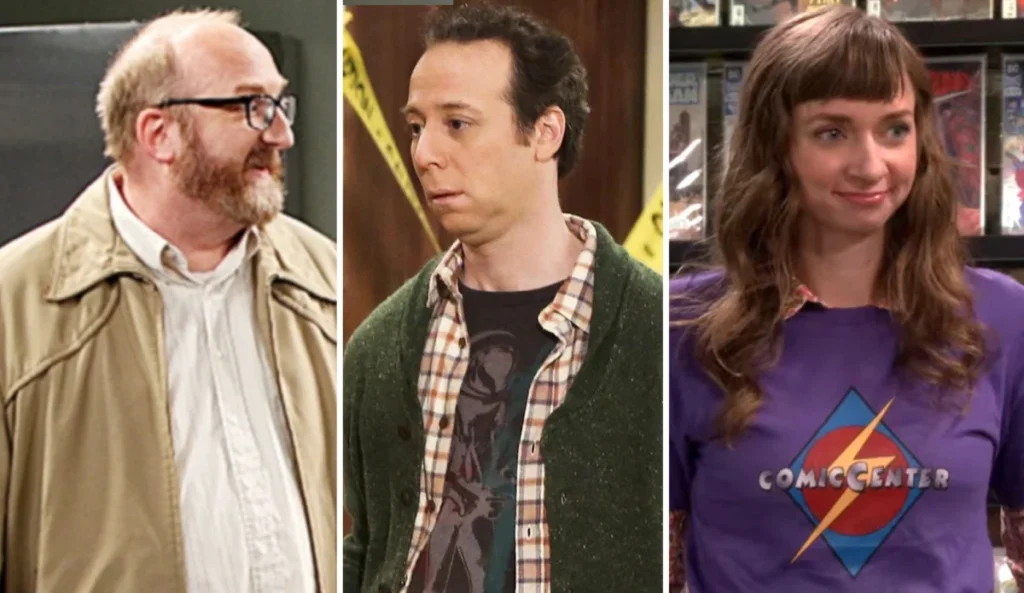

The eagerly anticipated spinoff, Stuart Fails to Save the Universe, is poised to propel a familiar, albeit less central, ensemble of characters from the beloved sitcom The Big Bang Theory into an expansive multiverse narrative. This ambitious project promises a high-stakes, science-fiction-infused adventure where the fate of humanity and all existing realities rests precariously on the shoulders of a comic book store owner, his girlfriend, a reserved geologist, and a physicist known for his sharp wit. The series premiere is slated for Thursday, July 23rd, at 9/8c, exclusively on HBO Max.
Before delving into the intricacies of this peculiar offshoot of the Big Bang Theory universe, it is crucial to revisit the concluding arcs of Stuart Bloom, Denise, Bert Kibbler, and Barry Kripke, understanding how their individual storylines laid the groundwork for what is arguably the franchise’s most expansive endeavor to date. This exploration will provide essential context for the unprecedented challenges these characters are set to face.
Setting the Stage: The Final Moments of Familiar Faces
The narrative foundation for Stuart Fails to Save the Universe is firmly rooted in the concluding episodes of The Big Bang Theory‘s twelfth and final season. The characters poised to undertake this cosmic responsibility were last seen navigating their personal lives, with their established relationships and routines offering a stark contrast to the multiversal chaos that awaits them.
Stuart Bloom and Denise: A New Chapter Begins
Stuart Bloom (Kevin Sussman), the perpetually optimistic yet often beleaguered owner of the comic book store, was last observed in Season 12, Episode 22, titled "The Maternal Conclusion." In a significant development for the character, Stuart and his girlfriend, Denise (Lauren Lapkus), made the mutual decision to deepen their commitment by moving in together. This marked a period of apparent contentment and stability for Stuart, a welcome departure from his more solitary and financially precarious past. His journey from a somewhat overlooked acquaintance to a romantic partner signifies a personal growth that will undoubtedly be tested by the extraordinary circumstances of the new series.

Denise, introduced in Season 11 as Stuart’s capable assistant manager, rapidly ascended to become a beloved fixture among the core group. Her relationship with Stuart blossomed, and by the series finale, their bond was evidently strong and enduring. Her continued presence at the comic book store, alongside Stuart, underscored their shared life and budding partnership. The decision to move in together represented a significant step forward, setting a tone of hopeful progression that now stands in direct opposition to the impending existential threat.
Bert Kibbler and Barry Kripke: Unforeseen Entanglements
Bert Kibbler (Brian Posehn), a geologist often characterized by his earnestness and occasional social awkwardness, had a relatively subdued conclusion to his arc in The Big Bang Theory. While he experienced a minor scooter accident that led to a promising encounter with a nurse, this budding romance did not materialize into a lasting relationship. His final appearance saw him agreeing to care for Raj’s dog, Cinnamon, during Sheldon and Amy’s Nobel Prize ceremony, a gesture intended partly as a social maneuver. Bert’s presence in the spinoff suggests his unassuming nature might be unexpectedly instrumental in navigating the complexities of the multiverse, perhaps through an unforeseen resilience or unique perspective.
Barry Kripke (John Ross Bowie), the intellectually formidable but often antagonistic colleague of Sheldon Cooper, maintained his consistent role as a recurring foil throughout all twelve seasons, appearing in 25 episodes. His final notable appearance was in Season 12, Episode 23, "The Change Constant," where he orchestrated a prank call to Sheldon and Amy, impersonating a member of the Nobel committee. The series concluded without further exploration of Kripke’s trajectory, leaving his status quo at Caltech and his ongoing rivalry with Sheldon as the prevailing assumptions. His inclusion in the spinoff hints at a potential shift in his allegiances or an unexpected collaboration, given the magnitude of the impending crisis.
Wil Wheaton: A Bridge Between Worlds
Wil Wheaton, playing a fictionalized version of himself, concluded his significant arc in Season 12, Episode 16, "The D & D Vortex." This episode featured him hosting a high-profile Dungeons & Dragons game, bringing together notable personalities such as William Shatner, Joe Manganiello, Kevin Smith, and Kareem Abdul-Jabbar. While initially positioned as a perceived antagonist to the main group, Wheaton evolved into a supportive figure, even officiating Sheldon and Amy’s wedding. His role as a bridge between the established universe and celebrity culture could translate into an unexpected role in the multiverse narrative, perhaps as a cosmic guide or a figure with connections beyond the ordinary.
The Multiversal Mandate: A Cosmic Conundrum
Stuart Fails to Save the Universe is not merely a continuation of character arcs; it represents a significant expansion of the Big Bang Theory‘s narrative scope. The premise of these seemingly ordinary individuals being tasked with saving all of existence from a multiversal threat introduces a profound thematic shift. This undertaking is a considerable burden for a group whose prior concerns largely revolved around academic pursuits, romantic entanglements, and the intricacies of pop culture.

The juxtaposition of their established personalities—Stuart’s earnestness, Denise’s grounded pragmatism, Bert’s gentle demeanor, and Kripke’s cynical intellect—against the backdrop of cosmic peril creates fertile ground for both dramatic tension and comedic exploration. The "B-team," as they are colloquially referred to, must now confront challenges that dwarf any they have previously encountered, forcing them to draw upon reserves of courage, ingenuity, and perhaps even latent abilities they never knew they possessed.
Background and Context: The Evolution of the Franchise
The Big Bang Theory universe, initially centered on the social and intellectual lives of a group of scientists, has consistently demonstrated an ability to broaden its horizons. From exploring complex scientific theories to delving into the nuances of human relationships, the show maintained a dedicated fanbase for over a decade. The success of the prequel series Young Sheldon further illustrated the franchise’s appeal and its potential for expansion.
Stuart Fails to Save the Universe represents the most ambitious leap yet, venturing into the realm of science fiction with a premise that inherently demands creative storytelling and imaginative world-building. The decision to focus on these particular characters suggests a desire to explore the impact of extraordinary events on individuals who are not typically at the forefront of such narratives. Their relatability, rooted in everyday struggles and aspirations, makes their involvement in a multiversal crisis particularly compelling. The transition from a traditional sitcom format to a more genre-driven narrative on HBO Max also indicates a strategic move to attract a broader audience and explore more complex thematic elements.
Supporting Data and Inferred Motivations
While specific plot details for Stuart Fails to Save the Universe remain largely under wraps, the core premise of a multiversal threat allows for informed speculation regarding the characters’ likely motivations and the challenges they will face.
Stuart Bloom’s Role: As the central figure, Stuart’s journey is likely to be one of unexpected leadership. His inherent kindness and resilience, often tested by adversity, will be crucial. His deep knowledge of comic books and science fiction lore, previously a source of escapism, may now become an invaluable asset, providing him with a framework for understanding and confronting the multiversal anomalies. His personal stake, particularly his relationship with Denise, will undoubtedly fuel his determination.

Denise’s Pragmatism: Denise’s grounded nature and experience in managing Stuart’s often chaotic comic book store suggest she will serve as the voice of reason and practicality. Her ability to remain calm under pressure and her understanding of interpersonal dynamics will be vital in keeping the group cohesive and focused amidst the chaos. Her commitment to Stuart will be a driving force, potentially pushing her to achieve feats beyond her perceived limitations.
Bert Kibbler’s Unforeseen Strengths: Bert’s background in geology, while seemingly unrelated to multiversal physics, could offer unique perspectives on the structural integrity of different realities or the geological implications of cosmic phenomena. His inherent optimism and lack of cynicism might also prove advantageous in maintaining morale. It is plausible that his quiet observations and analytical skills will uncover critical clues.
Barry Kripke’s Intellectual Prowess: Kripke’s academic background and his well-documented intellectual rivalry with Sheldon position him as a key player in deciphering the scientific aspects of the crisis. His R-rated speech impediment, a signature characteristic, could be integrated into the narrative in surprising ways, perhaps as a unique form of communication across dimensions or a vulnerability that needs to be overcome. His self-serving tendencies might initially create friction, but the stakes of the crisis could force him to act for the greater good.
Wil Wheaton’s Meta-Narrative Potential: Wil Wheaton’s presence, as a real-world celebrity known for his engagement with geek culture, offers a meta-narrative dimension. He could serve as a cosmic entity, a guardian of the multiverse, or even an unreliable narrator whose understanding of events is influenced by his own fame. His ability to connect with various personalities could also be instrumental in forging alliances across different realities.
Timeline and Chronology: A Leap into the Unknown
The transition from the grounded reality of The Big Bang Theory to a multiversal adventure implies a significant temporal and spatial leap. The events of Stuart Fails to Save the Universe are likely to pick up sometime after the conclusion of The Big Bang Theory, allowing for the characters to have settled into their new routines. The inciting incident that triggers the multiversal crisis will be the catalyst for their extraordinary journey.

The series premiere will undoubtedly focus on establishing the initial threat and bringing the disparate characters together. Subsequent episodes are expected to explore various alternate realities, each presenting unique challenges and opportunities for character development. The overarching narrative will likely involve a race against time to identify the source of the multiversal instability and devise a means to restore order. The chronological progression will be dictated by their exploration of these different dimensions, potentially involving parallel timelines, alternate histories, and even fantastical realms.
Inferred Reactions and Broader Impact
The announcement of Stuart Fails to Save the Universe has generated considerable excitement among fans of The Big Bang Theory, eager to see beloved characters in a new, high-stakes context. The decision to branch out into a more genre-specific series reflects a growing trend in television production, where established franchises are leveraged to explore diverse narrative territories.
Fan Reception: Initial reactions suggest a blend of anticipation and curiosity. Fans are keen to see how the established comedic sensibilities of the original series will translate into a science-fiction adventure. The focus on a less central group of characters also offers an opportunity for fresh storytelling, allowing for new dynamics and character arcs to take center stage.
Industry Implications: For HBO Max, the series represents a significant investment in intellectual property, aiming to capitalize on the enduring popularity of The Big Bang Theory. The success of this spinoff could pave the way for further expansions of the franchise, potentially exploring other characters or entirely new narrative avenues within the established universe. The move into a more serialized, genre-driven format on a streaming platform suggests a strategic effort to capture a broader demographic and compete in the evolving landscape of television entertainment.
Thematic Resonance: The underlying theme of ordinary individuals rising to extraordinary challenges is a timeless narrative trope. In Stuart Fails to Save the Universe, this theme is amplified by the cosmic scale of the threat. The series has the potential to explore questions of destiny, free will, the interconnectedness of all things, and the idea that heroism can emerge from the most unexpected quarters. The success of the series will hinge on its ability to balance its science-fiction premise with the relatable character dynamics that made The Big Bang Theory a global phenomenon. The challenge lies in maintaining the show’s comedic roots while delivering a compelling and epic multiversal narrative.