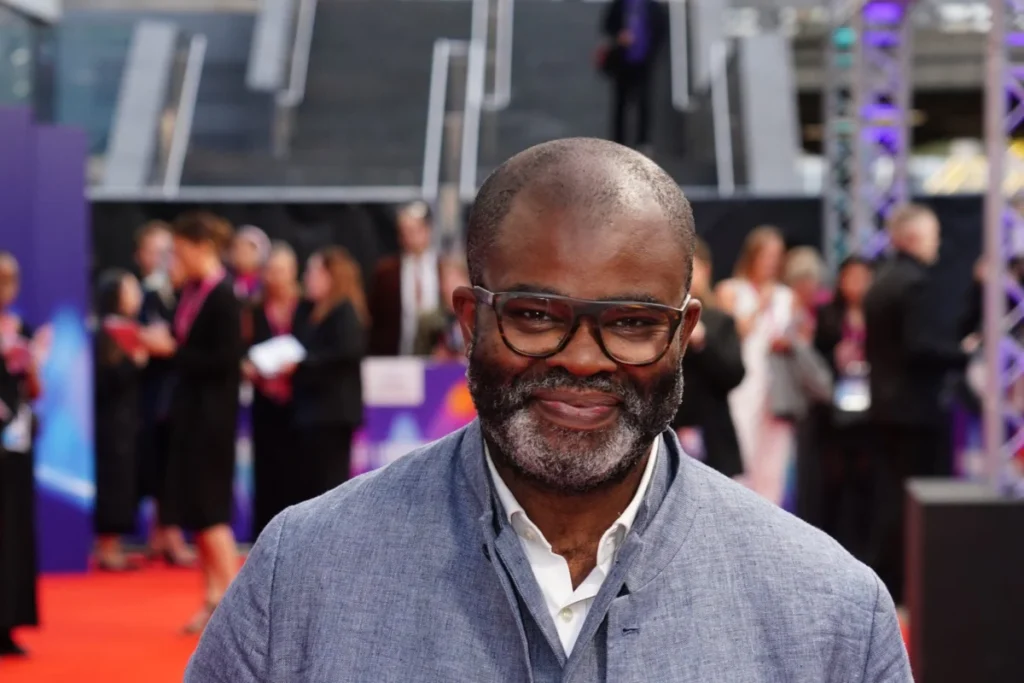

A significant cultural and ethical debate has erupted around Misan Harriman, the chairman of governors at London’s prestigious Southbank Centre, as he faces mounting calls to step down from his role. The controversy stems from allegations that Harriman’s social media activity, described by critics as "divisive," is undermining the reputation and impartiality of the publicly funded arts institution. This contentious situation has drawn a sharp divide, with a cohort of high-profile actors, broadcasters, and artists publicly defending Harriman against what they label a "smear campaign," while another group of influential figures from media and public life demands his immediate departure. The Southbank Centre, a recipient of substantial public funding, finds itself at the heart of a complex discussion regarding the boundaries of personal expression for leaders of cultural organisations and the imperative of institutional neutrality.
The Controversy Unfolds: Accusations of Divisive Conduct
The catalyst for this intensifying dispute was a letter published in The Times on Monday, which sharply criticised Misan Harriman’s conduct since his appointment as chairman of the Southbank Centre board of governors in 2021. The letter asserts that Harriman’s "divisive" social media posts are actively promoting a "divisive political agenda," causing "hugely damaging" repercussions for the Centre’s esteemed reputation. Critics argue that his public interventions on platforms like Instagram, where he commands a substantial following exceeding 540,000, are not only inappropriate for a leader of such a significant cultural body but also potentially violate the Charity Commission guidance for trustees of charities.
A key point of contention highlighted by the critics revolves around the Southbank Centre’s substantial public funding. The institution received a notable £18 million from the Government last year, a fact underscored by the letter’s signatories to emphasise the Centre’s responsibility to maintain public trust and avoid entanglement in partisan politics. The letter explicitly states, "Harriman’s tenure since 2021 risks undermining an important British institution… Rather than promoting the Southbank, Harriman makes daily interventions on social media, pushing a divisive political agenda."
Among the prominent signatories of the letter calling for Harriman’s resignation are David Kershaw, a former trustee of the Southbank Centre; Danny Cohen, former BBC director of television; Lord Roberts of Belgravia, an acclaimed author and historian; and influential TV and film producers Leo Pearlman and Neil Blair. Their collective stance suggests a deep concern within certain sectors of the establishment regarding the perceived politicisation of a national cultural asset. The letter concludes with a definitive call for action, asserting, "Harriman’s appointment was a misstep by an institution that requires serious leadership. It is time for him to go."

One specific social media post by Harriman, referenced in an accompanying article in The Times, has drawn particular scrutiny. This post "appeared to suggest there was a newspaper ‘conspiracy’ to make the Golders Green knife attacks last month entirely about the Jewish victims and not about the Muslim man allegedly stabbed by the same person earlier that day." This type of commentary, touching upon sensitive social and inter-community issues, is precisely what critics argue crosses the line from personal opinion to potentially damaging political intervention for a figure leading a major public charity.
Misan Harriman: A Profile in Activism and Art
Misan Harriman’s journey to the chairmanship of the Southbank Centre is rooted in a background rich with artistic endeavour and social activism. Born in Nigeria and educated in England, Harriman developed a profound love for the arts, a passion that has evidently shaped his career trajectory. The Southbank Centre’s own profile describes him as an "outspoken activist," a "photographer, creative director and cultural commentator." He is particularly noted for his advocacy for diversity and inclusion in the workplace.
His photographic work has captured significant historical moments, including powerful images from the Black Lives Matter movement in London, alongside portraits of high-profile celebrities. This breadth of work highlights his dual identity as both a celebrated artist and a committed social commentator. His appointment as chairman of the board of governors in 2021 was seen by many as a move to bring a fresh, diverse, and engaged perspective to the leadership of one of the UK’s most significant arts venues. However, it is precisely this "outspoken" nature, celebrated in his artistic and activist spheres, that has now become the focal point of the current controversy in his governance role.
A Wave of Support: The Counter-Campaign
In stark contrast to the calls for his resignation, Misan Harriman has garnered overwhelming support from a broad coalition of figures across the acting, arts, music, and media worlds. A "counter-letter" or "handraiser," launched in response to the criticisms, has amassed over 21,000 signatures, explicitly claiming that "rightwing newspapers are trying to run a smear campaign" against Harriman. This counter-narrative frames the attacks as politically motivated rather than genuinely concerned with the Southbank Centre’s governance.
The list of signatories to this letter of support reads like a who’s who of contemporary culture. It includes internationally renowned actors such as Mark Ruffalo, Nicola Coughlan, Susan Sarandon, Aimee Lou Wood, Brian Cox, Hugh Bonneville, and Eddie Marsan. Prominent broadcasters like Gary Lineker, Laura Whitmore, and Louis Theroux have also lent their names, alongside celebrated musicians Annie Lennox and Hozier, and influential artist Dame Tracey Emin. The sheer volume and calibre of these endorsements underscore the significant solidarity Harriman enjoys within the creative community, suggesting a belief that his activism is an integral part of his identity and not detrimental to his leadership role. This robust defence highlights a wider ideological split on the role of cultural leaders in public discourse.

The Southbank Centre’s Official Stance
Amidst the swirling controversy, the Southbank Centre has issued a carefully worded statement, seeking to navigate the delicate balance between supporting its chairman and upholding its institutional integrity. The statement affirms the Centre’s commitment to being "an inclusive and welcoming place for everyone including our artists, audience and all colleagues," and unequivocally "condemns all forms of antisemitism, hatred and discrimination." This part of the statement directly addresses concerns raised by the specific nature of Harriman’s controversial social media posts.
Crucially, the Centre also asserted the right of its board members to "exercise their freedom of expression within the law." However, it drew a clear distinction, stating: "The personal views of individual members of our board do not represent the views of the Southbank Centre and in no way affect our programming nor the welcome that we extend to all." This position attempts to compartmentalise Harriman’s personal online activity from the official stance and operations of the institution, aiming to reassure stakeholders that the Centre itself remains neutral and welcoming to all, irrespective of the political leanings of its leadership. This nuanced response reflects the challenge faced by cultural organisations in an era where public figures are increasingly vocal on social media.
Navigating the Ethical Minefield: Charity Governance and Free Speech
The heart of this controversy lies in the complex interplay between an individual’s right to freedom of expression and the responsibilities inherent in leading a publicly funded charitable institution. The Charity Commission, which regulates charities in England and Wales, provides guidance to trustees that generally encourages impartiality and the avoidance of partisan political activity. While charities can campaign on issues relevant to their objectives, trustees must ensure their actions do not compromise the charity’s independence, reputation, or public trust.
For an institution like the Southbank Centre, which relies on significant government funding and aims to serve a diverse public, maintaining a perception of neutrality is paramount. Critics argue that Harriman’s "daily interventions on social media, pushing a divisive political agenda," directly contravene the spirit, if not the letter, of this guidance. They contend that a chairman, as the public face and ultimate guardian of a charity’s mission, carries a greater responsibility to be circumspect in their public pronouncements than an ordinary trustee or private citizen.
Conversely, supporters argue that expecting a prominent activist and cultural commentator to entirely suppress their deeply held beliefs upon assuming a governance role is unrealistic and undesirable. They contend that Harriman’s activism is part of what makes him a valuable and relevant leader, bringing an authentic voice to the arts. Furthermore, they highlight the principle of freedom of speech, suggesting that an individual should not be penalised for expressing views, provided they are within the bounds of the law. The Southbank Centre’s statement, affirming the right to "freedom of expression within the law," aligns with this perspective, while simultaneously attempting to insulate the institution from the personal views of its chairman. This tension between personal liberty and institutional obligation is a recurring theme in modern public life.

The Broader Impact: Funding, Reputation, and Precedent
The unfolding situation surrounding Misan Harriman carries significant implications for the Southbank Centre and potentially for the broader cultural sector in the UK. On a practical level, the controversy could jeopardise future government funding. While the Centre received £18 million last year, public bodies are often sensitive to perceived political bias or mismanagement, especially when public funds are involved. A protracted public dispute could lead to increased scrutiny from government departments and potentially affect future grant allocations.
Beyond funding, the reputational damage, regardless of the eventual outcome, is a serious concern. For an institution that prides itself on being "inclusive and welcoming," the accusation of its chairman pushing "divisive" agendas risks alienating segments of its audience, donors, and partners. The public perception of the Southbank Centre as a neutral cultural space could be eroded, complicating its mission to bring diverse arts and culture to all.
Moreover, this case could set a significant precedent for how cultural institutions manage the public profiles of their leadership. In an increasingly digital world, where the lines between personal and professional personas are blurred, leaders of public bodies are under constant scrutiny. This debate highlights the challenge of balancing the desire for dynamic, engaged leadership with the need for institutional impartiality. Future appointments to similar roles may face more rigorous examination of candidates’ social media history and their willingness to compartmentalise personal political views from their official duties.
The controversy also reflects the broader "culture wars" prevalent in the UK and globally, where cultural institutions frequently become battlegrounds for ideological disputes. The arts, often seen as a space for challenging norms and fostering dialogue, are increasingly expected by some to remain strictly apolitical, while others advocate for their role in driving social change. Harriman’s case embodies this tension, forcing a national conversation about the role of cultural leaders in contemporary society.
Looking Ahead
As the debate continues to unfold, the Southbank Centre faces the challenge of navigating these choppy waters while upholding its mission. The strong opposing camps, each with significant backing, suggest that a swift resolution that satisfies all parties is unlikely. The outcome of this high-stakes standoff will undoubtedly have lasting consequences for Misan Harriman, the Southbank Centre, and the wider discourse on the intersection of leadership, activism, and cultural stewardship in the United Kingdom. It remains to be seen how the institution will reconcile its support for freedom of expression with the imperative of maintaining its reputation as a non-partisan cultural beacon for all.