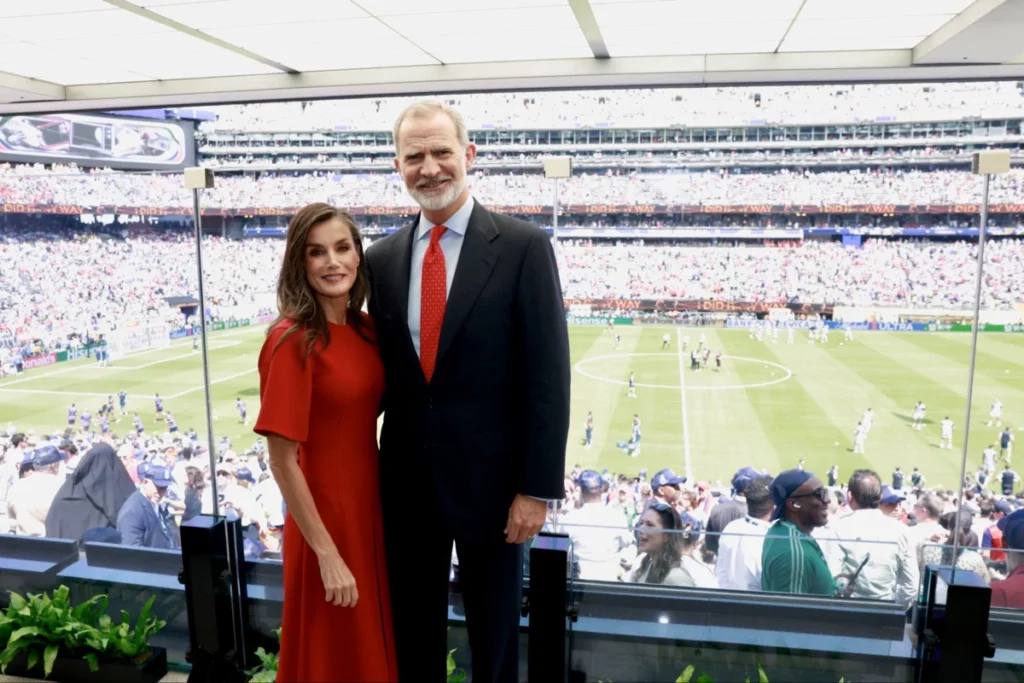

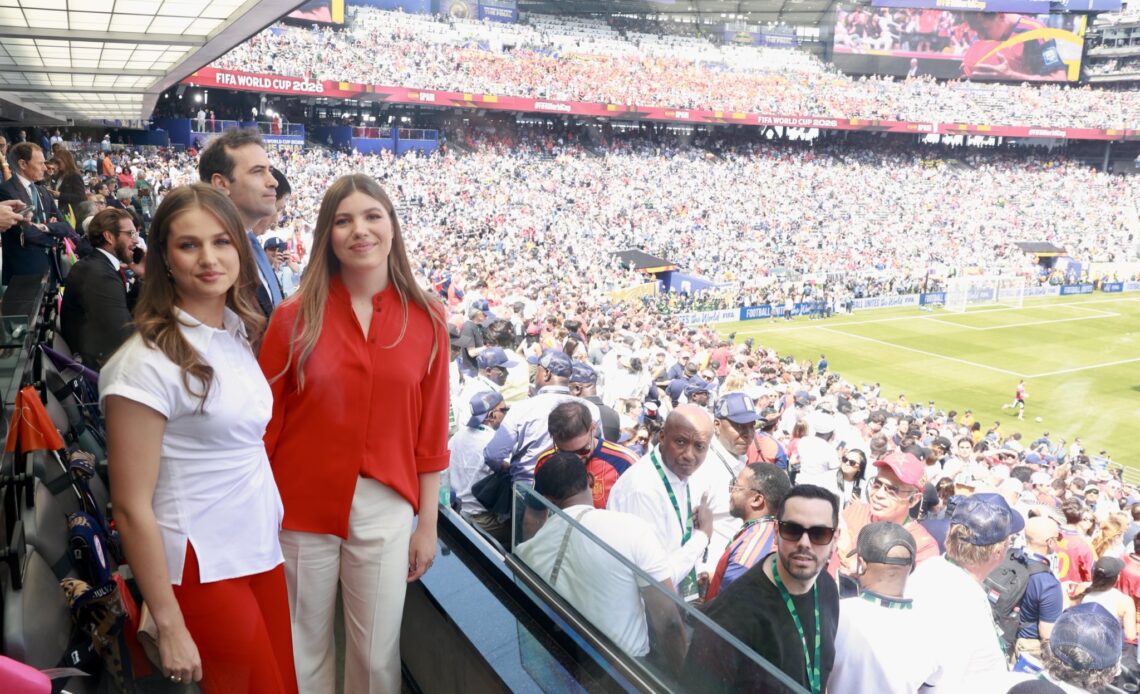
Spain has once again ascended to the pinnacle of international football, clinching the FIFA World Cup title in a dramatic overtime victory against Argentina. The final, a fiercely contested match that concluded with a 1-0 scoreline, marks a triumphant return to the World Cup glory for Spain after a 16-year hiatus. The historic win was witnessed firsthand by the Spanish Royal Family, with Infanta Sofía, the second-in-line to the Spanish throne, notably present and once again proving to be a potent symbol of good fortune for the national team.
The presence of Infanta Sofía in the stadium alongside King Felipe, Queen Letizia, and her elder sister, Princess Leonor, underscored the significance of the occasion. While the entire family was present to support the national team, Infanta Sofía holds a unique distinction. She is the only member of her immediate family to have cheered Spain to victory in multiple major international tournaments. Her presence at this World Cup final follows her attendance at the 2023 FIFA Women’s World Cup, where she celebrated with the victorious Spanish women’s team after their momentous win, and the 2024 Euros final in Berlin, where she joined King Felipe to witness Spain’s triumph.
A Royal Tradition of Support
The tradition of the Spanish Royal Family actively supporting the national football teams has become increasingly prominent in recent years. Queen Letizia and Infanta Sofía’s participation in the celebrations after the 2023 Women’s World Cup victory was a widely reported event, symbolizing a new era of recognition and support for women’s sports in Spain. Their joint presence with the championship-winning squad captured the nation’s pride and highlighted the growing influence of female athletes.
Furthermore, Infanta Sofía’s attendance at the 2024 Euros final in Berlin placed her alongside another prominent royal football enthusiast, Prince William. This shared passion for the sport across different European monarchies demonstrates the unifying power of football and its ability to transcend national borders and social strata.
Infanta Sofía: A Symbol of Evolving Sports Culture
As previously reported by Royal Central in 2025, Infanta Sofía’s fervent support for the national football teams, particularly the women’s side, has been interpreted as a reflection of shifting societal dynamics within Spain. Historically, football in Spain was largely perceived as a male-dominated domain. However, the burgeoning visibility and prestige of women’s football have opened new avenues for identification and engagement among younger generations. Infanta Sofía’s apparent draw towards the women’s game, her enthusiasm for the national women’s team, and Liga F – the Spanish women’s professional football league – underscore this evolving landscape. Despite its ongoing development, Liga F is already producing stars who are becoming influential figures beyond the sport itself, mirroring the impact of their male counterparts.
This connection between the young royal and the evolving face of Spanish football suggests a deeper resonance with a younger demographic that increasingly embraces inclusivity and recognizes the talent and dedication of female athletes. Her consistent presence at major victories serves not only as a personal expression of fandom but also as a subtle yet powerful endorsement of the growth and importance of women’s football within Spain.
A Family Affair on the Global Stage
The attendance of the entire Spanish Royal Family at the World Cup final in New Jersey marked a significant occasion. It was the first time King Felipe, Queen Letizia, Princess Leonor, and Infanta Sofía had undertaken an official trip together outside of Spain specifically for a sporting event of this magnitude. This collective presence underscored the national importance of the World Cup final and the unified support of the monarchy for the country’s sporting achievements.
The family’s journey to New Jersey was a testament to their commitment to national representation and their role as figureheads for the Spanish people. Their shared experience at such a high-stakes event likely fostered a sense of unity and pride within the family, mirroring the collective emotion of the nation watching from afar.
King Felipe’s Prescient Words and Royal Court’s Message
In a pre-game interview with TVE, King Felipe expressed a palpable mix of anticipation and confidence. "We’re nervous, but we’re also confident because this team is captivating us again, just like previous teams did in 2010," he remarked. "I think we’re going to see a spectacular final between two sister nations, two incredible teams. It will be a great spectacle."
These words proved remarkably prescient. King Felipe’s commitment to supporting the team was evident from the outset of the tournament. He attended Spain’s opening match on June 27th against Uruguay and, in a moment of encouragement to the players in their locker room, stated, "I hope to return, because if I do, it will be because you are in the final." This promise was fulfilled, highlighting his faith in the team’s potential to reach the ultimate stage.
Following the momentous victory, the Spanish Royal Court shared a heartfelt message from King Felipe, which was disseminated via their official X (formerly Twitter) account. The message eloquently captured the essence of the team’s journey and the significance of their triumph:
"This star is the reward for a path as long as it has been demanding, traveled with effort, sacrifice, perseverance, and exemplary commitment in every match. You have faced each challenge with the conviction of a great team and have carried the name of Spain to the very top."
The King continued, "Congratulations to the players, the coaching staff, and all the fans. Today we celebrate a title; tomorrow we will remember a legend." This message resonated deeply, acknowledging the immense dedication of the team and its support network, while also framing the victory within a historical context of enduring legacy.
Historical Context and Future Prospects
Spain’s FIFA World Cup victory in 2010 marked a golden era for Spanish football, a period characterized by a dominant playing style and a string of international successes. The recent triumph signifies the nation’s return to that elite status, demonstrating the enduring talent and strategic prowess within Spanish football.
Looking ahead, the focus will inevitably shift to the 2027 FIFA Women’s World Cup, which will be hosted by Brazil. The Spanish women’s national team, having recently achieved a significant milestone in their own right, will undoubtedly enter the tournament with ambitions to defend their title and continue their ascent on the global stage. This ongoing success across both men’s and women’s football positions Spain as a formidable force in the international sporting landscape.
The implications of this victory extend beyond the realm of sport. It serves as a powerful symbol of national pride and unity, particularly in challenging economic and social times. The collective joy and shared experience of supporting a winning national team can have a unifying effect on a country, fostering a sense of shared identity and optimism. For the younger generation, the success of both the men’s and women’s teams, coupled with the visible support from the Royal Family, can inspire aspirations and underscore the value of dedication, teamwork, and perseverance.
The presence of Infanta Sofía, in particular, continues to be a compelling narrative within the context of Spanish football. Her consistent attendance and evident passion for the sport are not merely anecdotal; they represent a generational shift in how football is perceived and engaged with within Spain. As she matures and potentially takes on a more prominent role within the monarchy, her continued association with football, especially the women’s game, could further solidify its status and encourage greater participation and support across all levels of society. The "good luck charm" of Infanta Sofía has, in many ways, become a symbol of a new, inclusive, and forward-looking era for Spanish football.