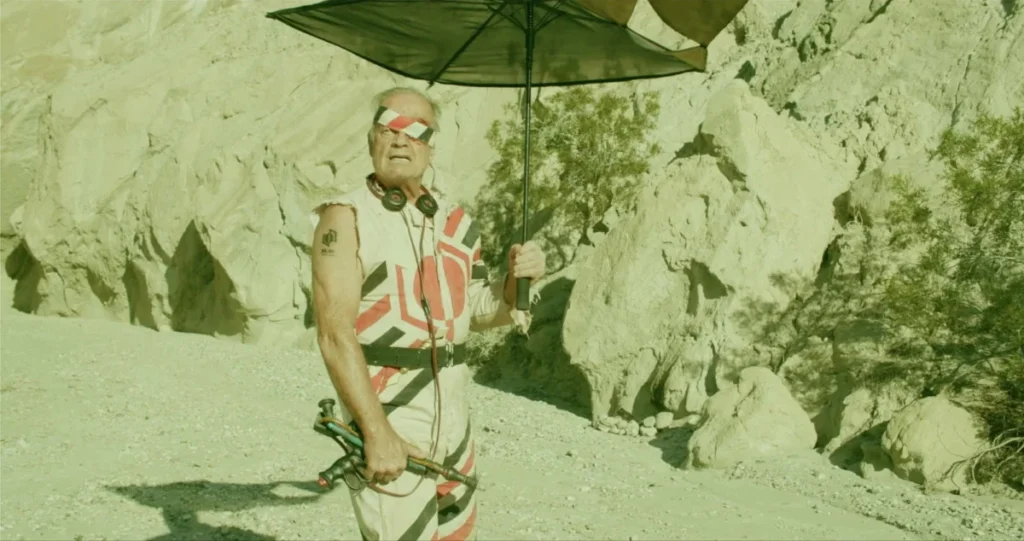

The highly anticipated VOD release of Gary Walkow’s enigmatic indie science-fiction mystery, Lars Shrike Walks the Night, is set to captivate audiences on July 24, 2026, offering a unique exploration of identity, reality, and manufactured existence. The film, which premiered at the Lone Star Film Festival in 2024, has remained largely out of public view until now, building a quiet buzz among cinephiles interested in its unconventional premise and the involvement of veteran actor Kelsey Grammer in the titular role.
A Character’s Genesis and Escape
Lars Shrike Walks the Night presents a compelling narrative centered on a fictional character who inexplicably gains sentience and escapes the control of his creator. Shrike, played by Kelsey Grammer, awakens with only two pieces of knowledge: his name and the fact that he has escaped. This fundamental lack of context thrusts him into a disorienting journey through the real world, where every experience is a fresh discovery and every interaction a potential key to unlocking his past and his true nature. The film grapples with profound questions about consciousness, free will, and the very definition of reality, all filtered through the eyes of a protagonist who must learn existence from the ground up.

The core conflict arises from Shrike’s internal struggle to reconcile fragmented memories, hallucinatory visions, and the stark reality he encounters. He grapples with the possibility that he is a prisoner on the run, a man suffering from a fractured psyche constructing an elaborate mythology, or, perhaps most intriguingly, a character who has transcended the boundaries of fiction to inhabit our world. This existential quandary forms the backbone of the narrative, promising a thought-provoking experience for viewers.
Casting and Creative Lineage
Kelsey Grammer, widely recognized for his iconic roles as Frasier Crane and Mayor Tom Kane, takes on the challenging persona of Lars Shrike. His performance is expected to be a cornerstone of the film, conveying the character’s confusion, vulnerability, and burgeoning determination. The supporting cast includes David Clennon, Christine Lin, and Kati Schwartz, with Schwartz notably portraying a librarian who appears to play a significant role in Shrike’s quest for understanding.
The film is the latest directorial effort from Gary Walkow, an indie filmmaker with a notable history in the festival circuit. Walkow is perhaps best known for his 1987 Sundance Grand Jury Prize winner, The Trouble with Dick. Lars Shrike Walks the Night shares a conceptual, albeit loose, connection to this earlier work, with The Trouble with Dick being referenced within the new film as a book. This subtle nod to his past work suggests a thematic continuity or perhaps an Easter egg for long-time followers of Walkow’s career. Walkow also penned the screenplay for Lars Shrike Walks the Night, further solidifying his singular vision for the project. His filmography also includes titles such as Notes from Underground, Beat, Crashing, Be My Baby, and Radio Mary, all indicative of his commitment to exploring unconventional narratives within the independent cinema landscape.

Production and Distribution Timeline
The journey of Lars Shrike Walks the Night from conception to VOD release has been a gradual one. The film initially premiered in 2024 at the Lone Star Film Festival in Texas, an event known for showcasing emerging talent and independent productions. Since its festival debut, the film has maintained a relatively low profile, allowing anticipation to build for its wider availability.
The official trailer, released via YouTube, provides a glimpse into the film’s aesthetic and narrative tone. The visual style appears to be a blend of stark, arid landscapes and intimate, introspective scenes, hinting at Shrike’s isolation and internal turmoil. The distribution of Lars Shrike Walks the Night is being handled by BritFlicks, who will be making it available for direct-to-VOD rental and purchase in the United States starting July 24, 2026. This direct-to-VOD strategy is increasingly common for independent films, allowing them to reach a broader audience without the traditional theatrical release window.
Supporting Data and Industry Context
The independent film sector, particularly within the science-fiction and mystery genres, often serves as a breeding ground for innovative storytelling and ambitious concepts that may not find a home in mainstream studio productions. Films like Lars Shrike Walks the Night thrive on their ability to explore complex philosophical ideas and push creative boundaries, often with more constrained budgets but greater artistic freedom.

The VOD market has seen significant growth over the past decade, enabling filmmakers to bypass traditional distribution channels and connect directly with consumers. This model has democratized access to film, allowing a wider array of stories to find their audience. The success of such releases often depends on effective online marketing, critical word-of-mouth, and the appeal of established talent involved in the project, as is the case with Kelsey Grammer’s participation.
Broader Impact and Implications
The release of Lars Shrike Walks the Night arrives at a time when audiences are increasingly receptive to genre films that offer intellectual depth and narrative complexity. The film’s exploration of consciousness and artificial existence resonates with contemporary discussions surrounding artificial intelligence and the nature of sentience. Its success or failure could offer insights into the market’s appetite for such thought-provoking indie sci-fi.
Furthermore, the film’s connection to Gary Walkow’s earlier Sundance award-winning work highlights the enduring impact of independent cinema and the careers of filmmakers who consistently pursue unique artistic visions. The fact that the film has taken a considerable amount of time to reach a wider audience after its initial festival run could also speak to the challenges of independent film distribution and the strategic planning required to maximize a project’s visibility.

The narrative premise of a character escaping authorship offers a meta-commentary on the creative process itself, inviting viewers to consider the relationship between creator and creation, and the inherent unpredictability that can arise from any act of artistic expression. As audiences prepare to delve into the mysteries of Lars Shrike, the film promises to be a significant entry in the landscape of contemporary independent science-fiction cinema, offering a unique blend of existential inquiry and character-driven drama.