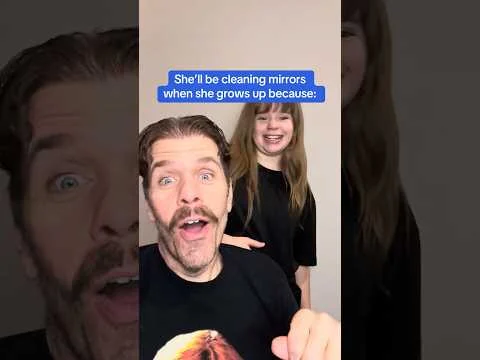

In a recent viral moment, Mia Hilton, the ten-year-old daughter of renowned media personality Perez Hilton, captured the hearts and laughter of online audiences by delivering a quintessential "dad joke" in a video shared by her father. The short clip, initially posted on YouTube and highlighted across various social media platforms, showcases Mia’s enthusiastic delivery of the classic pun, "She’ll be cleaning mirrors when she grows up because she can see herself doing it," prompting a wider discussion on the nature of intergenerational humor, the evolving landscape of celebrity parenting content, and the universal appeal of a simple, well-timed joke. The video, released on April 29, 2026, quickly garnered significant attention, demonstrating the potent appeal of authentic family moments shared within the digital sphere.
The Anatomy of a "Dad Joke": Simplicity and Universal Appeal
The joke told by Mia Hilton is a prime example of what has colloquially become known as a "dad joke"—a type of pun or play on words often characterized by its simplicity, predictable structure, and a tendency to elicit groans rather than uproarious laughter, yet remaining undeniably endearing. Such jokes typically rely on a straightforward setup and a literal interpretation of a phrase, leading to an unexpected, often cheesy, punchline. In this instance, the setup, "She’ll be cleaning mirrors when she grows up because," perfectly primes the listener for a double entendre, resolved by the phrase "she can see herself doing it," playing on both the literal act of seeing a reflection and the metaphorical concept of envisioning a future career.
The enduring popularity of dad jokes can be attributed to several factors. Psychologically, they offer a low-stakes form of humor, designed not to offend but to provide a gentle, often wholesome, moment of levity. For children like Mia, learning and delivering such jokes represents a developmental milestone, a nascent understanding of wordplay and social interaction through humor. For parents, sharing these moments often fosters connection and creates a shared language of amusement within the family unit. Cultural analysts suggest that dad jokes serve as a cultural touchstone, transcending age groups and often acting as a bridge between generations, offering a universally accessible form of comedy that requires little prior knowledge or complex interpretation.
Perez Hilton’s Evolving Public Persona and Digital Strategy
Perez Hilton, born Mario Armando Lavandeira Jr., first rose to prominence in the early 2000s as a controversial celebrity gossip blogger. His early career was defined by an often-unfiltered and critical approach to celebrity news, which garnered both immense readership and significant criticism. However, over the past decade, Hilton has visibly shifted his public persona, embracing a more family-centric and positive image, particularly since becoming a father. This evolution has seen him pivot towards content that reflects his personal life, parenting experiences, and a more positive outlook, aligning with a broader trend among public figures to share authentic glimpses into their family lives.
The sharing of Mia’s joke video is a strategic continuation of this brand evolution. By featuring his children in lighthearted and relatable content, Hilton cultivates a connection with a wider audience, including parents and those who appreciate wholesome family interactions. This move not only broadens his appeal beyond his original niche but also humanizes his public image, showcasing a relatable aspect of his life. The video’s metadata, including tags like "Parenting," "Parenthood," and "Fatherhood," explicitly highlights this strategic alignment, indicating an intentional effort to engage with communities interested in these themes. This deliberate content strategy underscores the growing importance of personal storytelling and authenticity in maintaining relevance in the fast-paced digital media landscape.
The Digital Stage: Celebrity Parenting and Content Creation
The phenomenon of celebrities sharing intimate family moments on digital platforms like YouTube, Instagram, and TikTok has become a cornerstone of modern media consumption. What was once largely private is now often curated and shared with millions, offering fans a perceived "behind-the-scenes" look at the lives of their idols. This trend, exemplified by Perez Hilton’s video of Mia, serves multiple purposes. For celebrities, it can enhance relatability, broaden their appeal, and even open new revenue streams through sponsored content or increased platform engagement. For audiences, it provides a sense of connection, entertainment, and often, inspiration or validation for their own parenting experiences.
However, this practice also raises important considerations regarding privacy, especially for children growing up in the public eye. While moments like Mia’s joke are innocent and joyous, the long-term implications of a substantial digital footprint for celebrity children are subjects of ongoing debate among child development experts and digital ethicists. Discussions often center on the balance between parental sharing and a child’s right to privacy, as well as the potential for online scrutiny or future implications for their personal and professional lives. Despite these concerns, the immediate appeal of such content is undeniable, with family-oriented videos consistently ranking high in terms of viewership and engagement across various platforms. The simple joy of a child telling a joke, as demonstrated by Mia, often cuts through the complexities of digital media, reminding audiences of universal human experiences.
Childhood Humor and Cognitive Development
Mia Hilton’s enthusiastic delivery of the mirror joke offers a glimpse into the fascinating world of childhood humor and cognitive development. Research in child psychology indicates that the ability to understand and create humor, particularly wordplay like puns, is a complex cognitive skill that develops over time. Younger children often find slapstick comedy or silly situations funny, while the appreciation of linguistic humor, such as jokes relying on double meanings or ambiguity, typically emerges around elementary school age. At ten years old, Mia is at an age where she is actively developing a sophisticated understanding of language and its nuances.
The act of telling a joke successfully requires several cognitive functions: understanding the joke’s premise, remembering the punchline, gauging the audience’s reaction, and delivering it with appropriate timing and intonation. For Mia, the excitement evident in her video suggests not just an appreciation for the joke itself, but also the social satisfaction derived from making her father laugh and engaging in a shared moment of joy. Child development experts often highlight the importance of humor in fostering creativity, problem-solving skills, and emotional regulation. Encouraging children to tell jokes and engage in playful banter can contribute significantly to their linguistic development, social skills, and overall emotional well-being.
The Power of Shared Laughter: Family Dynamics and Bonding
The simple exchange between Perez Hilton and his daughter Mia through a joke transcends mere entertainment; it exemplifies the profound role of shared laughter in strengthening family bonds. Humor within families acts as a powerful social glue, creating positive emotional experiences, reducing tension, and fostering a sense of togetherness. When parents and children share moments of laughter, it contributes to a positive family atmosphere, enhancing communication and creating lasting memories.
For fathers like Perez Hilton, engaging in playful interactions and appreciating their children’s attempts at humor reinforces their connection and nurtures a sense of security and belonging. Studies on family dynamics indicate that families that regularly engage in shared humor often report higher levels of satisfaction and resilience. These moments of levity provide an outlet for stress, facilitate emotional expression, and build a foundation of joy that can help families navigate challenges. Mia’s eagerness to share her joke with her father is a testament to the trust and comfort within their relationship, highlighting how humor serves as an accessible and enjoyable form of communication between parents and children.
Audience Reception and Social Media Engagement
The immediate and widespread positive reception to Mia Hilton’s video underscores the universal appeal of genuine, heartwarming family content. While the original post on Perez Hilton’s website encourages sharing and commenting, the nature of such content typically leads to high engagement across platforms. Audiences are drawn to the authenticity of a child’s unadulterated joy and the relatable experience of a parent delighting in their child’s humor. Comments often reflect sentiments of nostalgia, admiration for Mia’s confidence, and appreciation for Perez Hilton sharing such a personal moment.
The video’s metrics—views, likes, shares, and comments—are likely to indicate a strong resonance with a broad demographic, including parents, fans of Perez Hilton’s evolving brand, and general users seeking uplifting content. In an online environment often saturated with polarizing or sensationalized material, simple, feel-good content like Mia’s joke provides a refreshing contrast, demonstrating that authenticity and relatability remain powerful drivers of audience engagement. The inclusion of keywords like "Comedy" and "Humor" in the original post further signals its intent to tap into the broad appeal of lighthearted content, effectively positioning it for viral sharing within a diverse online community.
Broader Cultural Implications: Humor as a Unifier
The widespread positive reaction to Mia Hilton’s "dad joke" also highlights humor’s enduring role as a cultural unifier. Despite diverse backgrounds, languages, and experiences, the ability to appreciate and share a simple laugh is a fundamental aspect of human connection. The "dad joke" phenomenon, in particular, transcends demographic boundaries, resonating with individuals across various cultural contexts. Its accessibility means it requires no specialized knowledge or cultural context, making it universally relatable.
In a globalized digital landscape, where content can rapidly cross borders, such universal forms of humor play a crucial role in fostering shared experiences and moments of collective joy. The video’s implicit reach across audiences, including those identified by tags like "Latinas" (reflecting Perez Hilton’s own heritage and potentially a significant portion of his audience), underscores that wholesome, family-centric humor has a broad appeal that can bridge cultural divides. Ultimately, Mia Hilton’s charming delivery of a classic pun serves as a reminder of the simple yet profound power of humor to connect, delight, and unite people, one groan-worthy joke at a time. The continued sharing of such content on platforms like YouTube ensures these moments of lightheartedness remain an integral part of our collective digital experience.