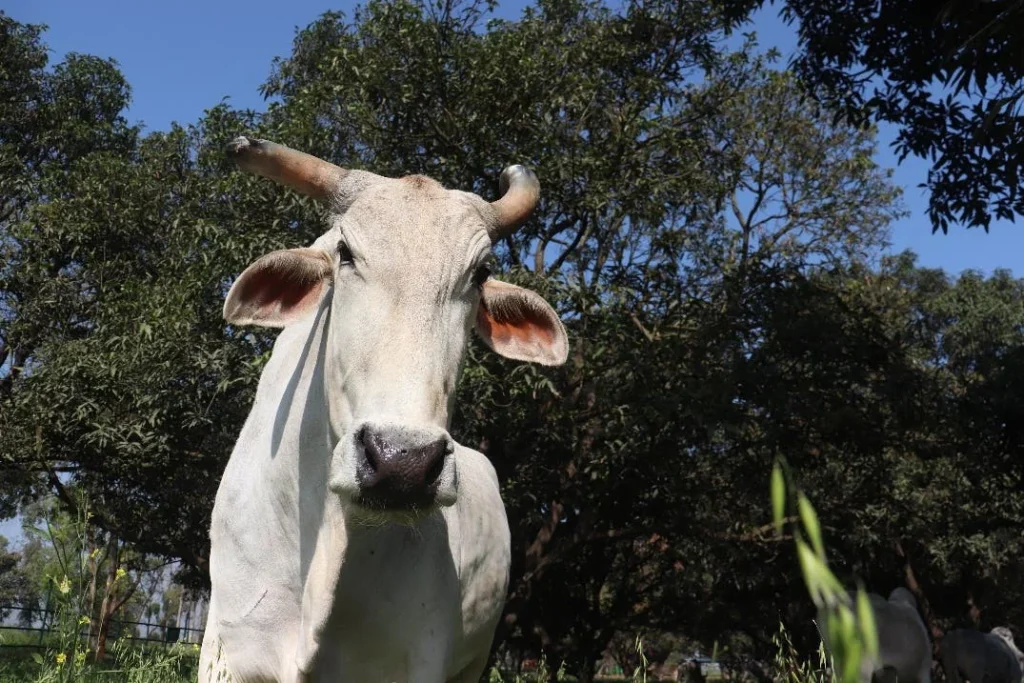

Animal welfare organisation PETA has announced a unique tribute to celebrated BBC nature broadcaster Sir David Attenborough, naming a rescued bull "Sir Attenbullock" in anticipation of his 100th birthday on May 8, 2026. This symbolic gesture not only celebrates a century of unparalleled dedication to natural history and environmental advocacy but also highlights PETA India’s ongoing efforts to transition working animals to a life of retirement through its Delhi mechanisation project. The naming ceremony and the broader initiative underscore a growing global recognition of animal welfare and the profound impact of figures like Sir David on environmental consciousness.
A Centennial Tribute: The Story of Sir Attenbullock
The decision to name the bull "Sir Attenbullock" was made by PETA to commemorate Sir David’s impending centennial, an event that will mark a remarkable milestone for one of the world’s most revered naturalists. The bull, described as "wise" by the charity, was among the first animals rescued through PETA India’s Delhi mechanisation project. This innovative initiative aims to alleviate the suffering of countless animals, predominantly bulls, horses, and donkeys, who are routinely overworked in the arduous task of pulling carts across India. By replacing these animal-drawn vehicles with modern, eco-friendly electric alternatives, the project provides a lifeline for these animals, allowing them to live out their lives in peace and dignity at sanctuaries.
Ingrid Newkirk, the outspoken founder of PETA, will convey the news of this special naming in a letter addressed directly to Sir David. In her correspondence, Ms. Newkirk draws compelling parallels between the rescued bull and the esteemed broadcaster. She describes Sir Attenbullock as "strong, yet gentle," a temperament she believes he shares with Sir David himself. Furthermore, she notes that the bull "quietly inspires others to appreciate the richness of the natural world," mirroring Sir David’s lifelong mission.
Elaborating on Sir Attenbullock’s character, Ms. Newkirk added, "He has a presence that draws people into his world, including visiting children. He invites visitors to the sanctuary to pause with him, and in doing so, they notice more — the bird songs, the life moving through the grass and trees, and the many other animals who share his home." This description encapsulates the essence of Sir David’s own work: fostering a deeper connection and appreciation for the intricate web of life on Earth. The bull’s peaceful existence at the sanctuary stands as a testament to the success of PETA’s mechanisation efforts, offering a tangible example of how technological advancement can directly contribute to animal welfare.
Sir David Attenborough: A Chronology of a Conservation Icon
Sir David Attenborough’s life, spanning nearly a century, is a testament to unwavering dedication to the natural world. Born on May 8, 1926, in London, he grew up in an intellectually stimulating environment as the son of Frederick Attenborough, an academic and principal of University College, Leicester. His early life laid the foundation for a career that would redefine natural history broadcasting.

Early Life and Academic Pursuits:
Attenborough’s intellectual curiosity was evident from a young age. He pursued his higher education at Clare College, Cambridge, where he studied natural sciences, specializing in geology and zoology, graduating in 1947. Following his academic pursuits, he served a two-year stint in the Royal Navy, a period that provided him with diverse experiences before he embarked on his true calling.
Pioneering Broadcasting with "Zoo Quest":
In 1952, Sir David joined the BBC, initially reluctant to appear on camera due to his perceived lack of ‘television presence.’ However, his passion for wildlife soon propelled him into the spotlight. He began his career producing and presenting the groundbreaking "Zoo Quest" series, which first aired in 1954. For a decade, "Zoo Quest" revolutionized natural history programming by venturing into remote corners of the globe to film animals in their natural habitats for the first time. This series introduced a generation of viewers to exotic wildlife, including Komodo dragons and birds of paradise, bringing the wonders of the natural world directly into their living rooms. It established Attenborough’s reputation as an intrepid explorer and an engaging communicator.
The Executive Years and a Return to Passion:
His career took a significant turn in 1965 when he became Controller of BBC Two. During his tenure, he played a pivotal role in the introduction of colour television to Britain, overseeing landmark programming decisions that shaped the channel’s identity. He was later promoted to BBC Director of Programmes in 1969. Despite his success as a broadcast executive, the allure of fieldwork and direct engagement with wildlife proved stronger. In 1973, he made the momentous decision to resign from his executive position, choosing to return to his primary passion: filming and presenting wildlife documentaries. This decision marked a critical juncture, paving the way for his most iconic works.
The Golden Era of Natural History Documentaries:
The late 1970s and 1980s witnessed the emergence of Sir David’s most celebrated documentary series, which cemented his status as a global icon. In 1979, "Life on Earth" captivated audiences worldwide. This ambitious 13-part series, a monumental undertaking for its time, explored the evolution of life on Earth over four billion years. His distinctive, often whispering, voice became a household sound, and his ability to mingle and bond with a family of gorillas in Rwanda became one of television’s most memorable moments, humanizing wildlife in an unprecedented way. The success was followed by equally impactful series, including "The Living Planet" (1984), which explored ecology and biogeography, and "The Trials of Life" (1990), focusing on animal behaviour. These series, characterized by their scientific accuracy, stunning cinematography, and compelling narration, transformed public understanding and appreciation of biodiversity.
Accolades and Enduring Legacy:
Sir David’s immense contributions have been recognized with numerous accolades throughout his career. He was knighted by Queen Elizabeth II in 1985 for his services to broadcasting. His commitment to conservation was further acknowledged when he was awarded a Knight Grand Cross of the Order of St Michael and St George (GCMG) in 2020 and a Knight Grand Cross of the Royal Victorian Order (GCVO) in 2022, a personal gift from the late monarch, making him the only person to hold two different knighthoods from the Queen. He has also received numerous BAFTA Awards, Emmy Awards, and honorary degrees from universities around the world, reflecting his global impact. His name has been given to several species and even a polar research ship, further cementing his scientific and cultural legacy.
Recent Contributions to Conservation and Climate Change:
Even as he approaches his centennial, Sir David remains a prolific and passionate advocate for the planet. In recent years, his work has increasingly focused on the urgent issues of climate change and biodiversity loss. Shows like "Dynasties," "Prehistoric Planet," and "Planet Earth III" continue to educate and inspire, but with an added urgency, often concluding with powerful pleas for environmental action. Residing in Richmond, his voice continues to be a leading one in the global conservation movement, emphasizing the critical need for sustainable practices and environmental stewardship.
PETA India’s Mechanisation Project: A Deeper Look
The PETA India mechanisation project, which saw Sir Attenbullock rescued, represents a significant step forward in animal welfare efforts within the subcontinent. India’s vast and diverse economy still relies heavily on animal labour, particularly in rural areas and in the transportation of goods in congested urban centres. Millions of working animals – including bulls, donkeys, horses, and camels – endure incredibly harsh conditions, often forced to pull overloaded carts for long hours under extreme weather, with inadequate food, water, and veterinary care. Common ailments include lameness, untreated wounds from ill-fitting harnesses, exhaustion, and dehydration.

PETA India’s initiative seeks to address this systemic issue by offering a humane and sustainable alternative. By providing electric vehicles (EVs) to cart owners, the project enables them to continue their livelihoods without exploiting animals. This transition offers multiple benefits:
- Animal Welfare: It directly removes animals from strenuous labour, preventing suffering and allowing them to retire to safe sanctuaries where they receive proper care.
- Economic Sustainability: Electric vehicles can often be more efficient and cost-effective in the long run, reducing fuel expenses and maintenance compared to animal upkeep. This can improve the livelihoods of cart owners who adopt the technology.
- Environmental Impact: The shift to electric vehicles contributes to reducing air pollution and noise in urban areas, aligning with broader environmental sustainability goals.
- Social Awareness: Such projects raise public awareness about the plight of working animals and encourage a more compassionate approach to animal use in society.
The Delhi mechanisation project, from which Sir Attenbullock was rescued, serves as a model for how targeted interventions can create meaningful change. It exemplifies PETA’s broader global mission to establish and defend the rights of all animals, challenging the traditional view of animals as mere resources for human use.
Inferred Reactions and Broader Implications
While Sir David Attenborough himself has not yet issued a direct statement regarding the naming of "Sir Attenbullock," the tribute is expected to be received warmly by the conservation community and the public at large. Animal welfare organisations globally are likely to applaud PETA’s initiative, seeing it as both a fitting homage to a titan of conservation and a practical step towards improving animal lives.
Conservationists and environmental educators would undoubtedly see the tribute as a powerful symbol. Naming a rescued bull after Sir David connects his lifelong advocacy for charismatic megafauna and pristine wilderness to the often-overlooked plight of domestic and working animals. It underscores his consistent message that all life, regardless of its size or perceived importance, deserves respect and protection. This gesture effectively broadens the scope of ‘conservation’ to include animal welfare in a very direct and impactful way.
For the general public, the news serves as a reminder of Sir David’s enduring influence and his upcoming milestone birthday. It reinforces his image as a compassionate figure deeply connected to the welfare of all creatures. The story of Sir Attenbullock also draws attention to the often-unseen struggles of working animals in various parts of the world, potentially inspiring greater support for initiatives that seek to alleviate their suffering.
The implications of this tribute extend beyond a simple naming. It highlights:
- The Power of Storytelling: Sir David’s career has demonstrated the profound impact of bringing stories of the natural world to a global audience. PETA’s act, in turn, creates a compelling narrative around animal welfare.
- Interconnectedness of Life: The choice of a bull, a creature often viewed through a utilitarian lens, as a namesake for Sir David, emphasizes the interconnectedness of all living beings and the moral imperative to care for them.
- Technological Solutions for Welfare: The success of PETA India’s mechanisation project showcases how modern technology can be harnessed to create more humane and sustainable practices.
As Sir David Attenborough approaches his 100th birthday, "Sir Attenbullock" stands as a living tribute to a man who has devoted his life to showing humanity the wonders of the natural world and the urgent necessity of protecting it. This unique honour from PETA not only celebrates his unparalleled legacy but also shines a light on the ongoing global efforts to ensure a more compassionate future for all creatures, big and small. It is a reminder that the spirit of wisdom, gentleness, and inspiration, so characteristic of Sir David, can be found even in the quiet presence of a rescued bull.