
The annual New York City Ballet Fall Gala has long stood as a preeminent intersection where high-tier performing arts converge with the upper echelons of global fashion. As one of the most anticipated cultural events on the Manhattan social calendar, the gala serves a dual purpose: raising critical philanthropic capital to support the institution’s artistic programming, and acting as an experimental runway where designers, choreographers, and celebrity attendees collaborate to push aesthetic boundaries. The 2026 iteration brought together an eclectic mix of figures from across the entertainment spectrum, offering a comprehensive study in contemporary red carpet styling, historical archival fashion, and the delicate balance between theatricality and modern elegance.
Main Facts of the 2026 Fall Gala

The 2026 New York City Ballet Fall Gala drew an unusually diverse and high-profile roster of attendees to the David H. Koch Theater at Lincoln Center. Established to celebrate the opening of the ballet’s autumn season, the gala routinely features world-premiere choreography commissioned specifically for the occasion, paired with costume designs spearheaded by prominent fashion houses. In recent years, the red carpet has evolved into a major cultural barometer, drawing immense media scrutiny for how well attendees navigate the dress code—a brief that frequently encourages avant-garde expression without sacrificing formal evening wear conventions.
The 2026 guest list reflected a widening demographic for the ballet, incorporating legendary rock royalty, idiosyncratic comedic actresses, avant-garde style icons, and theater mainstays. Among the most closely analyzed appearances of the evening were Amy Sedaris, Julia Fox, Sarah Jessica Parker alongside Matthew Broderick, Nicole Ari Parker, and music icon Stevie Nicks. Each attendee approached the red carpet with distinct sartorial choices, ranging from understated luxury and archival pieces to highly textured, whimsical creations that occasionally leaned into theatrical costume.
Chronology and Evolution of the Event

The tradition of the New York City Ballet Fall Gala in its modern, fashion-forward incarnation traces back to initiatives launched in the early 2010s, notably spearheaded by Sarah Jessica Parker as a board member and champion of the company. Over the past decade and a half, the event has transformed from a traditional opening-night fundraiser into a high-stakes fashion spectacle comparable to the Met Gala, albeit with a direct focus on dance and movement.
The evening typically follows a structured chronology: an early evening cocktail reception on the promenade, followed by the red carpet arrivals where photographers capture the evening’s ensembles against the backdrop of Lincoln Center’s iconic mid-century modern architecture. Guests then transition into the auditorium for a program consisting entirely of newly choreographed ballets, after which attendees and performers reconvene for a black-tie supper and post-performance celebration. The fashion choices documented on the red carpet are explicitly designed to nod to the fluidity, grace, and performative nature of the art form happening inside the theater, creating an ongoing dialogue between the clothes worn by the audience and the costumes worn by the dancers.
Detailed Sartorial Breakdown

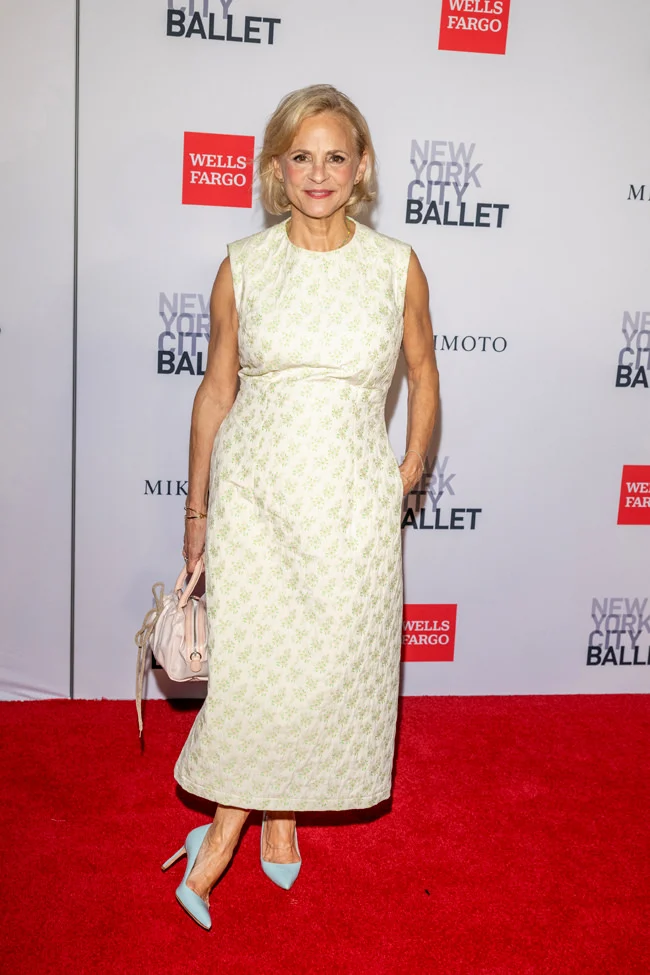
Amy Sedaris in Simone Rocha
Comedic actress Amy Sedaris arrived in a creation by contemporary Irish designer Simone Rocha. Known for her deeply romantic, subversive, and frequently Victorian-inspired aesthetic, Rocha’s designs often feature voluminous silhouettes, intricate lacework, and subtle nods to historical dress. Sedaris selected a piece characterized by an unconventional print that drew immediate comparisons to vintage decorative home goods, paired with a silhouette that prioritized comfort and subdued charm over hyper-tailored evening glamour.
Fashion analysts observed that Sedaris’s choice represented a calculated step toward a more scaled-back, classic form of elegance. While the comedian is widely celebrated for her eccentric, highly personalized public persona and eclectic street style, her appearance at Lincoln Center demonstrated an awareness of the venue’s formal expectations. However, critics noted that the overall fit and execution left room for improvement, suggesting that while the inclination toward classicism is a step forward, future iterations would benefit from sharper tailoring and elevated fabric choices.

Julia Fox in Archival Saint Laurent
Model, actress, and cultural provocateur Julia Fox made a notable departure from her typical avant-garde, DIY-engineered red carpet statements by opting for an archival Saint Laurent ensemble. Fox has built a reputation for pushing the boundaries of red carpet performance art, frequently utilizing unconventional materials such as latex, caution tape, and hyper-distressed textiles.
Her choice of a heritage piece from Saint Laurent’s archives signaled a distinct shift toward traditional chic. The look offered a masterclass in reading the room, proving that Fox possesses the stylistic versatility to adapt to institutional high-society events without entirely stripping away her inherent edge. Observers pointed out minor dissonance regarding her beauty styling—specifically a makeup application that felt slightly detached from the moody sophistication of the archival garment—yet the overall reception of the look was markedly positive, marking a mature milestone in her public style evolution.

Sarah Jessica Parker in Simone Rocha, Alongside Matthew Broderick
As the undisputed matriarch of the New York City Ballet Gala, Sarah Jessica Parker arrived alongside her husband, actor Matthew Broderick, both draped in creations that commanded immediate attention. Broderick opted for a classic, understated black-tie suit that served as a neutral frame for his wife’s elaborate ensemble. Parker, also wearing a design by Simone Rocha, showcased a sheer-trend dress layered over a half-slip, addressing transparency with traditional foundation garments.
The defining characteristic of Parker’s gown, however, was an extensive system of ribbon corseting and embellishments. While the silhouette offered a clever engagement with contemporary fashion’s obsession with sheerness, the sheer volume of ribbons introduced a level of fussiness that divided critics. Several style commentators noted that the intricate detailing pushed the garment dangerously close to theme-park costumey, echoing the look of a stylized character performer rather than a high-fashion evening gown. Nevertheless, Parker’s commitment to theatrical dressing remains unmatched, and her styling—complete with intricately coiffed hair—reinforced her status as fashion’s most fearless risk-taker at the ballet.

Nicole Ari Parker
Actress Nicole Ari Parker brought a striking, highly debated texture to the red carpet with an ensemble defined by tiered, hair-like detailing. The multi-layered gown generated immediate reactions across fashion media circles, primarily due to its unconventional fabric choice. While avant-garde textiles are a staple of gala fashion, the hairy tiers proved polarizing, eliciting strong critiques from style observers who questioned the visual and tactile appeal of the material in a formal setting.
Stevie Nicks

Rock legend Stevie Nicks graced the red carpet in her signature bohemian aesthetic, leaning into a flowing, ethereal silhouette that has defined her personal style for decades. Though Nicks could easily have leaned further into her iconic, witchy "Rhiannon" persona—darker, moodier, and more dramatic—she instead opted for a lighter, fairy-princess-adjacent interpretation.
Fashion critics acknowledged that while Nicks’s wardrobe choices often border on the costumey, her distinct look has remained remarkably consistent and authentic for the last fifty years. Her appearance at the ballet was less an experiment in modern trend-following and more a reaffirmation of her legendary personal brand, proving that established icons are exempt from seasonal trend cycles in favor of timeless self-expression.
Supporting Data and Economic Impact of the Gala

Beyond the fashion commentary, the New York City Ballet Fall Gala remains a critical financial engine for the non-profit performing arts sector. Historical data from Lincoln Center indicates that major seasonal galas generate millions of dollars in contributed income, directly funding company operations, orchestra salaries, student ticket initiatives, and the commissioning of new choreographic works.
In recent years, corporate sponsorships—frequently driven by luxury fashion conglomerates such as Chanel, Valentino, or, in this season’s informal spotlight, independent and luxury houses—have subsidized the production costs of the event. This symbiotic relationship allows fashion brands to secure high-visibility global press coverage while providing arts organizations with the necessary capital to sustain world-class productions in an increasingly challenging economic climate for the performing arts.
Official Responses and Industry Implications

While formal press releases from designers and celebrity representatives generally focus on the collaborative spirit of fashion and dance, industry analysts view events like the NYC Ballet Fall Gala as vital case studies in modern brand positioning. The increasing presence of diverse celebrity cohorts—spanning internet culture, classic Hollywood, music history, and comedy—underscores a deliberate strategy by cultural institutions to democratize their image and attract younger, digitally native audiences.
The fashion choices seen on the 2026 red carpet highlight a broader industry trend: the balancing act between shock-value performance art (exemplified by past red carpet iterations) and a return to archival heritage and wearable elegance. As public appetite shifts away from purely sensationalist dressing toward craftsmanship, historical curation, and tactile interest, events like the New York City Ballet Fall Gala will continue to serve as the primary laboratory where these shifts are tested, debated, and canonized.