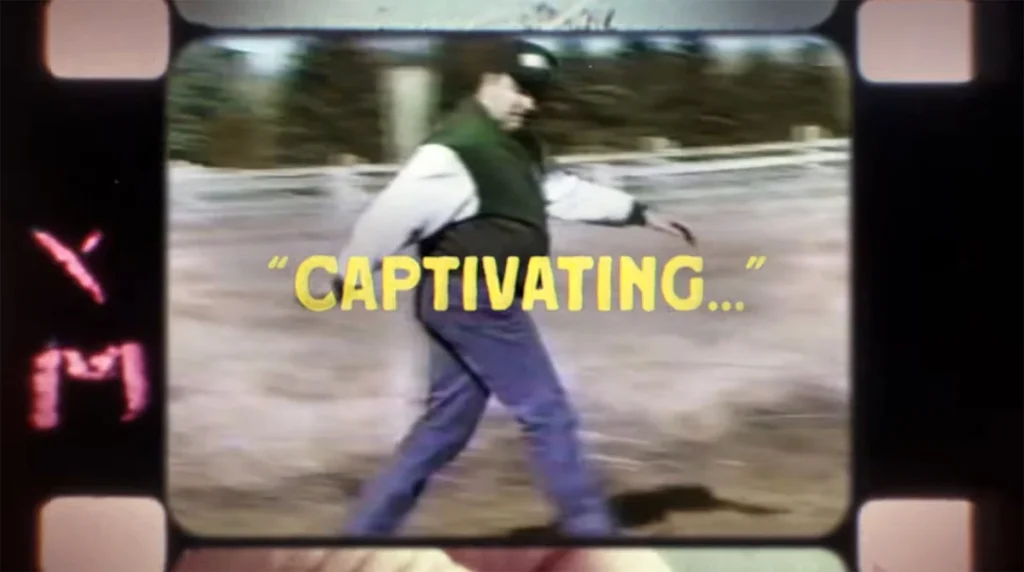

Nearly six decades after Roger Patterson and Robert Gimlin captured what would become the most scrutinized piece of footage in cryptozoology history, the definitive story behind the 59-second clip is finally coming to light. XYZ Films has officially released the full-length trailer for Capturing Bigfoot, a revelatory documentary directed by Marq Evans that promises to re-examine the cultural phenomenon, the controversial footage, and the human cost of an enduring American myth.
Scheduled for a strategic theatrical release and digital streaming debut on Amazon Prime Video on October 20, 2026, the documentary arrives precisely 57 years to the day after the original footage was filmed in the forests of Northern California. Following a critically acclaimed world premiere earlier this year at the 2026 SXSW Film Festival, the film has generated substantial industry buzz as a timely exploration of belief, exploitation, and conspiracy culture.
The Origins of the Legend: October 20, 1967
To understand the weight of Marq Evans’ new documentary, one must look back at the events that transpired in the Bluff Creek region of Humboldt County, California, on October 20, 1967. It was on this damp autumn day that Roger Patterson and his lifelong friend Robert Gimlin encountered an upright, bipedal ape-like creature moving through a heavily forested area. Armed with a 16mm K-100 Kodak camera, Patterson hastily filmed roughly 59 seconds of motion, capturing the subject—affectionately and colloquially dubbed "Patty"—as it walked away from the camera, occasionally turning to gaze back at the filmmakers.
The resulting reel of film sparked a global sensation that has endured for generations. Over the past 57 years, the Patterson-Gimlin film has been subjected to rigorous frame-by-frame analysis by Hollywood special effects artists, biomechanical scientists, anthropologists, and amateur sleuths alike. While skeptics have long dismissed the footage as an elaborate hoax involving a custom-made fur suit, proponents argue that the muscle articulation, gait, and anatomical proportions captured on the film are beyond the technological capabilities of 1967 costume design.
Despite the endless debates over its authenticity, the cultural impact of the original footage cannot be overstated. Roger Patterson utilized a mobile screening strategy, traveling across the United States to show the 16mm reel in community halls, schools, and theaters. In doing so, Patterson effectively pioneered a grassroots, pre-digital viral marketing campaign that grossed upwards of $5 million when adjusted for modern inflation. However, the commercial success came at a personal price, leaving a complicated legacy defined by financial strain, public ridicule, and fractured relationships.
A Breakthrough Discovery in a Locked Safe

Capturing Bigfoot sets itself apart from standard cryptozoology documentaries by introducing groundbreaking primary source material previously hidden from the public eye. According to production notes and early reviews, the documentary centers around a newly discovered reel of 16mm film found tucked away inside a secure safe more than five decades after the initial events took place.
This unexpected archival discovery serves as the narrative catalyst for the film, blowing the historical record wide open. Rather than relying solely on talking-head interviews with cryptozoologists and modern enthusiasts, Evans’ documentary grants unprecedented access to the individuals closest to the source. For the very first time, Roger Patterson’s own son, alongside surviving witnesses and family members who lived through the whirlwind of the 1967 discovery, step forward to share their firsthand accounts.
The narrative scope of Capturing Bigfoot extends far beyond the physical search for a legendary cryptid. Instead, the documentary pivots into a deeply human exploration of family legacies, broken loyalties, and the psychology of belief. As the tagline of the official trailer suggests, the project ultimately confronts the uncomfortable financial realities and opportunistic greed that frequently shadow extraordinary claims.
Director’s Vision and Production Background
Director Marq Evans is no stranger to unearthing complex, niche cultural histories. His previous directorial credits include acclaimed biographical and historical documentaries such as The Glamour & the Squalor, Cow by Bear, Claydream, and The Diamond King. For Capturing Bigfoot, Evans collaborated with producers Tamir Ardon, Marq Evans, and Nick Spicer to craft a narrative that respects the gravity of the subjects’ lived experiences while maintaining a rigorous journalistic approach.
Reflecting on the emotional weight carried by the primary subjects, Evans offered insight into the delicate process of bringing the documentary to the screen. "That footage is one of the most recognizable images in the world, but the people behind it have privately carried its weight for almost sixty years," Evans stated following the trailer’s release. "This film is their story; about family, loyalty, and the truths they’ve held onto or finally let go of. I’m grateful they trusted me to help them finally tell it."
The filmmakers made a deliberate choice to withhold the documentary from widespread festival circuits throughout 2026 despite receiving numerous invitations. This calculated distribution delay was designed to safeguard the integrity of the newly uncovered archival materials, ensuring that audiences across North America could experience the cinematic revelation collectively at the exact same moment.
Broader Implications in a Conspiracy-Minded Era

Media analysts and film critics have noted that Capturing Bigfoot arrives at an ideal cultural juncture. In an era dominated by digital deepfakes, rampant online misinformation, and a pervasive appetite for conspiracy theories, a documentary examining the foundational modern American myth offers a fascinating lens through which to study public credulity.
As cultural critics pointed out following its SXSW screening, the film does not simply ask whether Bigfoot is real; rather, it explores why humanity possesses such an insatiable desire to believe in the unexplained, and how individuals capitalize on that collective yearning. By grounding the myth in the tangible realities of 1960s rural America, family dynamics, and financial desperation, Evans elevates the material from a niche monster-hunting chronicle to a profound study of human sociology.
Release Details and Distribution Schedule
XYZ Films has scheduled the theatrical and digital rollout of Capturing Bigfoot to coincide with the anniversary of the original 1967 expedition. Beginning on October 20, 2026, audiences will have the opportunity to view the film through a dual distribution model. The documentary will open in select movie theaters across the United States, offering communities a shared theatrical experience that mirrors the grassroots touring exhibitions popularized by Roger Patterson more than half a century ago.
Simultaneously, the film will become available for digital streaming on Amazon Prime Video, granting global audiences immediate access to the long-awaited historical revelations.
With the debut of the official trailer, anticipation has reached a fever pitch among film critics, history buffs, and cryptozoology enthusiasts alike. Whether Capturing Bigfoot ultimately silences the skeptics or simply adds fuel to an already burning fire of debate, it promises to stand as the definitive historical accounting of one of the 20th century’s most enduring and perplexing mysteries.