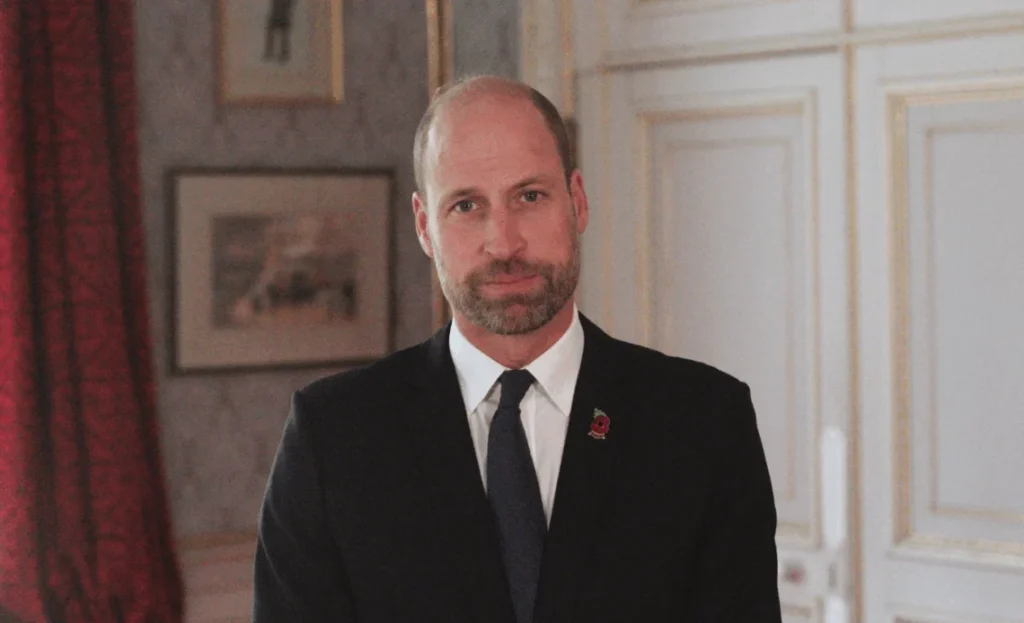

In a candid moment during an interview with Heart Radio’s Breakfast Show, Prince William, The Prince of Wales, inadvertently revealed a significant development in the educational journey of his eldest son, Prince George. While discussing the daily routines of the Wales family, particularly the often-chaotic school run, the heir to the throne confirmed that Prince George is already embracing a boarding lifestyle, a move that has been the subject of considerable public speculation. This revelation, made without direct prompting, effectively answers a long-standing question about the future schooling of the second in line to the British throne.
The School Run Revelation: A Glimpse into Royal Mornings
The Prince of Wales was speaking with hosts Amanda Holden and Jamie Theakston about the realities of managing the morning schedules for Prince George, Princess Charlotte, and Prince Louis. It was during this discussion, ostensibly about the role of music in the car during commutes, that the significant detail about Prince George’s boarding arrangements emerged. Prince William stated, “Charlotte and Louis, because George is boarding last night, Charlotte and Louis, if you’re listening, make sure you’re on time, please, make sure you’re not fighting over who listens to what, this morning.”
This seemingly casual remark highlighted a key shift in the family’s routine. The phrasing “George is boarding last night” suggests that Prince George has already begun experiencing life away from home as part of his educational transition. The Prince of Wales further elaborated on the general morning chaos, explaining the multitude of factors that need to be considered: “are we boarding are we not, are we seeing friends or are we not, all of that going on in the morning.” This statement reinforces the idea that boarding is now a regular, albeit sometimes variable, component of Prince George’s current schedule.
Prince George’s Educational Trajectory: From Lambrook to Secondary School
Prince George, who will celebrate his 13th birthday in July, is currently attending Lambrook Prep School in Berkshire, a prestigious institution he joined in September 2022. His time at Lambrook is drawing to a close, as he is slated to commence his secondary education in September of this year. The choice of secondary school for the future king has been a topic of intense media interest and public conjecture.
Among the most frequently discussed potential institutions are Eton College and Marlborough College. Eton, located in Windsor, is a historic boarding school with a long-standing connection to the British aristocracy and royalty, having been attended by Prince William and his brother, Prince Harry. Marlborough College, a co-educational boarding school in Wiltshire, is notable for having been attended by the Princess of Wales. The family has also reportedly toured Oundle School, another highly regarded boarding institution.
The confirmation that Prince George is already boarding provides a strong indication of the direction his secondary education will take. Lambrook Prep School itself offers a flexible boarding program, allowing students to opt for one to five nights per week. This flexibility likely facilitated Prince George’s initial introduction to boarding life, preparing him for a more immersive experience at his next school.
The Royal Tradition of Boarding Education
Prince William’s own educational background includes a period as a boarder at Eton College. Similarly, Catherine, Princess of Wales, was a boarder during her time at Marlborough College. This familial precedent suggests a potential continuation of the tradition, with boarding education being viewed as a valuable aspect of preparing young royals for their future roles.
Boarding schools are often characterized by their rigorous academic programs, extensive extracurricular activities, and the development of independence and resilience among students. For a young royal like Prince George, whose life will be subject to intense public scrutiny and demanding responsibilities, the skills and experiences gained in such an environment could be considered highly beneficial. The structured environment of a boarding school can provide a degree of normalcy and a supportive peer group, away from the unique pressures of royal life.
Implications of the Boarding Confirmation
The confirmation of Prince George’s boarding status carries several implications. Firstly, it suggests that the family is leaning towards a traditional boarding school for his secondary education, aligning with the choices made by his parents. This narrows the field of potential schools and provides a clearer picture of his imminent educational path.
Secondly, it signifies a deliberate step in preparing Prince George for a future that will inevitably involve periods of separation from his family. While the modern approach to royal parenting may differ from previous generations, the inherent demands of monarchy often necessitate a degree of detachment. Early exposure to boarding can help foster the emotional fortitude required for such a life.
Thirdly, the revelation underscores the increasing autonomy and personal development being fostered in the younger generation of the Royal Family. By embracing boarding, Prince George is being given opportunities to develop his own identity and build relationships outside the immediate family unit, a crucial aspect of adolescence.
Broader Context: Royal Education Through the Ages
The education of future monarchs has always been a carefully managed and strategically important aspect of the British monarchy. Historically, royal children were often educated by private tutors within the confines of palaces, ensuring a controlled environment and tailored curriculum. This approach was designed to instill the necessary knowledge of history, governance, and etiquette, while also safeguarding them from outside influences.
The 20th century saw a gradual shift towards more conventional educational settings. King George VI, for instance, attended the Royal Naval College, Dartmouth. His sons, Queen Elizabeth II’s cousins, also attended boarding schools. Queen Elizabeth II herself received private tuition at home, but her children, including Prince Charles, were sent to boarding schools. Prince Charles famously attended Gordonstoun in Scotland, a challenging establishment known for its focus on character development, and later, Cambridge University.
The decision to send Prince William and Prince Harry to Eton, a prestigious public school, marked a significant departure from the previous generations’ emphasis on private tutors. This move was seen as an effort to integrate the young princes into a more diverse social environment and provide them with a more rounded education. The current trend, as indicated by Prince George’s likely boarding future, continues this trajectory of providing an education that balances academic rigor with personal development and exposure to a broader society.
Public Reaction and Royal Scrutiny
While Prince William’s comment was an informal revelation, it is likely to be met with keen interest from royal followers and the media. The education of the heir to the throne is always under a microscope, and every decision is subject to analysis. The confirmation of a boarding education for Prince George will undoubtedly spark further discussion about his future role and the preparation he is receiving.
It is important to note that the specific school Prince George will attend and the exact nature of his boarding arrangements will likely be formally announced by Kensington Palace in due course. Until then, the Prince of Wales’s candid remark provides a significant insight into the ongoing evolution of royal upbringing and the careful planning that underpins the education of the future King. The transition to secondary boarding school is a major milestone for any child, and for Prince George, it represents a significant step on his unique path towards assuming his future responsibilities. The blend of tradition and modernity in his educational choices reflects the dynamic nature of the British monarchy in the 21st century.