
Netflix has officially announced the commencement of production for The Generals (working title), a highly anticipated political period thriller set to explore a pivotal and often controversial era in South Korean history. The streaming giant’s latest venture into the vibrant Korean content landscape reaffirms its commitment to narratives that resonate deeply with local audiences while captivating a global viewership. Acclaimed director Yoon Jong-bin, known for his masterful dissection of power dynamics and human survival within rigid hierarchies, helms the project, marking his first feature film in eight years since his critically lauded The Spy Gone North (2018). This film also signifies Yoon’s second collaboration with Netflix, following the successful limited series Narco-Saints (2022).
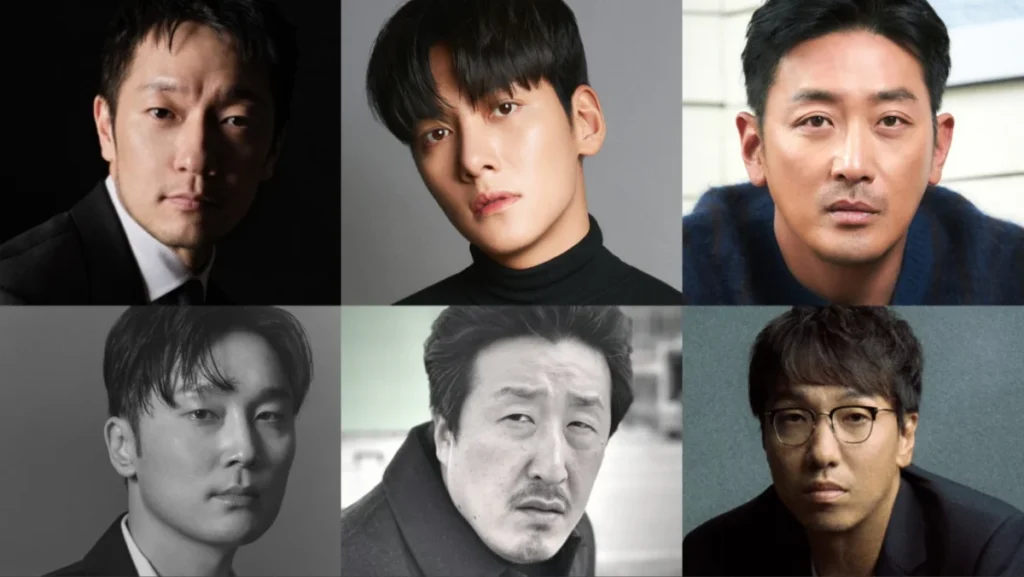
The narrative of The Generals is poised to chronicle the ascent of Roh Tae-woo, a figure who transitioned from a military general to become South Korea’s sixth president. Portrayed by the in-demand actor Son Suk-ku, Roh Tae-woo is depicted as a man who publicly cultivated an image of an "ordinary man" while strategically maneuvering behind the scenes alongside the formidable dictator Chun Doo-hwan, played by veteran actor Ha Jung-woo. Chun Doo-hwan, who wielded absolute authority during his reign, serves as the powerful backdrop against which Roh’s ambitions unfold. The film promises a complex exploration of power, ambition, and survival as Roh navigates a dense network of relationships, surrounded by allies, rivals, and functionaries, all with their own agendas, in his bid to claim the nation’s top office.
Unpacking a Pivotal Historical Period: The Fifth Republic and its Architects
To fully appreciate the scope and significance of The Generals, it is essential to delve into the historical context of the period it portrays – the tumultuous era of South Korea’s Fifth Republic (1980-1987). This period was defined by military rule, profound political instability, and a fervent struggle for democracy following decades of authoritarianism.
Chun Doo-hwan’s Rise to Power (1979-1980):
The narrative begins shortly after the assassination of President Park Chung-hee in October 1979, which brought an abrupt end to his 18-year military dictatorship. A brief period of political uncertainty ensued, often referred to as the "Seoul Spring," where hopes for democratic transition surged. However, these hopes were quickly dashed. On December 12, 1979, Major General Chun Doo-hwan, then head of the Defense Security Command, orchestrated a military coup d’état, consolidating power by arresting key military leaders. This event is famously depicted in the 2023 box office hit 12.12: The Day.
Following the coup, Chun systematically suppressed dissent and democratic movements. In May 1980, he expanded martial law across the entire country, leading to widespread arrests of opposition figures, including future president Kim Dae-jung. This repressive measure sparked the Gwangju Uprising, a brutal crackdown by government forces on pro-democracy protesters in the city of Gwangju. The violence, which resulted in hundreds, possibly thousands, of civilian deaths, remains a deeply traumatic event in South Korean history and a symbol of the struggle against authoritarianism.
Roh Tae-woo’s Role and Ascent:
Roh Tae-woo, a close associate and military academy classmate of Chun Doo-hwan, played a crucial role in the December 12 coup and subsequent consolidation of power. He was a key figure in the "Hana-hoe" (One-Mind Group), a private organization of military officers that formed the backbone of Chun’s regime. After Chun solidified his control and formally became president in September 1980, Roh held various high-ranking positions, including Minister of National Security and Director of the National Security Planning Agency. He was widely seen as Chun’s chosen successor, carefully groomed to maintain the military-backed government.
The film’s focus on Roh Tae-woo, a figure who publicly presented himself as an "ordinary man," hints at the subtle yet ruthless political maneuvering required to survive and thrive within such a volatile system. It suggests an exploration of the complex psychology of power, where outward appearances often mask deep-seated ambitions and strategic calculations. The contrast between Roh’s public persona and his behind-the-scenes actions promises a nuanced portrayal of a man operating in the shadow of absolute authority, yet striving for his own claim to power.
Director Yoon Jong-bin: A Master of Institutional Dissection
Yoon Jong-bin stands as one of Korea’s most respected mid-career filmmakers, renowned for his ability to craft taut, character-driven narratives that often dissect the intricate ways individuals survive and navigate within rigid, often corrupt, hierarchies. His filmography consistently explores themes of loyalty, betrayal, ambition, and the moral compromises inherent in systems of power.
His breakthrough film, The Unforgiven (2005), offered a stark and unflinching look at the psychological and social pressures of Korea’s compulsory military service, immediately establishing his reputation for critical realism. He continued to build on this foundation with Nameless Gangster: Rules of the Time (2012), a critically and commercially successful Busan mob movie that delved into the rise and fall of a corrupt customs officer intertwined with organized crime. This film, starring Ha Jung-woo, showcased Yoon’s skill in portraying complex anti-heroes and the blurred lines between legality and criminality.
The Spy Gone North (2018), which premiered at Cannes, was a Cold War espionage drama based on a true story, depicting a South Korean agent infiltrating the North Korean nuclear program. This film further solidified Yoon’s prowess in crafting high-stakes thrillers rooted in political realities, earning him widespread acclaim for its meticulous detail and suspenseful narrative.
With The Generals, Yoon Jong-bin returns to these familiar yet ever-relevant themes. Netflix states that the film will "once again explor[e] the human thirst for power and the mechanisms of survival against a backdrop of political turbulence." Given his track record, audiences can anticipate a meticulously researched and psychologically astute portrayal of Roh Tae-woo’s journey, offering insights into the personal and political sacrifices made in the pursuit of ultimate authority.
A Stellar Ensemble Cast: Clash of Titans and Rising Stars
The casting of The Generals has generated considerable excitement, bringing together two of Korea’s most in-demand leading men, Son Suk-ku and Ha Jung-woo, opposite each other for the first time in a feature film. This pairing alone signals a cinematic event, promising a powerful dynamic between the two central figures.
Son Suk-ku as Roh Tae-woo: Son Suk-ku has experienced a meteoric rise in recent years, captivating audiences with his charismatic and intense performances. He first broke through with the critically acclaimed Netflix military-drama series D.P. (2021), where his portrayal of a morally conflicted military police captain earned him widespread recognition. He further cemented his star status by headlining Netflix’s dark comedy thriller A Killer Paradox (2024) and the recent Disney+ mystery hit Nine Puzzles. Son’s ability to embody complex characters, often with a subtle intensity, makes him an intriguing choice to portray Roh Tae-woo’s duality.
Ha Jung-woo as Chun Doo-hwan: Ha Jung-woo is widely regarded as one of Korea’s most decorated and versatile actors, with a career spanning over two decades and a diverse filmography. He has a long-standing creative partnership with director Yoon Jong-bin, having starred in Nameless Gangster, Kundo: Age of the Rampant, and Narco-Saints. Beyond Yoon, Ha has collaborated with leading auteurs like Na Hong-jin (The Chaser, The Yellow Sea) and Park Chan-wook (The Handmaiden), consistently delivering compelling performances that showcase his range from gritty anti-heroes to nuanced dramatic leads. His portrayal of the authoritarian Chun Doo-hwan is expected to be a formidable and captivating performance, anchoring the film’s historical gravitas.
The Supporting Ensemble: The film’s robust supporting cast further enriches the narrative tapestry:
- Ji Chang-wook (The Sound of Magic, The Worst of Evil, Revolver) steps into the role of Heo Hak-seong, a junior officer who becomes a challenging obstacle for Roh Tae-woo. Ji Chang-wook’s recent forays into darker, more complex roles suggest a compelling performance as a potential thorn in the protagonist’s side.
- Hyun Bong-sik (Narco-Saints, A Killer Paradox, Aema) takes on the character of Jung Ho-joong, a classmate and friend to both Roh and Chun, suggesting a character who might offer a different perspective on their intertwined ambitions. Hyun Bong-sik’s experience in Yoon’s previous works and Netflix productions makes him a reliable addition.
- Seo Hyun-woo (Decision to Leave, My Name Is Loh Kiwan) portrays Park Cheol-woong, a prosecutor and Roh’s trusted chief of staff. This role hints at the intricate legal and political machinations involved in Roh’s ascent, with Seo Hyun-woo’s subtle acting style likely bringing depth to the character.
The collective talent of this ensemble promises a nuanced and multi-faceted exploration of the historical figures and the political landscape they inhabited.
Netflix’s Strategic Investment in Korean Content
The Generals is a testament to Netflix’s unwavering commitment to investing heavily in South Korean content, a strategy that has yielded immense success and significantly expanded its global subscriber base. Since its initial major investment in 2016, Netflix has poured billions into Korean productions, recognizing the unique storytelling, high production values, and global appeal of K-dramas and films.
The success of titles like Squid Game, Hellbound, All of Us Are Dead, The Glory, and director Yoon Jong-bin’s own Narco-Saints has demonstrated the universal resonance of Korean narratives, transcending language and cultural barriers. These successes have not only brought unprecedented global attention to Korean talent but have also cemented Netflix’s position as a dominant player in the Korean entertainment industry. By supporting projects like The Generals, which delve into sensitive historical and political themes, Netflix is diversifying its Korean portfolio, moving beyond fantasy and romance to explore more challenging and historically significant narratives. This strategic diversification aims to appeal to a broader spectrum of viewers who appreciate historical depth and political intrigue.
The Resurgence of Political Period Thrillers in Korean Cinema
Politically charged dramas that engage with South Korea’s authoritarian past have long been a staple of the local film industry. These films often serve as a form of national catharsis, allowing the public to revisit and process traumatic historical events through a cinematic lens. However, the genre has recently struck an especially strong commercial chord, indicating a renewed public appetite for these stories.
"12.12: The Day" (2023): This Kim Sung-su-directed political drama, which dramatized the December 1979 coup into a riveting ticking-clock thriller, became the top-grossing Korean film of 2023. Its immense success, drawing over 13 million admissions, was pivotal in reviving the country’s ailing post-pandemic theatrical business. The film’s ability to combine historical accuracy with intense suspense resonated deeply with audiences, sparking widespread public discussion about the coup and its perpetrators. The fact that The Generals covers the period immediately following this event creates a compelling cinematic continuity and a strong precedent for its potential success.
"Harbin" (2024): Woo Min-ho’s sweeping period thriller, focusing on a 1909 plot to assassinate Japan’s first prime minister and resident-general of Korea, also dominated the Korean box office for a month at the end of 2024. While set in a different historical context, Harbin shares the genre’s characteristic blend of historical significance, patriotic fervor, and thrilling action.
The success of these films suggests a cultural moment in South Korea where audiences are eager to engage with their nation’s complex history, particularly stories of struggle against oppression and the fight for sovereignty and democracy. The Generals, by tackling the controversial figures of Chun Doo-hwan and Roh Tae-woo and the rise of the Fifth Republic, taps directly into this zeitgeist. It offers an opportunity for a younger generation to learn about this critical period, while providing a reflective experience for those who lived through it.
Production Details and Creative Partnerships
The Generals (WT) is a joint production between two prominent Korean production houses: Moonlight Film and Sanai Pictures. Both companies have a track record of producing high-quality, impactful Korean content.
Moonlight Film: Known for its diverse portfolio, Moonlight Film has been involved in projects like Karma, Narco-Saints (another collaboration with Yoon Jong-bin and Netflix), The Match, and Nine Puzzles. Their experience across various genres, including historical dramas and thrillers, makes them a suitable partner for a project of this scale and historical weight.
Sanai Pictures: This production company has contributed to critically acclaimed and commercially successful films such as Mission: Cross, Revolver, and Hunt. Sanai Pictures often focuses on gritty, character-driven narratives, aligning well with the tone and themes typically explored by director Yoon Jong-bin.
The collaboration between these two experienced production houses, coupled with Netflix’s global distribution platform, ensures a project with robust production values and wide reach. The film is slated to stream exclusively on Netflix, making it accessible to a massive international audience upon its release.
Broader Implications for Korean Cinema and Global Audiences
The production of The Generals carries significant implications for both the Korean film industry and Netflix’s global content strategy. For Korean cinema, it further solidifies the trend of revisiting and reinterpreting historical events, particularly those related to the nation’s struggle for democracy. These films not only provide entertainment but also serve as important cultural artifacts, fostering dialogue and critical reflection on national identity and past traumas. The success of such projects can encourage further investment in historically rich narratives, diversifying the landscape of Korean filmmaking.
For Netflix, The Generals represents a strategic deepening of its Korean content portfolio. By backing a film from a respected director like Yoon Jong-bin, featuring a top-tier cast, and tackling a historically resonant subject, Netflix reinforces its commitment to delivering high-quality, authentic local stories. This strategy is crucial for maintaining its competitive edge in a global streaming market that increasingly values local relevance. Furthermore, exposing a global audience to a nuanced portrayal of South Korea’s authoritarian past can foster greater understanding of the nation’s modern democratic achievements and the sacrifices made to attain them. It contributes to a more diverse and informed global cinematic dialogue, demonstrating that powerful storytelling transcends geographical and linguistic boundaries.
As The Generals moves through production, anticipation will undoubtedly build for a film that promises to be not only a gripping political thriller but also a significant historical commentary, offering a penetrating look into the complex tapestry of power, ambition, and survival in a nation striving for its democratic future.