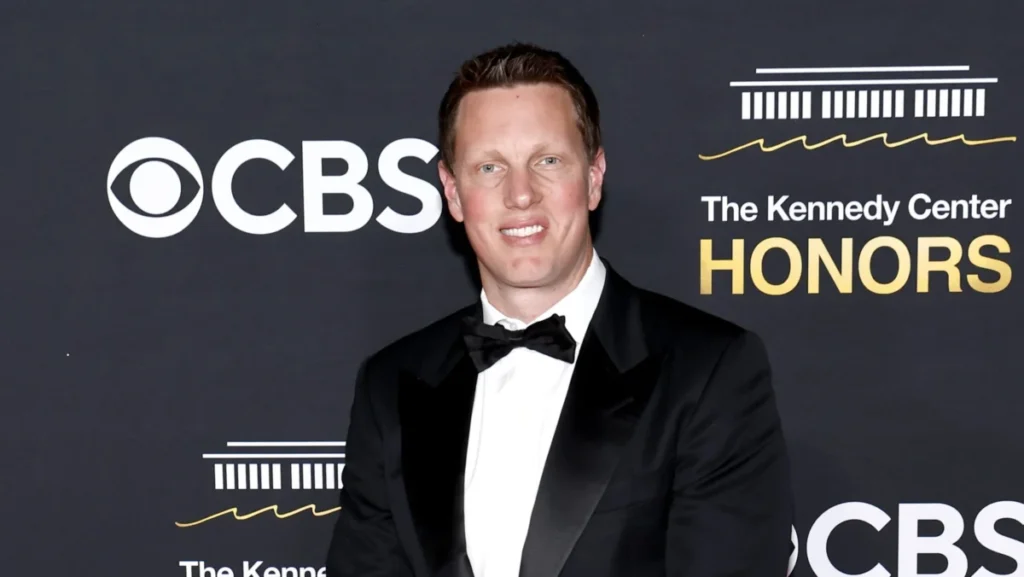

In a significant gathering that underscored the intricate nexus of media, politics, and corporate power, David Ellison, CEO of Skydance Media, hosted an exclusive event at the U.S. Institute of Peace on Thursday, April 24, 2026, specifically designed to honor former President Donald Trump. The evening featured a reported hour-long address by Trump himself, drawing a notable roster of attendees from media, legal, and political spheres, a convergence that has since ignited discussions about journalistic independence and the potential implications for major corporate transactions.
A Convergence of Power: The Ellison-Trump Event
The private dinner, held in Washington D.C., was extended through invitations distributed by Paramount Global, explicitly naming Ellison as the host. The invitations themselves set a clear tone, describing the night as "honoring the Trump White House," signaling a deliberate and public alignment with the former president. The event’s timing and guest list have become subjects of intense scrutiny, particularly given the ongoing, colossal $110 billion proposed merger between Paramount Global and Warner Bros. Discovery (WBD), a deal spearheaded by Ellison’s Skydance Media.
Among the prominent figures in attendance, as reported by The Times on Friday, April 25, 2026, were several high-ranking CBS News executives and journalists, including seasoned anchors Norah O’Donnell and commentator Bari Weiss. The presence of such influential media personalities at an event honoring a polarizing political figure, especially one who has frequently been critical of the press, immediately sparked internal and external debates regarding journalistic impartiality.
Further amplifying the event’s significance was the attendance of Acting Attorney General Todd Blanche. Blanche’s presence at an event hosted by a key player in a massive corporate merger, the approval of which falls under the purview of the Justice Department he oversees, has drawn particular attention. The Department of Justice’s antitrust review is a critical final hurdle for the Paramount-WBD megadeal, making the appearance of its acting head at such a gathering a subject of considerable speculation and ethical consideration within legal and media circles. Other notable attendees included Paramount’s chief legal officer Makan Delrahim, former Secretary of State Marco Rubio, and former White House Deputy Chief of Staff Stephen Miller, further cementing the event’s high-level political and corporate character.
The Paramount-Warner Bros. Discovery Megadeal: Context and Hurdles
The backdrop to Ellison’s event is one of the largest proposed transactions in recent media history: the acquisition of Paramount Global by Skydance Media, which would then merge with Warner Bros. Discovery. This complex, multi-billion-dollar deal aims to create a new media titan, consolidating vast content libraries, studio assets, and streaming services in an increasingly competitive global market.
On Tuesday, April 22, 2026, just two days prior to the D.C. dinner, Warner Bros. Discovery shareholders formally approved the impending Paramount merger. This crucial vote moved the deal significantly closer to completion, underscoring the immediate relevance of regulatory approvals. The proposed merger, valued at an estimated $110 billion, involves intricate financial engineering and a strategic vision to combine two of Hollywood’s most venerable studios and their extensive intellectual property portfolios, ranging from Paramount Pictures’ cinematic legacy to Warner Bros.’ vast television and film empire, along with their respective streaming platforms.
The primary regulatory obstacle remaining is the antitrust review by the U.S. Department of Justice. The DOJ scrutinizes large mergers to ensure they do not create monopolies, stifle competition, or harm consumers. Given the scale and scope of the Paramount-WBD deal, which would bring together a vast array of film studios, television networks (including CBS, CNN, HBO), and streaming services (Paramount+, Max), the antitrust review is expected to be thorough and rigorous. The presence of Acting Attorney General Todd Blanche at a private event hosted by the deal’s architect, David Ellison, has thus raised questions about the optics and potential for perceived influence, irrespective of any actual impropriety. The media industry has a long history of lobbying and political engagement, but the direct involvement of a regulatory chief at such a function, while a deal under his jurisdiction is pending, is uncommon and draws scrutiny.
Journalistic Ethics and Perceived "Coziness"
The attendance of CBS News executives and journalists at an event "honoring the Trump White House" provoked a strong reaction, particularly from within the news organization itself. Anonymous CBS News journalists reportedly expressed to The Times that they were "taken aback" by the dinner. Their concerns centered on the potential message of "coziness" that such an appearance could send, implying an inappropriate proximity or alignment between the newsroom and the Trump administration.
CBS News, a flagship division of Paramount Global, operates under the corporate umbrella of the very entity seeking regulatory approval for a massive merger. This corporate structure inherently creates a delicate balance, as news organizations strive to maintain an independent stance while their parent companies engage in significant business and political dealings. For journalists, the perception of independence is paramount to public trust. Attending an event explicitly "honoring" a former president, especially one who has consistently challenged the credibility of the mainstream media and who is currently a subject of intense journalistic scrutiny, risks eroding that public trust. The event, in the eyes of some journalists, could suggest a blurring of lines between objective reporting and corporate interests, potentially compromising the news division’s perceived impartiality.
The issue of journalistic ethics in the context of corporate ownership and political engagement is not new. Media conglomerates frequently navigate these waters, but the directness of this event – a private dinner hosted by a major media mogul for a former president, with high-ranking regulators and journalists present – makes it particularly poignant. It highlights the constant tension between the business imperatives of media corporations and the ethical obligations of their news divisions to remain neutral and objective.
A Weekend of Contrasts: The White House Correspondents’ Dinner
The Ellison-Trump dinner occurred just days before another significant event on Washington D.C.’s social and political calendar: the White House Correspondents’ Dinner (WHCD) on Saturday, April 26, 2026. This annual gathering traditionally brings together journalists, politicians, and celebrities for an evening that, while often lighthearted, serves as a symbolic acknowledgment of the press’s role in a democratic society.
Notably, former President Trump confirmed his attendance at the WHCD, marking a rare appearance for him at an event typically seen as a bastion of the "establishment media" he frequently criticizes. The juxtaposition of Trump attending both Ellison’s private "honoring" dinner and the broader WHCD provides a fascinating lens through which to view his complex relationship with the media and corporate power.
Further adding to the intricate web of connections, CBS News, backed by its parent company Paramount, reportedly planned to bring "Secretary Pete Hegseth" to the WHCD. While the exact identity of "Secretary Pete Hegseth" in this context is unclear (given there is no current U.S. cabinet Secretary by that name, and Pete Hegseth is a prominent conservative commentator and Fox News personality), the detail underscores the strategic considerations media organizations employ in selecting guests for such high-profile events, often aiming to engage with diverse political viewpoints or cultivate relationships across the political spectrum. The decision to bring a figure like Hegseth, known for his conservative commentary, to an event widely attended by mainstream journalists and political figures, further highlights the strategic maneuvering within the media-political complex.
The Wall Street Journal’s Award and Trump’s Legal Battles
Adding another layer of complexity and irony to the weekend’s events, the Wall Street Journal was slated to receive the prestigious Katharine Graham Award for Courage and Accountability on Saturday night. This award, named after the legendary publisher of The Washington Post, recognizes exceptional journalism that demonstrates human and professional qualities exemplified by Graham, particularly in coverage of subjects and events of significant national or regional importance.
The Wall Street Journal was honored for its investigative piece published on July 17, 2023, titled "Jeffrey Epstein’s Friends Sent Him Bawdy Letters for a 50th Birthday Album. One Was From Donald Trump." This meticulously reported article detailed a 2003 letter from Donald Trump to the disgraced financier Jeffrey Epstein, in which Trump notably wrote that they share a "wonderful secret." The article shed new light on the relationship between Trump and Epstein, contributing to the public’s understanding of Epstein’s vast network of influential acquaintances.
The Journal‘s exposé had significant repercussions, directly leading Trump to file a defamation lawsuit against News Corp., the Wall Street Journal‘s parent company. Trump’s lawsuit alleged that the article was defamatory and sought to damage his reputation. However, in April 2026, a Florida federal judge, U.S. District Judge Darrin P. Gayles, dismissed the lawsuit. Judge Gayles’s order stated that Trump’s legal team failed to argue that the article was published by those named in the complaint with malicious intent, a high bar for defamation cases involving public figures.
The timing of this award and its underlying story creates a stark contrast: a major news organization being honored for courageous journalism that detailed a controversial past association of Donald Trump, while simultaneously, another media mogul hosted a private event "honoring" Trump, attended by executives from a rival news organization and a key regulatory figure overseeing a massive deal. This juxtaposition highlights the diverse and often conflicting roles that media entities play in contemporary society – as watchdogs, as corporate players, and as social arbiters.
Broader Implications and the Future of Media
The Ellison-Trump dinner, set against the backdrop of a pending $110 billion merger and a weekend of media-political convergence, offers a potent illustration of the evolving landscape of American media and politics. It underscores several critical implications:
Firstly, the event brings into sharp focus the blurring lines between corporate interests, political influence, and journalistic independence. In an era of increasing media consolidation, the relationships between powerful media owners, political figures, and regulatory bodies become ever more scrutinized. The presence of a key regulator at a private event hosted by the architect of a deal under review inevitably raises questions about transparency and fairness in the regulatory process, regardless of actual influence.
Secondly, it reignites debates within journalism about maintaining impartiality and public trust. When news executives attend events explicitly honoring political figures, particularly those who have been subjects of intense and often critical coverage, it can create a perception of bias or "coziness" that undermines the credibility of their news organizations. This is especially true when the parent company has significant business interests intertwined with political decisions.
Thirdly, the event highlights the enduring influence of Donald Trump on the media landscape. Even out of office, his presence commands attention, and his relationships with media figures and corporations continue to shape narratives and events. His participation in both a private "honoring" dinner and the more traditional WHCD demonstrates his strategic engagement with various facets of the media ecosystem.
Finally, the entire scenario underscores the immense stakes in the ongoing consolidation of the media industry. Deals like the Paramount-WBD merger are not merely financial transactions; they reshape the content landscape, influence public discourse, and determine who controls the narratives that inform society. The regulatory scrutiny applied by the Justice Department is crucial for ensuring competition and preventing undue concentration of power, making any perceived influence on that process a matter of significant public concern.
In sum, David Ellison’s event, while ostensibly a private dinner, has become a public touchstone, encapsulating the complex and often contentious interactions between corporate power, political influence, and the ethical responsibilities of the press in a rapidly changing world. The reverberations from this gathering are likely to continue to be felt as the Paramount-WBD merger progresses and as discussions about media ethics and political accountability persist.