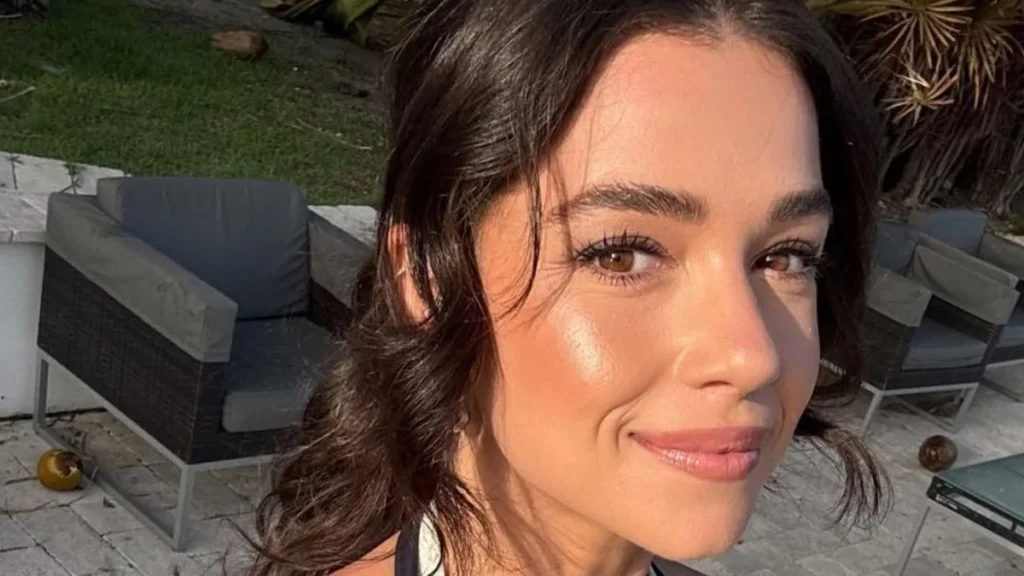

The intersection of live broadcast journalism and immediate physical danger was captured in a now-viral video featuring NBC News correspondent Julie Tsirkin during a security breach at the White House on Saturday. Tsirkin, a veteran reporter covering Capitol Hill and the White House, was preparing for a segment on the North Lawn when a series of gunshots erupted nearby, forcing her and her crew to flee for safety. The incident, which has sparked widespread discussion regarding the safety of the press corps and the volatility of the current security environment in Washington, D.C., culminated in the arrest of a 21-year-old suspect and a temporary lockdown of the executive mansion’s grounds.
The event unfolded during what began as a routine Saturday evening for the White House press pool. Tsirkin and her cameraman, identified as John, were positioned on the North Lawn, a standard location for television "stand-ups" where reporters provide live updates with the White House as a backdrop. At approximately 6:00 p.m., as they were finalizing the technical details for a report regarding U.S. policy toward Iran for NBC’s Nightly News, the silence of the evening was shattered by the sound of rapid gunfire.
The Chronology of the North Lawn Incident
According to reports from the United States Secret Service (USSS) and the Metropolitan Police Department (MPD), the incident began when a male suspect approached a security checkpoint on the perimeter of the White House grounds. The suspect, later identified by authorities as 21-year-old Nasire Best, allegedly reached into a bag, produced a firearm, and began discharging the weapon indiscriminately toward the security post.
The timeline of the event, as reconstructed from witness accounts and official statements, suggests a rapid escalation:
- 5:55 p.m.: Routine activity continues on the White House North Lawn; journalists prepare for evening broadcasts.
- 6:02 p.m.: Nasire Best approaches the USSS checkpoint located near the intersection of 15th Street and Pennsylvania Avenue NW.
- 6:03 p.m.: Best pulls a firearm from a bag and fires between 20 and 30 rounds.
- 6:03 p.m. – 6:05 p.m.: NBC’s Julie Tsirkin and her cameraman hear the "booms." Initially uncertain of the source, they remain in place for several seconds before the severity of the situation becomes apparent.
- 6:06 p.m.: Secret Service agents on the North Lawn draw their weapons and command all press personnel and staff to seek immediate shelter.
- 6:07 p.m.: The White House enters a full lockdown. Tsirkin and other members of the media are ushered into the James S. Brady Press Briefing Room.
- 6:15 p.m.: Law enforcement officials neutralize the threat and take the suspect into custody.
The auditory confusion during the first few seconds of the shooting is a common phenomenon in high-stress environments. In the viral footage, Tsirkin is seen looking visibly startled as the first volleys of gunfire ring out. She turns to her cameraman and asks, "What is that?" to which he replies, "It sounds like fireworks." This brief exchange highlights the cognitive dissonance often experienced by civilians when violence erupts in a space typically considered one of the most secure locations in the world.
The Viral Reaction and the Reality of Modern Reporting
The video of Tsirkin’s reaction quickly migrated from news feeds to social media platforms, where it garnered millions of views. While some viewers focused on the dramatic nature of the footage, industry analysts pointed to the video as a stark reminder of the risks faced by journalists.
Tsirkin later took to social media to provide a firsthand account of the experience. In a detailed Instagram post, she reflected on the trauma of the moment and the recurring nature of such threats. "My cameraman, John, and I were getting ready to tape something on Iran for Nightly News when what sounded like 20-30 loud booms rang out very close by," she wrote. She further noted the chilling reality of modern newsgathering: "Twice in one month I found myself face to face with a USSS agent yelling at me to get to safety, guns drawn. I find myself thankful, again, that I could run to safety when so many run to danger."
The reference to this being the second such incident in a month underscores a period of heightened tension at the White House. Previous security alerts, including a recent incident involving a reported shooting in a ballroom context related to political events, have kept the Secret Service and the press corps on high alert. For Tsirkin, the transition from being a reporter of the news to a witness—and potential victim—of a crime happened in a matter of heartbeats.
Suspect Identification and Law Enforcement Response
The Metropolitan Police Department took the lead in identifying the gunman. Nasire Best, 21, faces multiple federal and local charges, including assault with a dangerous weapon and carrying a firearm without a license. While the motive for the shooting remains under investigation, the Secret Service confirmed that Best fired "indiscriminately" at the checkpoint, suggesting a direct challenge to the security apparatus of the White House rather than a targeted assassination attempt on a specific individual.
The response from the Secret Service has been praised by security experts for its speed and efficiency. Within seconds of the first shot, "P-unit" teams (perimeter security) and the Counter Sniper Team were engaged. The protocol for a "Code Red" or lockdown involves the immediate clearing of all open areas, including the North and South Lawns. Journalists, who are often the only non-security personnel in these areas during the evening hours, are trained to follow the instructions of the Uniformed Division of the Secret Service without hesitation.
In an official statement, a spokesperson for the Secret Service stated, "The safety of our protectees and the integrity of the White House complex remain our highest priorities. The swift action taken by our officers today prevented a serious breach and ensured that no members of the public or the press were harmed during the exchange."
Supporting Data: White House Security Challenges
The shooting involving Nasire Best is part of a broader trend of security challenges facing the executive mansion. Data from the last decade indicates an uptick in "fence-jumping" incidents, suspicious packages, and perimeter breaches.
- Increased Perimeter Incidents: Between 2014 and 2024, the Secret Service recorded a 35% increase in unauthorized attempts to access the White House grounds.
- Firearm Recoveries: Law enforcement in the District of Columbia has reported a steady rise in firearm recoveries within the "restricted zone" surrounding the White House, often linked to individuals experiencing mental health crises or those motivated by political extremism.
- The 2026 Security Climate: The year 2026 has seen a particularly volatile atmosphere, with several high-profile security scares occurring at political rallies and government buildings.
The North Lawn, where Tsirkin was standing, is protected by a 13-foot-tall fence equipped with anti-climb technology and sensors. However, the checkpoints where the public and press enter remain vulnerable points of contact. The incident on Saturday has prompted renewed calls for a review of the security perimeters, specifically regarding the "buffer zones" between public sidewalks and the gates of the White House.
Broader Implications for Journalist Safety
The viral nature of Tsirkin’s reaction also brings to light the psychological toll on journalists. In recent years, reporters covering domestic politics in the United States have faced increasing levels of harassment and physical danger. The Committee to Protect Journalists (CPJ) has noted that while international conflict zones remain the most dangerous places for the press, the domestic "front lines" at government institutions are becoming increasingly unpredictable.
Tsirkin’s experience—hearing gunfire, seeing drawn weapons, and being forced to run for cover—is a form of occupational trauma that is becoming more common. The press briefing room, usually a place of verbal sparring and policy debate, became a sanctuary for the media as they waited for the "all-clear" signal.
Official Responses and Political Reaction
While the President’s location at the time of the shooting was not immediately disclosed for security reasons, the White House Press Office later confirmed that the First Family was safe and that the President had been briefed on the situation.
Political figures from both sides of the aisle issued statements condemning the violence. Members of the House Oversight Committee indicated that they would seek a briefing from the Secret Service Director regarding the breach at the checkpoint. The focus of the inquiry is expected to center on how a suspect was able to approach the checkpoint with a bag containing a firearm and fire nearly 30 rounds before being neutralized.
Public reaction has been a mix of concern for the safety of those on the grounds and praise for the bravery of the reporters who continue to work under such conditions. Tsirkin’s ability to maintain her composure and later report on the very event that threatened her life has been cited as a testament to her professionalism.
Conclusion and Future Outlook
As the investigation into Nasire Best continues, the White House grounds have returned to a state of guarded normalcy. For Julie Tsirkin and the NBC News team, the incident serves as a harrowing chapter in their careers. The video of her reaction will likely remain a significant piece of digital media, serving as a visceral documentation of a moment when the safety of the American "People’s House" was momentarily shattered.
The incident highlights the ongoing need for rigorous security protocols and the essential role of the press in witnessing and documenting even the most terrifying moments of national history. As Washington D.C. grapples with the implications of this latest shooting, the focus remains on preventing future breaches and ensuring that those tasked with reporting the news can do so without fear for their lives. The bravery of the Secret Service in running toward the danger, and the resilience of journalists like Tsirkin in continuing their work, remains the defining takeaway from a Saturday evening that could have ended in far greater tragedy.