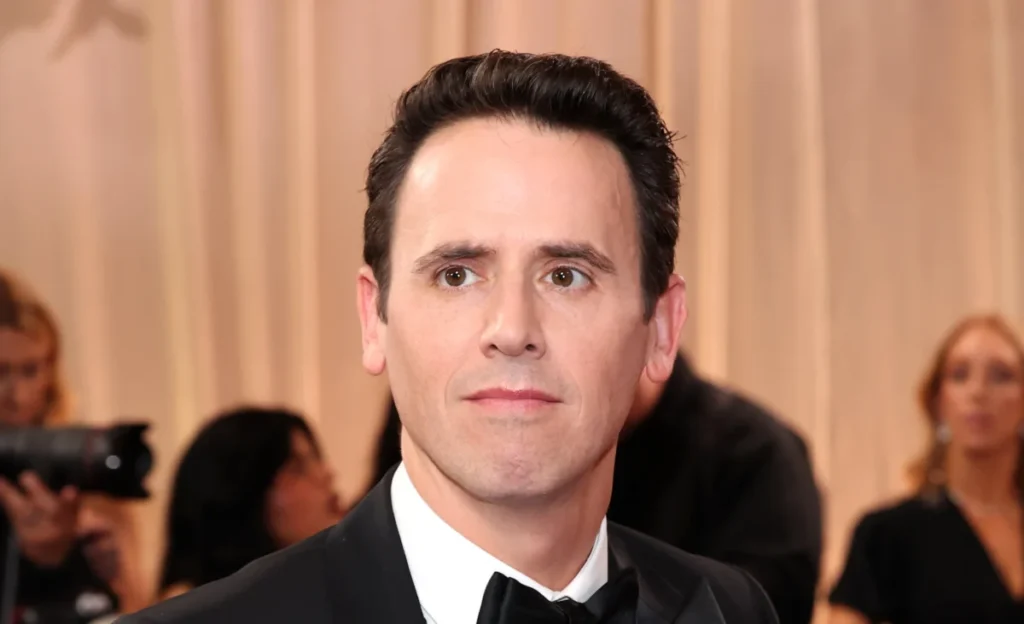

Oz Pearlman was in the midst of a mind-bending performance for President Donald Trump, First Lady Melania Trump, and White House Press Secretary Karoline Leavitt on Saturday, April 25th, when the White House Correspondents’ Dinner was violently disrupted by gunfire. The acclaimed mentalist, serving as the evening’s host, was executing a trick on the pregnant press secretary when the startling sounds of gunshots erupted from outside the packed ballroom. The assailant, later identified as 31-year-old Cole Allen, had breached security and entered the building armed with a shotgun and knives, only to be swiftly apprehended by agents of the Secret Service.
In the immediate aftermath of the incident, footage captured Pearlman holding a notebook and engaged in conversation with Leavitt. In an interview with ABC News correspondent Jonathan Karl on Sunday, April 26th, Pearlman detailed the nature of the trick he was performing on the press secretary, who was nearing the end of her pregnancy.
"Karoline Leavitt, the press secretary, said, ‘Challenge me, I’m having a baby next week. Can you guess what I’m naming my daughter?’ This was happening backstage… we were interrupted because the President walked in. I said, ‘Let’s save it for when we get up on the dais,’" Pearlman recounted to Karl.
Pearlman elaborated on the intricate nature of his mentalist act. "I was guessing letter by letter, how many letters were in the name," he explained. "And right at the moment when you see it happen, I wrote down the name and said, ‘How did I do?’ and then I turned around and that’s when the First Lady gasped." He described how he had progressively narrowed down the possibilities, eventually identifying a name starting with "V." His final guess, "Viviane," was met with confirmation from Leavitt, who declared, "That’s the name of my daughter." Pearlman stated he had obtained permission from Leavitt to share the name.
The successful completion of this seemingly innocuous yet remarkably precise mentalist feat was immediately overshadowed by the unfolding crisis. Seconds after Pearlman had revealed the predicted name, the atmosphere of sophisticated diplomacy and entertainment was shattered by the chilling sound of gunfire.
Chronology of a Chaotic Evening
The events of that Saturday evening unfolded with a stark and terrifying juxtaposition of lighthearted entertainment and grave danger.
Early Evening: The White House Correspondents’ Dinner commenced, with Oz Pearlman serving as the evening’s host and performer. The event, a traditional gathering of journalists, politicians, and prominent figures, was attended by President Donald Trump and First Lady Melania Trump, alongside key administration officials.
Mid-Performance: Pearlman was on stage, engaging with White House Press Secretary Karoline Leavitt, who was visibly pregnant and expecting her child imminently. He was in the process of performing a mentalist trick, attempting to guess the name of her unborn daughter.
The Interruption: As Pearlman was concluding his trick, having correctly predicted the name "Viviane," the first sounds of gunshots were heard from outside the ballroom.
Immediate Reaction: The sound of gunfire sent immediate shockwaves through the attendees. Pearlman described his initial thought as, "Are we about to die?" He recounted seeing Secret Service agents swiftly move to shield President Trump, guiding him to the floor for protection.
Assailant Apprehended: Simultaneously, security forces engaged with the intruder, Cole Allen. Allen, armed with a shotgun and knives, had managed to breach security protocols and enter the building. He was swiftly subdued and apprehended by members of the Secret Service before he could reach the main event area or cause further harm within the ballroom.
Aftermath and Assessment: Following the immediate threat neutralization, a tense period of assessment and securing the perimeter ensued. Officials worked to ensure the safety of all attendees and to understand the full scope of the incident.
The Mentalist’s Perspective: A Moment of Profound Fear
Oz Pearlman’s account of the moments leading up to and during the attack offers a visceral glimpse into the sudden shift from planned entertainment to a fight for survival. His description of bracing for a potential explosion and observing the Secret Service’s rapid response to protect the President underscores the severity of the perceived threat.
"When I dropped down, and dropped down to all fours, and I’m waiting and bracing because I think a bomb’s going to go off," Pearlman told Jonathan Karl, painting a picture of sheer terror. "I watch the two Secret Service guys get behind the president, bring him down. And just by pure chance, he gets brought down… And I just look at him right here, and in my head, I go, ‘Oh no, are we about to die?’ That was my first thought."
This recollection highlights the instantaneous nature of the danger and the primal instincts that surface in such extreme situations. The juxtaposition of the mentalist’s calculated predictions and the unpredictable violence that erupted is a poignant element of the incident.
The Assailant and His Motives
The individual responsible for the attack, Cole Allen, was identified as a 31-year-old male. While details surrounding his background and motivations are still being thoroughly investigated, preliminary reports suggest a potential ideological or political grievance.
An alleged manifesto attributed to Allen has surfaced, reportedly indicating that Trump administration officials were primary targets. Within this document, Allen is quoted as stating, "I am no longer willing to permit a pedophile, rapist, and traitor to coat my hands with his crimes." This statement suggests a deeply disturbed individual with a warped perception of reality and a specific animosity towards the current administration, although the precise meaning and context of these claims require further official scrutiny. The nature of his targets, as suggested by the manifesto, raises concerns about the vulnerability of high-profile political figures and their immediate staff.
Broader Context and Implications
The White House Correspondents’ Dinner has historically been a unique platform where the press, politicians, and the President converge, often characterized by a blend of satire, policy discussion, and social commentary. The event’s tradition of presidential attendance, however, also places it in a position of high security, especially given the prominence of attendees.
This incident serves as a stark reminder of the persistent threat of politically motivated violence and the challenges faced by security agencies in safeguarding public figures and high-profile events. The breach, though ultimately contained, raises critical questions about security protocols at such gatherings and the ongoing efforts to prevent individuals with malicious intent from accessing sensitive locations.
Security Concerns: The ease with which the assailant reportedly breached security, even if temporarily, will undoubtedly trigger a comprehensive review of existing security measures for similar events. This could involve enhanced screening, increased visible security presence, and potentially revised access control protocols.
Political Climate: The alleged motives cited in the manifesto, however extreme, reflect a concerning level of animosity and delusion that can unfortunately fester in highly polarized political environments. Such incidents can exacerbate existing tensions and fuel further distrust.
Media and Public Discourse: The White House Correspondents’ Dinner is itself a symbol of the relationship between the press and the presidency. An attack during such an event, even if thwarted, can cast a shadow over the very foundations of this interaction, underscoring the need for continued dialogue and the protection of democratic institutions.
Mental Health and Radicalization: The alleged manifesto also brings to the fore the broader societal concerns surrounding mental health and the potential for radicalization. Understanding the pathways through which individuals like Cole Allen become radicalized and act upon their grievances is a complex and ongoing challenge for law enforcement and public health officials.
The incident at the White House Correspondents’ Dinner, while thankfully concluding without fatalities thanks to the swift actions of the Secret Service, has left an indelible mark. It underscores the unpredictable nature of threats in the modern era and the constant vigilance required to protect democratic processes and the individuals who participate in them. The focus now shifts to a thorough investigation into Cole Allen’s motives and actions, and a comprehensive assessment of how to prevent such breaches from occurring in the future. The mentalist’s remarkable trick, once the evening’s highlight, is now inextricably linked to a moment of profound fear and a stark reminder of the fragility of peace.