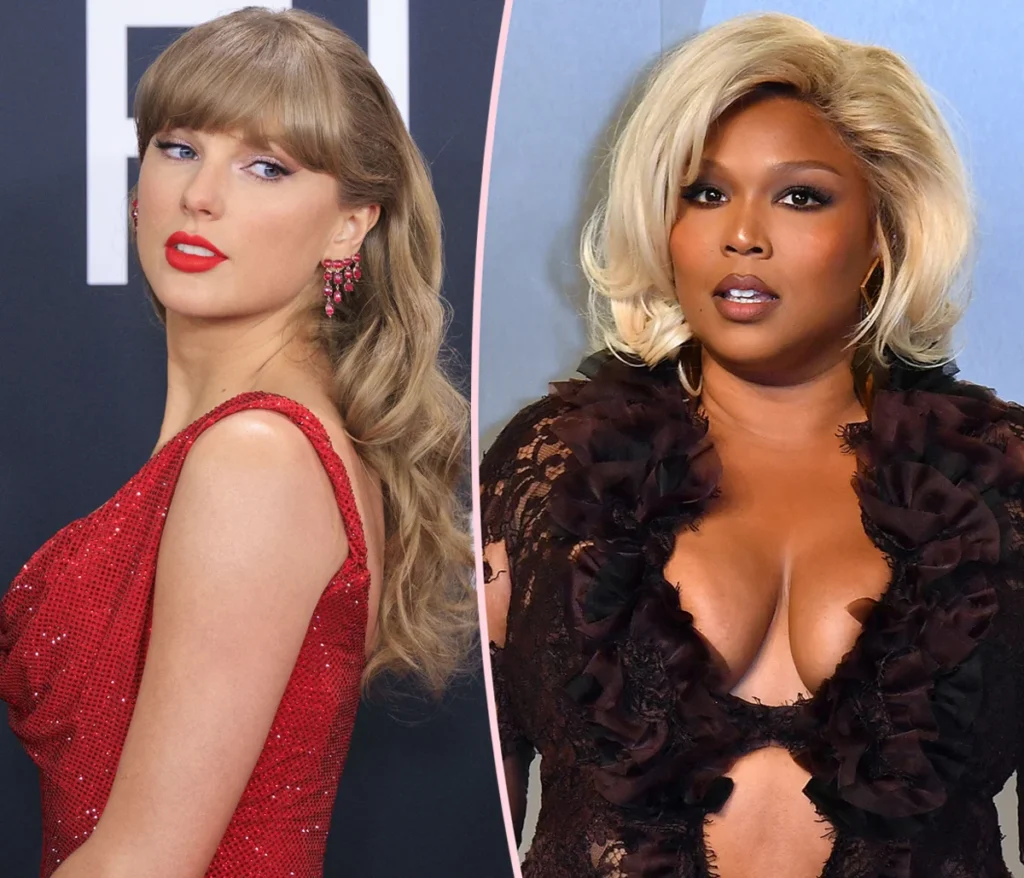

Pop superstar Lizzo has emphatically denied claims of a long-standing feud or "bad blood" with fellow artist Taylor Swift, following a recent social media exchange that quickly escalated into a heated debate involving Swift’s ardent fanbase, known as Swifties. The controversy, which unfolded on the platform X (formerly Twitter), saw an initial, unsubstantiated accusation regarding Swift’s chart performance morph into a deep dive into a nearly decade-old tweet by Lizzo concerning Kanye West.
The Online Catalyst: Chart Claims and Accusations
The digital drama commenced when a social media user posted a clip from Lizzo’s music video for her track "STFU," alongside a series of seemingly unrelated numbers and song titles: "The Life Of A Showgirl + MY FACE HURTS FROM SMILING – 4.005M. ICEMAN + MAID OF HONOUR + HABIBTI – 683k." Perplexed by the cryptic message, Lizzo, whose real name is Melissa Jefferson, publicly inquired, "Can someone explain what this means?"
This innocent query served as an unexpected spark. Another user quickly interjected with a pointed accusation, stating, "it means all that s**t talking you did about Tay finally caught up to you." The user further implied that Lizzo’s alleged disparagement had negatively impacted a fictional Taylor Swift record titled "My Face Hurts From Smiling" – a title not recognized in Swift’s actual discography – on the music charts. Similarly, the reference to Swift as the "Opalite artist" appears to be an invention of the social media narrative. This foundational misunderstanding, built on fabricated chart performance and song titles, nonetheless ignited a significant online firestorm, demonstrating the rapid spread of misinformation and its capacity to provoke celebrity responses.
Lizzo’s Direct Rebuttal
Lizzo, known for her candid and assertive online presence, swiftly moved to quash the burgeoning rumor. On a recent Saturday, she issued a forceful denial, stating, "Are you well? First of all I have never talked st about Taylor Swift — also while we on the subject I’ve never talked st about any artist. Just because I mention an artist by name does not mean I’m talking s**t — grow tf up pls." Her response highlighted her frustration with the unsubstantiated nature of the claims and her general philosophy of not engaging in public criticism of fellow musicians. She has previously expressed admiration for Swift, even once referring to herself as the "Black Taylor Swift" in an acknowledgment of their shared tendency to draw from personal experiences in their songwriting.
The Resurfaced History: Kanye West and the "Famous" Controversy (2016)
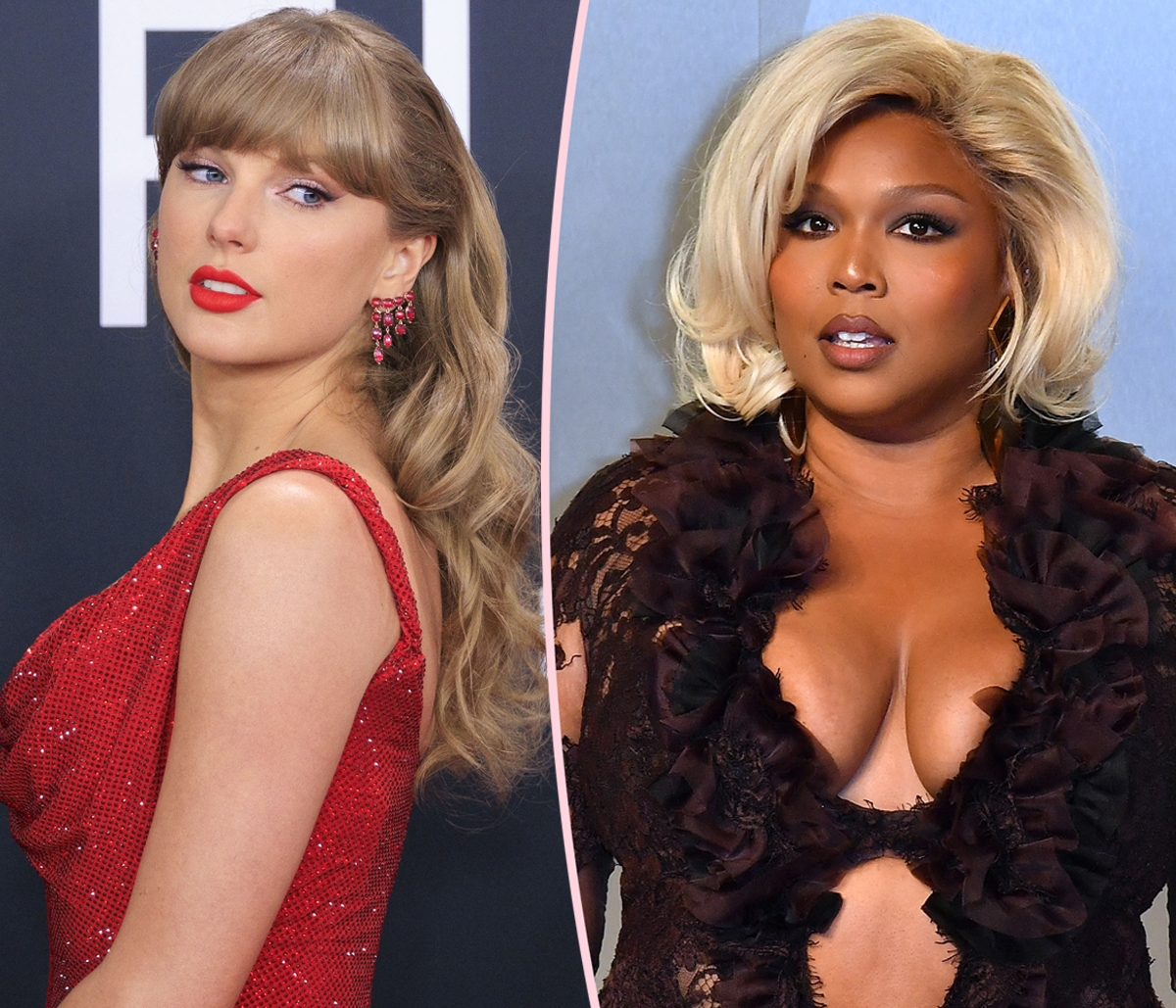
Lizzo’s staunch denial, however, did little to deter a segment of the Swiftie fanbase. Undeterred by her direct repudiation, several users pivoted to an older, highly contentious episode in pop culture history: the 2016 feud between Taylor Swift and Kanye West. This long-simmering conflict centered around West’s track "Famous" from his album The Life of Pablo. The song contained the controversial lyric, "I feel like me and Taylor might still have sex / Why? I made that b**ch famous."
The release of "Famous" triggered an immediate and widespread backlash, with Swift publicly denouncing the lyric and asserting that she had never approved of its content, particularly the derogatory term. West, however, maintained that he had received Swift’s explicit consent during a phone call. The situation escalated dramatically when Kim Kardashian, West’s then-wife, released edited snippets of the phone conversation on Snapchat, purportedly showing Swift giving her blessing to the lyric (though not the "b**ch" part). This move led to a massive public outcry against Swift, with many accusing her of being a liar and manipulative. The hashtag #TaylorSwiftIsOverParty trended globally, and Swift famously withdrew from the public eye for nearly a year, a period she later described as a deeply isolating and challenging time.
The narrative surrounding the "Famous" controversy shifted significantly years later, in 2020, when the full, unedited recording of the phone call between West and Swift was leaked. This unedited version revealed that Swift had indeed not approved of the specific derogatory term, nor had she been informed of the full context of the lyric’s use. The complete recording largely vindicated Swift’s original account, exposing the selective editing that had initially framed her as untruthful and revealing a more complex truth behind the highly publicized spat.
Lizzo’s 2016 Tweet and Swiftie Response
It was against this backdrop of one of modern pop’s most infamous feuds that Swifties unearthed a tweet from Lizzo dating back to 2016. At the height of the "Famous" controversy, Lizzo had posted, "Thank you @kanyewest for humanizing fame. Maybe one day we’ll all finally get over it. #FAMOUS." This tweet, originally an observation on West’s artistic commentary on celebrity culture, was interpreted by some Swifties as a direct endorsement of West and, by extension, a subtle jab at Taylor Swift during her most vulnerable public moment. They accused Lizzo of attempting to "rewrite history" by denying any past negativity towards Swift, when, in their view, this tweet clearly demonstrated where her allegiances lay.
Lizzo’s Second Response: Dismissing the "Stretch"
Faced with the resurfacing of her 2016 tweet, Lizzo once again took to X to defend herself. She responded to the Swiftie criticism with a dismissive, yet firm, retort: "Baby I know u must be flexible cus this is a stretch!" accompanied by a crying emoji. This response indicated her belief that drawing a direct line from her appreciation of Kanye West’s artistic commentary on fame to an act of "s**t-talking" Taylor Swift was a significant overreach and a misinterpretation of her original intent. Her reaction underscored the difficulty celebrities face when past statements, made in a different context, are re-evaluated through the lens of present-day controversies and fan loyalties.
Broader Context: Celebrity Interactions in the Digital Age
This incident serves as a salient example of the complex and often unforgiving landscape of celebrity interactions in the digital age. Social media platforms, while offering artists direct communication channels with their fans, also create fertile ground for misinterpretation, manufactured drama, and the resurrection of past controversies. The permanence of a digital footprint means that comments made years ago, often in a different cultural climate or with an entirely different intention, can be instantly retrieved and weaponized by fervent fanbases.
The sheer power of fan communities, particularly those as organized and dedicated as the Swifties, cannot be underestimated. Their collective memory and protective instincts towards their idol mean that perceived slights, no matter how minor or old, can quickly escalate into full-blown online campaigns. This dynamic places immense pressure on public figures to maintain an almost impossible level of neutrality, or face intense scrutiny and potential backlash from millions of followers. The lines between genuine support, perceived slights, and entirely manufactured drama become increasingly blurred, often driven by the desire for engagement and viral content.
The Evolution of Public Opinion and Celebrity Feuds
The Lizzo-Swiftie interaction also highlights the evolving nature of public opinion and the longevity of celebrity feuds. The Kanye West-Taylor Swift saga is a prime example of how narratives can shift dramatically over time as more information comes to light. While Lizzo’s 2016 tweet might have been interpreted differently at the time, its recontextualization in light of the full "Famous" phone call and Swift’s eventual vindication presents a new challenge for Lizzo. Her original comment, made when public opinion was largely against Swift, is now being judged by a fanbase that feels their idol was wronged. This demonstrates the difficulty for celebrities to navigate complex historical events without being perpetually re-judged by current standards or new information that wasn’t available at the time of their original statement.
Implications for Artist Relationships
Despite the online fervor, there is little to suggest genuine "bad blood" between Lizzo and Taylor Swift. Lizzo has consistently expressed admiration for Swift, and their interactions, when they have occurred, have been amicable. This incident, therefore, appears to be less about a direct conflict between two artists and more about the role of third parties—social media users and highly protective fanbases—in attempting to create division where none explicitly exists. It underscores the ongoing challenge for artists to support peers, express opinions on cultural events, or simply engage online without inadvertently being drawn into unrelated historical conflicts or perceived slights.
In conclusion, the recent exchange between Lizzo and Swifties serves as a compelling case study in contemporary celebrity culture. It illustrates the enduring power of digital records, the intense loyalty and influence of fan communities, and the ever-present potential for online interactions to spiral from minor inquiries into widespread controversies, demanding swift and often repeated clarification from public figures. The incident reinforces the notion that in the age of instant information and perpetual online archives, every past statement by a public figure remains subject to reinterpretation and renewed scrutiny, regardless of its original context or intent.