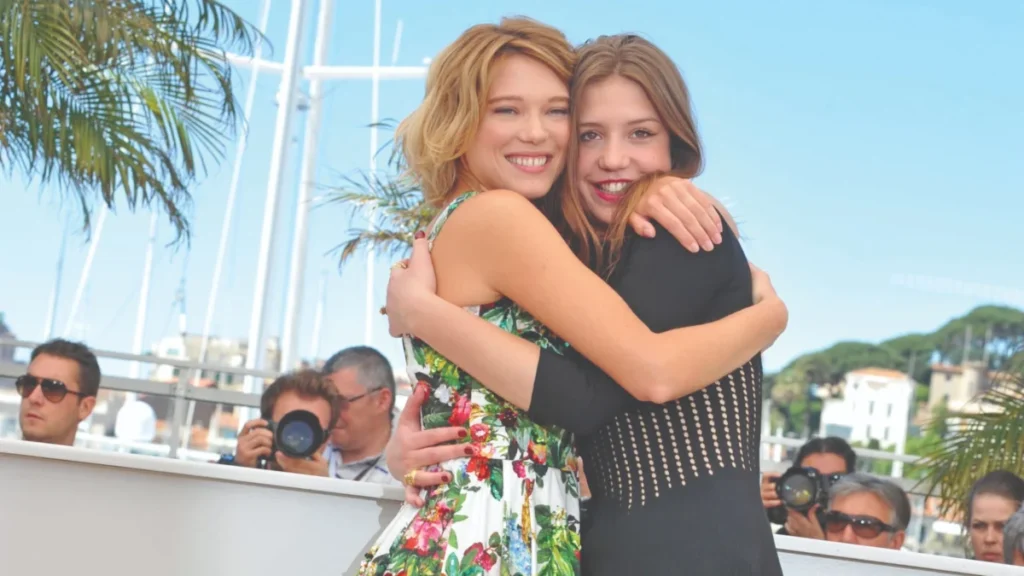

The names of French actresses Léa Seydoux and Adèle Exarchopoulos are inextricably woven into the fabric of Cannes Film Festival history, a testament to their groundbreaking collaboration and the enduring impact of a single film. It is therefore a remarkable and fitting serendipity that both acclaimed artists are making significant returns to this year’s festival, a decade after their monumental shared triumph. Their careers, while distinct, remain tethered by the extraordinary events of 2013, when they starred in director Abdellatif Kechiche’s visceral and emotionally charged drama, Blue Is the Warmest Color. The film, an adaptation of Julie Maroh’s graphic novel Le bleu est une couleur chaude, depicted the passionate and complex romantic relationship between two young women, Adèle (Exarchopoulos) and Emma (Seydoux). Upon its premiere, it immediately ignited a global conversation, praised for its raw honesty and bold depiction of intimacy, yet also sparking considerable debate regarding its explicit sexual content and the director’s methods.
The Genesis of a Phenomenon: Blue Is the Warmest Color
Blue Is the Warmest Color, originally titled La Vie d’Adèle – Chapitres 1 et 2 (The Life of Adèle – Chapters 1 & 2), arrived at Cannes as a highly anticipated entry, not least due to Abdellatif Kechiche’s reputation for unflinching realism and lengthy, improvisational shooting processes. Kechiche, known for critically acclaimed works like L’Esquive (Games of Love and Chance) and La Graine et le Mulet (The Secret of the Grain), had a distinctive directorial style that pushed actors to their limits in pursuit of authenticity. For Blue, this approach manifested in an arduous six-month shoot, involving numerous takes for emotionally and physically demanding scenes, particularly the film’s explicit sexual sequences.
The narrative followed Adèle, a high school student, as she navigates her burgeoning sexuality and identity, finding herself irresistibly drawn to Emma, an older art student with distinctive blue hair. Their relationship forms the core of the film, charting its euphoric beginnings, passionate highs, and eventual, painful unraveling. The Hollywood Reporter critic Jordan Mintzer succinctly captured its essence, stating, "Sure to raise eyebrows with its showstopping scenes of unsimulated female copulation, the film is actually much more than that: It’s a passionate, poignantly handled love story." This dual nature—its explicit content garnering headlines, but its emotional depth winning over critics—set the stage for its contentious yet celebrated run at Cannes.
An Unprecedented Triumph: Cannes 2013
The 66th Cannes Film Festival in 2013 was presided over by an eminent jury led by legendary American director Steven Spielberg, alongside luminaries such as Nicole Kidman, Ang Lee, Christoph Waltz, and Lynne Ramsay. The competition was fierce, featuring works from established auteurs. As Blue Is the Warmest Color screened, whispers began to circulate about its profound impact, alongside concerns that its explicit nature might prove too audacious for the jury, potentially risking its chances for the coveted Palme d’Or.
However, the jury delivered a stunning announcement at the closing night ceremony. Breaking with tradition and demonstrating a profound recognition of the collaborative artistry involved, they not only awarded the Palme d’Or to Blue Is the Warmest Color but also took the "exceptional step" of declaring that the honor should be shared by director Abdellatif Kechiche and his two leading actresses, Léa Seydoux and Adèle Exarchopoulos. This decision was unprecedented in the festival’s history, typically reserved solely for the director, and underscored the jury’s belief that the actresses’ performances were absolutely central to the film’s success and emotional resonance.
At the subsequent press conference, the raw emotion and significance of the moment were palpable. Adèle Exarchopoulos, still relatively new to the international spotlight, articulated the film’s broader appeal: "It’s universal. It’s a love story. If it’s also a hymn to tolerance, then that’s all the more gratifying." Léa Seydoux, already a rising star, added a more personal reflection on their on-screen chemistry and the bond forged during the intense production: "What brought us together was the love that existed between us, and perhaps our sense of humor." The shared Palme d’Or not only elevated the film to instant classic status but also irrevocably linked the careers and legacies of its two young stars.
However, the triumph was soon followed by controversy. In the weeks and months after the award, both Seydoux and Exarchopoulos publicly detailed the challenging and at times agonizing conditions on set, describing Kechiche’s demanding and manipulative directorial style. They spoke of the emotional toll and the feeling of being exploited, particularly concerning the extended and repetitive takes for the sex scenes. Kechiche, in turn, reacted strongly to their comments, suggesting they were ungrateful and damaging the film’s reputation. This public spat cast a shadow over the film’s critical acclaim, igniting a broader discussion within the industry about directorial ethics, actor welfare, and the boundaries of artistic pursuit. Despite the off-screen drama, the film itself went on to garner widespread international distribution, significant box office returns for an arthouse feature, and numerous awards nominations, cementing its place as a pivotal work of 21st-century cinema and a landmark in LGBTQ+ film representation.
Post-Palme d’Or: Divergent Yet Illustrious Paths
The shared Palme d’Or propelled both actresses onto the global stage, yet their career trajectories in the decade since have been distinct, showcasing their individual talents and choices.
Léa Seydoux’s Global Ascent
Léa Seydoux, already an established actress in French cinema with roles in films like Mission: Impossible – Ghost Protocol and Midnight in Paris, leveraged the international acclaim from Blue Is the Warmest Color to solidify her position as a sought-after global talent. Her striking screen presence, blend of vulnerability and strength, and multilingual abilities made her ideal for diverse roles. She became a recurring fixture in the James Bond franchise, playing Dr. Madeleine Swann in Spectre (2015) and No Time to Die (2021), a rare feat for a "Bond girl" to return for multiple installments.
Seydoux also became a muse for auteur directors, collaborating repeatedly with Wes Anderson in films such as The Grand Budapest Hotel (2014) and The French Dispatch (2021). Her filmography boasts an impressive array of international and arthouse features, including Yorgos Lanthimos’s The Lobster (2015), Xavier Dolan’s It’s Only the End of the World (2016), and Bruno Dumont’s France (2021). Her career demonstrates a careful balance between high-profile commercial projects and critically acclaimed, challenging independent cinema, cementing her status as one of France’s most internationally recognized actresses.
Adèle Exarchopoulos’s Authentic French Voice
Adèle Exarchopoulos, a relative newcomer compared to Seydoux at the time of Blue Is the Warmest Color, saw her career explode overnight. Her raw, uninhibited performance earned her not only the shared Palme d’Or but also the César Award for Most Promising Actress, France’s national film award equivalent to an Oscar. Rather than immediately leaping to Hollywood blockbusters, Exarchopoulos largely chose to remain rooted in French cinema, cultivating a reputation for authentic, often gritty, and emotionally intense performances.
She has consistently impressed critics with her versatile range, from comedic roles in films like Sibyl (2019) and Mandibles (2020) to poignant dramas such as Orphan (2016), The Stronghold (2021), and Zero Fucks Given (2021). Exarchopoulos’s strength lies in her naturalism and her ability to embody complex, often working-class or outsider characters with profound empathy. She has become a vital and distinctive voice in contemporary French cinema, admired for her integrity and refusal to conform to conventional leading lady stereotypes. Her continued presence at Cannes with new projects underscores her sustained relevance and artistic growth within the industry.
The Enduring Echoes of Blue
A decade on, Blue Is the Warmest Color remains a potent and often-discussed film. Its legacy extends beyond its critical accolades and box office success. It sparked crucial conversations about LGBTQ+ representation in mainstream cinema, pushing boundaries and challenging perceptions. While some queer critics raised valid points about the film being directed by a heterosexual man and potentially catering to a male gaze, its raw portrayal of a same-sex relationship undeniably brought a significant and complex narrative to a global audience. The film’s critical reception also highlighted the often-hypocritical double standards applied to explicit sexual content involving women versus men, or heterosexual versus homosexual relationships.
For both Seydoux and Exarchopoulos, the film served as a career-defining moment, a benchmark against which their subsequent performances are sometimes measured. It cemented their reputations as fearless actresses willing to commit entirely to their roles, even under arduous circumstances. The film’s title, Blue Is the Warmest Color, has itself become a cultural touchstone, often referenced in discussions about passionate love, artistic expression, and the complexities of human connection.
A Return to the Croisette: Cannes 2024
The Cannes Film Festival, a global epicenter for cinematic artistry, once again provides the backdrop for Léa Seydoux and Adèle Exarchopoulos to showcase their latest works, both returning to the prestigious Official Competition, the very section where they made history. Their presence underscores their continued prominence in the global film landscape and the festival’s role in celebrating their evolving careers.
*Adèle Exarchopoulos’s Competition Entry: *Another Day***
Adèle Exarchopoulos stars in Jeanne Herry’s French drama Another Day (original Leurs Enfants Après Eux), which is screening in competition. Herry, known for her sensitive and humanistic approach to complex social issues, notably with Pupille (In Safe Hands), is expected to deliver a poignant and insightful narrative. The inclusion of Another Day in the Official Competition suggests a film of significant artistic merit and emotional depth, providing Exarchopoulos another platform to demonstrate her acclaimed dramatic prowess. Herry’s previous work often explores themes of family, adoption, and the intricate web of human relationships, areas where Exarchopoulos’s authentic and grounded acting style can truly shine.
*Léa Seydoux’s Double Presence: Gentle Monster and *The Unknown***
Léa Seydoux arrives at Cannes with an impressive double feature in competition, a testament to her prolificacy and the high demand for her talent. She appears in Marie Kreutzer’s Gentle Monster (original Le Monstre Doux), a film that also features the iconic Catherine Deneuve. Kreutzer, who garnered widespread critical acclaim for her historical drama Corsage (2022), which premiered in Un Certain Regard at Cannes and earned Vicky Krieps the Best Performance award, is known for her visually rich and psychologically nuanced storytelling. The combination of Seydoux and Deneuve under Kreutzer’s direction promises a compelling and possibly formidable cinematic experience, exploring complex female characters.
Seydoux’s second competition title is Arthur Harari’s The Unknown (original Leurs Enfants Après Eux), a Neon acquisition that has already generated considerable buzz. Harari’s previous film, Onoda: 10,000 Nights in the Jungle, was a Cannes Un Certain Regard opener and garnered a César Award for Best Original Screenplay. The Unknown features an intriguing premise: a man who, after a one-night stand, wakes up in the body of the woman he seduced. This high-concept narrative, combining elements of psychological drama and body-swap fantasy, offers Seydoux a unique opportunity to explore a challenging and transformative role, further diversifying her already extensive filmography. Neon’s early acquisition signals strong confidence in the film’s international appeal and critical potential.
The Unbreakable Bond and Future Horizons
The return of Léa Seydoux and Adèle Exarchopoulos to Cannes, both in the festival’s most prestigious section, serves as a powerful reminder of their enduring impact and the unique bond forged in 2013. While their individual paths have diverged, the historical moment of their shared Palme d’Or for Blue Is the Warmest Color forever intertwines their cinematic destinies. It is highly probable that the two actresses will encounter each other on the red carpet or during festival events, a decade after their shared triumph, offering a poignant visual metaphor for their intertwined legacies.
Their continued presence at the forefront of international cinema, bringing challenging and diverse projects to one of the world’s most important film festivals, signifies not only their individual artistic growth but also their collective contribution to French and global cinema. They represent a generation of actresses who are fearless, versatile, and committed to pushing artistic boundaries. The legacy of Blue Is the Warmest Color and the precedent of their shared Palme d’Or continue to resonate, inspiring discussions about acting, collaboration, and the power of film to provoke and move. As they present their new works, Seydoux and Exarchopoulos reaffirm their status not just as celebrated performers, but as integral figures in the ongoing narrative of cinematic excellence, with their most iconic collaboration serving as a permanent landmark in the annals of Cannes.