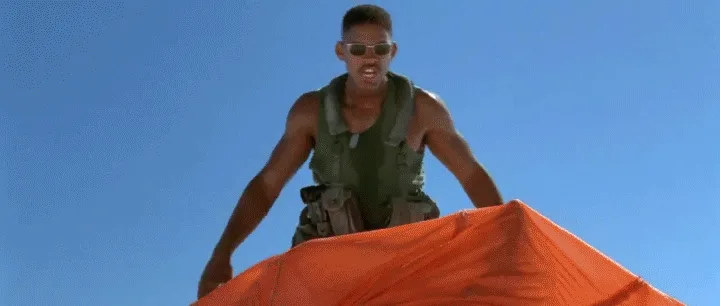

The year 2026 marks the 30th anniversary of Independence Day, a film that transcended mere cinematic release to become a genuine cultural phenomenon. Directed by Roland Emmerich, this science fiction disaster epic achieved a rare ubiquity in an era when summer blockbusters were not yet a prerequisite but an eagerly anticipated event. Its release, strategically timed around the American Fourth of July weekend in 1996, cemented its place in popular culture, despite its sequel, Independence Day: Resurgence, oddly missing the same holiday window two decades later. While critical reception was, as expected for a loud, two-and-a-half-hour spectacle about global destruction by tentacled aliens, decidedly mixed, its impact was undeniable. Independence Day was not just a movie; it was an event that captured the zeitgeist of a particular moment in American history.
The Genesis of a Blockbuster Phenomenon
The journey to bring Independence Day to the big screen was ambitious. Conceived by Roland Emmerich and his long-time co-writer Dean Devlin, the film’s premise – a massive alien invasion threatening human extinction – tapped into primal fears and a universal desire for heroism. Emmerich, known for his penchant for large-scale destruction, had already made a name for himself with films like Universal Soldier (1992) and the commercially successful Stargate (1994). Independence Day, however, was designed to be on an entirely different scale. With a production budget of $75 million, a substantial sum for its time, the film aimed to push the boundaries of visual effects, creating unprecedented scenes of iconic landmarks being obliterated.
Filming commenced in July 1995, utilizing a combination of practical effects, miniatures, and emerging computer-generated imagery (CGI). While CGI was still evolving, particularly after Terminator 2: Judgment Day (1991) and Jurassic Park (1993) had showcased its potential, Independence Day leveraged it to depict its grand-scale destruction. The visual effects team, led by Volker Engel and Douglas Smith, faced the daunting task of rendering the aliens’ colossal city-sized spacecraft and the subsequent devastation of major global cities. This blend of cutting-edge technology and traditional filmmaking techniques allowed the filmmakers to achieve a scope that felt truly epic and immersive for audiences of the mid-90s.
A Star-Studded Ensemble and Iconic Moments
The film’s narrative structure, following multiple disparate storylines converging towards a unified global effort, was key to its appeal. Audiences were introduced to a diverse cast of characters, each representing a different facet of humanity’s response to the crisis. Captain Steven Hiller, portrayed by Will Smith, was the charismatic fighter pilot whose role in Independence Day catapulted him from a popular television star (The Fresh Prince of Bel-Air) to a bona fide global mega-star. His blend of bravado and humor, encapsulated in his memorable line, "Welcome to Earth!" delivered after punching an alien, became an instant classic.

Jeff Goldblum brought his signature quirky intellectualism to the role of David Levinson, an MIT-educated environmentalist and computer expert whose quick thinking provides the crucial vulnerability to the alien invaders. His character’s scientific ingenuity, while perhaps stretching the bounds of credibility (the infamous floppy disk virus plot point), offered a relatable brain-over-brawn approach to the conflict.
Perhaps most enduringly, Bill Pullman’s portrayal of President Thomas J. Whitmore solidified the film’s aspirational message. Initially depicted as a politically compromised leader, Whitmore transforms into an inspiring wartime president, delivering one of cinema’s most iconic motivational speeches. His impassioned plea for global unity against a common enemy resonated deeply, cementing his character as a symbol of resilience and collective strength.
Beyond these central figures, the film populated its world with a host of colorful supporting characters, from Randy Quaid’s eccentric crop-duster Russell Casse to Robert Loggia’s gruff General Grey. This ensemble cast, combined with the film’s relentless pacing and escalating stakes, created a rollercoaster ride of emotion and spectacle that kept audiences gripped from start to finish.
Box Office Domination and Critical Reception
Upon its release on July 3, 1996, Independence Day exploded at the box office. It shattered opening weekend records, raking in over $50 million domestically. Its momentum continued throughout the summer, making it the highest-grossing film of 1996 and the only release that year to cross the $300 million mark domestically, ultimately grossing over $817 million worldwide. This financial success underscored its widespread appeal and its status as a cultural event.
To put this in context, the second highest-grossing film of 1996 was Twister, another disaster film, albeit one focused on natural phenomena. Other major box office successes that year included Eddie Murphy’s The Nutty Professor, Mel Gibson’s Ransom, the live-action 101 Dalmatians, and The Birdcage. Independence Day stood out among these diverse offerings as the quintessential summer spectacle, a testament to its ambitious scale and marketing.
Critically, the film received a mixed bag of reviews. Many critics acknowledged its impressive visual effects and thrilling action sequences, praising it as an effective popcorn flick. Roger Ebert, for instance, gave it a positive review, calling it a "fun movie" despite its clichés. However, others were less forgiving, criticizing its simplistic plot, thinly drawn characters, and reliance on genre tropes. Rotten Tomatoes currently holds a "scattershot" aggregate score, reflecting this initial division. Yet, for the millions who flocked to theaters, these critical nuances mattered little. The experience of seeing the White House explode on a massive screen, surrounded by a cheering audience, was the real draw.

The Mid-90s Cinematic Landscape
Independence Day arrived at a pivotal moment in cinematic history. The early 1990s had seen a significant evolution in blockbuster filmmaking, largely spurred by the technological breakthroughs in CGI. While films like Terminator 2 and Jurassic Park had demonstrated the potential for photo-realistic digital effects, Independence Day pushed the envelope further, applying these techniques to truly apocalyptic scenarios.
The summer spectacle, as a concept, had been established decades earlier with films like Jaws (1975) and Star Wars (1977). By the mid-90s, studios were increasingly developing a taste for large-scale, trailer-driven movies designed to dominate the summer box office. However, Independence Day was playing on a field that most other films were not yet daring to fully explore. Its $75 million budget was immense, and its heavily promoted destruction set pieces were even bigger.
Fox’s marketing campaign was relentless and highly effective. The film’s memorable teaser trailer, which famously depicted the destruction of the White House, played before countless other movies, generating immense anticipation. This teaser alone became a cultural touchstone, signaling that something truly unprecedented was coming. The combination of star power (Will Smith, Jeff Goldblum, Bill Pullman), a clear high-concept premise, and innovative marketing ensured that Independence Day was not just released but unleashed upon the public.
A Reflection of Its Time: Sociopolitical Undercurrents
Beyond its technical prowess and box office success, Independence Day is deeply intertwined with the sociopolitical climate of 1996. The mid-90s in America were a strange and often fraught period. The infamous O.J. Simpson trial, which concluded in 1995, had exposed deep fissures in American society regarding race, justice, and policing. Popular culture, by 1996, was beginning to grapple with the larger national dialogues born out of this lengthy ordeal.
For many, Independence Day offered a powerful diversion, a fantasy of national unity in a time when the country felt increasingly divided. The film arrived amidst a general sense that things were on the decline, characterized by discussions of racism, police abuse, and legal injustice. Hollywood movies often either evaded these complex issues or made ham-handed attempts to bridge societal gaps, as seen in Volcano (released a year later), which ended with a child observing that, beneath a volcanic sky, everyone in Los Angeles looked the same. Independence Day presented a world where these earthly divisions were rendered irrelevant by an existential threat.

Roland Emmerich has never been known for his political subtlety, often approaching such themes in broad strokes. His films frequently feature ersatz American presidents, from Kenneth Welsh’s Dick Cheney-esque figure in The Day After Tomorrow to Jamie Foxx’s action-star Obama in White House Down. In Independence Day, Bill Pullman’s President Whitmore, initially depicted as prone to compromise, transforms into an unwavering, warrior-like leader. This transformation, from a perceived weakness to decisive strength, resonated with a public yearning for strong leadership and a clear sense of national purpose.
The 1990s are often recalled through a lens of innocent homogeneity, exemplified by shows like Full House. However, beneath this surface, a roiling cultural tension persisted. For film and television’s attempts to engage with this, a common method was to simply "forget about it." By presenting a world where differences were ignored, the hope was that they could be overcome, or at least pushed aside in polite society. For a summer blockbuster to then argue that only a united world could stand together was, in its own way, an uncommonly bold message for the time.
Roland Emmerich’s Signature Style and Its Limitations
Independence Day stands as the crown jewel in Roland Emmerich’s career of cinematic destruction. His directorial signature, characterized by an operatic scale of devastation and a fascination with end-of-the-world scenarios, was fully realized here. From the drowned New York City in The Day After Tomorrow (2004) to the global decimation of 2012 (2009), Emmerich has consistently returned to themes of cataclysm and human survival. Independence Day was his ascension from earlier, more modest action fare like Universal Soldier and a massive leap forward from Stargate.
However, the film’s "united world" message, while idealistic, was undeniably filtered through an American-centric lens. The rest of the world is largely laid to waste off-camera, existing primarily in various globe-trotting montages depicting exchanges of information. The most prominent non-American military presence is a brief, rain-battered glimpse of the Russian forces. If audiences ever forget the central role of the United States, a prominently displayed American flag is rarely more than 30 seconds away. This inherent jingoism, while typical of 90s action cinema, has drawn criticism for its insensitivity and the implied xenophobia of its "destroy ’em all" approach to extraterrestrial contact, a stark contrast to the open-mindedness of predecessors like Close Encounters of the Third Kind (1977).
Emmerich’s work, including his later historical epic The Patriot (2000) which controversially depicted a horse impaled on an American flag, suggests that any profound political implications in his films are often superficial. Yet, Independence Day occupies a unique cross-section of jingoism and idealistic naiveté. Its staunch militarism and domestic centrism may be distasteful to some, but what time has lent the film is the sense that it came into being during the final years where a movie this staunchly optimistic and, given its subject matter, lighthearted could be made at all.
The Enduring Legacy and Post-9/11 Contrast

The film’s opening shots, which dwarf the plaques on the moon commemorating America’s 1969 walk, immediately frame Independence Day as a definitive good vs. evil standoff. It’s America (and its largely invisible allies) against the tyranny of far-off planets. But in Emmerich’s vision, once the alien saucers dwarf every city on the planet, political squabbles and international conflicts dissolve. There’s just a world under siege, united for the continued survival of the species.
Bill Pullman’s iconic speech, delivered with fervent sincerity, encapsulates this spirit:
"Good morning. In less than an hour, aircraft from here will join others from around the world. And you will be launching the largest aerial battle in the history of mankind. Mankind. That word should have new meaning for all of us today. We can’t be consumed by our petty differences anymore. We will be united in our common interests. Perhaps it’s fate that today is the Fourth of July, and you will once again be fighting for our freedom… Not from tyranny, oppression, or persecution… but from annihilation. We are fighting for our right to live. To exist. And should we win the day, the Fourth of July will no longer be known as an American holiday, but as the day the world declared in one voice: ‘We will not go quietly into the night!’ We will not vanish without a fight! We’re going to live on! We’re going to survive! Today, we celebrate our Independence Day!"
This sincere, earnest belief in redemption and global unity feels almost quaint three decades later. Much has been written about how action filmmaking in the post-9/11 era has reflected a more nightmarish aesthetic. The cultural paranoia of the Bourne series, the "wall-of-ash" aesthetics prevalent in films like Batman v Superman: Dawn of Justice, or a doubling down on the "America vs. all" sentiments of Independence Day recast with bravado but little idealized social oneness, characterize modern spectacle. Heroes like Superman are often depicted with ambiguity, seen as potential threats rather than pure symbols of hope, until very recent attempts to revive a more optimistic ethos. Governments are either oppressive or barely competent, and salvation often rests solely on "super" beings.
Independence Day, in contrast, aspired to a universal ideal: that humanity could indeed put aside its differences and rally together. There’s none of the political exhaustion or cynical realism that permeates so much contemporary spectacle. Its catharsis comes from imagination and hopeful fantasy, from the belief in collective human triumph, rather than the grim confirmation of existential pain. While its commentaries might be incidental or painfully of its era, its enduring appeal, especially that speech, serves as a potent reminder of a world that, despite its failings, could still aspire to something greater. In this singular respect, they truly don’t make them like that anymore.
The Sequel and Beyond
The film’s legacy was revisited, albeit with mixed results, with the 2016 sequel, Independence Day: Resurgence. While it brought back many original cast members (notably absent Will Smith, whose character was written off-screen), and attempted to recapture the original’s scale, it largely failed to resonate with critics or audiences in the same way. The magic of the original lay not just in its spectacle, but in its ability to tap into a particular cultural moment and deliver a message of optimistic unity. The sequel, released in a vastly different geopolitical and cinematic landscape, struggled to find that same spark.
Today, Independence Day remains a beloved staple, revisited annually by many, especially around its namesake holiday. It is available to stream on platforms like Disney+ and Hulu, and on VOD via Prime Video and Apple TV, ensuring its continued accessibility to new generations. Its 30th anniversary serves as an opportunity to not only appreciate its groundbreaking effects and thrilling narrative but also to reflect on the cultural moment it so perfectly captured—a weird, united, American world, facing down the unknown with a spirit of hopeful defiance.